
The Unified Fishing System gives sport anglers a useful way to think about carp tactics: stop fishing random water, find fish before you cast, control pressure, and make each boat move part of a plan. The full agency-scale method is not a casual weekend setup. It is a coordinated removal approach for invasive bigheaded carp, especially bighead and silver carp, and it uses tools most recreational anglers cannot legally use without permits. Still, the tactical lessons are gold if you adapt them responsibly.
The Unified Method was adapted from traditional Chinese floodplain capture methods and, in the United States, was refined as the Modified Unified Method for carp capture. It combines herding, gill nets, pound nets, trap nets, and timed coordination to concentrate fish for harvest, with the U.S. version shaped for environmental compatibility, cost efficiency, and regulatory compliance USGS publication. That is a bigger operation than a sport-fishing crew can run, but the structure behind it fits everyday angling: scout, position, apply pressure, intercept, and measure what worked.
What The Unified Fishing System Teaches Anglers
Start With Fish Location, Not Favorite Spots
Many anglers, myself included on my early carp trips, have wasted time defending a favorite bank like it owed us money. The Modified Unified Method points in the opposite direction. It starts with fish location. In Illinois River work, spatial and temporal hydroacoustic surveys were used bimonthly to map bigheaded carp aggregations and build heat maps before removal events 2019 interim report. For a sport angler, that translates into a simple rule: do not begin with the cast; begin with the search.
If you have sonar, idle first and fish second. Look for repeated marks, bait concentration, edge structure, current seams, pits, backwater mouths, and zones where fish stack instead of roam. If you do not have electronics, use surface activity, wind lanes, current breaks, bird activity, and water color changes as clues. None of those signs proves carp are feeding, but they help you narrow the field before you burn your best light.
Unified Fishing System Lessons For Boat Control
Boat control is where the Unified Fishing System idea becomes very practical. The agency version depends on coordinated movement. Your boat does not have to run nets or herding gear to use that principle. It simply needs to stop scattering fish by accident. Approach from the quietest useful angle. Keep your trolling motor steady. Avoid charging directly into the school, then wondering why the water went dead.
The value of the Unified Fishing System mindset is that every movement should either locate fish, hold position, or guide your presentation toward a likely intercept point. If a school is shifting along a bank, set up ahead of it. If fish are using a current edge, cast across the seam so your bait or lure enters the path naturally. If boat traffic pushes fish deeper, adjust depth before changing baits. That sounds simple, but it is the difference between angling and aquatic guesswork.
Turning Agency-Scale Ideas Into Boat-Level Tactics
Build A Small-Team Plan Before The First Cast
The Unified Method works because timing matters. Crews do not all do their own thing at random. Recreational teams can copy that discipline without copying restricted gear. Before you launch, assign roles. One angler watches electronics and depth. One manages boat position. One tracks strikes, follows, bumps, or visible fish movement. If you fish from shore, spread out with purpose instead of crowding the most obvious access point.
For carp tactics, I like a three-pass plan. The first pass is scouting only. The second pass tests depth and presentation speed. The third pass focuses on the highest-confidence water. If the second pass shows no fish sign, do not force the third pass in the same place. Move. Carp removal programs are built on concentrating effort where fish are present; anglers should be just as stubborn about leaving empty water.
Use Pressure Without Turning It Into Chaos
Herding is a core part of the Modified Unified Method, but recreational anglers need to be careful with that idea. The goal is not to harass fish or disrupt other anglers. The useful lesson is pressure control. Sound, shadows, prop wash, anchor drops, and repeated casts all create pressure. Sometimes pressure slides fish toward cover or deeper water. Sometimes it pushes them out of casting range. Watch what happens after each move.
On a small flat, one boat pass may be enough to reposition fish. On a deeper edge, you may need a quiet hold and longer casts. In a current-influenced area, fish may not flee far; they may simply shift to the softer side of the seam. Treat each response as data. If you want more help reading how fish change position under stress, light, and oxygen shifts, this piece on fish behavior changes pairs well with this approach.
Gear, Selectivity, And Legal Boundaries
Match Gear To The Fish You Are Actually Reaching
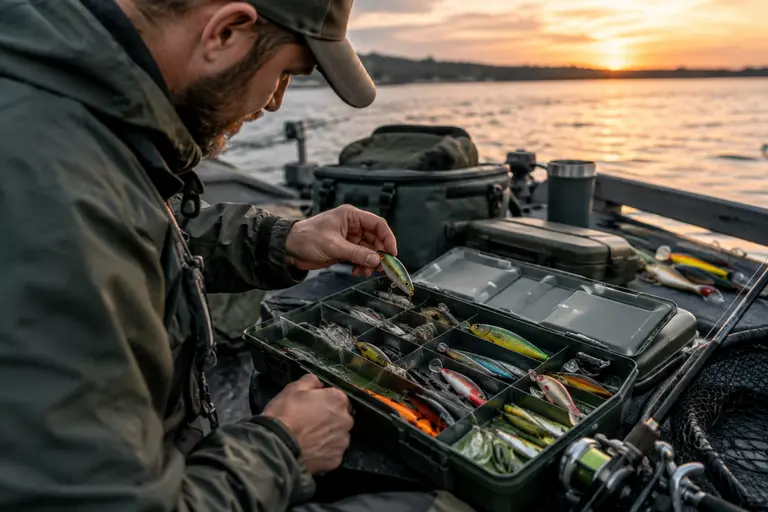
Large-scale carp capture uses multiple gear types because one tool rarely handles every situation well. Sport anglers should think the same way. A rod setup that works for visible fish in shallow water may be poor for fish holding down a ledge. Heavy line may help around cover, while lighter, longer casts may help when fish are spooky. The key is not owning every gadget in the tackle shop; it is matching your setup to the depth, distance, current, and fish size in front of you.
Keep your notes practical. Record location, water level, water clarity, wind direction, depth, presentation, and whether fish were seen, hooked, bumped, or ignored the offering. After a few trips, patterns start to show. You may learn that a certain pit fishes better after wind stacks warmer surface water, or that a current seam produces only when the boat holds outside the main push. That kind of note-taking turns scattered trips into a training plan.
Stay Inside The Rules
The Modified Unified Method includes gear and coordination that are not automatically open to recreational use. Nets, commercial harvest methods, and electrofishing are regulated. Before borrowing any tactic beyond ordinary rod-and-reel fishing, check state and local rules, access limits, species rules, and gear restrictions. If your trip plan includes harvest, transport, or unusual gear, slow down and verify the rule before launch. Smart tactics are only smart if they keep you legal and protect the fishery. For trip planning, keep a current habit of reviewing fishing regulations before changing methods.
- Scout first: use sonar, visible fish signs, and water movement before choosing a casting lane.
- Control pressure: make boat noise, casting angles, and repositioning part of the plan.
- Fish intercept points: target seams, edges, mouths, and travel lanes rather than empty open water.
- Rotate tactics: change depth and angle before blaming the bait.
- Track results: write down what fish did, not just what you caught.
Why Unified Fishing System Tactics Matter On The Water
The Unified Fishing System matters to anglers because it rewards discipline over luck. The agency-scale goal is removal of invasive bigheaded carp; the sport-fishing lesson is better decision-making. Find the fish, understand how pressure moves them, set up ahead of them, and measure each tactic against what actually happened.
The real win from the Unified Fishing System mindset is not copying a government operation from a jon boat. It is fishing with a coordinated plan. Anglers who scout before casting, hold boat position with intent, respect legal boundaries, and adapt gear to fish behavior will waste less time and learn faster. That is practical fishing: fewer random casts, better reads, and more confidence each time you pull away from the ramp.


