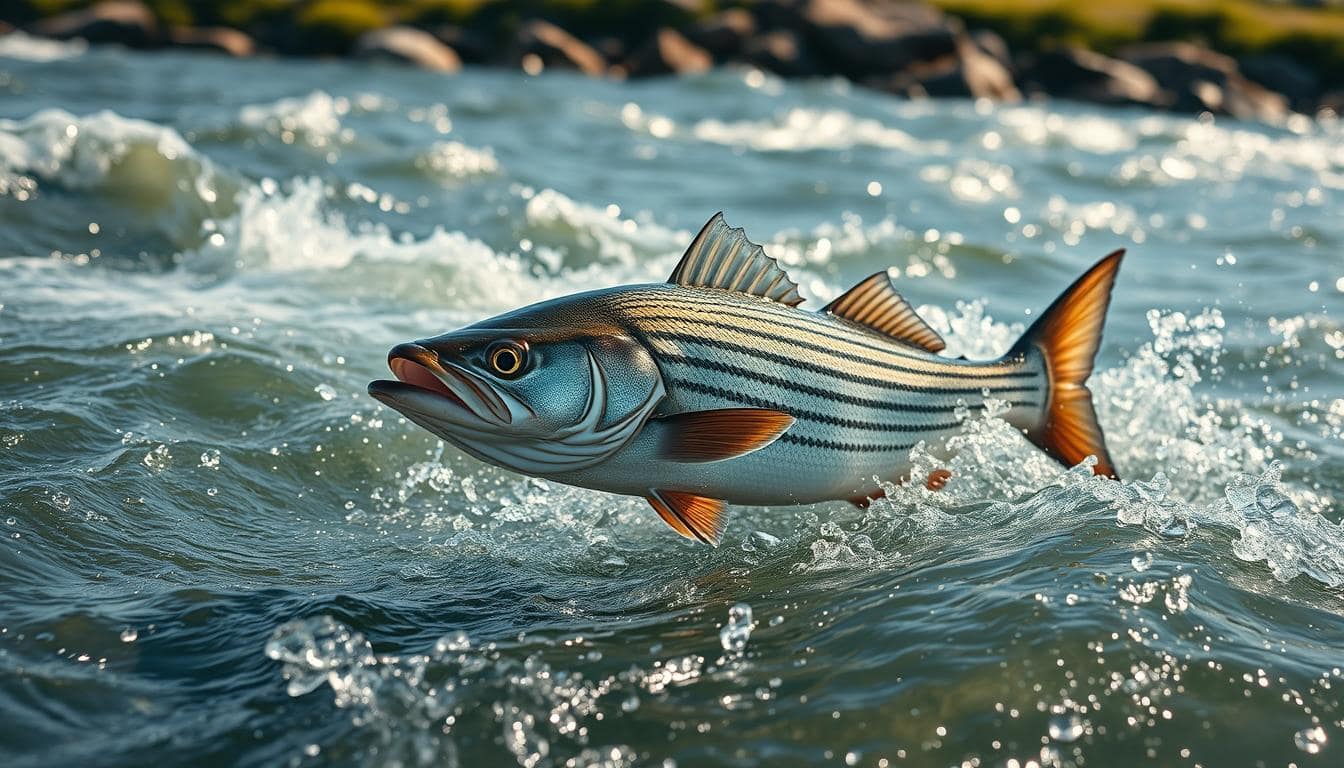

Forget luck. You’re not fishing; you’re conducting a hydrological audit on a top predator with a business degree. The striper isn’t just in the current—it is the current’s most profitable venture.
Think of moving water as its conveyor belt of convenience. Tide, moon phase, and temperature aren’t mystical forces. They’re the market fundamentals. A full moon means a stronger gravitational pull, which means faster currents and disoriented baitfish. Is it any wonder the bite turns on like a switch? This is how migration routes, like those in the Long Island Sound, become interstate highways for ambush.
Your job is to find their corporate headquarters. That means reading the terrain: the rocky-bottomed stock exchanges, the estuarine backchannels, the beaches where the water churns. It’s about understanding seasonal patterns and positioning yourself where the current does the work. Once you’ve scouted the structure, the real game begins with precise presentation tactics.
Let’s cut through the static. The water is moving. Are you reading the flow, or just getting wet?
Strong-Current Presentation
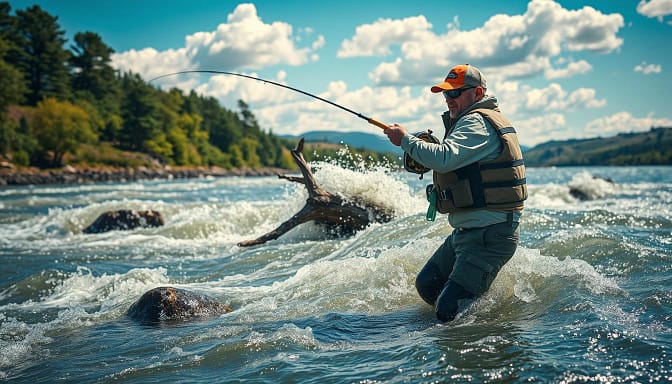
Decorating the water and catching fish in heavy flow is all about presentation. It’s about working with the current, not against it. Think of the river or tidal rip as a conveyor belt. Your job is to place your lure on it so perfectly that a fish thinks it belongs there.
Trolling in current is all about precision, not patience. Unlike in a lake, you need strategy here. Cycling in and out of gear makes your lure rise and fall, mimicking a wounded baitfish. This creates an erratic movement that static lures miss.
Surf fishing requires even more finesse. Your rig is your ambassador to the fish. The fish finder rig is elegant, using a sliding sinker to let your bait dance naturally. This makes your bait look alive.
The bottom rig is your anchor in strong currents. It’s about holding power. Choose based on the current’s mood. Is it a gentle waltz or a wild mosh pit?
Surfcasting with lures is a high-stakes game of physics. You’re balancing weight against current, and speed against drag. A heavy jig might get down, but will it move? A light swimmer will dance, but will it stay in the zone?
The Toolbox for Moving Water
Three key techniques define successful current fishing. Trolling covers water to find fish routes. Jigging creates a vertical, struggling presentation. Chunking scents the current, leading fish to your hook.
You must read the water itself. Look for current breaks—points, rock piles, drop-offs. These are ambush spots where predators wait. The seam between fast and slow water is a dinner table.
| Technique | Best Current Condition | Key Presentation Tip | Common Mistake |
|---|---|---|---|
| Trolling (Cycling Gear) | Strong, consistent flow in channels | Vary speed to make plugs dart and dive | Running too straight; ignoring tide change |
| Jigging | Eddies & current seams near structure | Use just enough weight to feel bottom, then hop | Heaving like a pile driver; no subtlety |
| Chunking / Bottom Fishing | Heavy rip currents & deep holes | Anchor up-current of your target zone | Fishing directly in slack tide |
| Surfcasting (Lures) | Incoming tide along bars & cuts | Cast up-current, let lure swing across seam | Ignoring the current direction on retrieve |
Live bait versus artificial? In current, it’s a tactical choice. Live eels or bunker send out panic vibrations and scent. Artificials—jigs, plugs, soft plastics—are durable. You can work them aggressively through tough rips. Choose based on the predator’s energy level.
The cardinal sins of current fishing are simple. First, ignore the current direction. Your retrieve should work with it, not against it. Second, fishing during slack tide is a waste. It’s like showing up to a party after everyone left. The conveyor belt stopped. No flow, no food, no fish.
Your takeaway? Don’t just cast into the torrent. Place your lure. Use the flow to give it life. This is where brute force fails and finesse wins. For more on that delicate dance, see how experts approach finesse fishing in current. It’s not about power. It’s about partnership with the water.
Adapting Rod/Line for Power Fights
When a striped bass challenges you in a tidal rip, your gear is key. It’s not just about the right tackle; it’s about understanding the physics. You’ve got the current figured out and your lure is perfect, but now it’s time to put your gear to the test.
Think of your rod as a lever and your line as a tendon. In the world of tidal tactics, a 30-pound bass can use the current to its advantage. A medium-action 7-foot rod with 20lb braid is essential. It helps you control the fish’s movements.
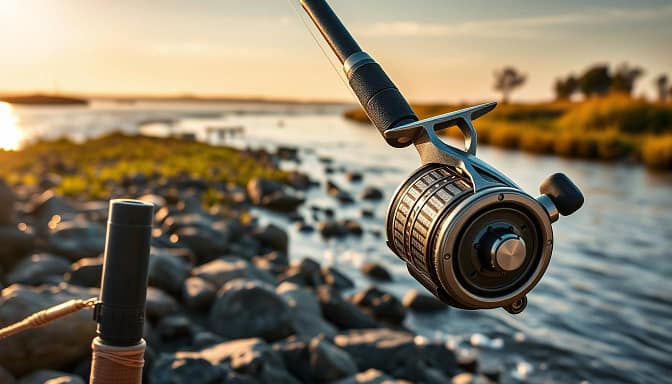
Braid is a must in these situations. It has little stretch, so you feel every move the fish makes. This lets you apply pressure exactly where you need it, making the fight more technical.
The rod’s backbone helps you steer and lift, while the tip absorbs the fish’s strong lunges. Going for a lighter rod is not wise in strong currents. You need tools that can handle the fight against a creature adapted to its environment.
Your tidal tactics depend on the right gear. Choose wisely, or your plan will fail. Serious anglers invest in specialized striper trolling outfits for these battles.
In moving water, you fight the fish and the current. Your gear must handle both. A rod that’s too weak or line with too much stretch will fail.
The 7-foot medium action rod is not a random choice. It offers the right balance of leverage and sensitivity. The 20lb braid is strong yet has low water resistance. Together, they make your tidal tactics more effective.
Surf fishing tools need to be practical, not just romantic. Your rod should handle shocks well while keeping control. The reel’s drag is your main control, needing smooth pressure.
This gear setup lets you control the fight, not just react to it. You apply pressure to specific areas, working against the bass’s strength. It’s like using a jerk-sweep-twitch retrieve pattern to trigger specific reactions.
The current is the bass’s advantage. But with the right gear, you can neutralize it. This turns the water into a manageable factor, not a force against you.
So, your tidal tactics depend on the connection between rod and fish. The right gear lets you lead the fight, not just provide background music. In power fights, success is clear: you either catch the fish or your gear breaks.
Resistance Training for Anglers
We’ve explored the striper’s world in moving water. We’ve set up our gear for the battle. Now, it’s time to check our own strength.
Fishing in currents is all about physics. The tide pushes, your rod pulls, and your body adds force. If your body can’t keep up, the whole thing falls apart. Ever felt your core shake after fighting a kayak in strong currents? That’s not just tiredness. It’s your body giving up.
Think of resistance training as building a strong base for fishing. A strong core keeps you steady on a moving boat. Grip strength is key to keeping the drag tight when a striper makes a final dash.
Your fishing skills need a strong body to back them up. Strong legs help you stay put on a slippery jetty. A strong back is needed to set the hook against the current. This isn’t just about looking good. It’s about being ready for the fight.
The wise angler knows the battle starts before casting. Studying charts and tuning gear are just the beginning. Building your strength is the real key to success. It all adds up to a complete angler.
So, look at a plank routine while you plan your fishing trip. Your gear is ready, and your spots are set. Make sure you’re ready too. The striper will respect your hard work.


