Going into a big fight with the wrong heavy tackles is like a bad idea. It’s interesting to think about, but it won’t end well.
I don’t just pick gear for the sake of it. I look at it like a scientist. It’s all about avoiding risks. A small mistake could mean losing a big catch.
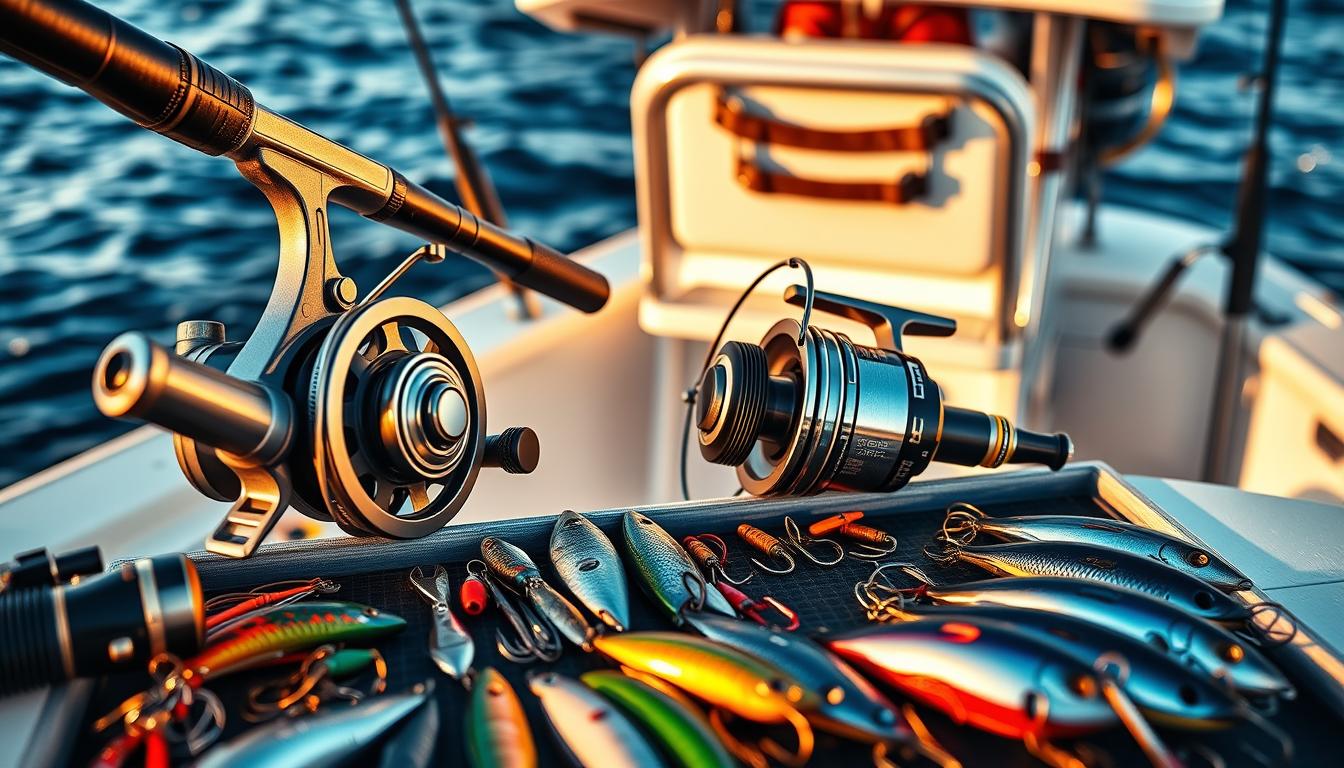
I love the science behind it. A rod like the Colton Leviathan is more than a stick. It helps turn your strength into the fly’s movement. A reel like the Redington Grande is actually a complex system, not just fishing gear.
Switching to modern spinning setups isn’t a betrayal. It’s a step forward. It shows that old heavy tackles are now outdated.
The key is to see your gear as one unit. A weak spot in the line is a failure of the whole system. I check every connection because the sea is tough. It doesn’t give refunds.
This way of thinking works in many areas, not just fishing. Whether it’s adjusting a fly reel’s drag or mastering jigging gear, it’s about creating a strong system for long battles.
Live Bait Rigging
Imagine live bait rigging as a calm, patient art form. But Gulf chum slicks are a different story. It’s like a battle, where bycatch is the currency and excitement is the interest.
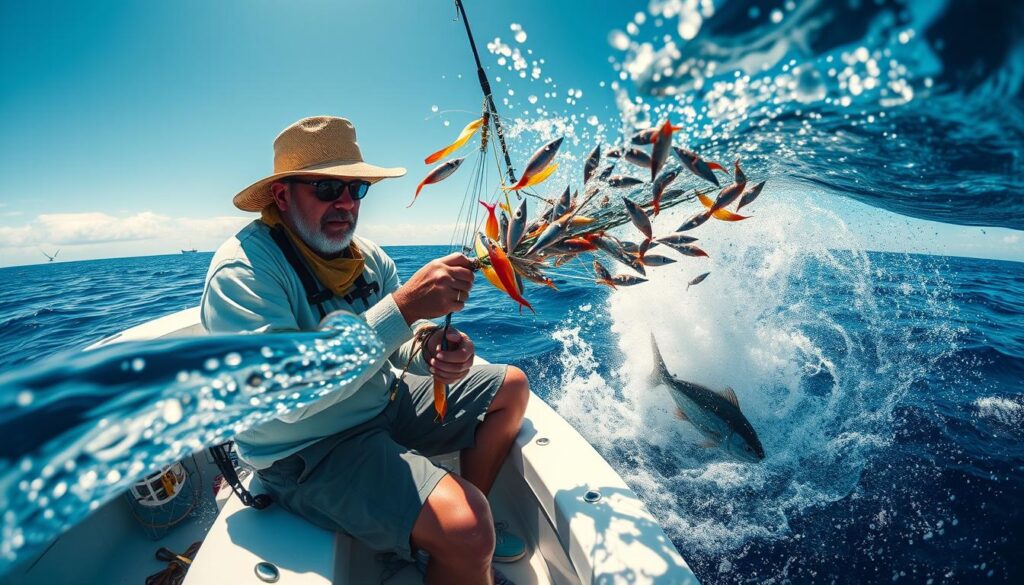
Picture Venice, Louisiana. The air is filled with diesel and hope. You’re not just fishing; you’re trading for bycatch from a shrimper. This bycatch is not trash; it’s a marine life snapshot.
You create a food chain off your boat. The goal is to make a big, loud dinner party. Blackfin tuna come first, like fans at a game. They’re the troublemakers.
Then, you look for the yellowfin tuna. They’re the VIPs, watching from the sidelines. They wait for the perfect moment to join the party.
The setup is simple but effective. Custom J&M rods and Shimano Tiagras are the base. An 80lb braid backing and a 100lb Seaguar fluorocarbon top shot are key.
Fluorocarbon is chosen for its invisibility in the slick. It’s like an invisible leash. A Mustad 6/0 circle hook is used for a strong hook set.
Baits swim on the surface, 2 to 20 feet away. They’re frantic, making it hard for predators to resist. This is the point of the setup.
The chum line’s steady stream keeps the party going. Your live bait is the main attraction. You choose bigger baits for the yellowfin.
Refined live baiting techniques are key. It’s not just sitting back. You’re controlling the chaos you’ve created.
| Chum / Bait Type | Primary Target | Aggression Level | Strategic Purpose |
|---|---|---|---|
| Live Croaker | Yellowfin Tuna | High (Initiator) | Large, flashy movement to pull big fish up the slick |
| Chunked Menhaden | Blackfin Tuna | Extreme (Frenzy) | Create the initial feeding mass and cover |
| Live Blue Crab | Large Yellowfin | Calculated | High-value, natural forage that tempts wary giants |
| Cut Flounder | Mixed School | Moderate (Scent) | Oil-rich scent trail that holds the school in place |
Knowing the hierarchy is key. Blackfin tuna create the frenzy, attracting yellowfin. It’s a primal dance.
Your task is to read the underwater structure of the frenzy. Find the calm water at the edge for the yellowfin.
When it works, you feel a big weight on the rod. It’s not just a bite; it’s a decision made by the fish. They’ve chosen to eat.
This rigging is about theater, not just tackle. The hook, line, and rod are the final act in a story started with shrimp boat scraps.
Blueprint for Multiple-Drift Passes
In offshore fishing, the single pass is for beginners. The multiple-drift method is for experts. My saltwater tactics focus on recognizing patterns, like playing chess on water. Each move should lead to the next.
Finding life is the first step. Whales and birds can lead you to big catches. Look for sand eels and halfbeaks to make tuna happy. Ignore sporadic butterfish feeds as they’re not reliable.
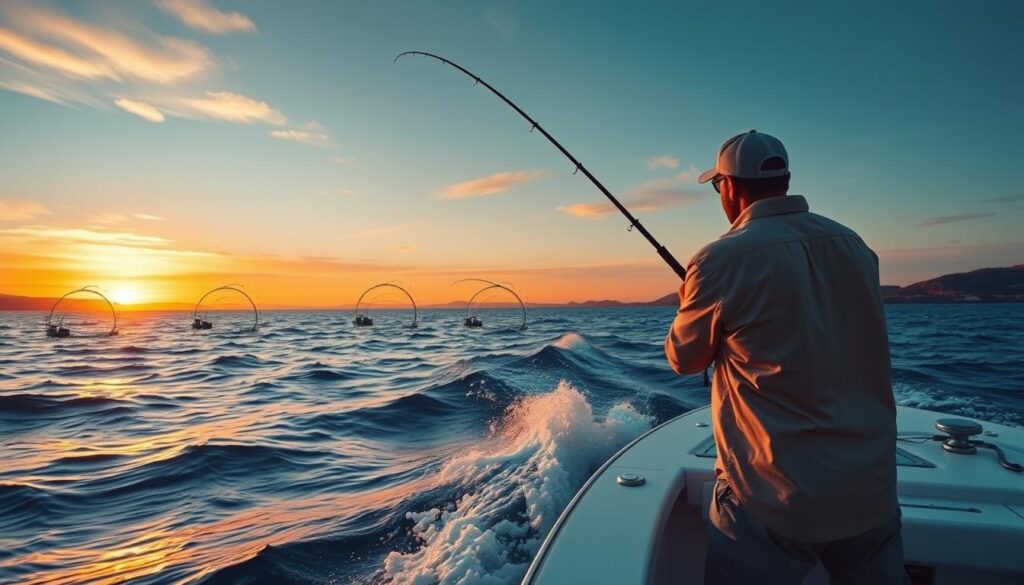
Water color tells more than temperature. Yellowfin like 70-degree blue water, but bluefin are different. They can be found in green water, unlike what most think.
Most anglers make one pass and guess. I use a drift line and repeat passes to gather data. This helps figure out where fish are and how they move.
The trolling fleet is a problem in fishing. They waste fuel and lines. Find your own spot and use your sounder wisely. It shows what’s below, not ahead.
| Aspect | Single-Pass Approach | Multiple-Drift Blueprint |
|---|---|---|
| Philosophy | Hope-based fishing | Data-driven strategy |
| Data Collection | Minimal (one observation) | Systematic (multiple data points) |
| Success Rate | Low, inconsistent | High, predictable over time |
| Fuel Efficiency | Poor (constant repositioning) | Excellent (planned drifts) |
| Learning Curve | Shallow (little to learn) | Steep (continuous improvement) |
The debate between fly casting and run-and-gun spinning is not the main issue. Both can fail if your approach is wrong. Fly casting needs stealth, while run-and-gun works on active fish. The key is your drift pattern.
The real reward is not just catching fish. It’s when you understand the ocean’s patterns. This turns fishing into a science.
Whales, birds, and systematic drifts find fish. Your plan turns chaos into opportunity. The ocean favors those who analyze, not gamble.
Strength Training for Big Game
Fishing for tuna in deep water is not just a hobby. It’s a lesson in physics, where the ocean teaches you through pain. Your Tuna Deepwater Performance is tested in real-time, not in gym workouts. The low rod angle acts as a lever, and your body as a counterweight.
It’s like playing chess with your muscles. The captain’s adjustments are your queen moves. Your focus is the board. When doubt hits, that’s check. Overcoming it is how you avoid losing.
Before the battle, gym work is key. Squats build strength for hours of fighting. Arm strength is needed for the reel cranks. As a guide on preparing for Panama’s big fish suggests, being consistent is more important than being a hero. Turn daily walks into training. Use a water jug for curls. Make your body strong and resilient.
When you catch the giant, the victory is quiet. It’s in the deep muscle ache from using your body right. It’s knowing your prep met the challenge. That’s the real reward of Tuna Deepwater Performance—a story of saltwater and soreness you’ll wear with pride for days.


