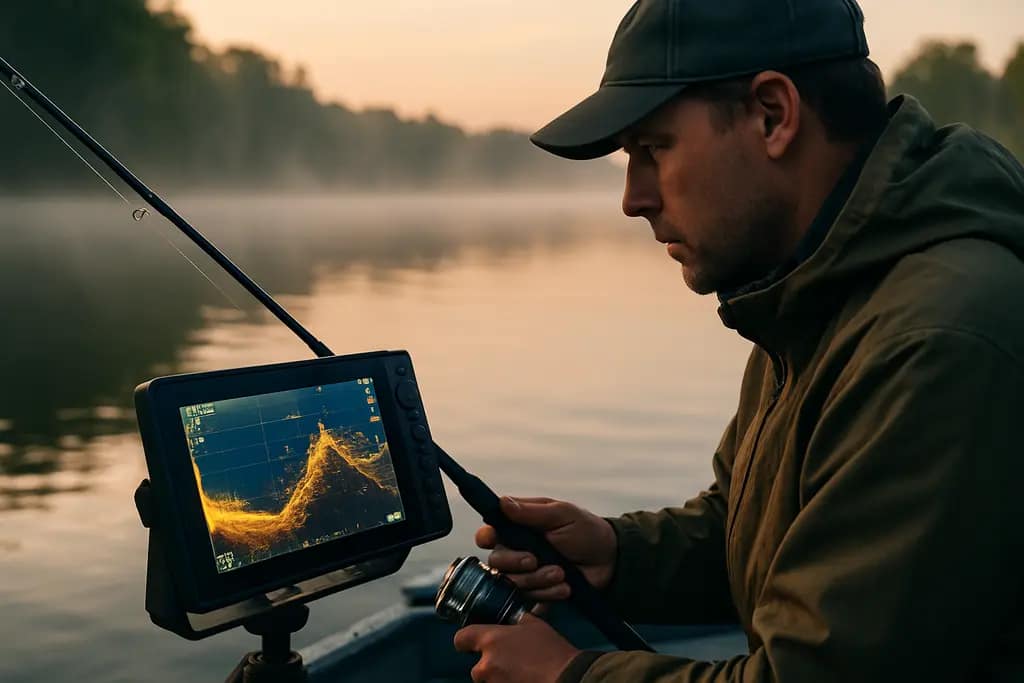

Live-imaging sonar has changed how many black bass anglers make decisions, but recent tournament research gives us a clear coaching cue: the screen is a tool, not a free pass. I treat it like a heart-rate monitor in training. It tells you what is happening, but you still need footwork, timing, strength, and judgment to perform under pressure.
The biggest lesson from recent black bass events is not “stare at the screen longer.” It is “choose the right water, confirm the right targets, and keep a Plan B ready.” A study published on September 2, 2026 analyzed eight Major League Fishing tournaments from 2025 and found that anglers using this technology caught more bass, especially in deeper lake settings with less structure, but the average weight of bass did not significantly exceed catches made without it black bass sonar study. That is a huge distinction for tournament anglers chasing both bites and quality.
Live-Imaging Sonar Starts With Water Type
The first adjustment is environmental, not electronic. Before I even think about bait choice, I ask three questions: Is this a lake or a moving-water fishery? How deep is the productive zone? How much cover blocks clean target reading? The 2026 multifishery analysis reported stronger catch benefits in lentic waters, deeper zones, and areas with lower structural complexity. In plain boat-ramp language, open-water bass in deeper lakes are easier to track and target than bass tucked into brush, docks, grass, or tight current seams.
Match The Screen To The Habitat
If the lake has open basins, long points, saddles, humps, or suspended bait, the forward view earns practice time. Your cast angle, trolling-motor pace, and bait fall rate all become performance variables. If the lake is shallow and cover-rich, do not force the screen to solve a cover-fishing problem. Flip, pitch, skip, crank, or work visible edges with the same focus you would use in a no-tech division.
That is where anglers get burned. They try to turn every fishery into an open-water video session. Bass do not care what electronics are bolted to the bow. They respond to depth, forage, light, cover, current, and pressure. Your strategy should start with those factors, then decide whether the forward view gives you a real advantage.
Map First, Then Confirm Targets
I like a “map first, target second” routine because it keeps the angler in charge. Study contour changes, likely travel routes, inside turns, hard-bottom transitions, and wind-facing features before pointing the transducer. That cuts wasted scanning time and gives every cast a reason. Think of it as pre-lift activation before a heavy squat: you are setting the body up before the main rep.
Study Fish Before Screens
Use mapping to narrow the playing field, then use live-imaging sonar to confirm whether fish or bait are present. If you see fish following but not eating, do not panic-cast ten different lures in five minutes. Track the reaction. Did the fish rise, fall, fade, pin to bottom, or follow and stop? Those screen reactions are clues, and they should guide bait speed, angle, profile, and depth.
For a deeper look at reading on-screen reactions without turning into a statue on the bow, the site’s piece on real-time fish feedback fits this exact skill set. The key is to interpret behavior quickly, then make a clean adjustment. Slow decision-making is just as costly on a bass boat as it is in a final sprint.
Live-Imaging Sonar Decision Drill
Here is one practice drill I use with tournament anglers. Pick one offshore feature and give yourself 12 minutes. Spend the first three minutes scanning from distance, the next three identifying fish position, the next four making only high-percentage casts, and the final two writing a quick note: depth, angle, fish response, and bait result. Then leave. This builds discipline and prevents the “one more cast at ghosts” problem that eats tournament mornings.
Build A Tournament Clock For Sonar Time
Recent rule changes have pushed anglers to think like coaches managing substitutions. The 2026 Bassmaster Elite schedule included nine regular-season events, with forward-facing sonar allowed in five and disallowed in four, according to a report on the new season limits sonar limits report. That split format rewards anglers who can shift between modern electronics and classic fish-finding skills without losing rhythm.
Early Period Versus Late Period
If a tournament format restricts forward-facing use by time block, make the choice before takeoff. Early use makes sense if your best area has roaming fish that feed in low light or if you need a fast limit. Saving a limited live-imaging sonar window can make sense if wind, sun angle, or boat traffic will push fish deeper later. The wrong move is deciding from emotion after a slow first hour.
Build a simple clock. Assign your first window to high-confidence structure, your middle window to adjustment water, and your late window to either quality hunting or damage control. If the fishery is shallow and visual, your best move may be to fish without the screen early, then use electronics only after the easy cover bite fades.
Body Mechanics For Better Screen Reads
Screen skill is physical. Long hours on the bow tax calves, hips, lower back, neck, and casting shoulder. A tired angler oversteers the trolling motor, rushes casts, and loses bait control. Train for balance the same way you train casting accuracy. Single-leg stands, hip mobility, band pull-aparts, and light rotational core work all carry over to boat control and repeated casting.
On the water, set your stance before scanning. Keep knees soft, shoulders relaxed, and rod tip ready. If you are constantly twisting from a stiff lower back, your cast angle suffers. Tournament electronics are not only about eyes; they demand stable feet and calm hands.
Keep Non-Sonar Skills Sharp
The study result that should calm every old-school angler is this: more bass caught with the technology did not mean heavier bass on average. That leaves plenty of room for anglers who can read shade, wind, shoreline targets, grass edges, docks, drains, and current breaks. In tournaments with no forward view allowed, those skills move from backup plan to main weapon.
Cover Fishing Reps
Run weekly practice blocks where screens are off or covered. Pick one shallow pattern and commit. The goal is not nostalgia. The goal is to keep your instincts sharp enough to compete under any rule set.
- Visual reading: Identify the best cast on a dock, laydown, grass point, or riprap stretch before picking up the rod.
- Angle control: Make three different presentations to the same target: parallel, 45 degrees, and straight in.
- Bait discipline: Choose one bottom bait, one moving bait, and one vertical or slow-fall bait for the session.
- Pressure notes: Record how fish react after boat traffic, sun change, wind shift, or repeated casts.
This is where competitive confidence comes from. You do not want your season riding on one tool. You want a full athletic skill set: power for long days, mobility for clean mechanics, and tactical range for changing rules.
Live-Imaging Sonar Practice Plan
A strong practice week should blend electronics work, no-screen reps, and recovery. Day one can be map study and offshore scanning. Day two can be shallow cover with the forward view off. Day three can be a mixed session where you start without electronics, then verify your assumptions. That teaches you whether your eyes, map reading, and fish behavior calls are matching what the screen later shows.
After each trip, grade three items only: water selection, target confirmation, and adjustment speed. Did you choose the right habitat for the tool? Did the fish you saw match the bite you expected? Did you change bait, angle, or location quickly enough? Keep the review short and honest. Tournament growth comes from repeatable feedback, not from a 40-page diary nobody reads.
The best anglers I know do not worship electronics or reject them. They train with them, train without them, and understand why each approach works. Use live-imaging sonar where research and tournament lessons say it helps most: deeper lake water, cleaner target zones, and situations where fish position can be confirmed before the cast. Then keep your hands ready for docks, grass, wood, rock, and every no-screen hour that still decides checks.


