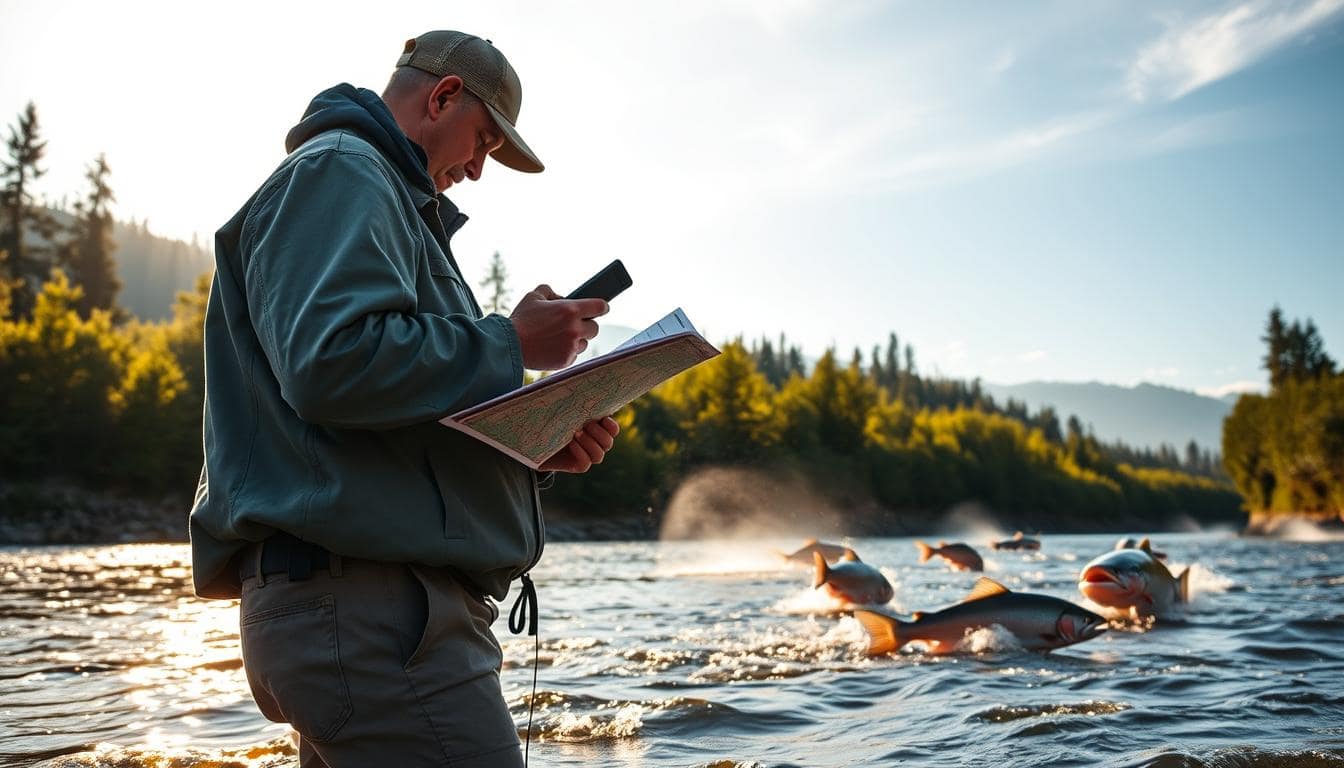

Imagine the ocean’s biggest heist. The target is a fast, silver fish with a small brain but a sharp sense of direction. Tracking these fish is like solving a puzzle that mixes weather, water, and nature’s whispers.
Anglers today have tools that would impress even spies. We use sonar to find the perfect spot where warm and cold waters meet. But, for years, people along rivers like the Yukon have used the wind and plants to predict when fish will come.
Our biggest challenge is combining all this information. When should we fish at 80 feet or 150? The answer comes from analyzing everything from satellite data to bird behavior. For more on this, check out our guide to finding king salmon.
Drift and Deep Rigs
The art of upstream fishing starts with a calculator and a depth chart. It’s about fighting water pressure and the current’s push. Upstream techniques turn into real physics here.
In Michigan’s deep waters, anglers use tungsten to target fish. Downriggers send lures to the 70-80 foot thermocline. For deeper fishing, “low divers” are used, reaching 150 feet or more.
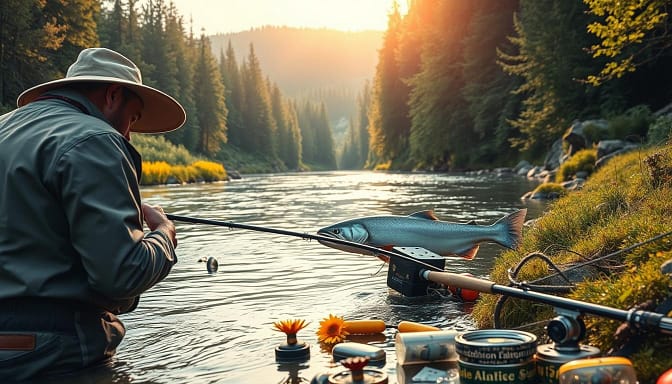
Puget Sound has its own tricks. The Deep Six diver uses water pressure to dive deeper as you troll. Weighted mooching sinkers are used for shallower fishing.
Mooching is a unique upstream technique. It’s about suggesting to fish, not dragging bait. A cut-plug wafts downstream, mimicking a wounded snack.
Knowing which rig to use is key. Is it a drift fishing setup or a mooch? Your electronics, like sonar, will guide you. The salmon will decide which insult is more believable.
Rod Handling for Resistance Fighters
Drift fishing teaches you to be patient, but when a king salmon bites, that patience turns into a big challenge. It’s like switching from a calm game to a wild fight. The rules change fast.
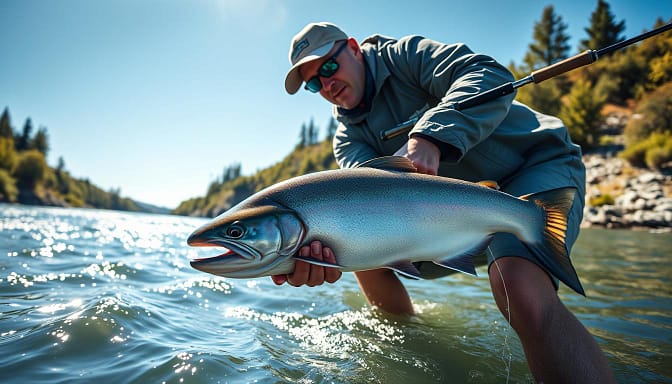
The gear you use is like your team. On the Great Lakes, a 9-foot St. Croix Encore rod and a Daiwa Saltist 50 reel are key. The rod supports heavy leadcore, and the reel’s drag helps when things get tough.
In drift fishing, your rod is like a sensitive antenna. You keep a 45-degree line angle, feeling for bites. But, don’t set the hook right away. Let the fish fully commit. This shows you’re a pro.
This drift fishing patience is your first move. But when the fish bites hard, your patience is tested. The Saltist reel’s drag helps control the fish. You’re not just holding a rod; you’re managing a big fight.
Switching from drift fishing to fighting is quick. Your method changes from gentle to strong. Pump and reel, keep the rod high, and clear other lines. It’s chaotic, beautiful, and very demanding. This is how you catch that huge Lake Michigan salmon.
| Aspect | Drift Fishing Phase | Fight Phase |
|---|---|---|
| Rod Angle | 45-degree line angle for sensitivity | High angle for maximum leverage |
| Drag Setting | Light to moderate for bite detection | Firm but smooth to control runs |
| Angler Action | Restraint, delayed hook set | Aggressive pumping and reeling |
| Mental Focus | Patient detection of subtle bites | Crisis management of powerful runs |
| Primary Goal | Allow fish to fully commit to bait | Apply sustained pressure to tire fish |
Remember, the fish can swim against strong currents. Your job is to stop it. The rod and reel are your tools. Master both the patience of drift fishing and the strength needed for the fight.
When the drag screams, forget gentle ways. This is a battle of physics and nature. Your drift fishing skills are the base, but the fight needs quick thinking. Stay calm, apply pressure wisely, and every pump brings you closer to winning.
Training for Endurance Sessions
Endurance for king salmon anglers is unique. It’s not about gym reps. It’s about the long hours spent waiting for a bite.
Imagine a Yukon River fisher. He knows the water and waits for the right moment. But then, a rule change comes. He faces a battle of time and rules.
Your training is about staying sharp even when tired. It’s about mastering skills like casting in a strong wind. VR training helps you stay calm under pressure.
The king salmon teaches you to find joy in the little things. Like when a big fish takes your line. The real reward is the moment your patience and skill meet a screaming reel.


