
Imagine stepping into a boxing ring against a heavyweight champion. Now replace the gloves with fishing rods and the champion with 150 pounds of pure, silver fury. That’s your average Tuesday when you’re chasing tarpon.
This isn’t gentle angling. It’s a full-contact sport that demands more than luck. You need the right mindset and equipment. Think of it as mixed martial arts for the middle-aged adventurer.
Your body becomes the most critical piece of gear. Captain David Cohen trains relentlessly, knowing that skipping the gym affects his performance on 12-hour guide days. At 68, Jack Garnett spends eight months conditioning just to survive four months of kayak warfare.
This physical prep is what separates spectators from participants. Your stamina becomes your drag system. Your strength determines your hookset.
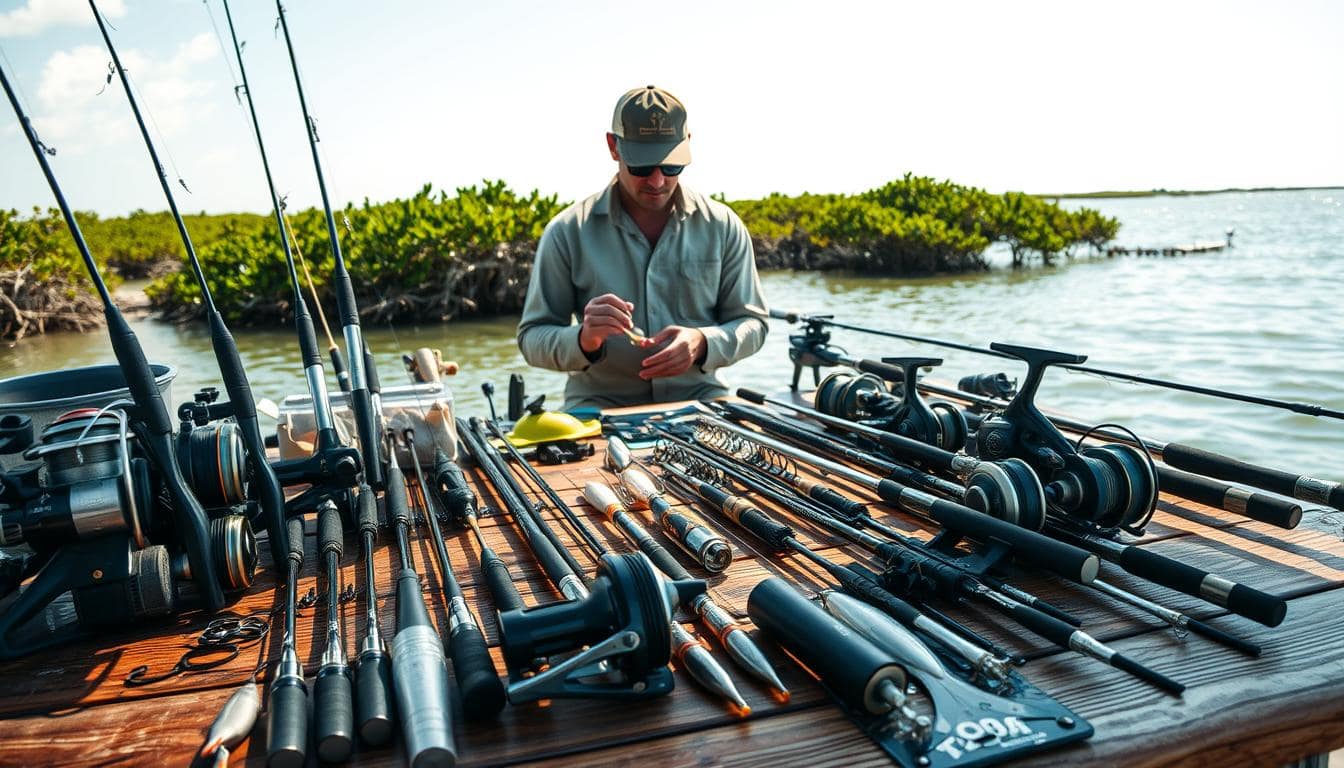
On the equipment front, precision matters. Cohen uses 6/0 Trokar TK4 circle hooks like surgical instruments. His 24-foot fluorocarbon leaders act as shock absorbers for explosive strikes.
The right rod isn’t just for casting. It’s your lever against chaos. Experts recommend an 8-foot heavy-power rod paired with a reel holding 250 yards of 50lb braid.
Forget beach-ready. You need to be fight-ready. The water doesn’t care about your excuses.
Jump Management
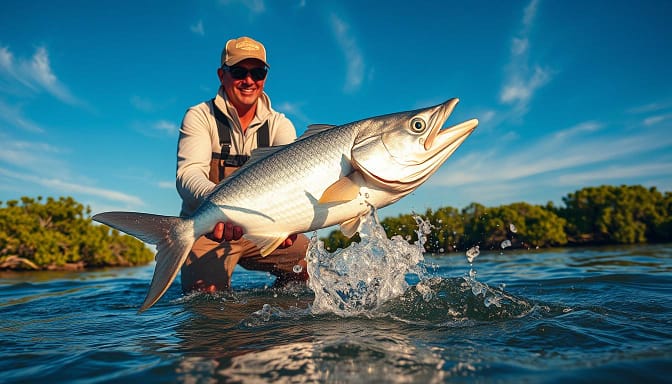
Dealing with a jumping tarpon is like trying to tame a flying freight train. It’s where Tarpon Fight Strategies show who’s a pro and who’s just a tourist. The fish is not just showing off; it’s trying to break your tackle and shake your confidence.
When the tarpon jumps out of the water, don’t try to hold it back. Sandy Cohen says, “If you can pull against a fish, your drag is too tight.” A tight drag is like hitting the emergency brake on a rollercoaster. It’s bound to break your line.
Instead, you need to act like a shock absorber. Cohen suggests using a loose drag and keeping your finger on the spool. This way, you can feel every move the fish makes. It’s not about letting it go; it’s about controlling the fight.
The fight’s angle is key. Cohen warns against letting the fish get behind you. Imagine a dog on a leash shaking its head. The force goes up the line, making it harder to control.
Move aggressively to flank the fish. Use your trolling motor to stay beside or just behind it. This keeps the line tight and reduces the fish’s power.
This positioning also helps your long leader. It stretches to absorb the fish’s energy, making it harder for it to shake off.
Here’s a look at common mistakes and how to avoid them:
| Common Mistake | The Consequence | Proper Technique |
|---|---|---|
| Locking the drag when the fish jumps | Creates maximum tension at the hook point, leading to a pulled hook or broken line. | Palm the spool with a finger to maintain feel and modulate pressure, using a drag set to 20-25% of your line’s breaking strength. |
| Letting the fish get directly behind the boat | Eliminates any shock absorption, translating every head shake directly to the hook. | Aggressively chase with the trolling motor to maintain a side or quartering angle on the fish. |
| Using a stiff, fast-action rod | Transfers all the shock directly to the line, giving no forgiveness. | Employ a rod with a parabolic bend and a long, soft tip to act as a secondary shock absorber. |
| Fighting from a stationary position | Allows the fish to control the geometry and leverage of the fight. | Never stop moving the boat. “You never want to fight from behind.” Always pursue to control angles. |
The goal in the aerial phase is to survive, not to win. You’re playing defense. Each jump you manage is a victory in a long fight. The fish wants to knock you out early; you need to stay strong and wait for your chance.
This is just part of a bigger plan. For more on catching tarpon, check out our complete guide. Learning these Tarpon Fight Strategies turns the jump into a manageable part of the fight.
Power Casting Drills
Think of your cast as a job interview with a tough CEO. Tarpon are like the top bosses in the shallow waters. They’re picky and quick to reject bad offers. Your power casting is about making a deal they can’t refuse.
This is where Tarpon Fight Strategies start, before the first jump. An 8-foot rod is your key to enter their world. It lets you cast far and present your offer quietly.
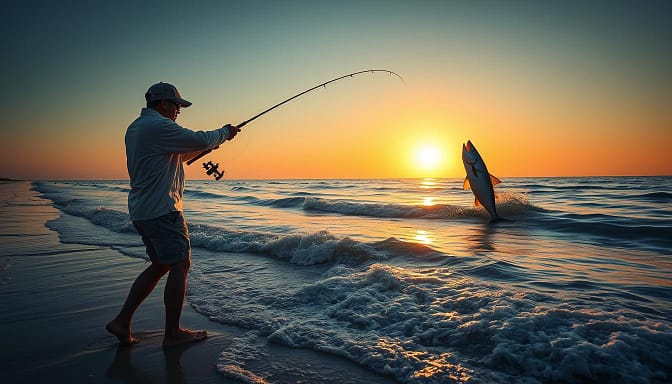
Jack Garnett is a master. He doesn’t just cast anywhere. He uses binoculars to spot fish from far away. His kayak helps him sneak up for the perfect cast.
Garnett’s bait work is all about finesse. He snatches a pogy with a gentle jerk. He wants the bait to look natural, not scared. A healthy baitfish is more appealing to tarpon.
Accuracy is more important than strength. It’s like serving a subpoena or having a clown do it. For more on the fight, check out tangling with tarpon.
Mark Cohen uses a 7-rod spread. He presents many offers at once. Even if one is ignored, the others might not be.
Your drill has two parts: watching and doing. Practice spotting water movements and casting far without scaring fish. Most people fail because they’re too aggressive. For better stamina, try athlete-inspired warm-ups.
Advanced Tarpon Fight Strategies focus on the first cast. The fight is won or lost there. Make your first impression strong, and you’ll win them over. A weak cast means they’ll ignore you.
Recovery & Endurance Tips
The jump was just the start. Now, your lower back is the main character in a three-hour show. Recovery in a tarpon fight isn’t about resting. It’s about managing pressure to deny the fish its recovery.
Captain Nicky Cohen’s strategy is a lesson in endurance. He uses the trolling motor to keep constant pressure. This lets the angler recover while the boat does the work, a key part of Tarpon Fight Strategies.
From a kayak, as anglers like Garnett say, endurance changes. You become the kayak’s engine, balance, and shock absorber. Fighting a fish from a kayak is a tough dance of strength. Your gym work pays off in this moment.
True endurance is staying sharp when adrenaline drops. It’s about quick reflexes, learned through dryland drills. The best strategies focus on steady, consistent pressure. Win the fight with small, steady moves, not just the big jump.


