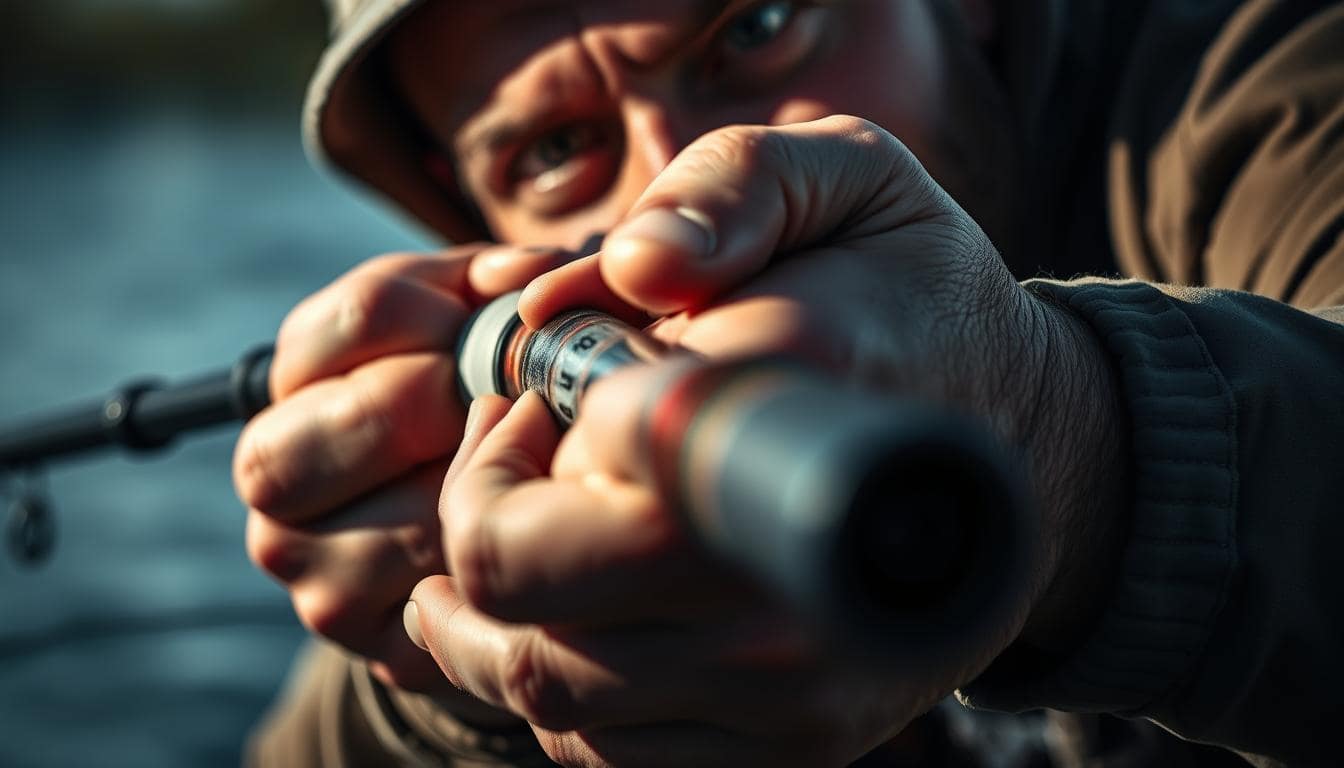

Ever had that moment when a fish strikes and your brain goes full Matrix while your hands remain firmly in reality? We’ve all been there, staring at Instagram hero shots while our own reflexes betray us.
It’s not about having cat-like reflexes generally. It’s about having the right reflexes for the specific scenario. Going from muscle-memory saltwater hooksets to delicate trout presentations requires completely rewiring your neural pathways.
Think of it like using your college football tackling form during a ballet performance. The wrong reaction time at the wrong moment turns a great catch into another “the one that got away” story.
True fishing success isn’t about speed alone. It’s about developing context-specific reflexes that separate the heroes from the zeros on the water.
Dryland Reaction Drills
Ever tried to parallel park a semi-truck after years of driving a Mini Cooper? That’s what switching rod weights feels like. Muscle memory doesn’t transfer – it requires complete neural reprogramming.
Your living room becomes a reflex laboratory. These dryland drills build the neurological architecture that makes on-water performance automatic. No water required.
Visual cue recognition games separate amateurs from pros. Try this: have a partner flash colored cards while you practice casting motions. Red means power cast, blue means delicate presentation. It’s Top Gun for anglers.
Timing and force application matter more than brute strength. The difference between setting hooks on musky versus cutthroats is like the difference between a sledgehammer and a watchmaker’s tool.
Three essential dryland drills for building better reflexes:
- Mirror Reaction Training: Practice casting motions while watching yourself correct form in real-time
- Auditory Trigger Drills: Use sound cues to practice hook sets at varying intensities
- Blind Equipment Familiarization: Handle different rods behind your back to develop tactile sensitivity
These exercises create neural pathways that fire automatically when fish strike. The best anglers aren’t thinking – they’re reacting. Their responses become as natural as breathing.
Consistency transforms these drills into second nature. Just like swimmers use dryland exercises to build muscle memory out of water, anglers can build fishing reflexes anywhere. Your reactions will become so ingrained you’ll set hooks in your sleep.
The goal isn’t just repetition – it’s smart repetition. Quality over quantity always wins. Fifteen minutes of focused dryland work beats hours of mindless practice.
These neurological drills create the foundation for everything that happens on water. They’re the secret weapon that turns frustration into mastery.
On-the-Water Reaction Training
Dryland drills are like rehearsing Shakespeare in your basement – helpful, but nothing prepares you for the live audience throwing tomatoes. The water is where your reflexes face their final exam, and the fish are brutally honest graders.
I learned this the hard way after countless “almost” moments. My technique was all force, no finesse – trying to ram hooks home like a politician pushing unpopular legislation. The breakthrough came when I shifted from power to precision, treating each strike like a delicate negotiation.
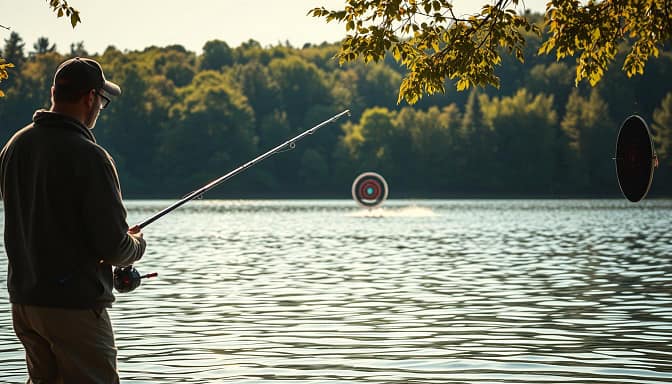
Real-world fishing conditions never play fair. Wind messes with your line. Currents drag your presentation. That trophy fish strikes when you’re distracted by a buzzing fly or tangled in yesterday’s poor decisions. This chaos is exactly why on-water training matters.
Create deliberate practice scenarios that mimic actual fishing pressure:
- Practice with crosswinds that would ground lesser anglers
- Use lighter tackle than necessary to heighten sensitivity
- Fish during changing light conditions when visibility challenges your reactions
The goal isn’t perfection – it’s developing reflexes that work when everything goes wrong. That subtle tap on your line? That’s not a nuisance, it’s a test. That sudden surface boil? That’s your final exam happening right now.
Transitioning from frustration to flow state happens when you stop fighting the conditions and start working with them. Your equipment, the weather, the fish’s mood – they’re all partners in this dance, not opponents. When your reflexes sync with this reality, that’s when missed opportunities become successful hooksets.
Remember: nobody ever caught fish by practicing in perfect conditions. The magic happens when you embrace the beautiful chaos of actual fishing.
Improving Hand-Eye Coordination
Ever watch a great angler work and wonder if they’ve got some supernatural connection to the fish? Spoiler alert: they don’t. They have hand-eye coordination so refined it makes a concert violinist look clumsy. It’s not about catching footballs. It’s about creating a neural superhighway between your eyes, brain, and hands.
When I switched from conventional to fly fishing, I had to completely rewire my approach. My left brain – the analytical, overthinking part – was getting in the way. The breakthrough came when I stopped thinking and started feeling. My wrist and forearm began doing the work instead of my shoulder, creating fluid motions that actually connected with the water.
This neuromuscular coordination separates adequate anglers from exceptional ones. It’s the difference between reacting to a strike and anticipating one. Your hands learn to interpret what your eyes see and what the line feels faster than your conscious mind can process.
Want to develop this seamless connection? Start with these drills:
- Visual tracking exercises: Follow a moving object with your eyes while maintaining perfect rod position
- Kinesthetic awareness drills: Practice casts blindfolded to heighten your sense of position and movement
- Reaction training: Use unpredictable stimuli to sharpen your response time
These hand-eye coordination drills work because they force your brain to create new neural pathways. You’re not just building muscle memory – you’re building intelligence in your fingertips.
The real magic happens when complex actions become effortless. When that fish strikes, you shouldn’t be thinking about mechanics. You should be executing with the grace of a concert pianist and the precision of a neurosurgeon. That’s the level of fishing performance that separates the casual weekend angler from the artist.
This isn’t about being faster. It’s about being more appropriate. Your hands learning to interpret subtle changes in line tension. Your eyes tracking multiple variables simultaneously. Your brain processing it all without conscious thought.
That’s the coordination breakthrough that transforms adequate into exceptional. That’s the kind of fishing performance that makes people wonder if you’ve got some supernatural connection to the water.
Integrating with Practice
Ever tried teaching a goldfish quantum physics? That’s what sporadic reaction training feels like. True reaction time enhancement needs more than occasional drills. It’s about making reflexes a part of your fishing until they become second nature.
My week-long trout immersion showed this change doesn’t happen fast. Learning a new language or chess shows us that. You’re not just practicing reflexes; you’re rebuilding your angling nervous system.
Make practice sessions like a video game. Start with easy strikes in calm waters. Then, add challenges like changing currents and unexpected rises. This keeps your skills growing and your responses adaptable.
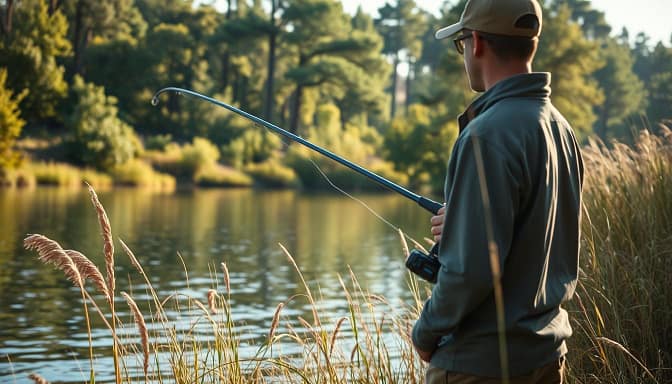
The magic happens when you do things without thinking. You’ll stop thinking about rod positioning and react to surface changes. Your hands will move before you even think about it. That’s the sweet spot of reaction time enhancement.
| Practice Phase | Focus Area | Complexity Level | Expected Outcome |
|---|---|---|---|
| Foundation Building | Basic strike recognition | Low (calm waters) | Consistent hooksets |
| Variable Introduction | Current changes & rise patterns | Medium (moving water) | Adaptable timing |
| Advanced Integration | Multiple simultaneous cues | High (complex conditions) | Automatic response execution |
Do reflex drills between casts. Practice false casting with sudden changes. Drop your fly and recover fast. These small drills add up to big improvements without feeling like extra work.
The goal is to make reaction time enhancement so natural you forget you’re practicing. When your reflexes are faster than your thoughts, you’ve reached fishing nirvana. It’s where practice and performance blend together seamlessly.
Tracking Progress
Measuring milliseconds can feel like moving through molasses. If you only count fish caught, you’re missing the point. It’s like a politician dodging a question.
Effective progress tracking looks beyond the obvious. It’s about noticing subtle shifts. Like when your hand moves before you even think about it. That’s where real reaction time enhancement happens.
I learned this the hard way. After missing strike after strike, I realized the fish weren’t the problem. My measurement system was flawed. True reflex development shows up in the spaces between outcomes.
Here’s how to track what actually matters:
- The decreasing gap between stimulus and response
- Improved recovery from unexpected events
- Consistent performance under fatigue
- Reduced hesitation in decision-making
Quantitative measures have their place, but qualitative observations often tell a richer story. That moment when you automatically adjust to a sudden current shift? That’s progress no stopwatch can capture.
Establishing baselines is key. Time yourself on simple drills weekly. Note how often you’re surprised versus prepared. Track your anticipation accuracy.
| Metric Type | What to Measure | Improvement Signs | Tracking Frequency |
|---|---|---|---|
| Quantitative | Drill completion time | Consistent 5-10% reduction | Weekly |
| Qualitative | Decision confidence | Fewer hesitation moments | Each session |
| Performance | Error recovery speed | Faster adjustment time | Monthly |
| Cognitive | Anticipation accuracy | More correct predictions | Bi-weekly |
Progress isn’t linear – expect plateaus and occasional regression. The breakthrough often comes after what feels like failure. I spent weeks feeling slower before suddenly realizing I was processing information differently.
For those seeking deeper reaction time enhancement strategies, remember that the best metrics often measure what you almost did wrong but caught in time. Those micro-corrections represent the real wins in reflex development.
Set realistic targets. Aim for consistent small improvements. Celebrate the milliseconds saved and the opportunities capitalized, not just the obvious outcomes. That’s where true performance metrics reveal themselves.
Conclusion
So, here’s the final take: becoming fast with your reflexes isn’t about being a superhero angler. It’s about being ready for the right moment. That moment when a trout bites and your hand acts before you even think.
The Redington Butter Stick showed us how our reflexes are tied to our gear. Your journey to faster reflexes is about finding what works for you. It’s about making your gear fit you, not the other way around.
Science agrees. A study on athletic performance found that visual training can cut reaction times by almost 11%. This is the difference between missing a chance and landing a fish perfectly. This principle helps whether you’re dealing with a trout or a bass.
Getting better at reflexes isn’t just about catching more fish. It’s about enjoying the sport more. There’s nothing like the thrill of a move well done, thanks to skill, not luck. Your excuses won’t stand up to reflexes this sharp.


