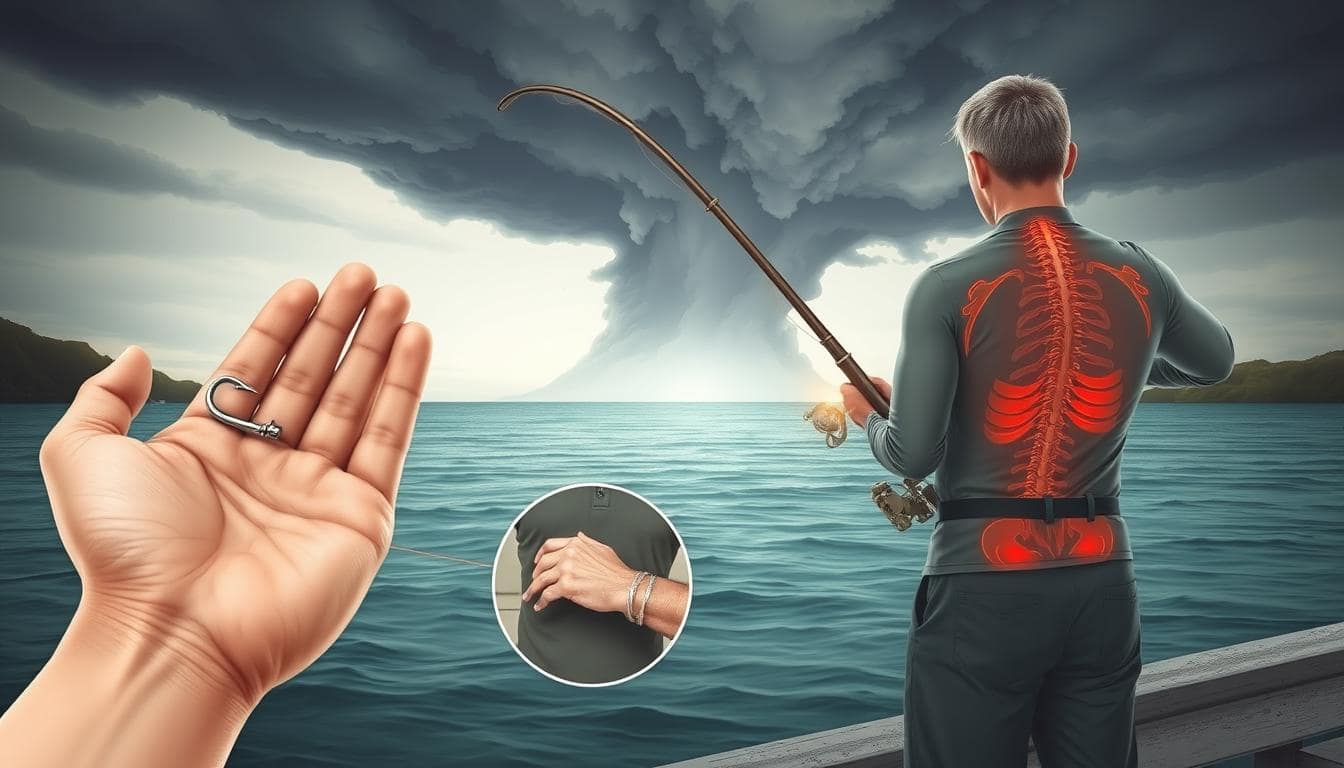

Fishing seems calm until you realize it’s a test on your body. I’ve seen more damage than a tackle box after a storm.
Rotator cuff issues make raising your arm hard, like reeling in a whale. Tennis elbow has nothing to do with tennis, unless you’re using your fishing rod.
Shoulder pain from casting, wrist strain from fighting fish, and back problems are common. Sharp surprises like hooks and knives can turn fingers into sushi.
But, the good news is most injuries are preventable. With smart injury prevention strategies, you can avoid these problems. It’s like fishing-related injuries prevention and management meets common sense, leading to better results than your last fishing trip.
Warm-Up & Stretching
Your fishing rods get more care than your body. It’s a big problem in your biomechanics. We’re talking about simple steps to keep you moving tomorrow.
Stretching is like a political strategy. You’re working with muscles and tendons. It’s essential to keep your body working right.
Start with your back. It takes a lot of abuse. Here are five key stretches for your back:
- Knee to Chest Stretch: A classic move against tight hips
- Lower Trunk Rotation: A way to keep your spine happy
- Cat/Cow Stretch:
A balance for your spine - Trunk Stretch: Good for tricky movements
- Cobra Stretch: Helps with hunching
Shoulders are key for casting. They have many parts and need care. Here are some stretches for your shoulders:
- Scapular Retraction: Keeps your shoulder blades in line
- Shoulder Shrugs: Simple muscle management
- Shoulder Rows with Rope: Strengthens without strain
- Resisted Diagonal Patterns: Prepares for tough fishing angles
- Resisted Rotation: Gets you ready for casting
- Dips: Helps with balance
Think of stretches as your body’s balance system. They stop any muscle from getting too strong. Your future self will be grateful.
Setting Up an Ergonomic Boat
Turning your fishing boat into a comfortable place needs careful planning. Think of it as a mobile office where you can work without pain. It’s all about fishing ergonomics.
Keep your body straight and things close to you. Arrange your gear so it’s easy to reach without straining. Your fishing spot should help you, not hurt you.
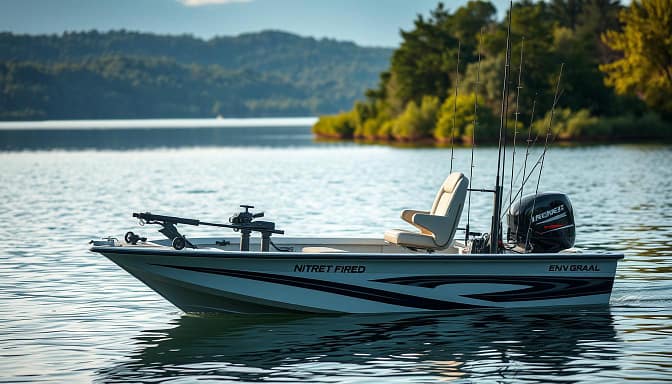
- Center of gravity matters: Keep heavy items at your waist level to avoid bending
- Create clear pathways: Make sure you can move around easily without needing to jump
- Anchor your stance: Use non-slip surfaces and handholds to stay stable
- Zone your equipment: Put things you use often in easy-to-reach spots
Pay special attention to your seating and standing. Make sure chairs and leaning posts support your back. If you’re standing a lot, use anti-fatigue mats. These small changes can make a big difference in fishing ergonomics.
When placing equipment, remember: if it’s hard to reach, it’s in the wrong spot. Rod holders, tackle boxes, and electronics should be easy to access. Move things in a way that feels natural, avoiding awkward positions.
For more tips on creating a great fishing environment, check out our guide on ergonomics on a boat. It makes complex ideas easy to apply to fishing.
The key to fishing ergonomics is to make your experience better, not worse. Use your core when lifting heavy things. And don’t be afraid to ask for help with heavy loads.
Good fishing ergonomics is about being able to enjoy your time on the water. A well-designed boat lets you focus on fishing, not pain. It’s the difference between looking forward to the next trip or needing pain relief.
Make changes slowly. Start with the areas that bother you the most. Your body will tell you what works and what doesn’t. Aim for gradual improvement, not perfection, for pain-free fishing.
Best Practices for Repetitive Motion
Ever notice how your fishing rod feels lighter in the morning? It’s not just the beer. It’s your body’s way of saying, “Hey, slow down!” Smart anglers know that injury prevention is about fishing smarter, not harder.
Think of your body like a friend who’s great in small doses but gets annoying after too long. The fix isn’t to avoid them. It’s to take breaks.
Here’s a hard truth: perfect casting form doesn’t matter if you do it non-stop. The secret to injury prevention isn’t stronger muscles. It’s knowing when to pause.
The Break-Time Revolution
Rest breaks aren’t weak. They’re strategic pauses. Studies show that taking 15 minutes of casting followed by 5 minutes of stretching can cut repetitive motion injury risk by 40%.
Your gear choices are more important than you think. That cheap rod might save money upfront but could cost you in physical therapy later. Ergonomic gear helps distribute force, protecting your joints.
| Grip Type | Force Distribution | Injury Risk | Best For |
|---|---|---|---|
| Power Grip | Even across palm | Low | Heavy lures, big fish |
| Pinch Grip | Concentrated on thumb/index | High | Precision casting |
| Modified Power | Palm with finger support | Medium | All-day fishing |
The power grip spreads the load evenly, like a well-organized team. The pinch grip, on the other hand, puts too much strain on your hands. They weren’t made to be martyrs.
The Alternation Advantage
Varying your motion is key. Try these strategies:
- Switch casting hands every 30 minutes (yes, even if you feel ridiculous)
- Alternate between overhead and sidearm casts
- Vary retrieval speeds and techniques
This isn’t just about injury prevention. It’s about beating fatigue. Your muscles adapt quickly, so keep them guessing.
Pros know that ergonomic optimization goes beyond gear. How you stand, pivot, and breathe during casting matters. These small adjustments can make a big difference.
Remember, your body keeps score, even when the fish don’t bite. Those twinges in your elbow or wrist? They’re your body’s way of saying, “Hey, slow down!” Listen before it’s too late.
Ultimately, managing repetitive motion is what separates weekend anglers from lifelong enthusiasts. The goal is to fish forever, not just for a few hours.
Handling Gear Safely
Fishing gear wasn’t made with safety in mind. It was created by people who thought it was easy to avoid accidents. But, your gear shouldn’t make you worry about getting hurt.
Think of your gloves as hand armor, not just fashion. They help keep your fingers safe from sharp objects and slippery fish. This is more important than looking cool.

Better gear means less strain on your hands. It’s all about physics. Good grip sizes and materials help avoid accidents.
Handling knives is like a horror movie. Move slowly and carefully. Never cut towards yourself, and remember, your fingers are not for testing.
Heavy gear follows simple rules. Lift with your legs, not your back. This keeps you stable and safe.
Here’s how to handle your gear safely:
| Gear Type | Safety Approach | Ergonomic Benefit | Risk Reduction |
|---|---|---|---|
| Fishing Knives | Controlled, deliberate cuts | Minimizes wrist deviation | 80% fewer “oops” moments |
| Heavy Tackle | Lift with legs, alternate hands | Reduces back strain | Prevents dropped gear incidents |
| Sharp Hooks | PPE gloves + focused attention | Improves grip security | Eliminates impalement risks |
| Slippery Fish | Enhanced friction gloves | Decreases hand force needed | Reduces slip-related injuries |
Even with the best technique, your hands need breaks. Do simple stretches to keep them flexible. This prevents stiffness and injuries.
Good gear and technique are key. They reduce pressure and effort. Your hands should not feel like they’ve been tortured.
Switching hands is smart, not just for show. It helps avoid overworking muscles. Your dominant hand will appreciate it.
Respect your gear to stay safe. Remember, a good fishing trip doesn’t end with a lost thumb.
Listening to Your Body
Your body has a language that’s honest, unlike any politician’s promise. The trick is to understand its warnings before they turn into big problems. Think of those twinges and aches as your own fishing ergonomics guide, telling you “don’t cast for three hours straight” or “you’re not 25 anymore, dummy.”
Persistent pain isn’t about being tough – it’s your body complaining. Numbness means your nerves are trying to get your attention. Swelling is like your body flashing hazard lights. Limited motion? That’s your joints going on strike.
When your body speaks this clearly, medical attention isn’t optional – it’s mandatory. These signals help you know when to push hard and when to seek help.
Your prevention playbook should include:
- Distribute force among fingers instead of death-gripping gear
- Move your feet instead of twisting your spine
- Limit repetition and duration like you’re rationing good whiskey
- Team up for heavy lifts – fishing isn’t a solo superhero movie
- Keep your body upright and load close like you’re hugging precious cargo
- Push/pull at mid-torso height – your shoulders aren’t construction cranes
- Tighten your stomach and exhale when lifting – core engagement isn’t just for gym bros
Temperature awareness matters too. Cold muscles behave like grumpy toddlers – unpredictable and prone to tantrums. Hot conditions turn your body into a drama queen about hydration.
Remember: good pain is a myth invented by people who later need physical therapy. Your body’s signals are the most honest feedback you’ll ever get. Learning this language might just keep you active and injury-free when others are sidelined.
Mastering fishing ergonomics means recognizing that your body’s complaints aren’t weaknesses – they’re data points. Smart anglers collect that data before it becomes a medical chart.
Conclusion
Fishing should be about the stories you tell, not the pain you feel. We’ve covered how to prevent injuries, from stretching to using the right gear. It’s all about making sure you can keep fishing for years to come.
Listen to your body now to avoid big problems later. Injury prevention is all about enjoying your time on the water. If pain persists, it might be time to see Dr. Tauro for help.
So, go out there and catch that big fish. And do it without worrying about getting hurt.


