
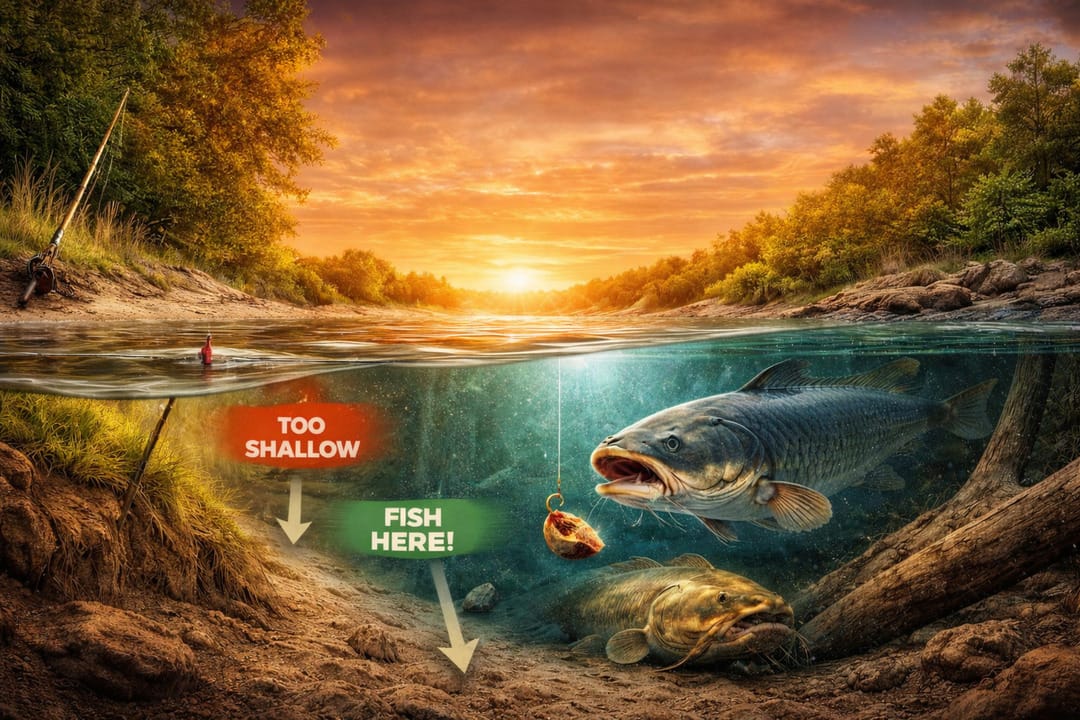

Every angler remembers the frustration of spending hours on the water without a single bite. I have experienced those days myself—perfect weather, good bait, and plenty of patience, yet the fishing rods remain motionless. Over time, I discovered that one mistake explains many unsuccessful catfish trips: Fishing in the wrong depth.
Catfish are not random wanderers in rivers and lakes. They follow predictable patterns related to water temperature, oxygen levels, food availability, and structure. When anglers place their bait in areas that are too shallow or too deep, they often miss where the fish are actually feeding.
Understanding the relationship between catfish and water depth can dramatically improve success rates. Once anglers learn how to identify productive zones, they begin finding the true hotspots where catfish gather.
Why Depth Matters in Catfish Fishing
The mistake of Fishing in the wrong depth often occurs because anglers assume catfish roam evenly throughout the water. In reality, catfish are bottom-oriented fish that prefer specific depth zones depending on the time of day and season.
During daylight hours, catfish often move into deeper water where conditions are cooler and safer from predators. These areas may include deep river channels, underwater ledges, and submerged holes.
At night, however, catfish frequently move into shallower water to feed. They patrol flats, shoreline edges, and shallow coves searching for baitfish, insects, and other food sources.
Because of these behavioral shifts, anglers who fail to adjust their depth are often placing bait far away from where the fish actually are.
The Deep-Water Catfish Hideouts
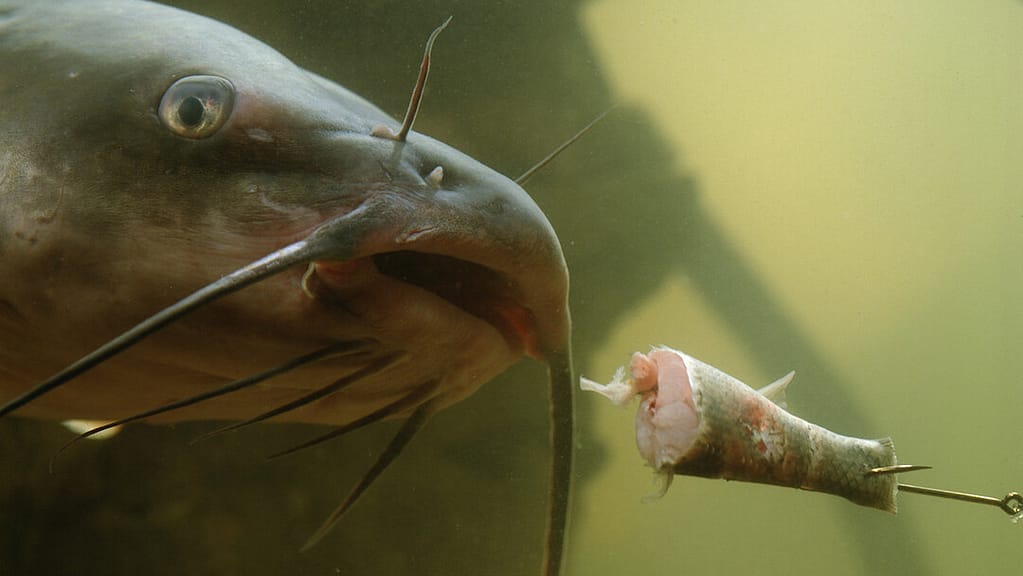
One of the clearest examples of Fishing in the wrong depth occurs when anglers ignore deep structures during the daytime.
Catfish commonly gather in:
- River bends and channels
- Deep holes below dams
- Drop-offs near submerged ledges
- Underwater structures like logs or rock piles
These areas provide cooler water temperatures and protection from strong currents.
When I fish rivers, I often focus on outside bends where the current naturally scours deeper channels. These locations frequently hold larger catfish that prefer deeper water during daylight hours.
Many experienced anglers say that if you want to catch big catfish, start by finding deep water first.
When Shallow Water Becomes the Hotspot
While deep water is important, Fishing in the wrong depth can also happen when anglers overlook shallow feeding zones.
Catfish are opportunistic predators and scavengers. At night or during low-light periods, they often move into shallow areas where food becomes easier to find.
Some of the most productive shallow-water areas include:
- Sandbars and flats near deeper channels
- Shoreline edges during nighttime hours
- Flooded vegetation after heavy rain
- Lake coves where baitfish gather
These zones become feeding grounds when catfish move out of their deeper daytime hiding spots.
Fishing too deep during these periods can cause anglers to miss the action completely.
Seasonal Changes That Affect Depth
Another reason anglers struggle with Fishing in the wrong depth is that catfish behavior changes throughout the year.
In colder months, catfish typically hold in deeper water where temperatures remain more stable. Fishing deep channels and slow-moving holes becomes especially important during winter.
During spring, warming water temperatures trigger increased feeding activity. Catfish begin moving between deeper channels and shallower flats.
Summer brings another shift. Catfish often remain in deeper water during the hottest part of the day but move shallow at night to hunt.
In fall, cooling water temperatures can create some of the best fishing of the year as catfish aggressively feed before winter.
Learning these seasonal patterns helps anglers determine which depth zones are most productive at different times of year.
Technology Helping Anglers Find the Right Depth
Modern technology has made it easier than ever to avoid Fishing in the wrong depth.
Fish finders and sonar systems allow anglers to scan the underwater landscape and locate drop-offs, channels, and fish-holding structures. These tools reveal underwater features that would otherwise remain invisible.
Even without advanced electronics, anglers can still identify promising depth changes by studying maps, observing current flow, and paying attention to shoreline features.
For those interested in understanding more about freshwater fish behavior and habitat patterns, the Fishing in the wrong depth guide provided by the Florida Fish and Wildlife Conservation Commission offers valuable insights into catfish habitats and fishing techniques.
Combining technology with observation gives anglers a powerful advantage when locating productive fishing depths.
Signs You Are Fishing the Wrong Depth
Over time, anglers begin recognizing the signs that suggest Fishing in the wrong depth.
A few warning signals include long periods without bites, catching only very small fish, or noticing baitfish activity in different areas than where you are fishing.
When this happens, adjusting depth can make an enormous difference.
Sometimes moving only a few feet deeper—or shallower—can suddenly trigger strikes.
Successful anglers constantly experiment with depth until they find where catfish are holding.
Finding Catfish Where They Actually Live
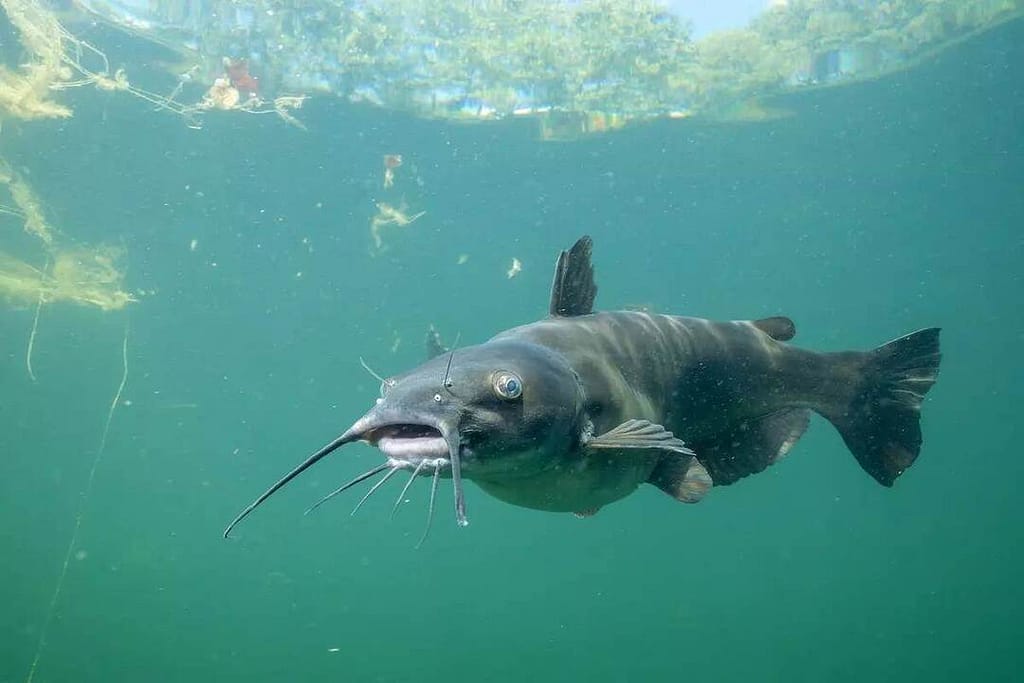
The simple truth behind many unsuccessful fishing trips is Fishing in the wrong depth. Catfish follow predictable patterns that revolve around water temperature, feeding behavior, and structure.
During the day, they often hide in deeper channels and underwater structures. At night, they frequently move into shallow feeding zones. Seasonal changes further influence these movements throughout the year.
By learning to read water depth and adapting to these patterns, anglers dramatically increase their chances of success.
Once you begin targeting the correct depth zones, the difference becomes obvious. The rods bend more often, the catches grow larger, and the mystery behind catfish fishing begins to fade.
In the end, understanding depth may be the single most important skill separating a slow day on the water from a memorable catfish fishing adventure.


