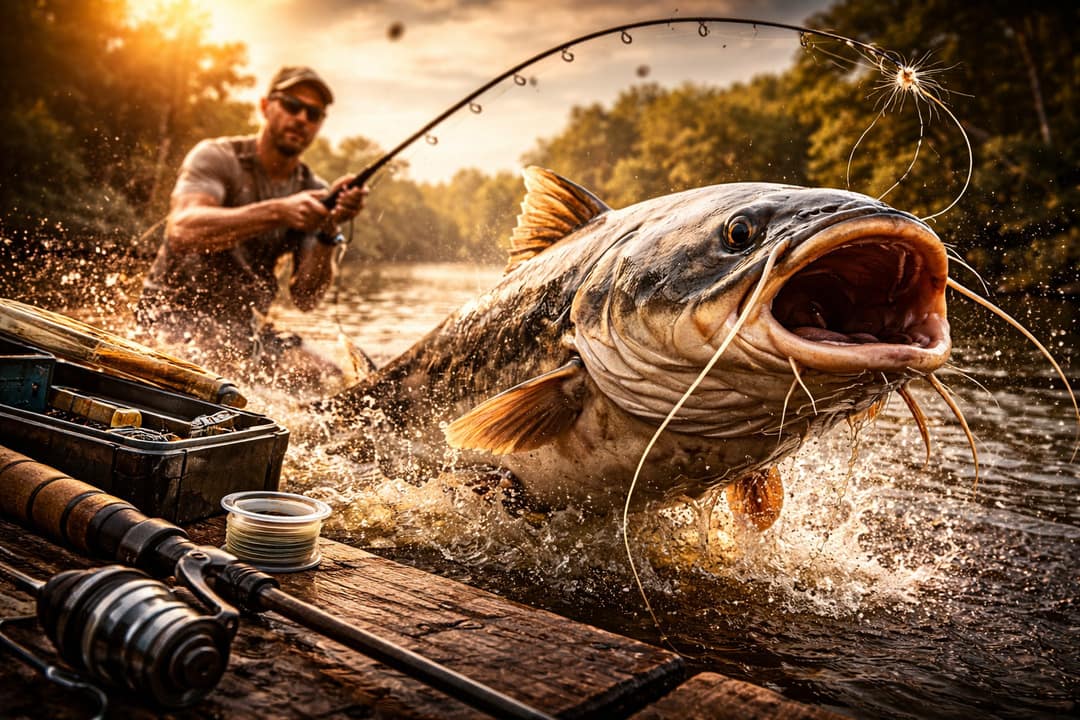

I’ve seen it happen more times than I can count a massive catfish takes the bait, the rod bends hard, and then… nothing. The line snaps, the hook pulls, or the fish simply disappears into the depths. For many anglers, this isn’t bad luck. It’s a pattern.
The truth is, using light gear for catfish is one of the most common reasons anglers lose the fish they’ve been waiting for all season. And while lighter setups may feel more fun or manageable, they often come at a steep cost especially when targeting trophy-sized catfish.
Why This Matters More Than Most Anglers Realize
Catfish are not just another freshwater species. Large blues, flatheads, and even mature channel cats are powerful, stubborn, and built for survival. When hooked, they don’t just run they dive, twist, and use structure to their advantage.
Using light gear might work for smaller fish, but when a 30-, 40-, or even 60-pound catfish strikes, the limitations become obvious. The rod lacks backbone, the reel struggles under pressure, and the line simply isn’t built to handle the fight.
What I’ve learned over years of fishing is this: catfish don’t give second chances. If your setup isn’t ready, the fish wins—every time.
The Hidden Risks of Using Light Gear for Catfish
At first glance, light gear seems appealing. It’s easier to cast, less tiring to use, and can make smaller fish feel more exciting. But beneath that convenience are several critical weaknesses.
The most obvious issue is line strength. Light lines are far more prone to snapping under sudden pressure, especially when a catfish makes a powerful run or wraps around underwater obstacles.
Rod flexibility is another factor. While a softer rod can absorb some shock, it often lacks the backbone needed to control large fish, allowing them to dictate the fight.
Then there’s the reel. Many lighter setups simply don’t have the drag capacity required to handle sustained pressure. When that drag slips or overheats, control is lost.
In my experience, these failures don’t happen gradually they happen instantly. One wrong move, and the opportunity is gone.
Real-World Scenarios Where Anglers Lose Big Fish
I’ve spoken with countless anglers who share similar stories. The pattern is almost always the same.
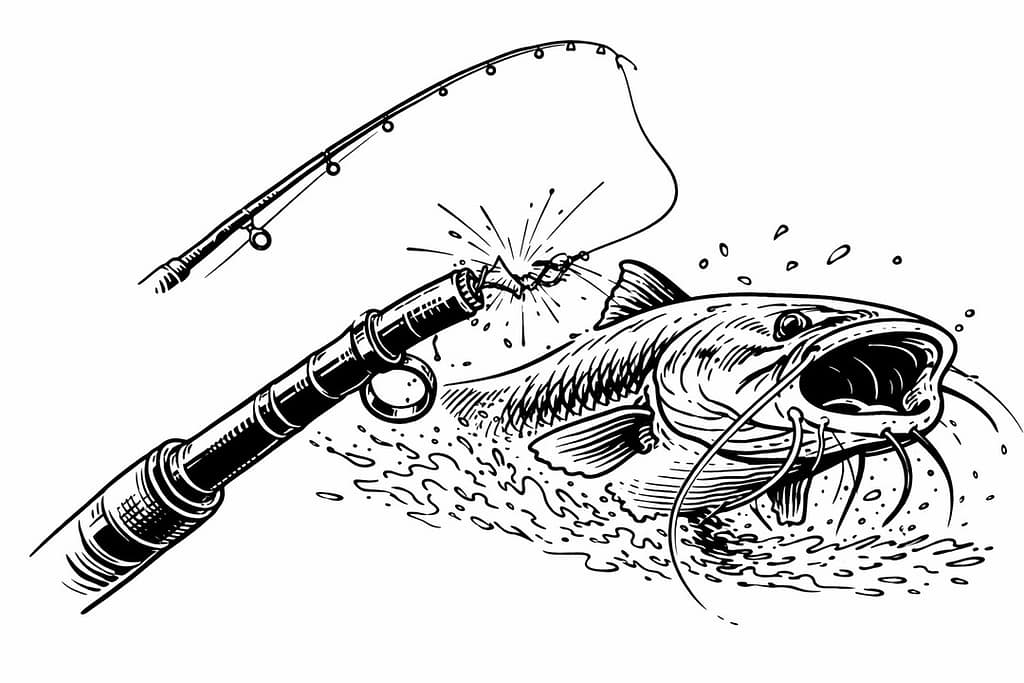
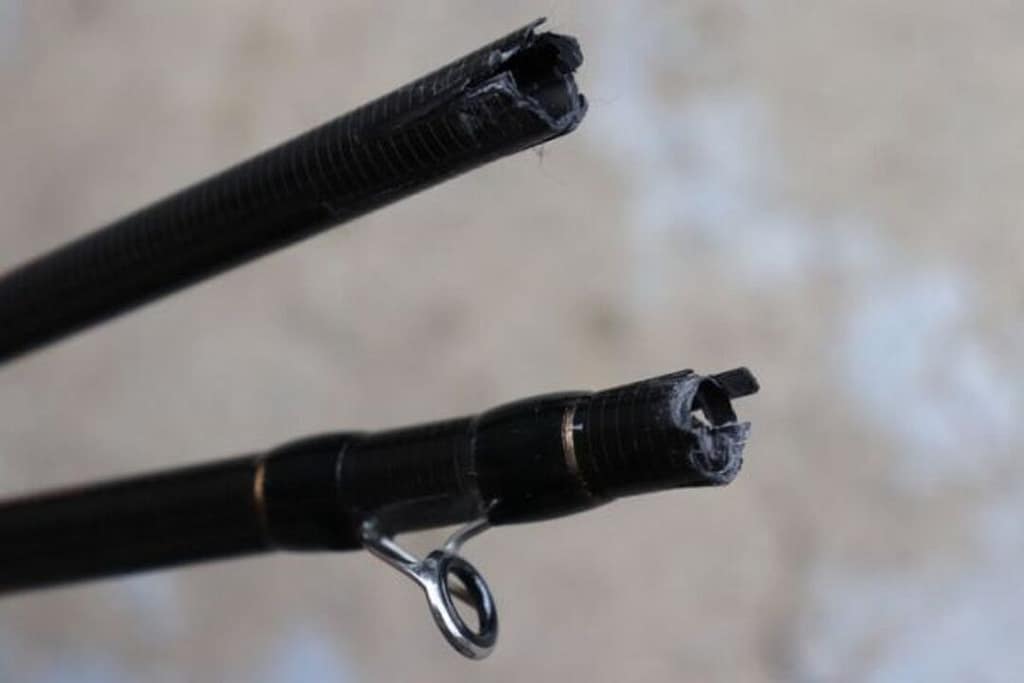
A big fish takes the bait, the initial hookset feels solid, and for a brief moment, everything seems perfect. Then the fish surges. The rod bends beyond its limit, the line strains, and suddenly the connection is broken.
In rivers and lakes with heavy structure, the problem becomes even worse. Catfish instinctively head for cover, using logs, rocks, and drop-offs to their advantage. With light gear, there’s simply no way to stop them.
This isn’t just theory it’s reality. And it’s one of the main reasons trophy catfish remain so elusive for many anglers.
Expert Insight: What the Data and Pros Say
Professional anglers and fisheries experts consistently emphasize the importance of using appropriate gear for target species. According to guidance from U.S. Fish and Wildlife Service, proper equipment selection is essential for both successful catch rates and fish conservation.
What stands out in expert discussions is the balance between strength and control. It’s not about using the heaviest gear possible it’s about using gear that matches the size, environment, and behavior of the fish.
From my perspective, that balance is where many anglers go wrong. They underestimate the fish and overestimate their gear.
The Right Approach: Matching Gear to the Fight
If there’s one lesson I’ve learned, it’s that success in catfishing comes down to preparation.
A medium-heavy to heavy rod provides the backbone needed to control large fish. A quality reel with a strong drag system ensures consistent pressure throughout the fight. And a durable line often braided offers the strength and sensitivity required for challenging conditions.
But beyond equipment, it’s also about mindset. You have to be ready to apply pressure, adjust quickly, and stay in control.
Switching from light gear doesn’t mean losing the excitement of the fight. In fact, it often enhances it because you’re no longer hoping to land the fish. You’re equipped to do it.
Looking Ahead: Smarter Angling in Modern Catfishing
As catfishing continues to grow in popularity, more anglers are beginning to recognize the importance of proper gear selection. Social media, tournament fishing, and shared experiences are helping to spread awareness.
Still, the misconception persists that lighter gear is “good enough.” And while that may be true for smaller catches, it doesn’t hold up when targeting trophy fish.
The future of successful catfishing lies in education, preparation, and adaptability. Anglers who take the time to understand their equipment and their target species will consistently outperform those who rely on guesswork.
Stop Losing Fish You Should Be Landing
Reflecting on the challenges of using light gear for catfish, one thing becomes clear: most lost fish aren’t accidents they’re preventable.
By choosing the right gear, understanding the behavior of catfish, and approaching each catch with preparation, anglers can dramatically improve their success rate.
Big catfish aren’t impossible to land but they demand respect. And that respect starts with the tools you bring to the water.
In the end, the difference between a story about “the one that got away” and a trophy photo often comes down to one simple decision: are you truly prepared for the fight?


