
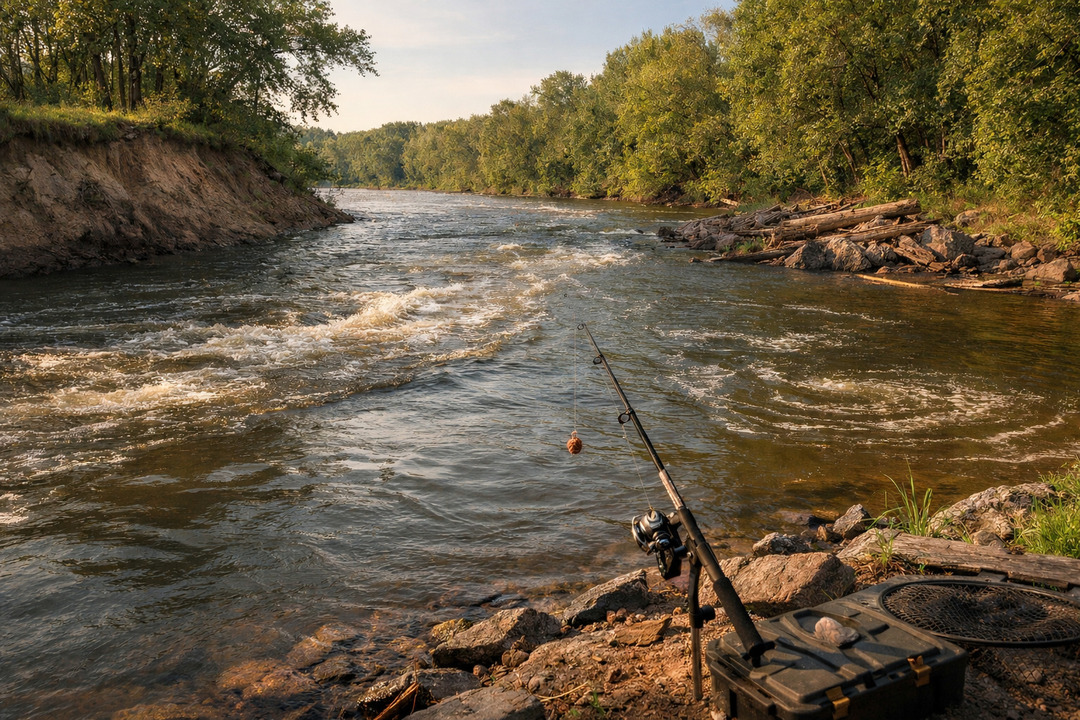
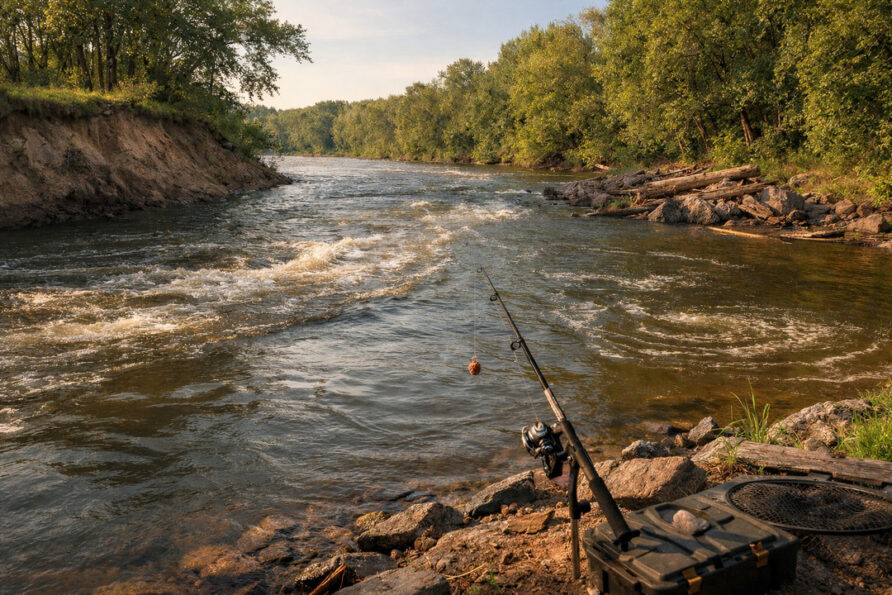
The difference between an empty cooler and a productive day on the water often comes down to location. Right now, as fishing pressure increases and conditions shift, understanding where catfish naturally gather is more important than ever. River bends consistently stand out as some of the most reliable and overlooked spots for serious anglers.
I’ve spent years studying river systems, and one pattern continues to repeat itself: if you want consistent action, you fish the bends. Not randomly, not casually but with a clear understanding of why these areas concentrate catfish and how to approach them strategically.
Why River Bends Attract Catfish
At first glance, a river bend might seem like just another curve in the waterway. In reality, it’s a dynamic zone where physics, structure, and biology intersect in ways that heavily favor catfish behavior.
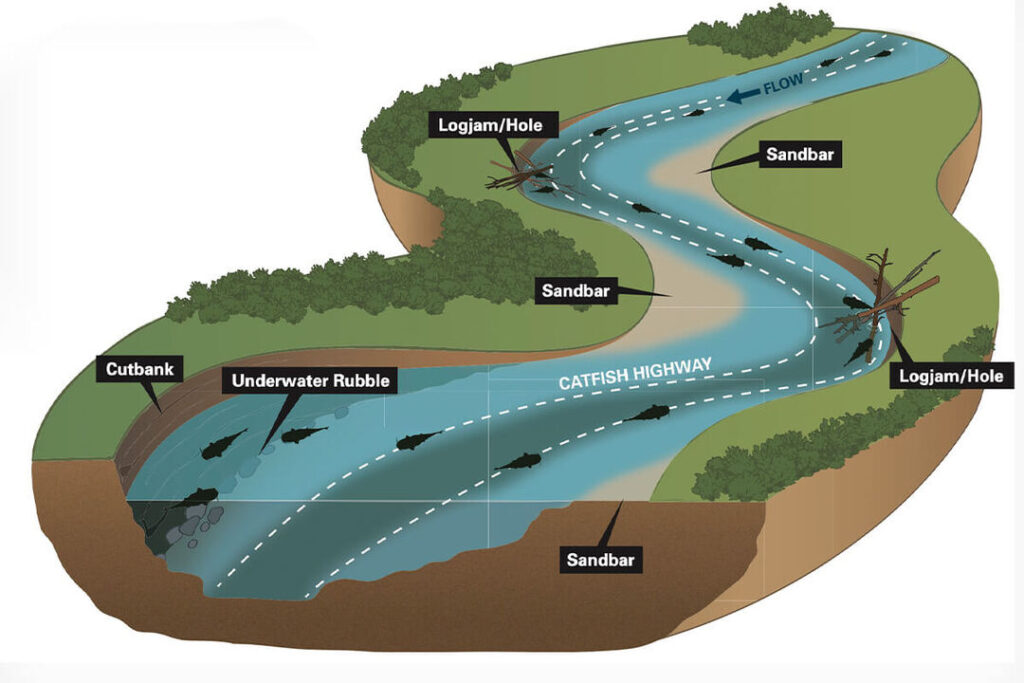
As water flows around a bend, it accelerates along the outer edge and slows on the inside. This creates a natural division of energy within a relatively small area. The faster current scours out deeper channels on the outside, while the inside collects sediment, forming shallower flats.
This contrast is critical. Catfish are opportunistic feeders that rely on current to deliver food, but they conserve energy by holding in slower water. River bends provide both conditions within a few yards.
The result is a predictable holding pattern: catfish position themselves where they can intercept food without fighting the full force of the current.
The Anatomy Of A Productive Bend
Not all river bends are equal. The most productive ones share a combination of depth variation, structure, and current seams.
On the outer bend, the deeper channel often forms a “cut bank.” This is where the river has carved into the shoreline, creating steep drop-offs and submerged ledges. These areas serve as prime daytime holding zones, especially for larger catfish.
On the inside bend, slower water allows debris like logs, branches, and organic matter to settle. These materials attract baitfish and insects, creating a secondary feeding zone.
Between these two extremes lies the most important feature: the seam. This is the line where fast and slow currents meet. Catfish frequently patrol this boundary, using it as a feeding lane.
Understanding this layout transforms a random cast into a targeted presentation.
How Current Shapes Feeding Behavior
Current is the engine that drives river ecosystems, and in bends, it becomes even more influential. As water moves around the curve, it creates swirling eddies and subtle backflows that trap food.
These micro-currents act like conveyor belts, delivering scent and bait directly to waiting fish. Catfish, with their highly sensitive barbels, detect these signals quickly and move in to investigate.
The key insight is that catfish don’t roam aimlessly they position themselves where food comes to them. River bends amplify this effect, making them consistent feeding zones even when other areas slow down.
During periods of increased flow, such as after rain, these zones become even more productive. The added current dislodges more food, intensifying feeding activity.
Best Spots To Target Within A Bend
Precision matters. Casting blindly into a bend wastes time and reduces your chances of connecting with fish.
The highest-percentage areas include:
- The downstream edge of the outer bend, where depth transitions occur
- Current seams between fast and slow water
- Submerged structure like fallen trees or rock piles
- Eddies formed behind obstructions
Each of these zones offers a combination of cover and feeding opportunity. By focusing on them, you significantly increase your odds of finding active fish.
Timing And Conditions Matter
While river bends produce year-round, timing still plays a role in maximizing success.
Catfish are more active during low-light periods, particularly at dusk and into the night. During these times, they move more aggressively along seams and shallower edges to feed.
Water clarity also influences behavior. In murky conditions, catfish rely heavily on scent and vibration, making river bends even more effective due to concentrated current flow. In clearer water, they may hold slightly deeper or closer to cover during daylight hours.
Temperature shifts can also reposition fish within the bend. Warmer water often pushes them into faster-moving areas with higher oxygen levels, while cooler conditions may concentrate them in deeper, slower pockets.
Choosing The Right Approach
Success in these environments depends not just on location, but on how you present your bait.
Heavier sinkers are often necessary to keep bait anchored in current. At the same time, rigs that allow natural movement such as sliding setups help maintain a realistic presentation.
Bait choice is equally important. Strong-scented options like cut fish or natural protein sources perform exceptionally well in river systems because they disperse scent downstream effectively.
For anglers looking to refine their strategy further, this guide on provides additional technical insights into positioning and rigging.
Common Mistakes Anglers Make
Even experienced anglers sometimes overlook the nuances of river bends.
One of the most frequent mistakes is fishing only the deepest water. While depth is important, it’s the combination of depth and current that matters most. Fish often hold just off the deepest point, where they can access both safety and feeding lanes.
Another issue is ignoring subtle current changes. Small seams or eddies can hold just as many fish as more obvious features, especially under pressure.
Finally, many anglers fail to adjust as conditions change. River systems are constantly shifting, and a productive spot one day may require slight repositioning the next.
Why This Matters Right Now
Fishing pressure is increasing, and easy spots are becoming less reliable. Anglers who rely on guesswork are finding it harder to produce consistent results.
River bends offer a solution grounded in predictability. They are shaped by forces that don’t change overnight current, structure, and flow dynamics. That makes them dependable even as other areas fluctuate.
Understanding how and why catfish use these environments is no longer optional it’s a competitive advantage.
As conditions evolve and more anglers crowd the water, those who can read a river bend effectively will continue to find success. The pattern is there, the fish are there, and the opportunity is immediate.
Mastering river bends isn’t just about catching more catfish it’s about fishing smarter in a landscape that rewards precision over luck.


