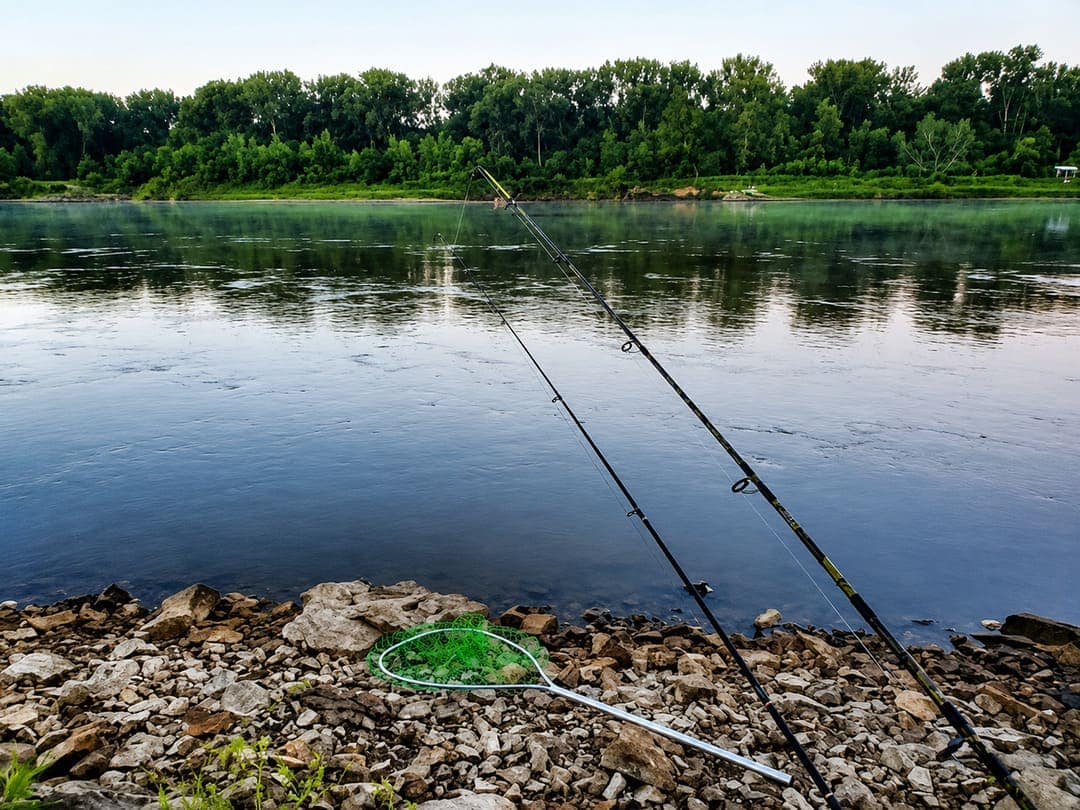

Bank fishing for catfish is often treated like the simple version of the sport, but the shoreline can punish lazy decisions. The biggest mistake is setting up where parking is easy instead of where catfish naturally travel. Without a boat, the bank angler has to make location, angles, bait spread, and timing work harder.
That does not mean shore fishing is a handicap. Bank anglers can quietly cover inflows, points, bridges, riprap, pond edges, and river bends without launching anything. The difference starts with a clean setup, and a simple catfish setup gives the bank angler more room to focus on water rather than overcomplicated gear.
Bank Fishing for Catfish Starts Before the Rod Holder Goes In
A good bank spot should offer more than a flat place to sit. Look for access to multiple casting angles, nearby depth, visible current, shade, cover, or a place where wind pushes food toward the bank. If every cast lands in the same shallow, featureless water, the setup may be comfortable but unproductive.
The first five minutes should be spent walking, not casting. Check whether the shoreline drops quickly or stays flat. Look for bait flickers, bubbles, mud lines, logs, rocks, or culverts. Notice where wind is pushing leaves or surface debris. Those clues help decide whether to fish short, long, left, or right.
A bank angler cannot chase fish across the lake easily, so choosing the right stretch matters. The bank is your boat, and every step changes your angle.
Casting Lanes Beat Random Distance
Long casts feel impressive, but distance alone does not catch catfish. The better goal is reaching lanes: a deeper edge, current seam, drop-off, inflow, or cover line where catfish can move and feed.
From shore, one rod might go parallel to the bank, one at a 45-degree angle, and one toward deeper water. That spread tests different travel routes without turning the setup into a tangled mess. If all rods are launched straight out, the angler may miss fish cruising just a few feet from shore.
Bottom contact also matters. If the rig keeps sliding, the weight is too light or the current angle is wrong. If the bait disappears into weeds, the cast may need to be shorter, higher, or moved toward cleaner bottom. Bank fishing is not passive when it is done well.
Rod Placement Should Control the Fight
Catfish have a way of finding every snag between the bite and the bank. Rod placement should reduce that risk before the hookset. Avoid setting rods where the line crosses rocks, brush, sharp concrete, dock posts, or another angler’s spread.
Point rod tips toward the likely line path, not just toward open water. Keep enough angle to detect bites without letting the fish pull sideways through heavy cover. In current, rods may need to sit higher to keep line off debris and reduce drag.
The Florida Fish and Wildlife Conservation Commission’s freshwater rules note that game fish may be taken only by pole and line or rod and reel, and there is no statewide limit on the number of rods an angler may use under that method. Anglers still need to check local rules, especially on Fish Management Areas, before building a large bank spread around freshwater fishing methods.
The Next Move Is Avoiding Dead Water
Dead water is the bank angler’s biggest trap. It looks peaceful, gives plenty of room, and offers no reason for catfish to feed there. If there is no depth change, no cover, no current, no bait, no shade, and no wind-blown food, the spot needs a short leash.
Use this decision table before settling in too long.
| Bank Situation | First Move | When to Leave |
|---|---|---|
| Flat shallow bank | Cast parallel and test distance | No taps after fresh bait cycle |
| Creek mouth | Fish the edge of incoming water | Flow stops or bait disappears |
| Bridge or riprap | Target shade and current breaks | Snags cost repeated rigs |
| Pond corner | Fish windblown debris line | No bait activity shows |
| River bend | Cast to seam and softer edge | Current drags every rig |
| Flooded grass | Use shorter casts near edge | Fish scatter with falling water |
Bank fishing for catfish works when anglers stop treating the shoreline as a limitation and start treating it as a decision tool. The opportunity is in angles, quiet setup, safe footing, and bait placement that covers real travel lanes. A boat helps reach more water, but a bank angler who chooses better water may not need one.
A Smart Bait Spread Finds the Pattern Faster
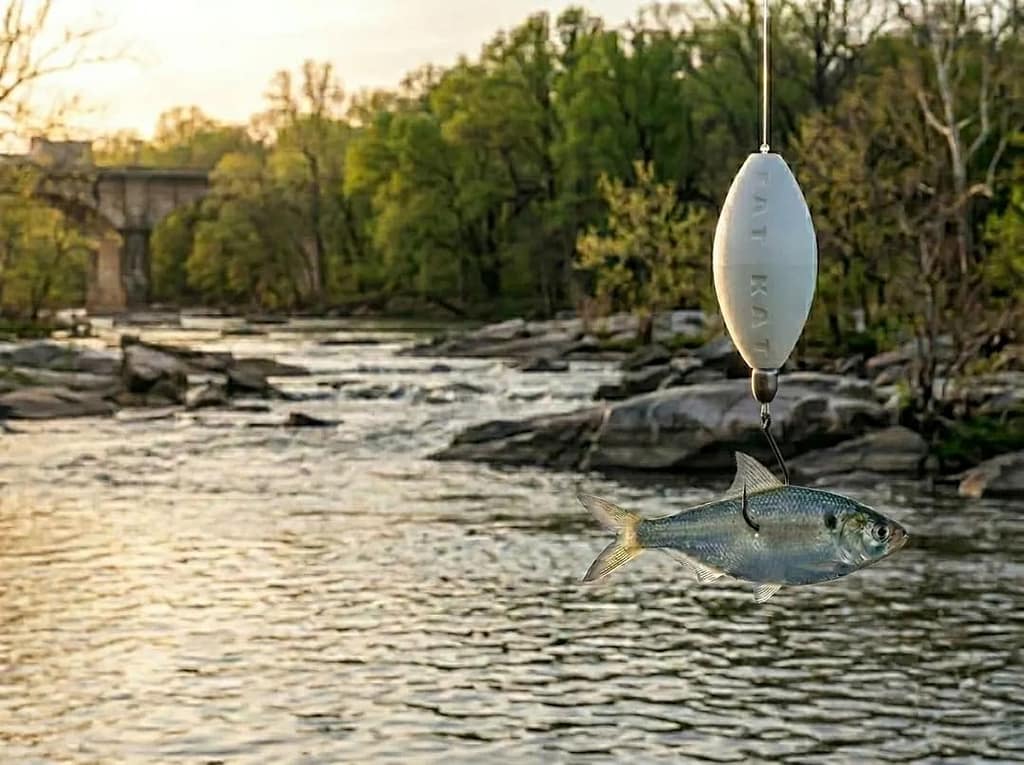
A bank angler should avoid putting the same bait at the same depth on every rod. Use the shoreline to test scent, size, and distance. One rod can carry cut bait near deeper water. Another can hold worms or shrimp closer to the bank. A third can test a current edge or cover line.
This does not mean bringing every bait in the cooler. It means making each bait serve a different purpose. Strong scent can pull channel cats. Fresh cut bait may attract better fish. Smaller natural bait can reveal whether the area has active feeders before committing to bigger chunks.
Track which rod gets touched. If the short rod gets bites and the deep rod stays dead, adjust. If only the current seam produces, move the whole spread toward moving water. Let the first bite teach instead of treating it like luck.
Safety Shapes the Best Shoreline Choice
Bank fishing often happens around slick mud, steep rocks, bridges, spillways, and night conditions. A good catfish spot is not worth it if landing the fish means sliding into unsafe water. Choose places with stable footing, room to swing a rod, and a safe path back to gear.
Night fishing adds another layer. Lights, insect protection, a landing net, pliers, and a clear bank area make the trip smoother. So does watching the weather. NOAA’s lightning safety guidance warns that hearing thunder means a person is within striking distance and should seek safe shelter, not wait for rain to start near lightning conditions.
The best bank anglers are organized because they have fewer escape options than boat anglers. They know where their net is, where the fish will be landed, and how to leave fast if weather or water changes.


