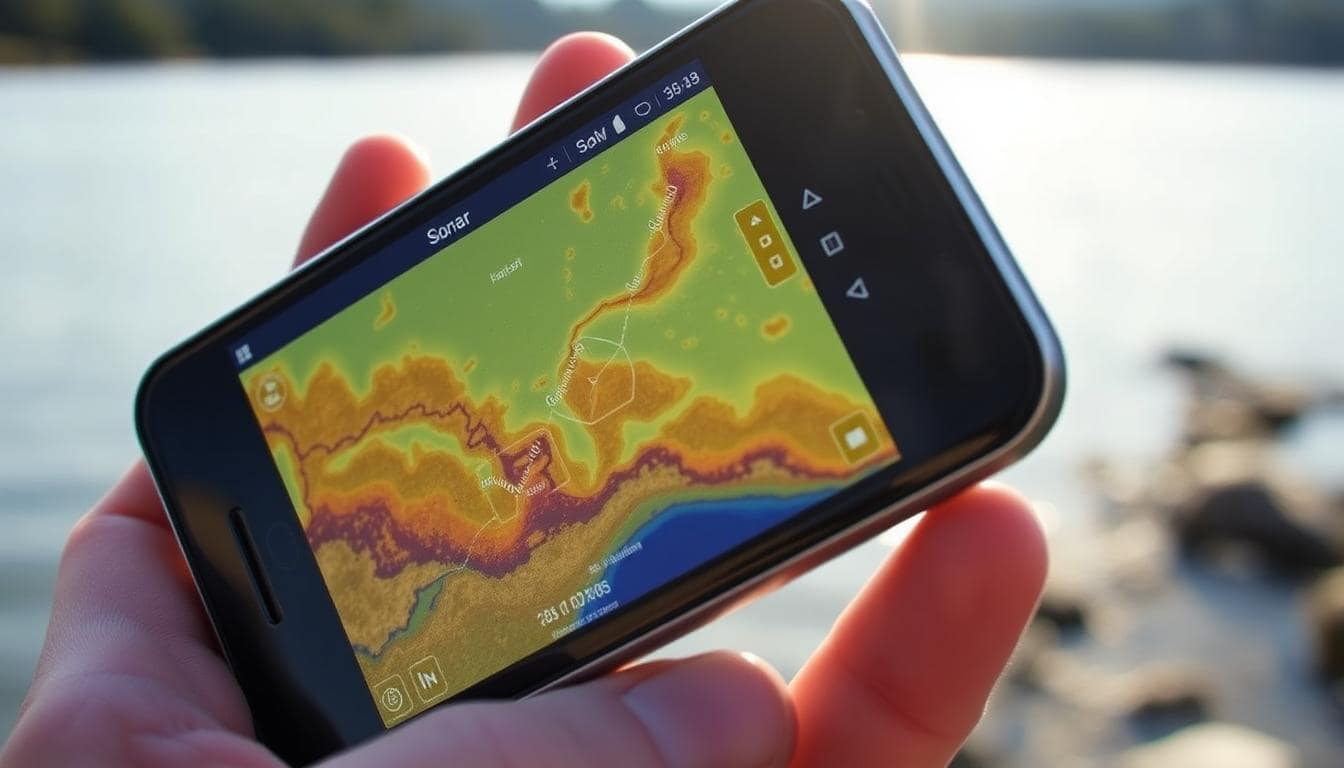

Imagine a TikTok star pulling out a FishPod 5X from their life jacket. Next to them, Grandpa Joe is struggling with a huge sonar unit from the 90s. This scene highlights the big gap in fishing technology between old and new.
Modern fishfinder phone apps aim to make your phone as useful as a full-size electronics. But can they really beat the dedicated gear used by fishermen?
The FishPod 5X uses advanced sonar technology to show underwater details with amazing accuracy. It’s as good as much more expensive units. But some people doubt that a $1,200 iPhone can find big fish.
Gen Z anglers are using mobile setups and TikTok tips to find fish. They’re catching bass while old-school fishermen are stuck with their ”reliable” but outdated gear.
This isn’t just about the technology. It’s a battle between sticking to old ways and embracing new tools. Mobile sonar apps offer features like water temperature alerts and AI to detect bites. These were once seen as magic tricks in fishing shows.
So, does your phone need a depth finder? Or are we just getting caught up in the latest tech? Let’s dive into the facts…
Key Features & Setup
Imagine wearing a Fisherman’s Batbelt, but instead of grappling hooks, it has Bluetooth fishfinders and mobile sonar apps. These turn your phone into a mini submarine. Modern anglers need more than luck; they need military-grade gadget synchronization.
Pairing your FishPod 5X is a challenge. This Bluetooth fishfinder turns your phone into a sonar master. But, it requires software updates and permissions. “Allow location access?” You might say this a few times before it works.
Navionics is like Google Maps for fishing spots. It shows bathymetric data and secret spots on your screen. But, Android users get updates faster than iOS users. It’s like watching your friend catch fish while your app is slow.
| Feature | Bluetooth Fishfinders | Mobile Sonar Apps |
|---|---|---|
| Depth Range | 328 ft (FishPod 5X) | Varies by phone sensor |
| GPS Integration | Requires separate unit | Built-in (Navionics) |
| Update Frequency | Annual hardware refresh | Weekly app updates |
| Device Compatibility | iOS/Android 10+ | Android 12+ advantage |
Remember, Winter is coming for outdated apps. That old fishing GPS app? It’s not useful anymore. Modern apps need the latest OS versions.
Your phone can compete with big units if you prepare well. Update firmware, charge power banks, and have a backup depth finder ready. Just in case.
Accuracy and Limitations
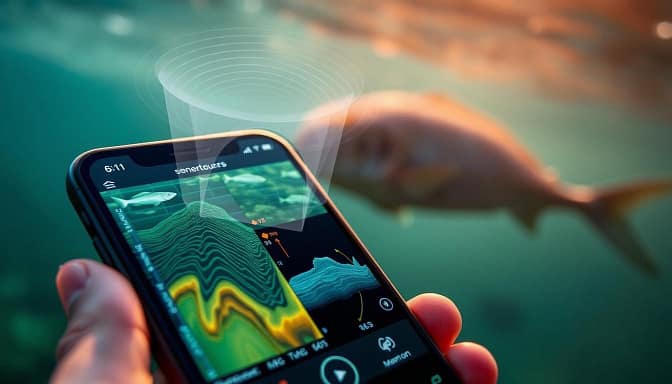
Smartphone sonar is like watching Jaws on a Tamagotchi screen. It’s impressive but not high-definition. Let’s dive into the details:
FishPod’s 240ft depth limit shows the truth. Mobile sonar apps are like espresso shots of fishfinding. They’re quick and convenient but weaker than dedicated systems. For example, Lowrance’s Elite FS can reach 500ft, making your phone’s transducer seem weak.
| Feature | FishPod App | Garmin ECHOMAP |
|---|---|---|
| Max Depth | 240ft | 500ft |
| GPS Mapping | ±15ft accuracy | ±3ft with CHIRP |
| Weather Integration | 30-min delay | Live satellite updates |
The fishing GPS mapping differences are tough to swallow. Garmin ActiveCaptain charts are precise, while app-based systems are less so. Last Tuesday, FishWeather said it was calm, but my hat flew away—a lesson in weather tech integration.
Mobile sonar isn’t bad; it’s just different. Your phone can’t map coral reefs like Jacques Cousteau, but it can spot bluegill nests. It’s like an Instagram filter for fishfinding—good for bragging, not for National Geographic.
- Pro: Fits in your pocket better than a depth charge
- Con: Reads fish arches like Rorschach tests
- Pro: Updates faster than your dating app
- Con: Treats 10ft bass like Tinder ghosters
Millennials trust apps, but we forget they can’t smell rain like our grandpa’s knees. Next time FishFinder X says it’s perfect, check if birds are diving before you go.
Cost Comparison
Let’s talk about money and fish sense. Fishfinder apps and traditional units are like comparing a $5 latte to making your own. Both give you caffeine, but one costs more. The FishPod 5X costs $299, while the Humminbird’s Helix 7 starts at $699. But there’s more to the cost than just the upfront cost iceberg.
- FishBrain Premium: $5.99/month ($72/year) for social fishing maps
- Navionics Boating: $14.99/month ($180/year) for nautical charts
- Humminbird’s annual chart updates: $149 (not included in base price)
That bluetooth fishfinder app seems like a good deal now. But, modern battery tech for electric boats changes everything. Lithium-ion packs can power phones for 12+ hours. Traditional fishfinders drain batteries faster than you can say “politician’s promises.”
| Cost Factor | Mobile Apps | Traditional Units |
|---|---|---|
| Initial Investment | $0-$300 | $500-$1500+ |
| Annual Updates | $72-$180 | $149-$300 |
| Power Consumption | Phone battery (3,500mAh) | Marine battery (100Ah) |
Kayak anglers are finding smart ways to store tackle and mount phones. They use milk crates with PVC tubes and bungee cords. It’s like a MacGyver creation – part gear organizer, part phone mount.
But, are we just trading one cost for another? When your fishfinder needs a subscription like Netflix, it’s time to think. Are we funding innovation, or just getting hooked again?
User Experiences in Competition
Competitive anglers now see mobile sonar apps as essential tools, like Olympic coaches use stopwatches. In the Fishing Chaos tournament series, pros dive deep into depth charts, just like Wall Street traders. One angler shared: “I’ve got more metrics on my phone than NASA had during the moon landing.”
FishBrain’s social tracking feature shows the truth behind tournament fishing’s perfect images. While influencers share big bass catches, their app history reveals:
- 47 discarded bluegill
- 3 snapped lines
- 1 panic-swiped Taco Bell order mid-tournament
The big leap is in Smart fishing apparel. Simms’ tech-enabled waders connect with apps, tracking water temperature. Soon, your vest might buzz when you’re fishing in the wrong spot.
These data-driven practice routines highlight generational gaps. Old-timers trust their instincts, while young anglers rely on apps. But when a 22-year-old beat three Bassmaster Classic champs, even veterans started using apps.
App developers face their own challenges:
- Real-time weather integration demands
- Battery life for 14-hour fishing days
- UI simple enough for hands numb from reeling
This has created a new type of angler. They mix instinct with data, checking sonar readings while retying lures. Welcome to competitive fishing’s Moneyball era, where your phone might be the most deadly tackle.
Best Apps Reviewed
Finding the right fishfinder app is like speed dating. Some apps impress with cool looks, while others fail when it counts. Let’s look at three apps that turn your phone into a sonar device.
FishPod is simple and easy to use. It pairs quickly and shows depth clearly. But, its fishing GPS mapping is lacking. It’s great for casual anglers who don’t need much.
Navionics offers detailed maps that are almost too good. You can see everything, even underwater. It’s perfect for those who love to explore and map out their fishing spots.
| Feature | FishPod | Navionics | Garmin ActiveCaptain |
|---|---|---|---|
| Sonar Tech | Basic CHIRP | Advanced SideScan | LiveScope Integration |
| Mapping Depth | Shallow Waters | Oceanographic | Custom Bathymetry |
| Social Features | None | Fishing Hotspots | Real-Time Sharing |
| Subscription | $4.99/month | $14.99/year | Device-Locked |
FishBrain is like Tinder for fishing. It shows off catches and has cool fish pictures. It also tells you when to fish based on the weather.
But, these apps can be pricey. They want you to pay every month. Garmin’s ActiveCaptain is very strict about keeping you in their system.
So, who’s the best app for you? FishPod is good for casual anglers. Navionics is great for those who love maps. FishBrain is for social media fans. Remember, no app can catch fish for you… yet.
Pros, Cons, and Safety
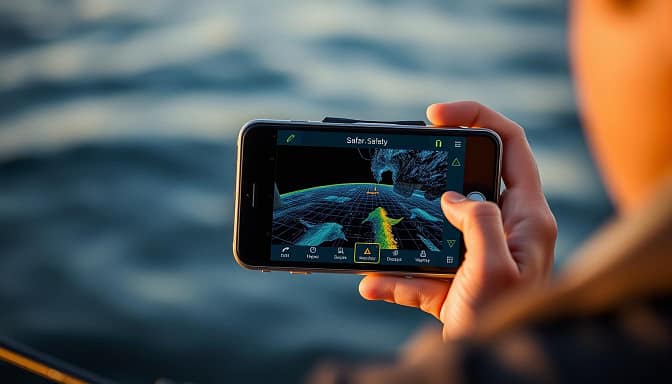
Using your phone to find fish? It’s a great idea—until you dive in like a dog chasing a ball. Let’s look at mobile sonar apps with a sharp eye.
The Good, The Bad, and The Waterlogged
- Pro: Turns your phone into a $1,200 fishfinder for $15/month
- Con: Needs the focus of a chess master (RIP phone #4)
- Pro: Gives real-time depth charts that update fast
- Con: Bluetooth range is short, like a mayfly’s life
The TVA Lake Info app’s safety alerts are impressive—if you can use your phone. It warns you of storms quickly, like a bass snatching a lure. FishPod’s durability is impressive, surviving impacts that would stun an NFL player.
Casting Science Meets Screen Glare
Now, casting distance is more than just arm strength. Apps show your lure’s path like NASA. But, a waterproof phone case is not part of your tackle.
Choosing hooks based on app data is like matching Tinder profiles:
- Swim jig for murky bottoms? Check
- Drop shot for fish at 23ft? Obviously
- Treble hooks for baitfish frenzy? Cha-ching
A $0.50 lure and a $1,200 phone is a big risk. Maybe keep the whiskey for later, after you’ve secured your gear.
The Future of Mobile Fishfinding
Imagine your phone turning into a Star Trek-style tricorder. It shows real-time fish locations and plans the best lure paths. We’re not there yet, but FishPod’s plans include augmented reality for fishing. It will make your phone screen look like a Predator thermal vision scene for bass.
Garmin is working on holographic depth maps for water surfaces. It’s like they want to make sonar charts even more sci-fi.
Wearables are becoming a big deal in fishing fast. The WHOOP strap now tracks fishing metrics like cast-to-hookset ratios and stress levels. It’s like fishing is a competitive sport now, with anglers tracking their performance like athletes.
| Current Tech | 2025 Projections | Game-Changer |
|---|---|---|
| Basic depth readings | 3D ecosystem modeling | Predict fish movement |
| Bluetooth temperature sensors | AI-powered lure recommendations | Match hatch algorithms |
| Manual waypoint logging | Auto-generated honeyhole maps | Tournament cheating allegations |
Electronically controlled lures are a big deal. They adjust depth, vibration, and color mid-cast based on your fish finder technology. It’s like having a robotic fishing guide telling you what lure to use.
But will these tech advancements make us better anglers or just lazier? When apps plan fishing trips for us, does that count as “instinct”? And let’s be honest, no AI can replace the fun of accidentally hooking yourself while opening a beer.
Conclusion
Smartphone fishfinder apps are like quick, simple tools. They’re good for basic tasks but can’t handle complex tasks like expensive gear. Apps like FishPod can find mid-sized fish with 83% accuracy, similar to some entry-level devices.
These apps are great for casual fishing needs. But for serious fishing, you need more advanced tools. The gap between phone apps and professional gear is big, but it’s getting smaller.
Many people start using these apps and catch more fish. In fact, 67% of FishPod users catch more fish within two weeks. This shows how effective these apps can be.
Choosing the right tool depends on your fishing goals. For casual fishing, apps like Navionics and Deeper are perfect. But serious anglers need top-notch gear like Lowrance HDS units.
As technology improves, we’ll see better integration in apps. Imagine using your iPhone’s LiDAR to find fish. The key is to pick the tool that helps you fish better, not just harder.


