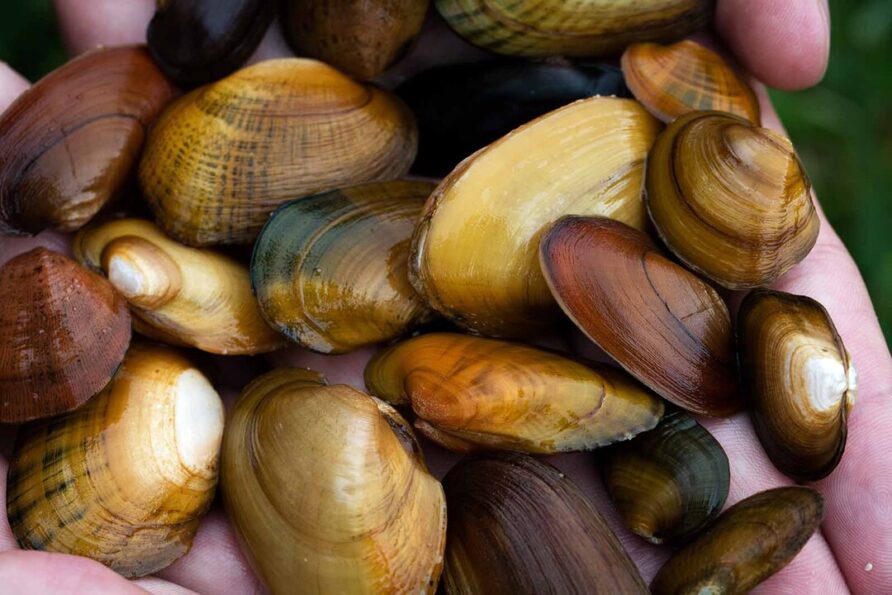
Yes, some freshwater clams can be used as catfish bait in Florida. But a clam found on the river bottom is not automatically legal bait. Florida’s wildlife agency lists freshwater clams among the occasional baits taken by catfish, while a separate set of rules governs which mussels and clams may be collected. The difference matters before an angler picks up a single shell.
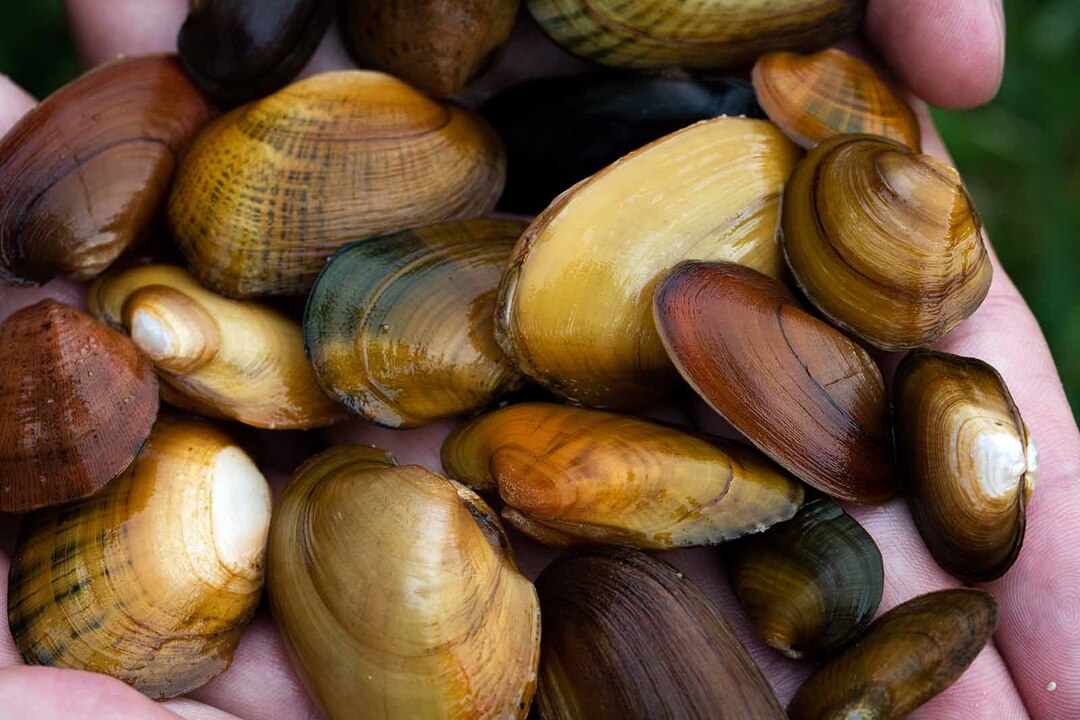
A useful first distinction is between the nonnative Asian clam and Florida’s native freshwater mussels. They may live in the same kinds of river and lake bottoms, but their conservation status and collection rules differ. A quick look at a brown shell is not enough to identify every species. If you are unsure what you have found, leave it in place and choose an established bait instead.
The U.S. Fish & Wildlife Service explains the importance of freshwater mussel conservation and their importance to fish, including how these animals filter water and depend on fish hosts for reproduction.
Not every freshwater shellfish is the same bait
The USDA’s Asian clam species profile identifies Corbicula fluminea as a nonnative clam established widely in U.S. fresh waters. Its shell is often small and heavily ridged, but appearance alone should not be treated as definitive identification. Asian clams can reproduce in dense colonies and compete with native mussels for resources.
Native freshwater mussels have a different ecological role to consider. They filter particles from the water, and many species depend on a fish host during their larval stage before young mussels settle onto the bottom. Florida has federally protected mussel species, particularly in northern river systems. Their presence makes indiscriminate shellfish collecting a poor choice even when an angler only wants a few pieces of bait.
What Florida’s freshwater mussel rules allow
The FWC freshwater mussel regulations distinguish the native mussel families Unionidae and Margaritiferidae from other freshwater clam families. For non-protected members of the first two families, the statewide personal-use limit is 10 whole mussels or 20 half-shells per day, with a two-day possession limit. Those limits do not authorize collection of federally protected species.
Other families, including the Asian clam, have no statewide bag or possession limit under FWC’s freshwater mussel summary. FWC also states that these other-family clams may be taken for bait or personal use. All freshwater mussels and clams covered by the collection rule must be taken by hand-picking; brailles, crowfoot bars, and other mechanical collection methods are prohibited. Taking live or dead freshwater mussels for later sale, or selling them, is prohibited.
FWC’s freshwater FAQ says a recreational license is not required simply to collect freshwater mussels under those rules. Fishing for catfish is a separate activity and generally requires the appropriate freshwater fishing license or an exemption. Check current rules and restrictions for your exact waterbody, including parks and protected areas, before collecting anything. If you cannot confidently identify the species or determine whether collection is allowed at that spot, do not take it.
How to present legally obtained clam bait
Freshwater clams are an occasional catfish bait, not a guaranteed substitute for worms, shrimp, or cut fish. If you have lawfully collected and positively identified a permitted clam, use a small portion of the meat on a bottom-fishing rig. Thread the hook through a firmer section, leave the point exposed, and make a gentle cast so the soft bait stays attached. If it slips off or is stripped immediately, switching bait is more useful than repeatedly losing pieces.
For a wider comparison of natural offerings by catfish species and fishing conditions, see the site’s natural catfish bait guide. There is no reliable evidence that a particular clam will outperform familiar catfish baits across Florida’s very different lakes and rivers.
Keep live Asian clams, shells, and bait-bucket water out of other waterbodies. Being allowed to collect an established nonnative clam does not make it responsible to transport and release living specimens elsewhere. Dispose of leftover bait on land in an appropriate waste container, and clean, drain, and dry equipment before moving to another lake or river.
The best decision starts before collecting
The simplest way to avoid a mistake is to separate three questions: Can I identify this clam? May I collect it in this waterbody? Is it worth using as bait? An Asian clam that is positively identified and lawfully hand-picked may be an option. An unfamiliar native mussel, especially in a North Florida river, is better left undisturbed.
Catfish have many effective bait options. Protecting mussels that help keep freshwater habitats healthy is worth more than testing one uncertain shellfish on a hook.