
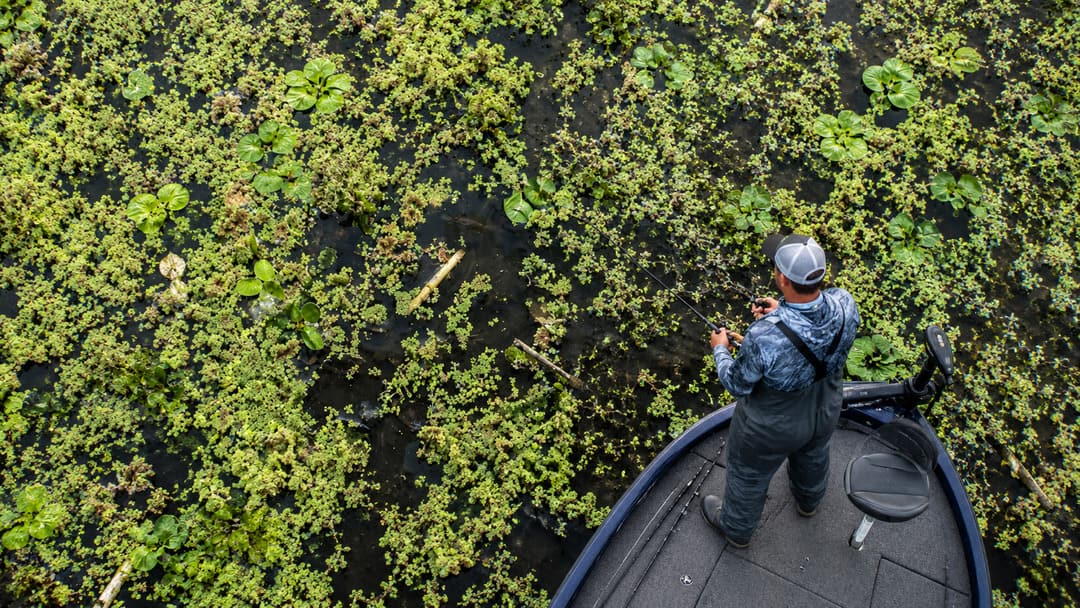

Lake Harris catfish habitat is entering a deliberate rebuilding phase, but catfish anglers should resist the temptation to treat newly planted vegetation as an instant fishing spot. Eight floating enclosures installed across Lake Harris and Little Lake Harris are designed to help native submerged plants establish and spread, creating a longer-term habitat change whose most interesting fishing effects may eventually develop along the edges.
For anglers, that distinction matters. Catfish do not need to sit inside dense vegetation for habitat restoration to affect them. Changes in cover can influence where forage develops, how fish move between shallow and deeper water, and which transition zones become worth testing with simple bottom-fishing techniques.
Lake Harris catfish habitat is being rebuilt from the bottom up
FWC aquatic habitat crews installed eight floating enclosures in June 2026 at locations on Lake Harris and Little Lake Harris. The structures contain native coontail and bladderwort and protect the vegetation while it reproduces and spreads.
The effort is part of a larger restoration program expected to continue over the next three years. The Lake Harris vegetation project also ties directly to a management target calling for submerged aquatic vegetation coverage of at least 10% as a minimum desirable level.
That does not mean 10% coverage will suddenly appear around the enclosures. Habitat restoration operates on a much longer clock than a fishing trip. Establishment, survival, spreading plants, water conditions and subsequent management all affect what anglers will eventually see.
The immediate fishing lesson is watch the change develop rather than assuming the newly installed structures themselves hold catfish.
The outside edge may matter more than the thickest grass
Aquatic vegetation creates habitat for juvenile fish and other organisms, but dense plant growth is only one part of the fishing picture. For a catfish angler, the boundary between vegetation and open bottom can be more practical than the vegetation itself.
An outside grass edge creates a physical transition. Add a nearby depression, channel, firmer bottom, isolated structure or gradual drop, and that boundary becomes a logical place to test for fish moving between feeding and holding areas.
Channel catfish are opportunistic feeders that consume aquatic insects, crayfish, mollusks, crustaceans and fish. More complex habitat can support several components of that food web. The connection anglers should make is not “new grass equals catfish.” It is new habitat can reshape forage.
That makes the first productive question simple: where does the vegetation stop, and what happens immediately beyond it?
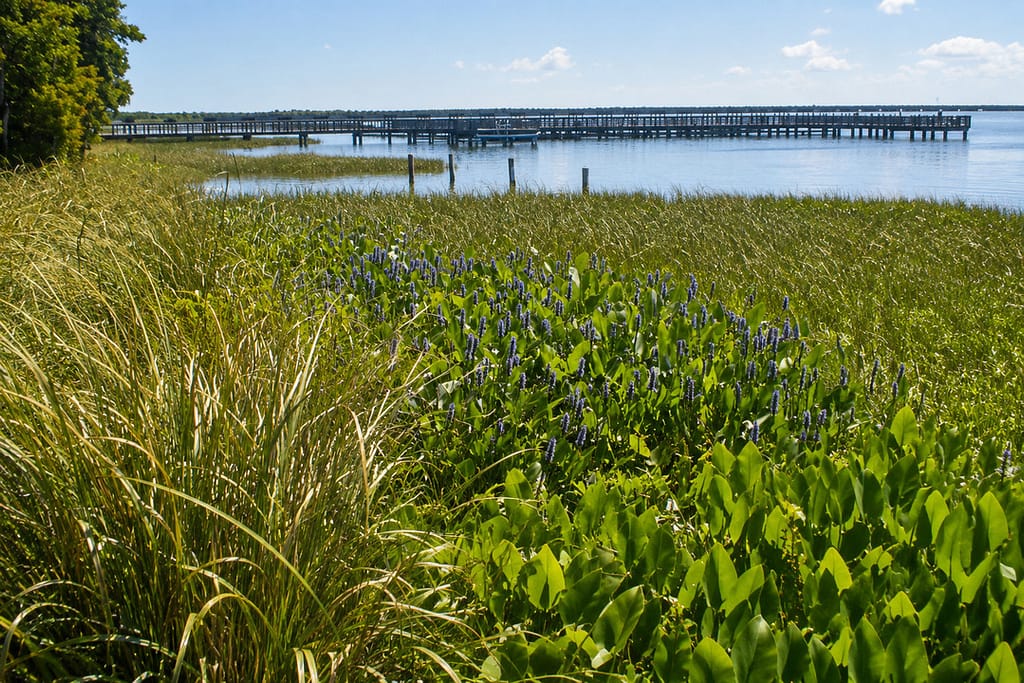
Fish the transition instead of burying bait in vegetation
A bottom rig thrown directly into thick submerged plants can create unnecessary problems. Bait disappears into vegetation, sinkers collect plant material, and detecting subtle pickups becomes harder.
Instead, use sonar or careful casting to locate the outside edge. Position the boat so baits can cover the vegetation boundary, adjacent clean bottom and the first meaningful depth change without repeatedly landing inside the grass.
A slip-sinker or other straightforward bottom presentation can work when the substrate is clean. Where vegetation rises higher off the bottom, suspending bait slightly above it with an appropriate float arrangement may keep the offering visible and easier for fish to locate.
The goal is controlled coverage of the edge, not simply putting more rods into the water.
Here is a practical way to break down unfamiliar vegetation as the habitat develops:
| Zone to test | Why it deserves attention | Fishing approach |
|---|---|---|
| Outer vegetation edge | Creates a clear cover-to-open-water transition | Place bottom baits just outside the plants |
| Edge beside deeper water | Connects feeding habitat with deeper holding water | Spread baits across multiple depths |
| Isolated vegetation patch | Offers cover without a continuous grass wall | Fish the perimeter from several angles |
| Clean pocket inside sparse grass | Gives catfish open feeding space near cover | Keep bait inside the opening |
| Vegetation near hard structure | Combines habitat types in a small area | Target the transition rather than the thickest cover |
None of these locations guarantees fish. Their value is that each gives anglers a specific hypothesis to test instead of anchoring beside the first visible plant bed.
Lake Harris already offers more than shoreline grass
The new vegetation should be viewed as another layer in a lake system that already contains varied fishing habitat. FWC’s Harris Chain fishing information lists channel catfish among its popular species and white catfish among the additional species found within the chain. The agency has also installed fish attractors in Lake Harris and maintains information on numerous shore and pier opportunities around the system.
For boat anglers, that means vegetation should be compared with existing structure rather than fished in isolation. A grass edge that connects with an attractor area, depth break, channel route or other structure deserves more attention than a featureless stretch of vegetation.
Bank and pier anglers face a different puzzle because they cannot simply follow an offshore grass line. Their advantage is repetition. Fishing the same accessible area over several trips can reveal whether bites develop at particular distances, depths or times as vegetation changes nearby.
Pattern the relationship, not merely the plant.
The restoration will create signals anglers can track
The most interesting part of this project may come later. FWC expects habitat work at Lake Harris to continue for three years, giving anglers an unusual opportunity to observe how specific areas change instead of encountering a mature vegetation field with no reference point.
Start with simple observations. Is submerged vegetation becoming visible beyond the protected areas? Are outer edges becoming more defined? Does one section connect vegetation with deeper water more effectively than another? Do baitfish or other forage become more noticeable along particular boundaries?
Catch records can add another layer. Mark productive waypoints and note water depth, vegetation density, bottom condition, time and bait. A single catfish proves little, but repeated catches along similar transitions can expose a usable pattern.
Anglers should also give the floating project structures room. FWC has marked the enclosures with retroreflective tape and upright posts for visibility, including at night. Fish the habitat, not the hardware.
The best catfish spot may emerge beside the restoration
The Lake Harris vegetation project is easy to view as a plant story, but anglers have a better reason to follow it. Habitat restoration can gradually rearrange the boundaries between cover, forage and open feeding water, producing new transitions that did not exist in the same form before.
For Lake Harris catfish habitat, the biggest opportunity is observation. Do not assume the densest grass will become the best spot, and do not expect immediate results from newly planted vegetation. Track the outside edges, adjacent depths and structural combinations as they develop.
The angler who notices those changes early will have something more useful than a waypoint: an understanding of why fish might be using it.
Frequently asked questions
What vegetation is being planted in Lake Harris?
FWC placed native coontail and bladderwort inside eight floating enclosures across Lake Harris and Little Lake Harris. The protected plants are intended to reproduce and contribute to greater submerged vegetation coverage.
Are channel catfish found in the Harris Chain of Lakes?
Yes. Channel catfish are listed among the Harris Chain’s popular sport fish. White catfish are also present, giving anglers multiple catfish species to encounter within the connected lake system.
Should catfish anglers fish directly inside the new vegetation?
Not necessarily. Outside vegetation edges, nearby depth changes and clean-bottom transitions may provide easier bait presentation and useful feeding routes. Anglers should test several positions instead of automatically placing bait in the thickest vegetation.
How could new vegetation affect catfish fishing over time?
As submerged vegetation expands, it can create new cover, forage habitat and transition zones. Those changes may influence where catfish travel and feed, especially near edges connected to deeper water.
What should anglers watch as the Lake Harris habitat project develops?
Track expanding grass lines, isolated vegetation patches, nearby depth changes, baitfish activity and recurring bite locations. Repeated observations can reveal whether certain habitat combinations are becoming more productive for catfish.


