
Forget packing a cooler. You’re gearing up for a tactical mission. Before you cast your line, the real battle is in the “planning room.” It’s not just about checking the weather (though that’s important too). It’s about applied ichthyology.
What’s the metabolic rate of post-spawn largemouth bass in your target lake’s current water temperature? Are you facing the nomadic, alewife-chasing roamers of a Southern reservoir, or the bluegill-focused dock guardians of a natural lake? Using a shad-imitator in a bluegill-dominated area is like bringing a knife to a gunfight.
This section is your intelligence briefing. We’ll break down how to analyze hydrological reports and map submerged contours. It’s about replacing guesses with calculated hypotheses. For more pre-spawn intelligence, the principles are the same: know your enemy’s patterns before you engage.
Think of the primary forage base as the local economy. In June, is the currency alewives, bluebacks, shad, or bluegill? Your lure selection is your trade agreement. Get it wrong, and you’re basically trying to pay for lunch in a foreign country with monopoly money.
Key Bass Behaviors
Forget what you thought about bass hunger. These fish are like biological supercomputers. They don’t just eat or not eat. They run complex algorithms like Wall Street traders.
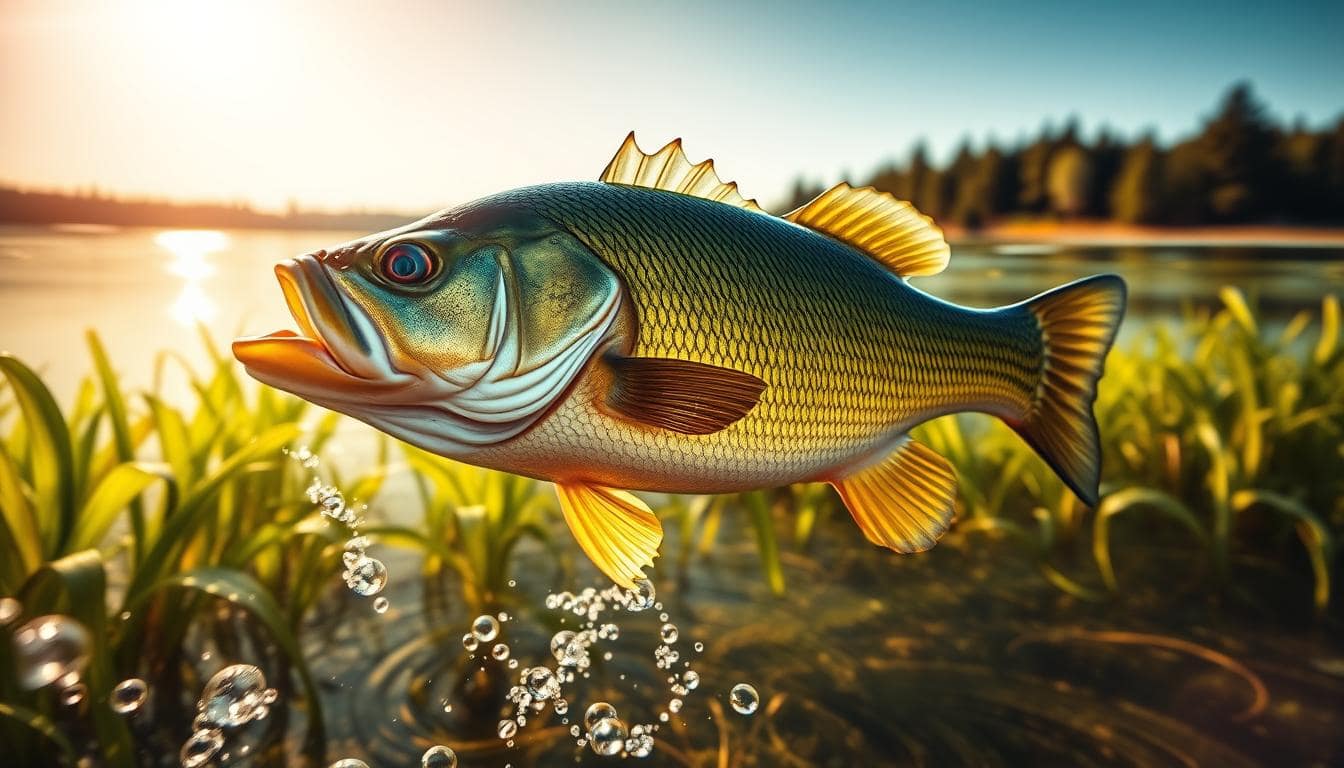
Think of a bass as a submarine with a PhD in physics. Its lateral line is a hydrodynamic sensor array. It can detect a crayfish at 20 yards. With its olfactory capabilities, it can parse chemical signatures in parts per billion.
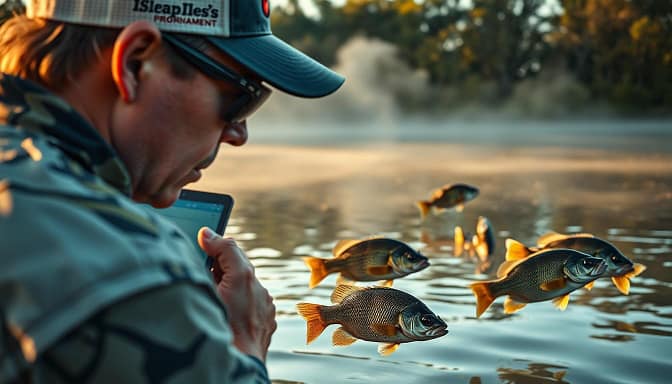
Reaction strikes are the holy grail of fishing. Jeff “Gussy” Gustafson knows this when he fishes flooded Texas brush. He’s not looking for a hungry bass. He’s using a bass’s instinct to defend its territory.
Seasonal shifts change bass behavior. In June, they move to deeper, cooler water. They’re not lazy; they’re saving energy.
Why do isolated bushes outperform solid walls? It’s simple. A lone structure offers clear attack lanes, saves energy, and has 360-degree surveillance.
- Clear attack lanes: No visual clutter means faster reaction time
- Energy conservation: Less movement required for ambush
- Strategic advantage: 360-degree surveillance of approaching prey
Bass are efficiency experts. They won’t chase bad meals. They wait for premium protein to come to them. This is why 6-16 foot flats are gold mines.
So, what’s your actual fishing day strategy? Stop thinking about hunger. Ask what data the bass is processing. Is your presentation triggering a reaction or an evaluation? Are you fishing in the right place?
This understanding makes you a strategic predator. You’re not just casting; you’re hacking the bass’s system. With this level of prep, you’re not just competing; you’re using insider information.
High-Performance Lure Choices
Greg Gussy flips a tube into heavy cover with precision. Every part of his setup is designed for a specific task. The G. Loomis NRX+ 895C JWR rod and Shimano Metanium reel work together perfectly.
This setup is like a Formula 1 car’s transmission. The gear ratio is all about managing fatigue during flips. The 50 lb PowerPro braid is like a data cable, sending every nibble to your brain.
The ⅜ oz tungsten weight and Gamakatsu hook are key. Tungsten is denser than lead, making the bait more effective. This system is all about presenting the tube perfectly.
June is a time of change for bass. They become more aggressive. Your lure selection must match this change.
Walking baits like Zara Spook or Walking Boss are great. Marty Stone uses them on alewife-rich points. The side-to-side action mimics injured bait, triggering strikes.
The Whopper Plopper creates a loud commotion that bass can hear far away. Buzzbaits add surface disruption. Dustin Wilks uses a buzzin’ frog for thick cover.
Strategy is key:
| Bait Type | Best Scenario | Trigger Mechanism | Pro Example |
|---|---|---|---|
| Walking Bait | Open water, points | Wounded prey imitation | Marty Stone |
| Whopper Plopper | Low-light conditions | Auditory commotion | Popular tournament choice |
| Buzzbait/Frog | Matted vegetation | Surface disruption | Dustin Wilks |
| Popper | Dock attacks | Bluegill imitation | Dock specialists |
Each bait answers a specific question. Is the cover thick or open? Is the forage bluegill or shad? It’s not random bass lures selection; it’s tactical problem-solving.
The green pumpkin tube that won Gussy the Bassmaster Classic was chosen for a reason. It matched the local crayfish. Its fall rate triggered strikes in specific water temperatures. This is where lure selection becomes a science.
Time of day also matters. The same spot might be dead at noon but electric at dusk. Your arsenal should have options for both.
So, next time you open your tackle box, ask yourself: “Am I carrying lures, or am I carrying solutions?” The difference is between just fishing and actually catching.
Pro Angler Strategy Breakdowns
The gap between a weekend angler and a tournament winner isn’t just skill. It’s about optimizing time, motion, and probability. Watching pros like Mike Iaconelli or Kevin VanDam is like attending a statistics class. Their boats are mobile labs, gathering data on largemouth bass habits.
I once sat with Greg “Gussy” Hackney, and it was a lesson in efficiency. His flipping arm moved at a steady pace, flipping 360 times an hour. The Minn Kota Ultrex and Talons were tools for precise positioning, like a surgeon dissecting a bush.
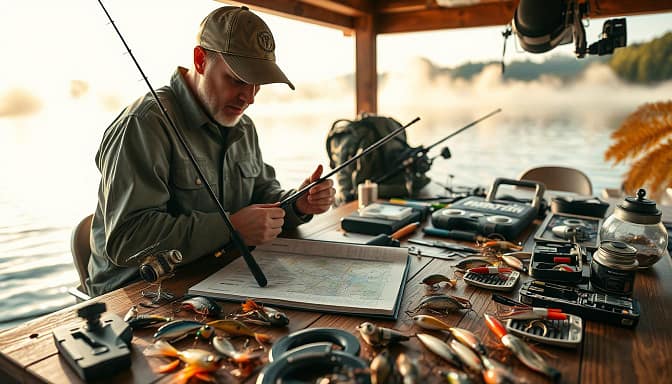
Gussy’s goal was to cover lots of water, but not randomly. He scanned the shoreline for anomalies. Each flip was a data point, and the productive spots were the signals in the noise.
Randy Howell’s strategy was different. He used a thin cable for his lure, aiming for stealth and hook-setting power. His casts scanned different depths, gathering information without sonar.
Howell’s method was a wide scan from one spot. Each cast explored a new depth or rock pile. It was a way to fish without sonar, relying on lure action and fish behavior.
Marty Stone’s approach was also strategic. He started with a buzzbait in the bank grass at dawn. As the sun rose, he moved offshore to rocky corners with a Whopper Plopper.
This wasn’t a guess. It was a response to bass behavior. Stone’s day was divided into chapters, each with its own lure and location.
To build your own strategy, ask these questions:
- When to Rotate: Have you given a pattern a fair chance (45-60 minutes)? Are you getting follows, short strikes, or nothing? Follows mean you’re close. Zero activity means it’s time to move.
- When to Commit: Did you get a quality bite? Did you see a group of fish on electronics? This is your anomaly. Park the boat. Milk it. This is what you’ve been scanning for.
- Managing Time: Your most precious resource isn’t your secret lure; it’s the clock. Divide your day into segments. Have a Morning Plan A, a Midday Plan B, and an Afternoon Hail Mary. Stick to the schedule unless hard evidence tells you to pivot.
This analytical approach turns hope into strategy. It transforms random casts into a deliberate search for a winning pattern. That’s the pro secret. It’s not about magic lures. It’s about treating every cast as a question and every bite as an answer in your ongoing tournament prep equation.
Drills to Sharpen Your Skills
Think of all that behavioral analysis and gear talk as your playbook. The field is where you run the drills. This is where knowledge becomes reflex.
Start with target practice. Place a bucket fifteen feet away. Can you pitch a jig into it ten times straight? This isn’t about catching fish yet. It’s about building the silent entry. Your lure selection means nothing if your cast spooks the entire cove.
Next, try the scenario simulator. Before a trip, open a map. Pick one spot. Now, based on season, time, and structure, force yourself to choose just two lures from your box. Justify each pick aloud. This drill wires your brain for rapid, on-the-water decision-making.
Lastly, master the manipulation matrix. Tie on a soft plastic. Work it along a bank five different ways: hop, drag, shake, swim, let it sit. Note what triggers interest. Repetition forges the neural pathways that turn thought into instinct.
The gap between knowing and doing is filled with deliberate practice. For a systematic breakdown of dry-land exercises, from knot-tying to rigging drills, this resource is your training manual. The master isn’t the one with the most information. The master is the one who has done the most thoughtful repetitions.


