
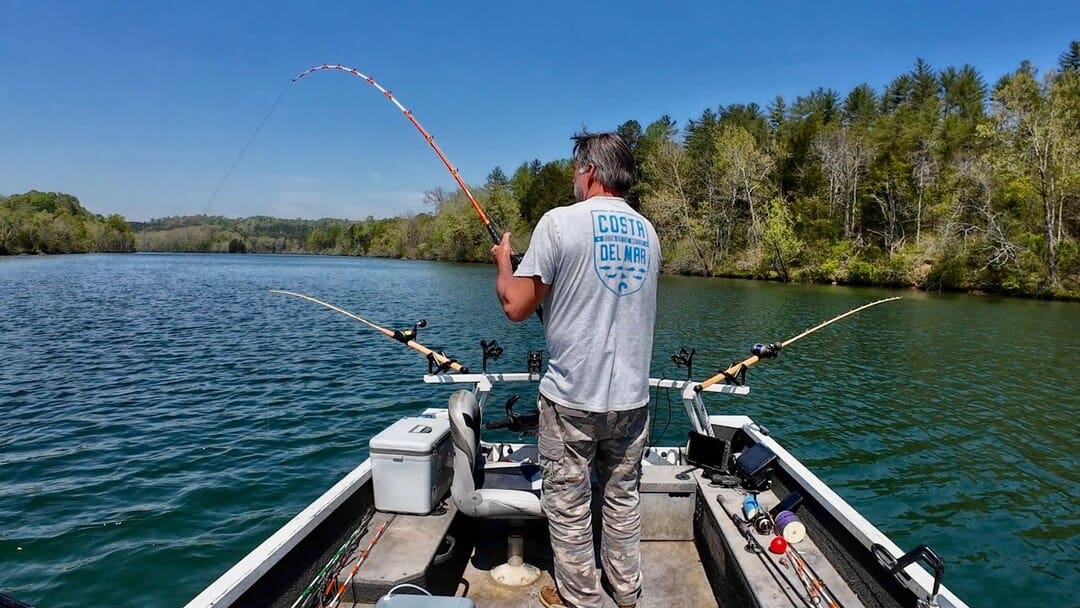

Catfish fishing weather is often treated like something anglers complain about after the trip. It should be part of the plan before the bait bucket leaves the house. Temperature swings, cloud cover, wind, rain, pressure changes, and lightning risk can all shape whether a trip sets up for steady action or wasted hours.
A good forecast does not catch fish by itself, but it tells anglers where to start and when to be careful. The deeper weather pattern behind better catfish bites shows why the best trips are rarely built on luck alone. Weather changes the water, and catfish react to water more than calendar dates.
Catfish Fishing Weather Starts With Temperature Swings
Temperature affects comfort, bait movement, oxygen conditions, and where catfish are likely to feed. A mild evening after a hot day can pull fish toward shallower edges. A sharp cold front may slow activity or push fish toward deeper, more stable water.
Florida anglers have to pay special attention to heat. Long, hot afternoons can make bank fishing uncomfortable and sometimes less productive in shallow water. Dawn, dusk, and night often become stronger windows because the water edge cools and shoreline pressure drops.
The National Weather Service’s heat safety tools help anglers plan around dangerous heat, especially during long sessions on open banks or exposed boats. A good fishing plan should protect the angler first and chase the bite second.
Clouds Can Stretch a Feeding Window
Cloud cover can soften bright conditions and extend feeding activity. Catfish do not need bright light to find food, so darker skies may help them roam more confidently along banks, inflows, and flats. Cloudy days can turn a short dawn or dusk window into a longer opportunity.
This does not mean every gray day is good. A dead, humid, windless afternoon can still fish slowly if no water is moving and bait is inactive. Clouds are most useful when paired with another positive sign: wind pushing food, rain adding flow, or cooler temperatures making shallow water more comfortable.
The best move is to treat clouds as permission to test shallower water longer. If baitfish, insects, foam, or current show up, the window may be real. Low light extends confidence for fish and anglers.
Rain Helps When It Moves Food Safely
Rain can improve catfishing when it creates runoff, stains water, cools the surface, and carries food into the system. Light to moderate rain can make creek mouths, culverts, drains, and bank edges stronger. Heavy storms can create the same food movement, but they also bring risk.
Lightning changes the decision immediately. NOAA’s lightning safety guidance warns that if thunder can be heard, a person is within striking distance and should seek safe shelter. For anglers, storm safety planning is not optional when rods, water, boats, and open banks are involved.
After the storm passes safely, the best question is where water entered. Fish the inflow, the color line, and the first deeper edge nearby. The rain itself matters less than what it does to the water.
Wind Tells You Which Bank to Test First
Wind is one of the most useful weather signals because it gives the angler a visible direction. It pushes surface food, insects, foam, baitfish, and warmer or cooler water toward specific banks. A windblown shoreline can be harder to fish, but it may also be the shoreline receiving the most food.
The best windy setup has a feature attached: a point, riprap edge, drop-off, bridge, grass line, or inflow. Wind alone is not enough. Wind plus structure is where catfish can feed efficiently.
Avoid making wind a slogan. Sometimes the protected bank is better if wind makes line control impossible or pounds shallow mud too hard. Wind is a clue, not a command.
Pressure Changes Matter Most When They Move the Water
Anglers talk about barometric pressure constantly, but pressure alone can become a distraction. The practical question is what weather is changing around it. Is a front bringing clouds? Is wind shifting? Is rain about to add runoff? Is heat breaking at dusk?
Rather than trying to fish a number, watch the sequence. Pre-front conditions can bring wind and feeding activity. Post-front conditions may bring clear skies, cooler air, and slower shallow movement. A stable period after rough weather may settle fish back into predictable edges.
Use this planning table before picking the trip window.
| Weather Signal | Better Fishing Read | Smart Starting Point |
| Hot sunny afternoon | Shallow bite may shrink | Shade, depth, or current |
| Cloudy evening | Low-light window may stretch | Banks near deeper water |
| Light rain | Food and scent may move | Inflows and drains |
| Heavy storm | Safety risk comes first | Wait, then fish runoff |
| Steady wind | Food stacks on one side | Windblown structure |
| Falling pressure | Conditions may shift fast | Be ready to move |
The table turns weather into decisions. The point is not predicting perfection; it is avoiding a blind start.
The Next Risk Is Ignoring Safety for a Better Bite
Catfish anglers can be stubborn because some of the best bites happen near uncomfortable weather. That is exactly why safety needs to be planned before the first cast. Heat, lightning, wind, rising water, slippery banks, and low visibility can all turn a good pattern into a bad decision.
Set a weather limit before the trip. Know the nearest shelter, check radar, bring water, use lights, and avoid banks that become dangerous when rain starts. A fish is not worth a storm gamble.
Catfish fishing weather gives anglers a practical edge when it is treated as a planning tool, not an excuse. The best trip is built around safe timing, useful water movement, and a forecast that points toward better feeding lanes. Luck still has a place, but the forecast should get the first cast.


