

Over the years, I’ve come to realize that successful catfish anglers don’t just rely on bait or gear they rely on reading the environment. One of the most important factors influencing success is weather. In 2026, with more anglers tracking conditions through apps and data, understanding how weather affects catfish biting patterns has become a critical advantage.
Catfish are highly sensitive to changes in their surroundings. Unlike some species that rely heavily on sight, catfish depend on smell, vibration, and environmental cues. This makes them particularly responsive to shifts in temperature, pressure, and water movement.
From my experience, the difference between a slow day and a productive one often comes down to how well you interpret these subtle changes.
Water Temperature: The Primary Trigger
If there’s one factor that consistently influences catfish activity, it’s water temperature. Catfish are cold-blooded, meaning their metabolism and feeding behavior is directly tied to the temperature of the water. In cooler conditions, especially during early spring, catfish tend to move slower and feed less aggressively. As temperatures rise, their metabolism increases, leading to more frequent feeding.
What I’ve noticed is that moderate warming trends often produce the best results. Sudden spikes, however, can temporarily slow activity as fish adjust.
For anglers, this means timing is everything. Monitoring water temperature can help predict when catfish are most likely to bite.
Barometric Pressure: The Hidden Influence
Barometric pressure is one of the most overlooked elements in fishing, yet it plays a significant role in how weather affects catfish biting patterns.
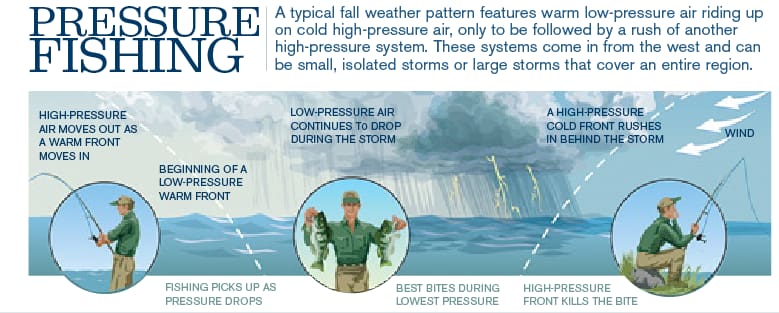
Before a storm, when pressure begins to drop, catfish often become more active. This is a feeding window that experienced anglers look for. The changing pressure seems to trigger a sense of urgency, encouraging fish to feed more aggressively.
After a storm, when pressure stabilizes or rises, activity can slow down. Fish may retreat to deeper water or become less responsive to bait. From my perspective, the best opportunities often occur just before weather systems change, not during or after.
Rain and Water Movement: Opportunity or Challenge?
Rain can have both positive and negative effects on catfish fishing. Light to moderate rainfall often improves conditions by increasing water flow and stirring up food sources. When rivers rise or lakes experience runoff, catfish become more active as nutrients and baitfish are carried into the water. This creates a feeding opportunity that skilled anglers can take advantage of.
However, heavy rain and flooding can make fishing more difficult. Excessive water movement can scatter fish and reduce visibility, making it harder to locate productive areas.
In my experience, the key is finding balance. Moderate rain creates opportunity, while extreme conditions require adjustment.
Wind and Oxygen Levels
Wind is another factor that directly impacts catfish behavior. While it may seem like a minor detail, wind influences oxygen levels and baitfish movement. Wind-driven currents push food toward certain areas, often concentrating fish along shorelines or structure. Increased oxygen levels in these zones can also make catfish more active.
I’ve found that fishing on the windward side of a lake where waves are pushing toward the shore can significantly improve results.
Day vs Night: Weather Amplifies the Difference
Catfish are naturally more active at night, but weather conditions can amplify or reduce this behavior.
Cloudy or overcast days often mimic nighttime conditions, allowing catfish to feed more aggressively during daylight hours. Conversely, bright, sunny conditions may push them into deeper or shaded areas.
This is where understanding how weather affects catfish biting patterns becomes especially valuable. Adjusting your fishing schedule based on cloud cover and light levels can make a noticeable difference.
Seasonal Weather Patterns and Catfish Activity
| Season | Weather Impact on Catfish | Fishing Strategy |
|---|---|---|
| Spring | Rising temps increase feeding | Target shallow water |
| Summer | Heat pushes fish deeper or nocturnal | Fish at night or deeper zones |
| Fall | Cooling temps trigger aggressive feeding | Focus on transition areas |
| Winter | Cold slows metabolism | Fish slow and deep |
Seasonal changes provide a broader context for understanding daily weather patterns. Each season introduces different challenges and opportunities, requiring anglers to adapt accordingly.
Why Modern Anglers Are Tracking Weather More Closely
Today’s anglers have access to more tools than ever before. Weather apps, sonar technology, and real-time data have made it easier to predict fish behavior.
For those serious about improving their success, understanding how weather affects catfish biting patterns is no longer optional it’s essential.
For additional scientific insight into fish behavior and environmental factors, this how weather affects catfish biting patterns perspective aligns with research from trusted environmental and wildlife sources.
Turning Weather Into an Advantage
As I reflect on years of fishing and observing patterns, one truth stands out: weather is not something to work against it’s something to work with. Understanding how weather affects catfish biting patterns allows anglers to make smarter decisions about when and where to fish. It transforms uncertainty into strategy and guesswork into informed action.
By paying attention to temperature, pressure, rain, and wind, anglers can significantly improve their chances of success. In 2026, with better tools and data available, there’s no reason to ignore these critical factors.
Ultimately, the difference between an average outing and a great one often comes down to how well you read the conditions. And in the world of catfish fishing, the weather is always telling a story you just have to know how to listen.


