

Forget everything you think you know about fishing. Catching smallmouth bass isn’t about lures or luck—it’s about understanding their behavior. They act like cold-blooded analysts, responding to their surroundings.
In forest streams, they’re like aggressive venture capitalists. Every drift is a pitch meeting. They’re hungry and seize every opportunity.
Lake-dwelling smallmouth are different. They’re like corporate executives in a rich environment. They’re well-fed and skeptical, making it harder to impress them.
Knowing the difference between stream and lake smallmouth is key. It’s not just fishing; it’s understanding their social behavior. Your strategy depends on knowing their environment.
This knowledge is vital when tracking their movements, like during spring migrations. The environment sets the rules. Your job is to learn and adapt.
Advanced Presentation Techniques
Think of it as behavioral psychology with a fishing rod: convincing a satisfied bass to strike requires understanding what it refuses to eat. When the underwater buffet has been picked clean and the fish are lethargic from gluttony, brute force becomes counterproductive. The advanced game shifts to finesse, suggestion, and sometimes, outright deception.
Frank Campbell’s approach on the Great Lakes exemplifies this surgical mindset. He doesn’t just downsize; he performs micro-surgery. A #4 mosquito hook, 6-pound fluorocarbon line, and the lightest tungsten sinker possible become his scalpel and sutures. This isn’t fishing—it’s a delicate operation where the patient doesn’t know it needs surgery. The drop-shot rig becomes a tool of vertical hypnosis, the lure hovering with tantalizing vulnerability.
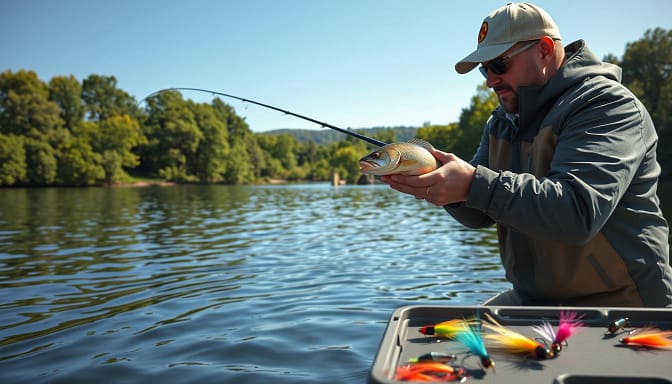
Then there’s the genius of the “do-nothing” solution. Imagine rigging a wacky worm under a fixed bobber with a fluorocarbon leader. You cast, you wait, and you might even eat your sandwich. The lure does all the work, sinking and swaying with a natural lethargy that screams “easy meal” to a bass conserving energy. It’s the angling equivalent of playing hard to get, and it works precisely because it demands nothing.
But what about when you need to think bigger by actually thinking smaller? Enter the subversive world of the Supersize Ned Rig. It takes the classic finesse number-catcher—a small mushroom head jig and a stubby worm—and feeds it steroids. A 5/16-ounce head paired with a full 5-inch worm creates brilliant false advertising. To a bass, it looks like a substantial meal that requires minimal effort, filtering out the smaller, more energetic fish and attracting the larger, more calculated predators.
This rig excels in the toughest conditions: heavily pressured waters, cold fronts, and post-spawn lethargy. It’s a confidence trick played on the bass’s own laziness.
Lastly, consider the soft jerkbait, like the Strike King Caffeine Shad rigged weightless. Forget the aggressive, mechanical pops of its hard-bodied cousin. The soft version sinks on a slow, fluttering glide, each twitch sending out pulses of “wounded” that trigger a primal strike reflex. It’s the difference between shouting at a bass and whispering a secret it can’t ignore.
In this realm, jigging transforms. It becomes less about creating violent action and more about implying life. A subtle shudder, a barely perceptible hop—these micro-movements suggest a dying or distressed creature, which is far more compelling to a full bass than a healthy one darting about. The psychology is clear: why chase what you can easily catch?
Mastering these techniques requires a shift in perspective. You’re no longer just an angler; you’re a strategist reading the room, or in this case, the lake. You match the hatch not in size, but in attitude. When the fish are skeptical, you offer certainty in the form of an effortless meal. That’s the advanced presentation game: winning through minimalism.
Seasonal Adjustments
August heat doesn’t stop the smallmouth bite; it just changes where they eat. It’s like a top chef switching to a food truck. They’re always hungry, but where and how changes with the weather.
Jeff Gustafson uses “largemouth gear” in the heat. He uses frogs, swimjigs, and flippin’ baits on heavy rods. It’s not about finesse; it’s about making a scene in the shallow slop.
But when it gets cold, everything changes. The baitfish and smallmouths head to deeper water. Now, it’s time for big lures like the Jackall Rhythm Wave. These imitate fleeing fish, triggering a different kind of strike.
And in the summer, topwater walkers can create huge explosions. The Rapala Skitter V in Bone is a provocation. It’s not just feeding; it’s a display of territorial rage.
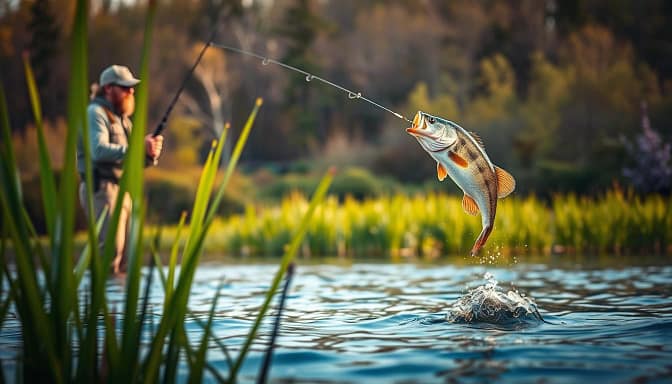
Understanding these changes is key. For more on these patterns, check out these seasonal smallmouth techniques. The goal is to match your approach to the weather.
| Condition | Habitat Focus | Primary Arsenal | Mental Approach |
|---|---|---|---|
| Summer Heat (Dog Days) | Shallow slop, weedy margins, docks | Heavy braid, frogs, swimjigs, flipping baits | Aggressive, power-fishing mindset; find the shade and chaos |
| Cold Front Passage | Deep main-lake structure (20+ ft), bluffs, humps | Large swimbaits (Jackall Rhythm Wave), spoons (Nichols) | Patient, vertical presentation; mimic fleeing baitfish pods |
| Stable Summer Weather | Rocky points, offshore transitions, current seams | Topwater walkers (Rapala Skitter V), jerkbaits, tubes | Trigger reaction strikes; capitalize on territorial defense |
| Transition Periods (Spring/Fall) | Gradual depth changes, creek channels, first breaklines | Ned rigs, drop shots, hair jigs, crankbaits | Methodical, searching patterns; follow the biomass migration |
The table is more than a checklist. It’s a guide to smallmouth behavior. Each condition needs a specific tactic. The true advantage is in reading the weather and choosing your approach wisely. Forget yesterday’s success; today’s weather is different.
River vs. Lake Approaches
Approaching river and lake smallmouth bass with the same tactics is like using NATO strategy in a guerrilla war. The environments are not just different settings; they require different strategies, tools, and tactics.
For river tactics, understanding the water flow is key. The current gives your lure the action it needs. River smallmouth bass are athletes, always moving. They hide in calm spots like behind rocks or logs.
Using a Rapala DT-4 crankbait can be a game-changer. It’s not a snag hazard but a signal to the bass that dinner is ready. The Red Crawdad pattern works well in these conditions.
Your approach changes from searching to reading the water. You look for signs like a boil on the surface. This means a rock is submerged. A smooth glide indicates a deep channel. Kayaks help you reach these spots easily.
Lakes are different, like a vast chessboard. Your main opponents are the water’s clarity and the pressure. You need to make long, stealthy casts. Lures like subtle paddletails or a drop-shot are best.
On a lake, you’re fighting how the fish perceive you. You need to trigger strikes in open water. This requires a different arsenal of retrieve patterns.
Mastering river tactics means using chaos to your advantage. Lakes require patience and subtlety. The difference is like a street fight versus a silent sniper duel. The table below shows the main differences in approach.
| Aspect | River Approach | Lake Approach | Strategic Mindset |
|---|---|---|---|
| Primary Force | Current (Hydrology) | Clarity & Pressure | Use vs. Overcome |
| Key Presentation | Current-animated lures (Crankbaits, Jigs) | Finesse plastics (Paddletails, Drop-shots) | Reaction vs. Inspection |
| Fish Positioning | Predictable ambush points (Eddies, Boulders) | Variable & suspended (Open water, Thermoclines) | Reading Water vs. Reading Electronics |
| Retrieve Style | Aggressive, using flow | Subtle, patient | Immediate Decision vs. Calculated Choice |
| Access & Stealth | Kayak/wading for intimate access | Long casts, quiet boats | Close-quarters vs. Distance Engagement |
For bank fishing, rivers and lakes have different strategies. On a river, target current breaks from shore. On a lake, cover long stretches of shoreline to find roaming fish. The same rod can be used, but the tactics change.
So, choose your battlefield. Are you fighting the current or waiting for fish in the lake? Your choice affects everything in your tackle box and your strategy.
Training Regimens
After you know the habitat and how to present your lure, it’s time to pick your gear. Think of Andrew Ragas’s boat as a carefully chosen library. Each St. Croix Mojo Bass or Victory rod is like a book for a specific fishing technique.
This isn’t about hoarding. It’s about being precise. A 7.5-foot rod is perfect for deep drop-shotting, giving you the power to lift subtly. A G. Loomis NRX 893C paired with a Shimano Curado is great for finesse fishing. Your gear is your argument.
Updating your mental skills is just as important. Know when to change lure colors on a pressured lake. Find the exact sinker weight that gets a fish’s attention. Practice your jigging rhythm until it feels automatic. Good jigging is about a timed, persuasive motion.
This training turns you from a hopeful caster to a strategic angler. You stop guessing and start knowing. Your rod becomes a direct link to the water. Every cast is a test, every retrieve an experiment. This is how you turn speculation into strategy and hope into a catch.


