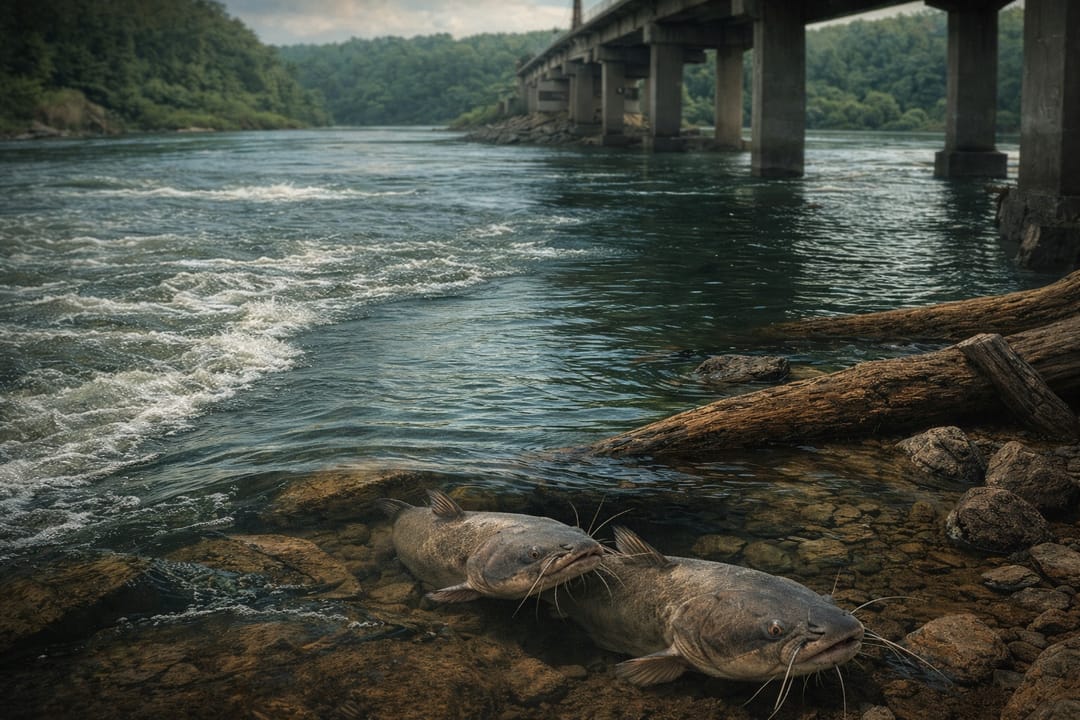

For a long time, I approached catfish fishing the wrong way. I’d set up in random spots, cast out bait, and wait sometimes for hours with little to show for it. It wasn’t until I began focusing on catfish fishing current and structure that everything changed.
The difference wasn’t subtle. It was immediate. Instead of hoping fish would find my bait, I started placing my bait exactly where catfish were already feeding. That shift from guessing to understanding completely transformed how I fish.
Now, whenever I approach a river or reservoir, I’m not just looking at the water. I’m looking for movement, breaks, and structure. Because that’s where catfish live.
Understanding Why Current Matters So Much
If there’s one factor that consistently influences catfish behavior, it’s current. Flowing water carries everything catfish need oxygen, scent trails, and most importantly, food.
Baitfish, insects, and organic matter drift with the current. But catfish don’t chase blindly. Instead, they position themselves in areas where they can intercept food efficiently without expending too much energy.
That’s why catfish fishing current and structure works so well. It aligns perfectly with how these fish naturally behave.
According to insights from trusted angling resources like the Catfish Fishing Current and Structure coverage on In-Fisherman, catfish are highly dependent on current breaks and structure to conserve energy while feeding. From my own experience, that observation couldn’t be more accurate.
The Sweet Spot: Where Current Meets Structure
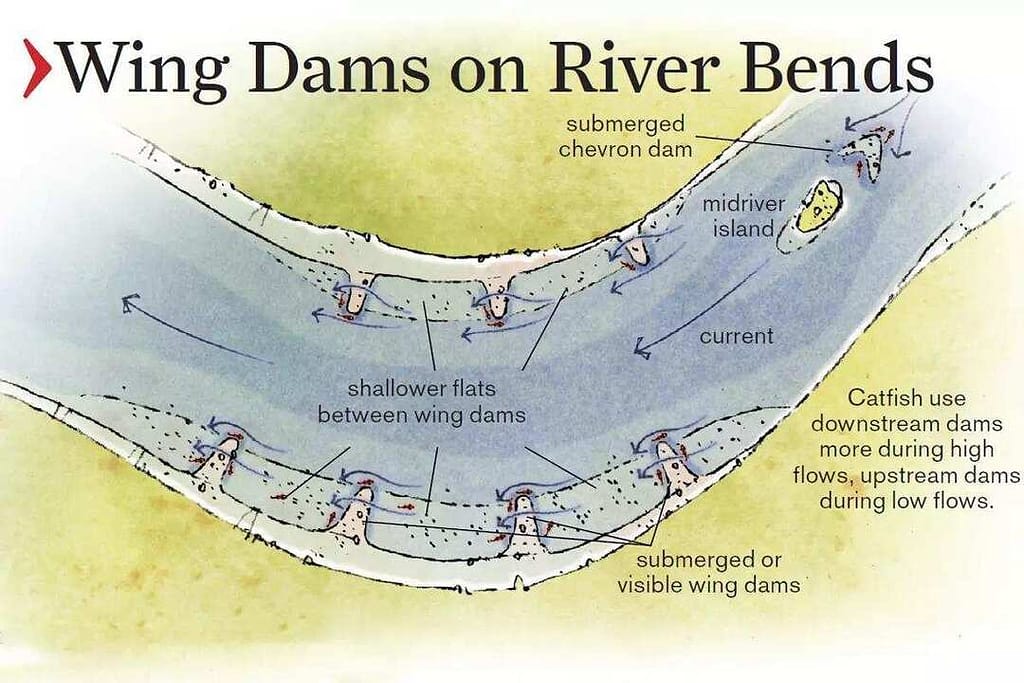
The real magic happens when current and structure come together. These areas create what I call the “sweet spot” zones where catfish can sit comfortably while food flows directly to them.
Key Elements of the Sweet Spot
| Feature | What It Does | Why It Works |
|---|---|---|
| Current Seams | Boundary between fast and slow water | Concentrates drifting food |
| Eddies | Calm water behind obstacles | Allows catfish to rest and feed |
| Structure | Logs, rocks, bridge pilings | Creates current breaks and cover |
When I find a location where these elements overlap, I know I’ve found a high-percentage area.
Current Seams: Nature’s Feeding Lanes
One of the first things I learned to identify was a current seam the visible line where fast-moving water meets slower water. These seams act like highways for food. Everything drifting downstream tends to collect or pass through these zones, making them prime feeding areas.
When I fish a seam, I position my bait right along that boundary. Not in the fastest water, and not in the stillest but exactly where the two meet. That’s where catfish are waiting.
Eddies: Calm Water With Big Potential
Eddies are another critical piece of the puzzle. These are areas of calm water that form behind obstacles like rocks, logs, or bridge supports. From the outside, eddies may look quiet or even unproductive. But underneath, they are incredibly active.
Food carried by the current gets pulled into these calm pockets, where catfish can feed without fighting the flow. It’s one of the most efficient feeding setups in nature.
I’ve had some of my best catches by placing bait just inside the edge of an eddy—where the current slows down but still delivers food.
Structure: The Backbone of Every Good Spot
While current brings food, structure provides the physical foundation that makes a spot hold fish consistently.
Catfish are drawn to:
- Fallen trees
- Rock piles
- Bridge pilings
- Submerged debris
These structures create shadows, break current, and offer protection. More importantly, they define where fish will position themselves. For me, structure is the first thing I look for. Once I find it, I analyze how current interacts with it. That combination tells me exactly where to cast.
Best Real-World Spots to Target
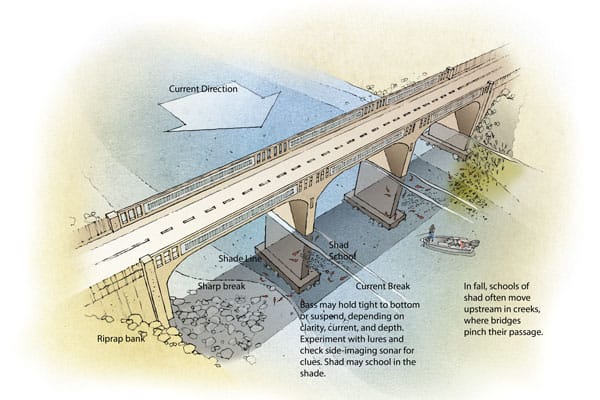
Over time, I’ve found that certain locations consistently produce results when applying catfish fishing current and structure principles.
High-Percentage Locations
- Downstream of bridges
The pilings break current and create multiple eddies, making these areas incredibly productive. - Outside bends of rivers
Water flows faster here, carving deeper channels and concentrating fish along the edge. - Behind fallen trees
These create perfect current breaks and often hold multiple fish at once.
What I’ve noticed is that these spots share one thing in common: they combine flow, cover, and feeding opportunity in a single location.
Why Location Matters More Than Anything Else
One of the biggest lessons I’ve learned is that catfish fishing isn’t about constantly changing bait or rigs it’s about choosing the right location. You can use the best bait in the world, but if you’re not placing it where fish are actively feeding, it won’t matter.
Now, when I’m not getting bites, I don’t immediately switch bait. I move. I look for better current, stronger structure, or a more defined seam. Because more often than not, the problem isn’t what I’m using it’s where I’m fishing.
Master the Sweet Spot, Catch More Catfish
If there’s one strategy that has consistently improved my success, it’s focusing on catfish fishing current and structure.
Understanding how water moves and how fish respond to that movement turns fishing from a guessing game into a calculated approach. Current brings the food. Structure creates the opportunity. And where those two meet, catfish are almost always nearby.
Now, every time I step onto a riverbank or launch a boat, I’m not just fishing I’m reading the water. I’m looking for seams, eddies, and structure. Because that’s where the real action happens. And once you learn to find that “sweet spot,” you’ll realize something I wish I had understood sooner:
The fish were never random you just needed to know where to look.


