
I’ve spent enough time on rivers to know one simple truth: catfish don’t fight current unless they have to. That realization completely changed how I approach fishing, and it’s why I consider Current Break Catfishing one of the most underrated techniques in the sport.
Instead of casting blindly into open water, I focus on where the river naturally creates relief areas where current slows down, shifts, or breaks entirely. These spots aren’t random. They’re strategic holding zones where catfish conserve energy while waiting for food to come to them.
From my perspective, once you understand how current shapes fish behavior, everything else bait placement, timing, and movement starts to make sense.
Understanding River Seams: The Feeding Highways
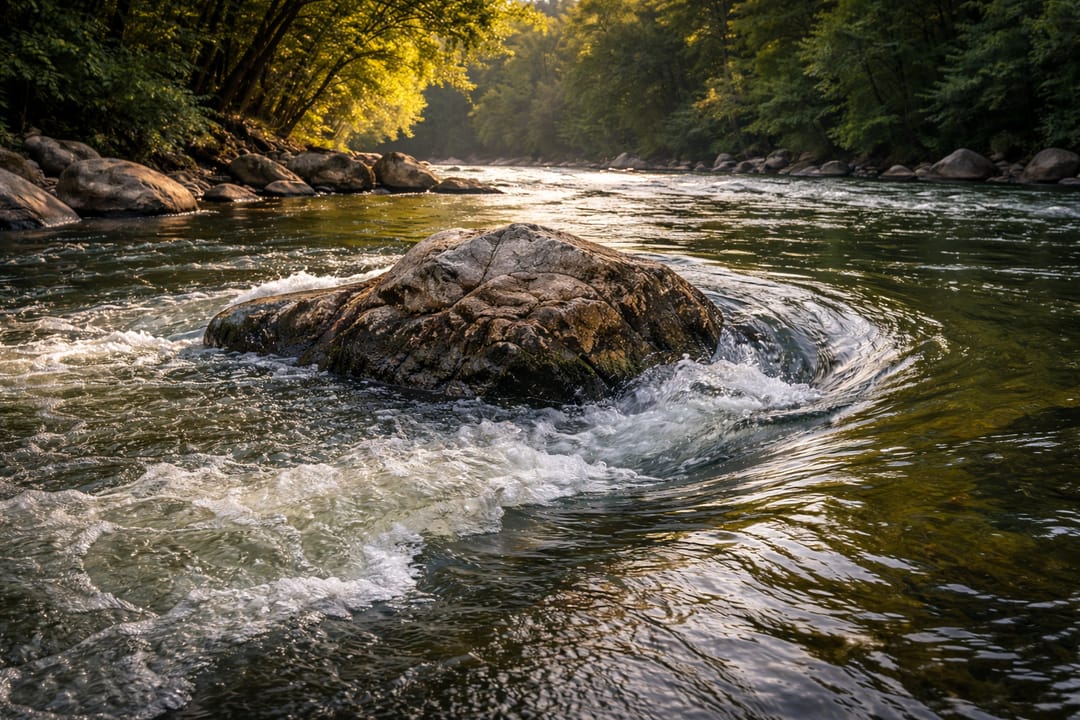
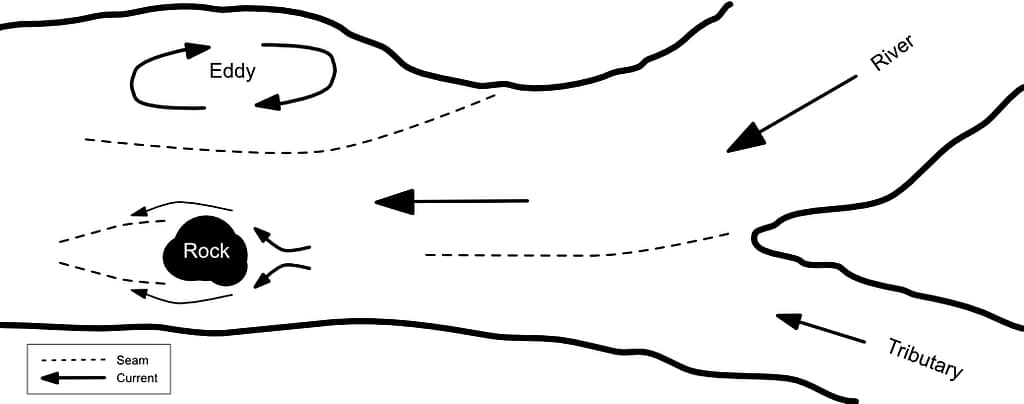
The first concept I had to truly understand was the river seam. A seam is the visible or invisible line where fast-moving water meets slower water. It’s not just a boundary it’s a feeding highway. Bait naturally drifts along these seams, and catfish position themselves right on the edge, letting the current deliver food directly to them. They don’t have to chase. They just wait.
When I fish seams, I’m not guessing. I’m targeting a zone where fish are already in position to feed. This is why the technique works so consistently.
Eddies and Slack Water: Where Big Fish Hide
If seams are feeding zones, then eddies and slack water are resting zones. These areas form behind obstacles like rocks, logs, bends, or drop-offs, where the current slows down or even reverses.
What I’ve noticed is that larger catfish tend to favor these areas. They sit in calm water, conserving energy, and then move short distances to feed when conditions are right.
Fishing these spots requires patience and precision. You’re not covering a lot of water you’re targeting a very specific pocket where fish are holding.
Positioning Your Bait the Right Way
This is where most anglers get it wrong. It’s not enough to find a current break you have to present your bait correctly. When I approach Current Break Catfishing, I focus on placement more than anything else. The goal is to position the bait where the fish already are, not where I hope they might be.
That usually means:
- Placing bait just inside the slower water
- Letting scent drift into the current seam
- Avoiding heavy current that pulls bait away too quickly
The key insight here is simple but powerful: your bait should move naturally with the water, not against it.
Reading the Water Like an Angler, Not a Beginner
One of the biggest differences I see between experienced anglers and beginners is how they read water. Beginners look at a river and see open space. Experienced anglers see structure, movement, and opportunity.
When I approach a new spot, I’m scanning for:
- Changes in water color or texture
- Subtle ripples that indicate a seam
- Calm pockets behind visible structure
These clues tell me where the fish are likely holding. It’s less about luck and more about interpreting what the river is showing you.
According to U.S. Fish and Wildlife Service, understanding habitat features like current breaks is essential for locating fish, reinforcing the effectiveness of Current Break Catfishing as a targeted strategy.
Best Conditions for Current Break Catfishing
From my experience, this technique becomes even more effective under certain conditions. Water flow, temperature, and seasonal patterns all influence how catfish use current breaks.
When It Works Best
| Condition | Why It Matters |
|---|---|
| Moderate current | Creates strong seams and feeding lanes |
| Rising water levels | Pushes fish into predictable holding areas |
| Warmer temperatures | Increases feeding activity |
| Low light (morning/evening) | Encourages movement from cover |
What stands out to me is how predictable fish behavior becomes when these factors align. Instead of searching randomly, you’re working within a pattern that repeats itself across different rivers and conditions.
Why This Technique Is Often Overlooked
Despite how effective it is, Current Break Catfishing is still underused. I think part of the reason is that it requires a deeper understanding of water movement.
It’s easier to cast into open water or rely on familiar spots. But those approaches often ignore the natural behavior of the fish.
From my perspective, anglers who take the time to learn current dynamics gain a significant advantage. They’re not just fishing they’re strategically targeting high-probability areas.
The Advantage of Fishing Smarter, Not Harder
One of the biggest lessons I’ve learned is that success in catfishing isn’t about effort it’s about efficiency. You can spend hours casting in the wrong place, or you can spend minutes fishing in the right one.
Current breaks allow you to do the latter. They concentrate fish into predictable zones, making your time on the water more productive.
What I find most rewarding is how consistent this technique can be. Once you understand it, you can apply it to almost any river system.
Turning Knowledge Into Results
Looking back, adopting Current Break Catfishing changed the way I fish entirely. It shifted my focus from covering water to understanding it.
By targeting seams, eddies, and slack water, I’m no longer relying on chance. I’m working with the natural flow of the river and the behavior of the fish.
The biggest takeaway is this: catfish are predictable when you understand their environment. They follow current, conserve energy, and position themselves strategically.
From my perspective, this technique isn’t just effective it’s essential for anyone serious about improving their success on the water.
And once you start seeing rivers through this lens, you’ll realize that the best fishing spots were there all along you just needed to know where to look.


