


September Lure Selection is where bass fishing starts to feel like interval training: fast bursts, smart recovery, and no wasted motion. September can bring surface feeding, shad movement, wind-driven banks, and cooler water that pushes bass toward creek mouths, secondary points, brush piles, and main-lake coves. If your deck looks like a garage sale and your shoulders are smoked by 9 a.m., you are not fishing hard; you are fishing scattered. Let’s tighten the plan.
I like September because it rewards anglers who can read conditions and switch pace without panic. Early in the month, water may still sit in the upper 70s on many fisheries, and bass can be aggressive. As the fall transition advances, temperatures can drop through the low 70s, 60s, and eventually toward the 50s. That temperature slide changes lure speed, depth, and target zones. StateOutdoors notes that bass shift toward shad-rich creek mouths, secondary points, brush piles, and main-lake coves as fall water temperatures fall from the mid-70s into the 60s and 50s fall bass lure patterns.
September Lure Selection Starts With Temperature
Water temperature is not a magic crystal ball, but it is a strong starting signal. Think of it like setting your workout pace before a long row: sprint too soon and you burn out; crawl too early and you miss active fish. In September, your first lure should match how willing bass are to chase.
Early September Speed Baits
In early September conditions, with water still around 78–72 degrees, the research supports fast-action choices such as topwater walkers, buzzbaits, and lipless crankbaits. That does not mean you throw them blindly across every flat. It means you start where bait is present, where shallow cover gives bass an ambush angle, and where low light or wind gives your lure some cover.
A walker is excellent when fish are showing on the surface or bait is flickering over shallow flats. A buzzbait is a contact sport lure; run it near grass edges, laydowns, or shoreline cover where a bass has one clean shot. A lipless crankbait is the cardio machine of the tackle box. You can cover water, feel grass or bottom changes, and quickly learn whether fish are chasing.
Mid-September Control Baits
By mid-September and into mid-October conditions, when water slides from the low 70s into the mid-60s, bass often relate to schooling baitfish. Medium-fast presentations such as spinnerbaits, squarebill crankbaits, and swimbaits fit that window. The practical move is to keep your retrieve active but controlled. If a bass misses, do not instantly change lures. Change cadence first. Pause a squarebill after it deflects. Let a spinnerbait pulse beside a stump. Slow a swimbait just enough that it looks easy to catch.
A smart September Lure Selection plan is a ladder, not a coin flip. Start high and fast in low light. Move to mid-depth reaction baits as the sun rises or wind builds. Drop to slower bottom contact if the chase bite fades.
| Condition Signal | Primary Lure Style | Best Target Area | Retrieve Cue |
|---|---|---|---|
| 78–72°F water and active surface bait | Topwater walker, buzzbait, lipless crankbait | Shallow cover, flats, bait-rich pockets | Fast, searching, and confident |
| Low 70s to mid-60s | Spinnerbait, squarebill crankbait, swimbait | Creek mouths, secondary points, coves | Medium-fast with brief pauses |
| Below about 55°F | Football jig, deep crankbait, Texas or Carolina rig | Brush piles, deeper edges, bottom structure | Slow, steady, and bottom-aware |
Match The Lure To Bass Behavior
Bass do not wake up and read your tackle catalog. They respond to forage, light, water clarity, cover, and pressure. In September, the strongest clue in the research is baitfish movement. If bait is shallow and nervous, start above the fish. If bait is scattered across points, cover water. If bait is present but bass will not chase, slow down and make repeated casts to the right targets.
Topwater Timing And Surface Windows
September can be prime time for topwater action during early morning hours. Walking baits, plopper-style baits, and poppers around shallow cover or bait-laden flats can draw surface strikes, according to Truscend’s September bass lure notes September topwater tips. My rule is simple: if I see bait dimpling or hear bluegill popping near cover, I give topwater a real chance before I pick up something deeper.
Do not overwork the bait just because you are excited. A walking bait needs rhythm. A popper needs pauses. A plopper-style bait needs the right lane. If the water is slick, I shorten casts and make quieter entries. If there is ripple, I get bolder and cover more distance. Your body matters here too. Keep your wrist loose, shoulders down, and feet set. A tense angler works a topwater like a jackhammer, and bass are not obligated to applaud bad form.
Wind, Flash, And Spinnerbait Decisions
Spinnerbaits shine in early fall when wind puts ripples on the surface. Flash and vibration help in stained water, and willow-blade designs pair well with smaller baitfish during this season. That is a practical, boat-deck-ready clue. If the wind hits a point, a shallow pocket entrance, or a stretch of cover with bait nearby, a spinnerbait deserves a cast.
Retrieve angle matters. Cast across the wind-blown face instead of straight into empty water. Let the bait tick cover without burying it. If the water has stain, let vibration work. If the water is clearer, keep the bait moving and avoid dragging it through the strike zone like a parade float. For more location work during this month, pair your lure choices with September bass movement clues so your bait is not perfect in the wrong water.
Build A Lean September Tackle Rotation
The biggest September mistake is carrying every lure you own into every decision. That is how you burn time, focus, and shoulder stamina. I want a lean rotation that covers the water column and gives me fast feedback.
Here is the rotation I would keep on the deck for a disciplined September session:
- Topwater walker or popper: First light, shallow cover, bait-laden flats, and calm to lightly rippled water.
- Buzzbait: Shallow cover, bank grass, wood, and aggressive fish that will commit upward.
- Lipless crankbait: Search tool for flats, grass edges, and roaming fish that are feeding on bait.
- Spinnerbait: Wind, stained water, rippled banks, and baitfish-focused bass.
- Squarebill crankbait: Shallow cover where deflection can trigger a reaction bite.
- Football jig or Texas/Carolina rig: Slower option once cooler water or inactive fish push you toward bottom contact.
This is where September Lure Selection becomes physical performance. You are not just picking bait; you are managing output. Keep rods staged by speed: topwater, moving bait, bottom contact. Put pliers, spare hooks, and soft plastics where you can reach them without crawling across the boat. Every awkward bend and wasted step adds up across a full fishing day.
Cadence should also be trained. Spend five minutes before launch making a plan: where you will start, what lure gets first water, what condition forces the first change, and what slower bait backs up the reaction bite. That small mental warmup can prevent the classic September spiral: three casts, no bite, new lure, repeat until lunch.
Rigging Adjustments For Changing Conditions
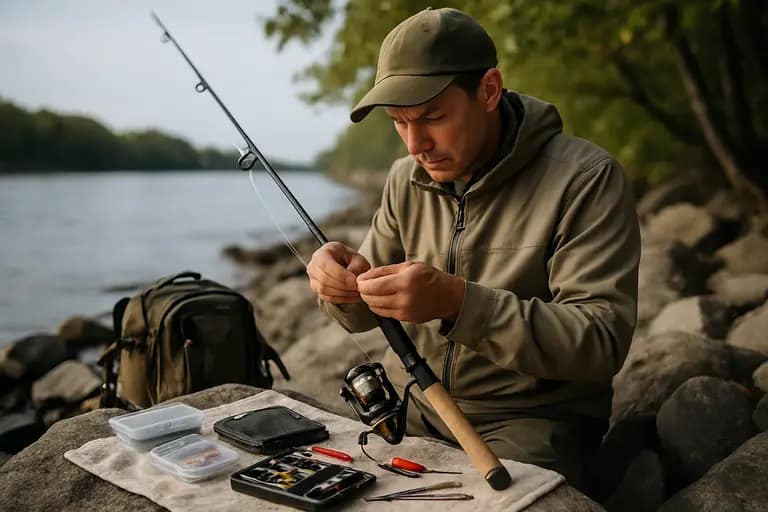
September rewards small adjustments because bass may be between summer habits and fall feeding patterns. You do not need a magic bait. You need the right retrieve, target, and backup rig.
When The Chase Bite Fades
If fish stop chasing a topwater, buzzbait, spinnerbait, or crankbait, first change speed. Then change angle. Then change depth. Only after that should you overhaul the lure. Many anglers swap too quickly because it feels productive. It is usually just tackle-box cardio.
Once water gets below about 55 degrees, research points toward slower presentations such as football jigs, deep-diving crankbaits, Texas rigs, and Carolina rigs. The key is patience. Keep contact with the bottom, feel cover, and let the bait stay in the strike zone longer. That is not lazy fishing; that is controlled fishing.
Where To Spend Your Best Casts
Creek mouths, secondary points, brush piles, and main-lake coves are strong September targets because they connect bait movement with bass positioning. Make your first cast count by choosing the highest-percentage lane: the windy side of a point, the shade line beside cover, the edge of a brush pile, or the shallow flat with visible bait activity.
Do not treat every cast equally. Tournament-minded anglers and weekend grinders both gain ground by ranking casts. A cast across dead water is a warmup. A cast past a piece of cover, retrieved through bait, with the correct speed for the temperature window, is a real rep.
September Lure Selection For Better Hookups
Your September Lure Selection should feel like a smart training plan: start with energy, adjust with feedback, and finish with discipline. Early in warm water, give bass fast targets such as walkers, buzzbaits, and lipless cranks. As water cools through the fall transition, lean on spinnerbaits, squarebills, and swimbaits around baitfish movement. When the water cools far enough that the chase bite weakens, slow down with football jigs, deeper cranks, and Texas or Carolina rigs.
The best part is that none of this requires guesswork heroics. Watch the bait. Check the temperature. Feel the wind. Match lure speed to fish mood. Keep your body efficient so your casts stay sharp late in the day. Do that, and September stops being a confusing in-between month. It becomes one of the most satisfying windows of the bass calendar.


