


ultrasonic fishing technology is a fancy phrase for what most of us care about on the water: cleaner sonar pictures, steadier targets, and electronics that help us fish a cast instead of chasing a screen like a cat after a laser pointer. Minn Kota and Humminbird have not released every detail yet, but the confirmed pieces already give sport anglers a practical read on where boat control and sonar are headed.
Minn Kota and Humminbird are planning a joint technology announcement for October 6, 2026, and the details were still being held back as of September 14, 2026, according to a Water Wire report. That timing matters because a lot of anglers are already running integrated trolling motors, forward-facing sonar, multiple displays, and networked accessories. If you fish tournaments, guide clients, or just want more productive weekend trips, the smart move is to prepare your rig and habits before the reveal, not panic-buy after the dock talk starts.
Ultrasonic Fishing Technology Signals To Watch
Ultrasonic Fishing Technology And Boat Control
For anglers, ultrasonic fishing technology is not only about seeing fish. It is about keeping the sonar beam pointed where your cast, jig, bait, or structure target actually is. The most concrete public clue is U.S. Patent No. 12,704,614, issued on August 11, 2026, to Johnson Outdoors. The patent describes a sonar array mounted in a trolling motor propulsion unit that can be steered independently from the motor, helping maintain sonar imaging of a structure despite platform movement and orientation changes, as shown in the Justia patent record.
That may sound like lab-coat language, but the fishing value is easy to picture. You spot fish on a brush pile, shell bar, bridge piling, stump line, or suspended bait ball. Then wind, current, boat traffic, or your own trolling motor input shifts the bow. With many current setups, the sonar view moves with the trolling motor direction. If independent steering works as described in the patent, the concept is to hold sonar focus more consistently even while the motor corrects the boat.
What The Patent Actually Supports
Do not read the patent as a product spec sheet. A patent confirms an invention was protected; it does not confirm exact release date, retail name, price, screen layout, or which motors and fish finders will get the feature. I like getting excited about gear as much as anyone, but I also like my credit card to survive September.
What the patent does support is a clear design direction: separate the job of boat movement from the job of sonar aiming. That could be a big help for anglers who fish spot-specific targets. Crappie anglers holding over brush, bass anglers tracking fish around standing timber, walleye anglers working edges, and catfish anglers watching bait near current seams all share the same problem. The boat needs one command, while the sonar needs another. Keeping those tasks from fighting each other is the heart of the concept.
How To Fish Smarter Before The October 6 Reveal
Set A Baseline With Your Current Sonar
Before any new Minn Kota and Humminbird announcement on October 6, 2026, spend two trips documenting how your current setup behaves. This is not busywork. It is the fishing version of checking your drag before a tournament blast-off. Mark three common scenarios: spot-locking over structure, slow-scanning a weed edge, and holding the bow into wind while tracking a lure or bait.
For each scenario, note what causes the target to leave the screen. Is it trolling motor steering? Boat swing? Transducer angle? Too much sensitivity? Interference from another unit? You do not need a spreadsheet worthy of a rocket launch. A phone note with depth, wind direction, display settings, and what went wrong will help you judge whether any new feature solves your real problem.
Practice Target Separation Without Chasing Rumors
Research notes point to patent activity around time synchronization for multiple fish finders and target enhancement for live sonar images. The practical lesson right now is simple: learn to tell fish, lure, bottom, and cover apart with the gear you already own. No announcement can replace hours spent watching how a jig falls, how a school reacts, or how a catfish slides along bottom instead of hovering like a video-game icon.
Run this drill on a known piece of structure. Drop a jig or bait straight down where you can see it. Change one setting at a time: gain or sensitivity, contrast, range, and beam orientation if your unit allows it. Then cast past the target and retrieve through the cone. Your goal is to understand what your presentation looks like before you start interpreting every bright return as a personal invitation from a trophy fish.
- Use one test bait: Keep weight and profile consistent so the screen changes come from settings, not tackle swaps.
- Mark boat movement: Note whether wind, current, or motor correction changes your view more than the fish do.
- Save useful settings: Keep separate presets or written notes for shallow cover, deeper structure, and open-water targets.
- Train your eyes: Watch the same fish for several minutes before casting so you learn how real behavior looks.
If you want a broader refresher on reading modern displays, this site’s piece on high-tech sonar gear pairs well with this kind of practice.
Rigging Checks For Minn Kota And Humminbird Users
Cable Discipline Still Matters
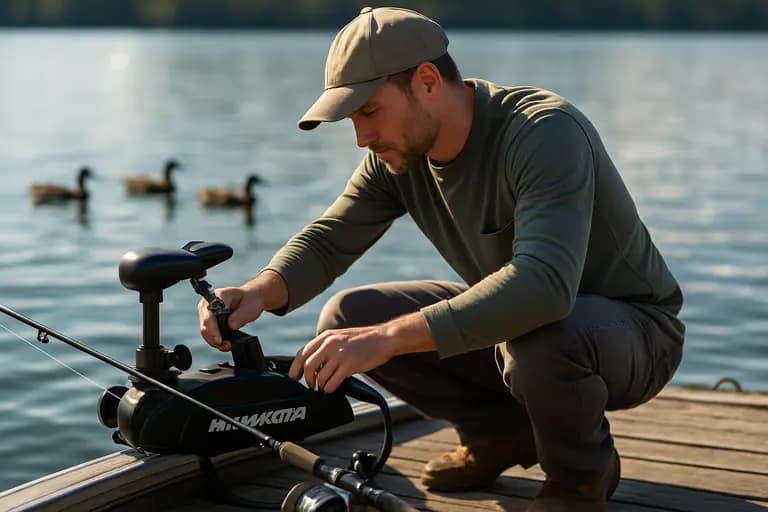
One research point should calm down the wireless rumors: Humminbird does not presently offer a true wireless transducer, and transducers still connect by hard wiring to the control head. That means clean rigging is still part of good fishing. A brilliant sonar concept can still look terrible if your boat has loose cables, poor routing, or electrical noise from other equipment.
Check cable runs near the trolling motor shaft, bow panel, battery compartment, and display mounts. Look for pinched insulation, tight bends, and connectors that sit where spray can collect. Make sure the transducer cable has enough slack for full motor movement but not so much that it can catch, slap, or twist. If you run multiple displays, separate power wiring as cleanly as your boat allows and keep notes on which unit produces interference under which conditions.
Compatibility Is A Fishing Decision
Current Minn Kota integration includes built-in Humminbird transducers on select freshwater motors such as Ultrex QUEST, Ulterra QUEST, and Terrova QUEST models. Research notes also show those built-in options can provide MEGA Side Imaging, MEGA Down Imaging, and Dual Spectrum CHIRP, depending on the model and connected fish finder. Compatible Humminbird families include certain APEX, XPLORE, SOLIX, and HELIX G-series models with MEGA Side or Down Imaging capability; older units may only support Dual Spectrum CHIRP from the built-in transducer.
That compatibility detail is more than a spec-chart chore. It shapes how you fish. If your screen only receives part of what the motor can provide, you may not get the imaging mode you expected. Before planning a winter upgrade, write down your motor model, fish finder model, software version, transducer type, and network accessories. Then compare that list against the feature you actually use: side scanning banks, vertical jigging, forward-facing sonar, spot-lock work, or mapping a channel edge.
| Angler Situation | Practical Check | Why It Helps |
|---|---|---|
| Running one bow display | Confirm the display supports the transducer mode you want | Prevents paying for imaging the unit cannot use |
| Running multiple fish finders | Test for interference with all units pinging | Shows whether crosstalk affects target reading |
| Using a QUEST trolling motor | Record exact motor and Humminbird model numbers | Makes compatibility checks faster and cleaner |
| Fishing wind or current | Practice holding the boat while keeping target view | Reveals whether boat control or sonar aiming is your weak link |
Humminbird’s MEGA Live 2 Forward-Facing Sonar and XPLORE fish finder series were released in January 2025, so do not treat them as future products. If you already own them, your best work right now is learning their strengths and limits. If you do not, wait for confirmed October 6 information before guessing how the next chapter may fit your boat.
Why Ultrasonic Fishing Technology Matters On The Water
Ultrasonic fishing technology matters because better sonar is only valuable if it helps you make calmer, faster fishing decisions. The strongest anglers I know do not stare at screens all day hoping electronics will make the cast for them. They use sonar to confirm depth, target position, fish behavior, and presentation timing. Then they put the bait where it belongs.
The Minn Kota and Humminbird direction appears centered on integration: trolling motor control, sonar aiming, multiple-display coordination, and smarter target visibility. Until the October 6, 2026 announcement provides exact product details, treat every rumor like an unverified fish tale at the ramp. Interesting? Sure. Worth rebuilding your whole boat around? Not yet.
Your action plan is straightforward. Learn your present system, clean up your rigging, document compatibility, and practice reading targets under real fishing pressure. That way, if the next Minn Kota and Humminbird release fits your style, you will know why. If it does not, you will still be a sharper angler with a cleaner boat and better sonar habits. That is the kind of gear progress I can get behind.


