
The best beginner catfish setup is not the most expensive rod, the biggest reel, or the flashiest tackle box. It is a simple, dependable system that puts bait near feeding fish, keeps the hook exposed, and gives new anglers enough power to land a hard-pulling catfish without turning the trip into a gear puzzle.
That matters because catfishing is one of the easiest ways to get into freshwater fishing, but beginners often make it harder than it needs to be. The real difference is usually not fancy equipment. It is matching the right rod, line, rig, hook, bait, and location to the way catfish actually feed.
The Beginner Catfish Setup That Solves The Biggest Problem First
Most new catfish anglers struggle because their setup is either too light, too complicated, or badly matched to the bait they are using. A medium-heavy spinning or casting rod gives enough backbone for channel cats and smaller blues while still being manageable for bank fishing, dock fishing, or learning from a boat.
A 4000–6000 size spinning reel is a practical starting point because it holds enough line, handles heavier sinkers, and gives beginners a smooth drag system. A strong baitcaster can work well too, but spinning gear is usually easier for new anglers to manage while they are still learning how to cast heavier rigs.
Line choice should stay simple. For most beginner situations, 20–30 lb line gives a good blend of strength and control. It is not so light that every snag or strong fish becomes a crisis, and it is not so heavy that casting becomes clumsy. That middle ground is what makes the setup forgiving.
The goal is simple bottom control. Catfish spend much of their feeding time near the bottom, around current breaks, ledges, bridge pilings, creek mouths, deep banks, and areas where food naturally collects. Your gear should help you keep bait in that zone without constantly drifting, twisting, or tangling.
Why The Carolina Rig Is Still The Smart Starting Point
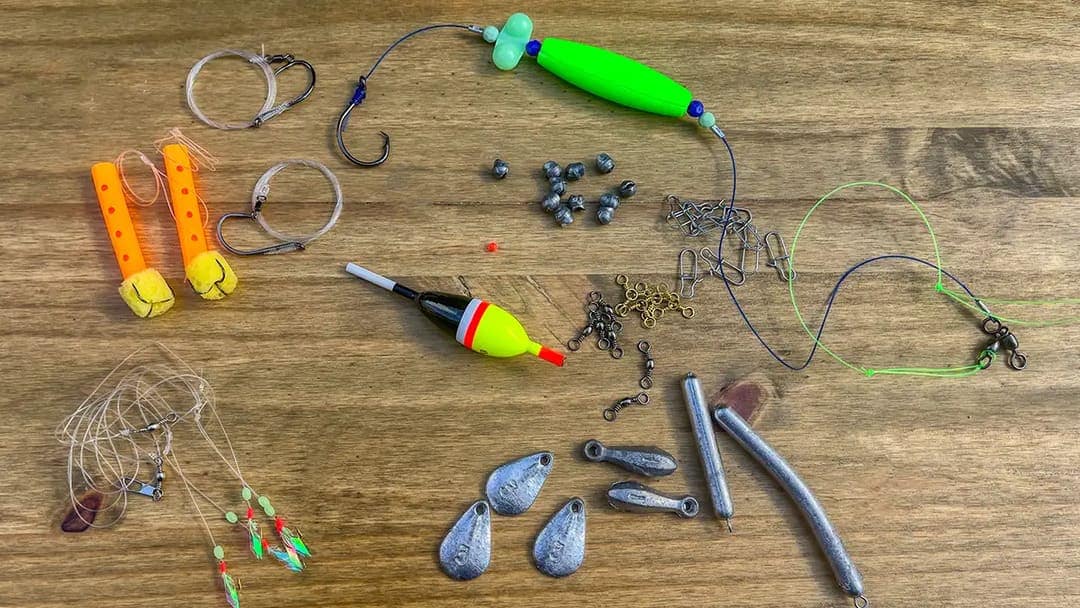
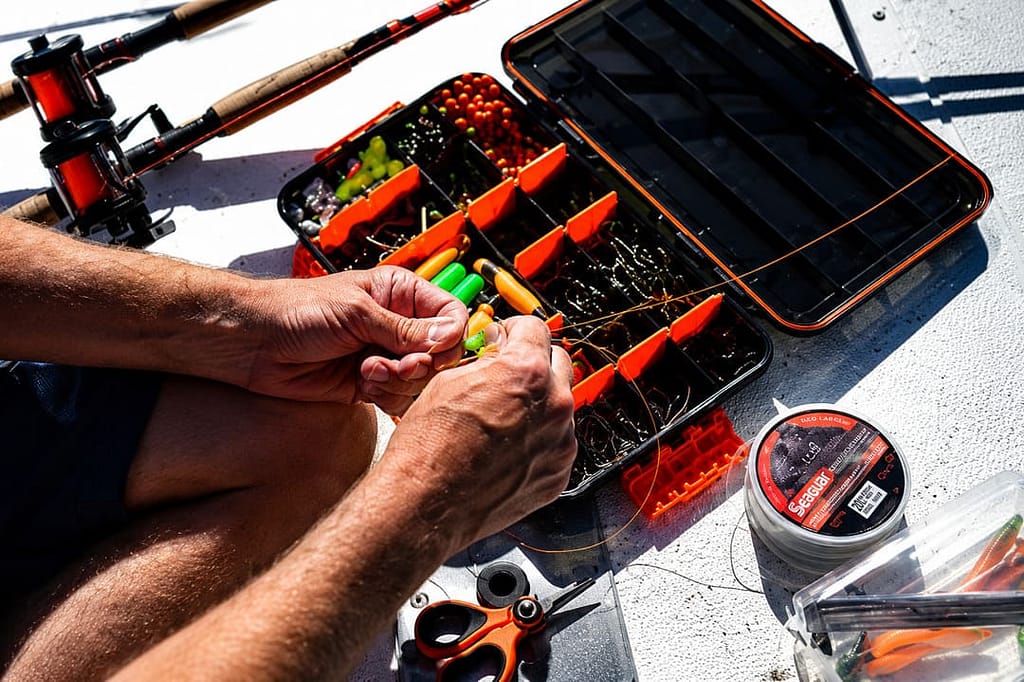
For a first catfish rig, the Carolina rig remains one of the best choices because it is easy to tie, easy to adjust, and effective in ponds, lakes, rivers, and reservoirs. The basic version uses a sliding sinker on the main line, a swivel, a short leader, and a hook.
That sliding sinker is the key. It lets a catfish pick up the bait with less resistance, while the weight keeps the bait near the bottom. For beginners, that means fewer moving parts and a better feel for what is happening on the line.
A typical beginner rig might use a 1–3 oz sinker, depending on current and casting distance, with a 12–24 inch leader. Faster current may require more weight. Quiet ponds or small lakes may need less. The mistake is assuming one sinker size works everywhere. If your bait rolls too much, go heavier. If it buries into soft bottom or kills your casting, go lighter.
A 5/0 circle hook is a strong starting size because it works with chicken liver, shrimp, worms, stink bait holders, and moderate pieces of cut bait. Circle hooks also help beginners avoid the hard, dramatic hookset that often pulls bait away from the fish. When the rod loads up, steady pressure usually does the work.
For broader bait and handling guidance, freshwater anglers can use Florida’s channel catfish fishing tips as a helpful reference point, especially around bottom fishing, strong-smelling baits, and evening activity.
Bait Choice Matters More Than Most Beginners Think
A good beginner catfish setup still fails if the bait does not match the fish. Chicken liver catches plenty of channel catfish because it carries a strong scent and is easy to find. The downside is that it can be messy and soft, so beginners should avoid casting it too aggressively unless it is tied on, wrapped, or handled carefully.
Fresh cut bait is often the stronger choice when bigger fish are the target. Pieces of shad, bluegill, mullet, or other legal baitfish can create a fresh scent trail that appeals to larger catfish. The fresher the bait, the better the odds. Old, mushy bait may smell strong to people, but fresh cut bait tends to fish better when blue cats or bigger channel cats are feeding.
Worms are still useful, especially for smaller waters or mixed-species fishing. Shrimp can also work well in many places. Stink bait has a role, particularly for channel cats, but it usually requires the right holder, punch bait tube, or treble-style setup. Beginners using a 5/0 circle hook may find cut bait or chicken liver easier to manage.
A practical comparison helps separate the common choices:
| Beginner Bait | Best Use | Main Advantage | Main Trade-Off |
|---|---|---|---|
| Chicken liver | Channel catfish near banks, docks, and slow water | Strong smell and easy to buy | Soft and messy on the hook |
| Fresh cut bait | Bigger channel cats and blue catfish | Natural scent and larger profile | Requires fresh legal baitfish |
| Nightcrawlers | Small ponds, creeks, and casual fishing | Easy to use and widely available | Attracts many non-catfish species |
| Shrimp | Bank fishing and simple evening setups | Stays on better than liver | Can be less natural in some waters |
| Stink bait | Channel cats in warmer water | Heavy scent trail | Needs the right bait holder |
The takeaway is clear: start with bait that stays on the hook and fits the fish you want. Beginners do not need ten bait options. They need two reliable choices and enough patience to let those baits work.
The Best Spot Is Usually Not The Most Obvious One
New anglers often cast as far as possible and hope the distance does the work. Catfish do not reward random casting. They reward placement.
Bridges are good because they create shade, current breaks, structure, and food funnels. Creek mouths are strong because moving water can carry baitfish, insects, and scent into larger water. Deep banks are productive because catfish can move between shallow feeding areas and deeper holding zones without traveling far.
Sunset is one of the easiest windows for beginners because catfish often become more active as light fades. That does not mean catfish only bite at night. They can be caught during the day, especially in deeper holes, stained water, or current. But for a new angler trying to get early confidence, evening bank fishing near structure is a smart starting plan.
This is where many beginners underestimate right water first. A perfect rig in dead water is still a bad setup. A basic rig near a bridge, creek mouth, or drop-off has a much better chance because it is placed where catfish already have a reason to move and feed.
For anglers tracking how water conditions can influence bigger fish, the current interest around low water and big blue cats shows why location and timing can matter as much as tackle.
Small Setup Mistakes That Cost Beginners Fish
The most common mistake is burying the hook point. Catfish bait can be soft, bulky, or awkward, but the hook still needs room to work. If the hook point is covered, the fish may pick up the bait without getting hooked cleanly.
The second mistake is moving too much. Catfish use scent, vibration, and current to find food. If the bait is in a good spot, give it time. A fair rule for beginners is to wait 20–30 minutes before changing locations unless the bait has obviously been stolen or washed out.
The third mistake is fishing with a drag that is too tight or too loose. Too tight, and a strong fish can break the line or pull the rod forward. Too loose, and the hook may not set properly. A good drag should give line under hard pressure but still keep steady tension.
Rod placement matters too. Bank anglers should use a secure rod holder, especially with circle hooks. A big catfish can hit hard enough to drag a poorly placed rod into the water. That is not a beginner problem; that is a catfish problem.
The Next Upgrade Is Strategy, Not More Gear
After the basic setup is working, the next step is not buying more tackle. It is learning how to read water, adjust weight, rotate bait, and recognize bites. A beginner who understands current seams, bottom depth, bait freshness, and timing will usually outfish someone with expensive gear and no plan.
The best upgrade is patient presentation. Keep the bait where catfish travel, keep the rig clean, check bait often enough to stay fresh, and move only when the spot gives you no signs of life. Small taps, stolen bait, or one missed bite can all mean fish are nearby.
A wider look at catfish fishing techniques can also help beginners understand how bait, depth, and presentation change across different waters without making the process feel overwhelming.
The beginner catfish setup works because it strips the sport down to the decisions that matter: sturdy gear, a Carolina rig, a 5/0 circle hook, dependable bait, and a spot where catfish naturally feed. Start near a bridge, creek mouth, or deep bank at sunset, and the learning curve gets much shorter. Once that first rod bends hard, the setup will make sense in a way no tackle aisle ever could.


