
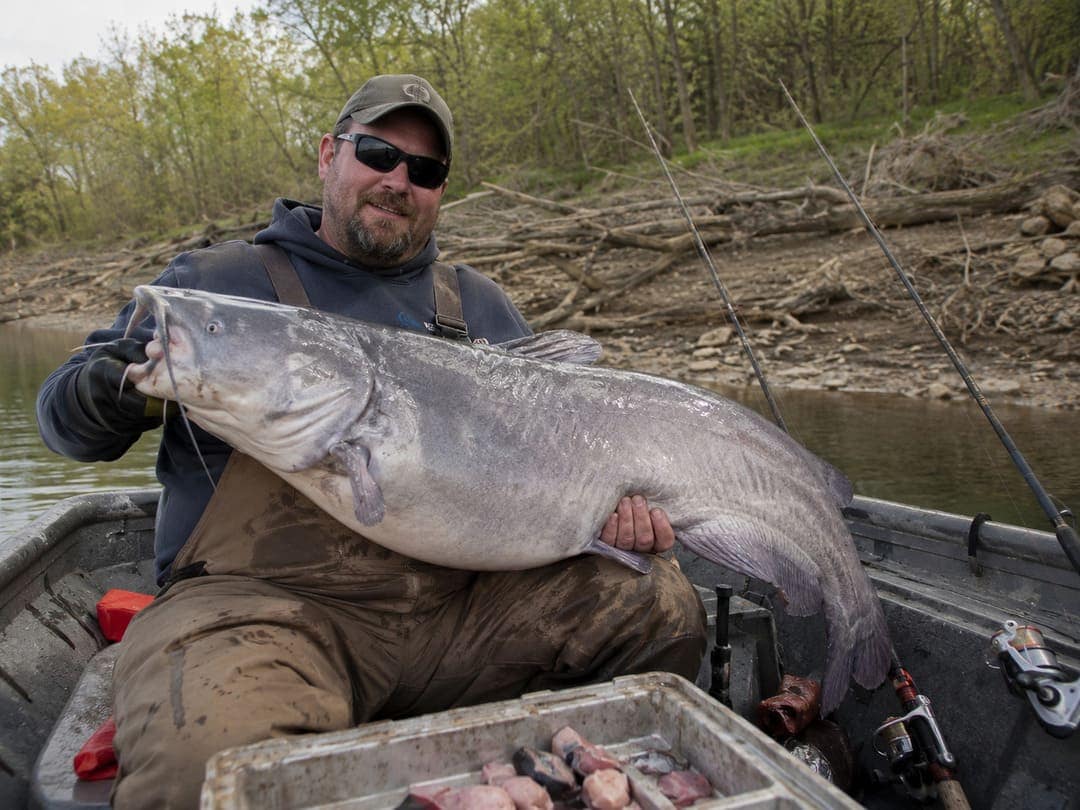

The low water catfish bite is becoming one of the more useful patterns for anglers to understand right now because blue cats are still feeding, but the water is forcing them to behave differently. Maryland’s latest fishing update points to large blue catfish and flathead catfish being caught around the Conowingo Dam pool, with the lower Susquehanna shifting into a mix of blue cats and channel cats. That combination tells me this is not just a “fish are biting” story; it is a timing, water-level, and bait-positioning story.
Why The Low Water Catfish Bite Changes The Setup
Low water does not automatically kill a catfish bite. In some cases, it makes the pattern easier to read because fish have fewer comfortable places to sit, travel, and feed. The challenge is that anglers have to stop thinking only about favorite spots and start thinking about how current, depth, and food are being compressed.
When flows are below normal, catfish often relate more tightly to holes, channel edges, ledges, and current breaks. They may still feed aggressively, but they are less likely to scatter randomly across a broad river system. That creates a moving pattern rather than a simple location report.
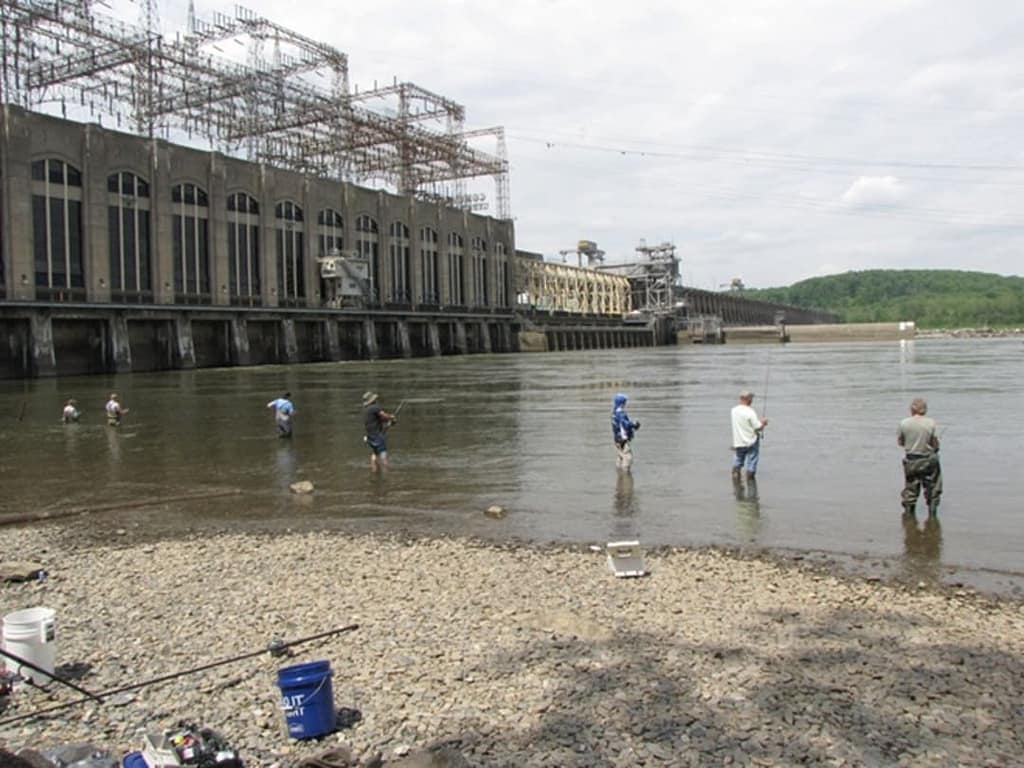
The current update from the Maryland Fishing Report gives anglers a practical clue: big fish are still showing around the Conowingo Dam pool, while the bite downriver becomes more mixed. That suggests anglers should treat the river as a sequence of zones, not one uniform body of water.
The Conowingo Pool Is The Headline, But The River Mouth Matters Too
The Conowingo Dam pool gets attention because it can hold serious fish and create the kind of heavy-catfish story anglers love. Large blue catfish and flatheads in that area make sense because dam pools, deeper water, structure, current changes, and available forage can concentrate predators.
But the lower Susquehanna and the area beyond the river mouth may be just as important for everyday anglers. Once the bite shifts into a blend of blue catfish and channel catfish, the opportunity broadens. That does not mean every stretch will produce equally. It means anglers need to match their expectations to the section they are fishing.
A dam pool pattern may call for heavier gear, stronger anchoring, and a deliberate approach to deep structure. A lower-river or mouth pattern may reward anglers who cover more water, test baits, and adjust based on current seams or subtle depth changes. The same river can demand two different strategies in the same week.
The Bait Story Is Telling Anglers Where To Start
The most useful part of the current bite is the bait list. Cut gizzard shad, menhaden, white perch, and scented baits are all in play, which points toward scent, oil, and local forage as the practical starting point.
For blue cats, fresh cut bait usually gives anglers the cleanest signal. It puts scent in the water, matches the predator mindset, and gives bigger fish something worth finding. Scented baits can still be useful, especially when channel cats are part of the mix, but I would treat cut bait as the first serious test.
Here is a clean way to compare the current options without overcomplicating the pattern:
| Bait Option | Best Fit | Practical Takeaway |
|---|---|---|
| Cut gizzard shad | Blue catfish near current and structure | Strong first choice when targeting larger fish |
| Menhaden | Blue cats in wider river or bay-influenced water | Oily scent helps pull attention in moving water |
| White perch | Local forage-style cut bait | Useful when matching what catfish may already be feeding on |
| Scented baits | Channel cats and mixed bites | Good backup when anglers want steady action |
| Mixed bait spread | Uncertain water or changing conditions | Helps identify what fish prefer that day |
The main takeaway is that anglers should not treat bait choice as random. In low water, scent lanes matter. The right bait in the wrong position may still fail, but the right bait near a travel route can quickly reveal where active fish are holding.
Low Water Creates Opportunity And Risk
Low water gives anglers a clearer read on structure, but it also raises the margin for error. Exposed flats, shallow bars, submerged hazards, and tighter navigation lanes can make boating more difficult. That matters even more when anglers are focused on heavy fish and may be anchoring near current.
There is also a fish-handling angle. Big catfish can be powerful, and warm late-spring conditions can make livewell management and quick handling more important. Anglers who plan to harvest invasive blue catfish should still keep fish care, safety, and local rules in mind. Anglers releasing other fish should minimize stress and avoid dragging the process out.
The broader Chesapeake conversation adds another layer. Blue catfish are prized by many anglers, but they are also treated as an invasive concern in Maryland waters. The state’s official blue catfish fishing guidance from nearby tidal-river systems is useful for understanding why cut bait, bottom rigs, and tidal-river structure remain central to the approach. The fishing opportunity is real, but so is the management tension around these fish.
Why This Bite Should Interest Anglers Beyond Maryland
Even if you do not fish the Susquehanna, the pattern matters because low water is a common catfishing problem across many systems. Rivers fall. Lakes pull back. Current changes. Bait shifts. Catfish adjust before anglers do.
That is why this is a useful national-style lesson, not just a local report. The specific names may change, but the logic holds: find the remaining comfort zones, understand where bait is moving, and fish the places where current, depth, and scent intersect.
Florida anglers can read this through a different lens. A river system, a clear lake, or a record-class fishery may not behave exactly like the Chesapeake region, but the bigger question is similar: where do the largest fish go when conditions narrow their options? That same curiosity sits behind Florida’s record catfish catch and the idea that overlooked water may still hold bigger fish than most anglers expect.
The Summer Signal Anglers Should Track Next
The next signal is not just whether catfish keep biting. The better question is where the bite moves as heat, spawning activity, river flow, and boat pressure increase. Late spring can create a strong window, but summer often forces anglers to be more precise.
If flows stay low, I would watch deeper holes, shaded structure, channel edges, and areas where bait has limited escape routes. If rain pushes water back into the system, fish may spread, reposition, or feed differently along newly energized current. Either way, the anglers who adjust fastest will have the advantage.
This is where many casual reports fall short. “Catfish are biting” is useful, but it does not tell an angler what to do next. The better interpretation is that conditions are narrowing choices for both fish and fishermen. That is where opportunity starts.
The low water catfish bite matters now because it gives anglers a sharper way to read the river before summer fully takes over. Big blue cats are still being caught, mixed catfish action is showing downriver, and cut bait remains the logical starting point. The risk is assuming yesterday’s spot will keep producing without adjustment; the opportunity is recognizing that low water can make the right structure, bait, and timing stand out even more clearly.


