
Catfish boat selection matters because the wrong boat can turn a promising trip into a frustrating, uncomfortable, or even unsafe day on the water. Catfish anglers are not just casting around docks for a few minutes; they are often anchoring in current, handling heavy bait, fighting big fish, and working around wind, wakes, darkness, and changing water levels. The right boat should match the water first, then the way you fish.
Catfish Boat Selection Starts With The Water, Not The Boat
A lot of anglers start boat shopping backward. They look at price, horsepower, brand, or layout before asking the most important question: where will this boat spend most of its time?
That matters because catfish water is not all the same. A narrow river with shallow bars asks for a very different hull than a big reservoir that gets rough in afternoon wind. A small aluminum jon boat may be perfect for a quiet backwater, but it can feel badly undermatched on wide, open water with rolling boat wakes.
The best approach is a water-first decision. Start with your primary fishing environment, then choose a hull, length, width, and layout that can handle that water consistently. You can compromise on accessories later. You should not compromise on the basic match between boat and water.
Small Rivers Reward Simplicity And Shallow Draft
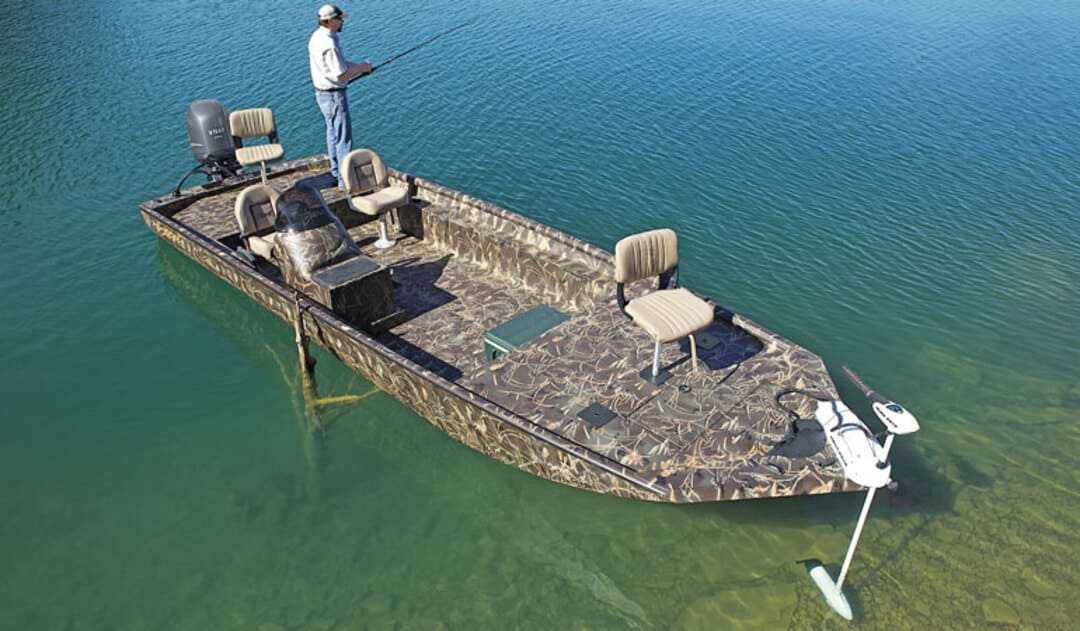
For small rivers, creeks, and protected backwaters, a jon boat or basic aluminum utility boat often makes the most sense. These boats are usually simple, easy to trailer, relatively easy to maintain, and capable of getting into skinny water where bigger rigs may struggle.
Flat-bottom and modified-V aluminum boats are popular because they offer shallow draft and practical deck space. That helps when you are sliding over shallow sections, setting up near logjams, or fishing slower bends where catfish hold close to cover. A smaller boat also makes it easier to launch at basic ramps or unimproved access points.
Still, small does not mean careless. Catfish gear adds weight quickly. Anchors, bait coolers, rods, batteries, a landing net, safety gear, and another angler can make a light boat feel crowded fast. The guidance around jon boat selection basics is useful because storage, fishing style, passengers, and power needs all affect whether a simple hull actually fits the job.
Big Rivers Demand Width, Stability, And Respect
Big rivers are where boat choice becomes more serious. Current, commercial traffic, wind, debris, and wakes can change conditions quickly. A boat that feels fine at the ramp can feel very small once it is anchored near current seams or sitting downstream from heavy boat traffic.
For big-river catfish anglers, width is not just comfort. It is control. A wider aluminum boat, center console, or larger modified-V hull gives anglers more room to move, net fish, manage rods, and handle anchor ropes. It also reduces the uneasy feeling that comes from shifting weight in a narrow boat while fighting a strong fish.
This is where some anglers make a mistake. They buy a boat that is easy to afford and easy to tow, then ask it to behave like a bigger river rig. That creates a false sense of security. The boat may float, but that does not mean it is the right tool for current, wakes, night fishing, or sudden weather changes.
The Boat-To-Water Match Anglers Should Use
A simple comparison can keep anglers from overbuying, underbuying, or choosing a boat that fits the wrong kind of water.
| Water Type | Better Boat Choice | Why It Fits Catfish Fishing |
|---|---|---|
| Small rivers | Jon boat or aluminum utility boat | Shallow draft, easy handling, practical for tight water |
| Big rivers | Wider aluminum boat or center console | More stability, room, and control in current and wakes |
| Lakes | Pontoon, center console, or deep-V aluminum | Better space and comfort for open water and longer trips |
| Shallow water | Flat-bottom jon boat | Easier access to skinny water and protected backwaters |
| Rough water | Deep-V or modified-V hull | Better ride and safer handling when wind or wakes build |
The key takeaway is that no boat style wins everywhere. The best catfish boat is the one that handles your most common conditions without making every trip feel like a compromise. If you fish small protected water most of the time, a big deep-V may be more boat than you need. If you fish rough open water, a tiny flat-bottom boat may be asking too much.
Lakes Put A Premium On Space And Comfort
Lake catfishing often rewards patience. Anglers may anchor on points, drift over flats, fish ledges, or sit near deeper structure for long stretches. That style makes space more valuable than many first-time buyers expect.
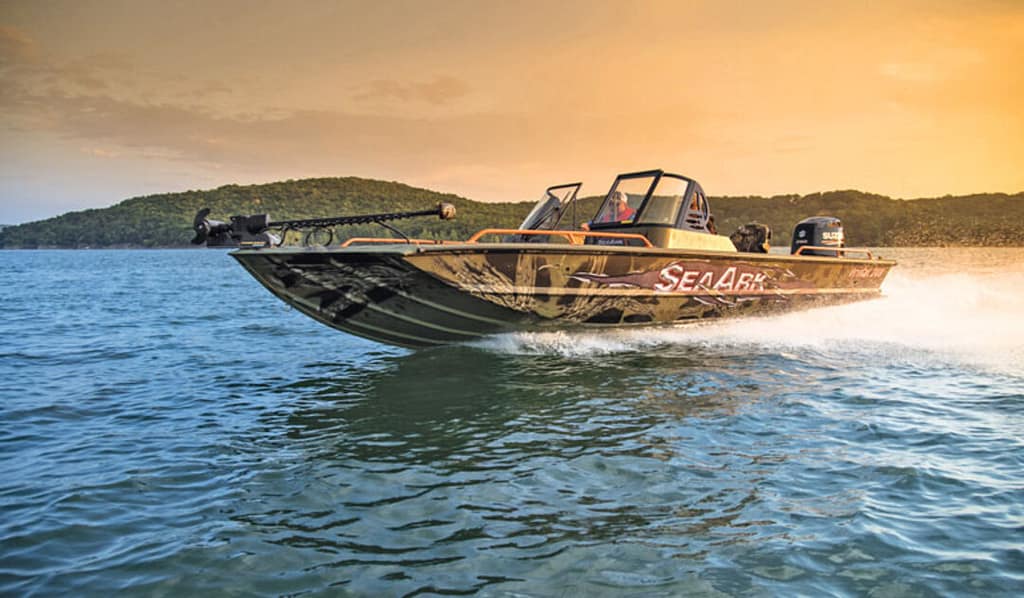
A pontoon can work well for relaxed lake catfishing because it provides room for passengers, gear, bait, and multiple rods. A center console gives better walkaround access and a more fishing-focused layout. A deep-V aluminum boat can be useful on bigger lakes where wind can stack up chop and make open-water travel uncomfortable.
The trade-off is mobility versus comfort. A pontoon may be comfortable and stable, but it is not ideal for every ramp, current situation, or tight fishing spot. A deep-V may ride better in rough water, but it may not be as convenient in shallow areas. That is why catfish boat selection should never be based on one perfect feature. It should be based on the full fishing routine.
Anglers interested in compact aluminum rigs can also look at why catfish anglers like the Lowe 1648M as a practical example of how size, simplicity, and fishing layout can matter for real catfish use.
Safety Is Part Of Performance
A catfish boat is not only a fishing platform. It is a safety decision. That becomes obvious when you fish at night, anchor in current, or bring family members along. The best boat is not the one that looks impressive online; it is the one that lets you fish confidently without fighting the layout all day.
Start with the basics. A boat should have enough capacity for people and gear, clean walking space, reliable lighting, accessible safety equipment, and enough freeboard for the water you fish. Life jackets should be easy to reach, properly fitted, and suitable for the people onboard. The U.S. Coast Guard life jacket guidance is a good reminder that safety gear only works if it is wearable, accessible, and ready before trouble starts.
Catfishing adds another layer because the deck can get messy. Cut bait, slime, anchor lines, rods, tackle trays, and coolers can turn poor layout into a tripping hazard. In a good catfish boat, space becomes safety. Open floor space is not wasted space. It is room to move, fight fish, manage gear, and avoid mistakes.
The Overlooked Detail Is Boat Control
Many anglers think about hull style and motor size, but they underestimate boat control. Catfishing often depends on holding a precise position: above a hole, along a ledge, near a current break, or beside a feeding lane. If the boat will not hold where you need it, the best rods and bait will not fix the problem.
Anchoring setup matters. So does the trolling motor, battery system, cleat placement, rope management, and the ability to reposition without turning the deck into chaos. A boat that drifts badly, swings too much, or lacks safe anchor points creates a boat control problem before the first fish ever bites.
This is especially true in current. Anglers should think carefully about how they will anchor, where rods will sit, how fish will be netted, and whether passengers can move without stepping over lines or gear. The best catfish boats feel boring in the best way: stable, predictable, and easy to work from.
The Next Test Is How The Boat Fits A Real Fishing Day
The smartest way to choose a catfish boat is to picture a full trip, not a showroom moment. Where will the bait cooler go? Can two people move around safely? Is there room for a big landing net? Can the boat handle your usual ramp? Will it feel stable if a heavy fish pulls beside the boat? Can you clean it easily after using cut bait?
Those questions reveal more than horsepower or paint color. They show whether the boat fits the way catfish anglers actually fish.
For most beginners, the best choice is not the flashiest rig. It is the smarter first purchase: stable enough for the water, simple enough to maintain, roomy enough for gear, and safe enough to build confidence. As experience grows, upgrades become easier to judge.
Catfish boat selection is really about matching ambition to conditions. Small rivers, big rivers, lakes, shallow flats, and rough water all ask for different strengths. Anglers who respect that match will fish more comfortably, make better decisions, and spend less time fighting the boat. The right boat does not catch the catfish for you, but it gives you the stable, practical platform needed to fish the right water the right way.


