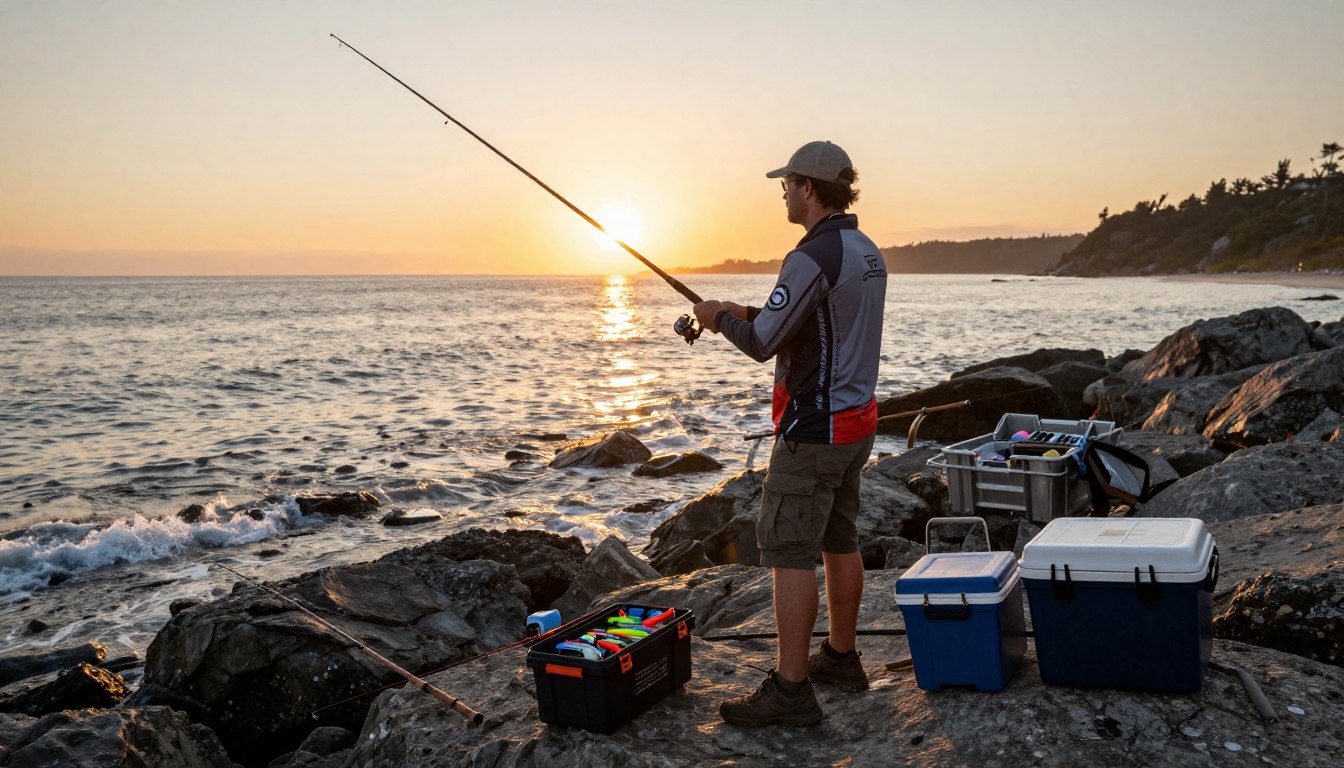
Most anglers fish like they’re blindfolded, throwing lines into the sea. They wade in and hope for the best. I’ve seen this on beaches from Montauk to Malibu, more like a prayer than a plan.
Fish aren’t scattered everywhere. They’re smart, sitting upcurrent of structures where prey flows by. Knowing shore fishing tactics can make all the difference.
Currents and tides shape the fishing spots. Wind direction can turn a beach into a feast or a desert for fish. It’s not magic; it’s something you can learn.
Thinking about positioning is essential. For more on anchoring, check Mastering Shore Anchoring. For night fishing tips, see Night vs Day Fishing.
Adapting to Different Terrains
Knowing the beach well can make all the difference. Shore fishing is more than just casting your line. It’s about understanding the landscape and how it affects fish behavior. Just like a seasoned sailor reads a map, you need to learn to read the beach.
Reading the Beach Like a Topographic Map
When you step onto the sand, take a moment to observe. The beach is a dynamic, three-dimensional landscape. It’s not just a flat expanse of sand; it’s a complex environment where every ripple and depression plays a role in the fishing game. Here are some key features to look for:
- Sandbars: These underwater formations can create ideal feeding zones for fish.
- Depressions: Shallow dips in the sand often act as highways for predatory fish, specially during incoming tides.
- Structure: Jetties, rocks, and other structures create eddies that concentrate baitfish, attracting larger predators.
By learning to read these features, you can position yourself where the fish are most likely to bite. It’s all about understanding how the water moves and where the fish are hiding.
Identifying Rip Currents and Sandbar Formations
Rip currents are the beach’s equivalent of a highway for baitfish. They may look intimidating, but these currents are essential for successful shore fishing. They create areas of concentrated food that attract predatory fish. Here’s how to spot them:
- Color Changes: Look for darker water, which often indicates deeper areas or channels.
- Wave Patterns: Observe how waves break; rip currents will have a different pattern than surrounding water.
- Debris Movement: Floating debris can reveal the direction and strength of a rip current.
Once you identify these features, you can adjust your casting precision to catch more fish. Placing your bait just outside the rip current can yield impressive results, while missing the mark by just a few feet could leave you empty-handed.
In conclusion, adapting to different terrains is key for shore fishing success. By honing your observational skills and understanding the beach’s dynamics, you can significantly improve your chances of landing that prized catch.
Maximizing Casting Reach
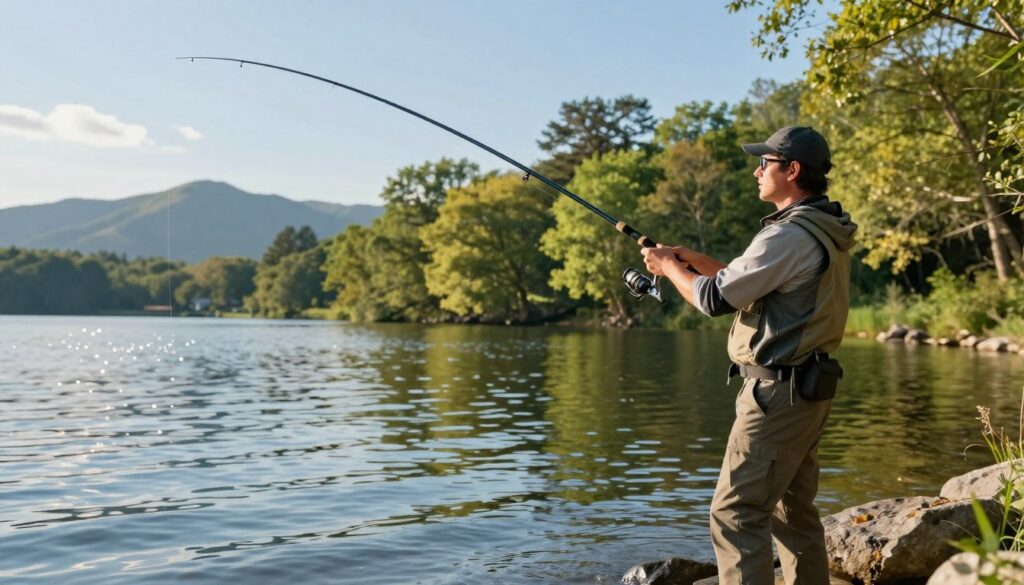
Casting from shore is a mix of skill and science. Every throw is a strategic move. It’s not just about how far you can cast. It’s about controlling the elements.
The Physics of Distance Casting from Shore
Distance casting is about finding the right balance. Many think more weight means farther casts. But, too much weight can mess up your bait’s natural look.
Think of casting like a quarterback’s fade route. It needs finesse and timing. Your cast should be precise but gentle.
Balancing Weight, Trajectory, and Wind Resistance
Match your weight to the conditions when casting. You need enough to stay in the strike zone but not so much to scare fish. This balance can make all the difference.
Here’s a quick breakdown of how these factors interact:
| Factor | Impact on Casting | Optimal Range |
|---|---|---|
| Weight | Too heavy can scare fish; too light can miss the zone | 0.5 oz – 2 oz |
| Trajectory | Angle of release affects distance and splash | 30° – 45° |
| Wind Resistance | Can alter the path of your line | Minimal to moderate wind |
Changing your weight by half an ounce can make a big difference. The fish haven’t moved; your presentation has. Mastering these principles shows that casting precision is more important than distance.
Weather & Environmental Considerations
Before you cast your line, think about this: the environment is more than just the setting for your fishing trip. It’s everything. Knowing how weather affects fish can make your day either great or bad. Let’s explore how wind and tides can change your fishing plans.
How Wind Direction Shapes the Surf Zone
Wind direction is key to your fishing success. An onshore wind might seem annoying, but it does more. It makes the surf zone smaller, pushing warmer water to the beach. This can make baitfish swim towards the shore, attracting hungry predators.
An offshore wind might look perfect for fishing, but it can also be a problem. It pushes bait and fish away from you. Knowing about wind can help you fish better and make smarter choices.
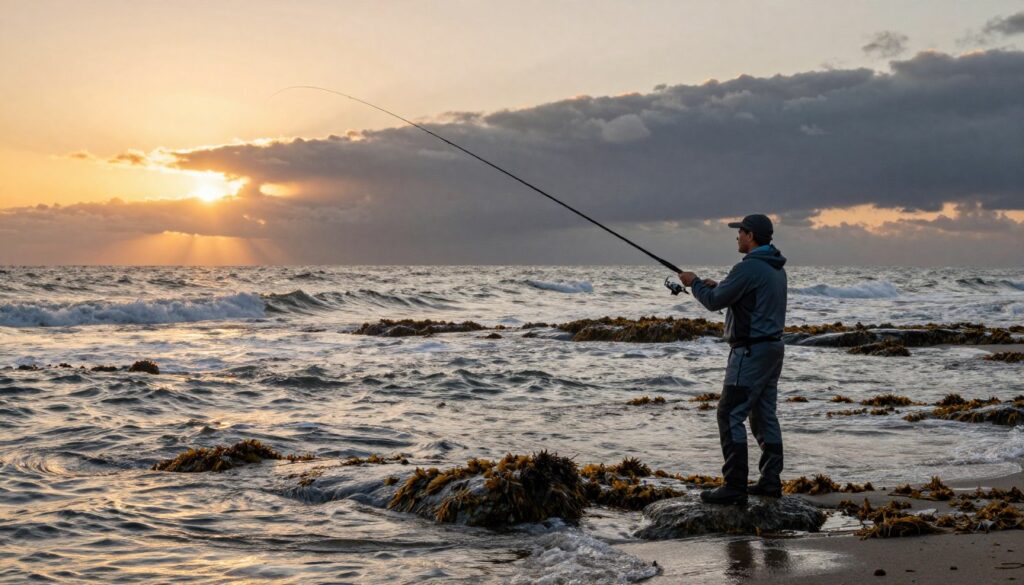
Now, let’s talk about tides. Fishing without knowing the tides is like trying to catch a train without a schedule. Each tide stage affects fish differently:
- Incoming Tide: Water flows in, bringing predators. Fish are more active, and you might catch a big one.
- Slack Tide: Fish slow down, like office workers at 4:59 PM. It’s a good time to take a break.
- Outgoing Tide: Currents push bait through channels, making ambush points. This is a great time to fish.
The best shore anglers study the weather. They know a falling barometer means fish will feed aggressively. They also know water clarity after a storm affects their tackle choice. They set up based on wind direction to increase their chances of success.
Understanding how the environment affects fish can improve your fishing. You’re not just trying to outsmart fish; you’re an informed angler ready to succeed. For more tips, check out this seasonal edge guide.
Learning from the Pros
Elite charter captains teach us that success in fishing isn’t just about the catch; it’s about the approach. They say that effective positioning and keen observation can make your shore fishing better. By adopting the “charter captain mindset,” you can make your fishing trips unforgettable.
Charter Captain Wisdom Applied to Shore Fishing
These seasoned professionals know that a perfect drift can yield better results than stubbornly sticking to one spot. The same principle applies to shore fishing. Spend time observing the water before casting. Look for signs like birds diving or bait flickering. These clues can lead you to the fish.
Remember, the goal is to maximize your casting precision by adjusting your strategy based on real-time observations.
The Art of Systematic Observation and Adjustment
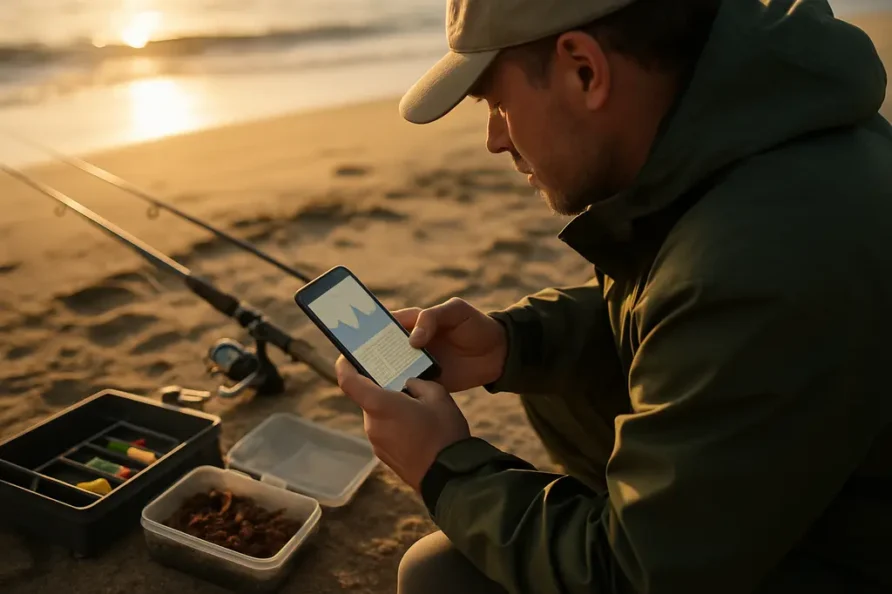
Embrace the analytical approach. If your first 20 minutes yield nothing, don’t hesitate to change your tactics. Adjust your leader length, downsize hooks, or modify your casting angle. Each session should be a data-gathering exercise.
Keeping a log of conditions and results will sharpen your instincts. With time, you’ll develop an almost intuitive sense of where fish are likely to be.
For further insights into effective shore crew strategies, check out this resource. The best anglers know that the magic of fishing lies in the homework. The more you analyze, the more successful your outings will be.