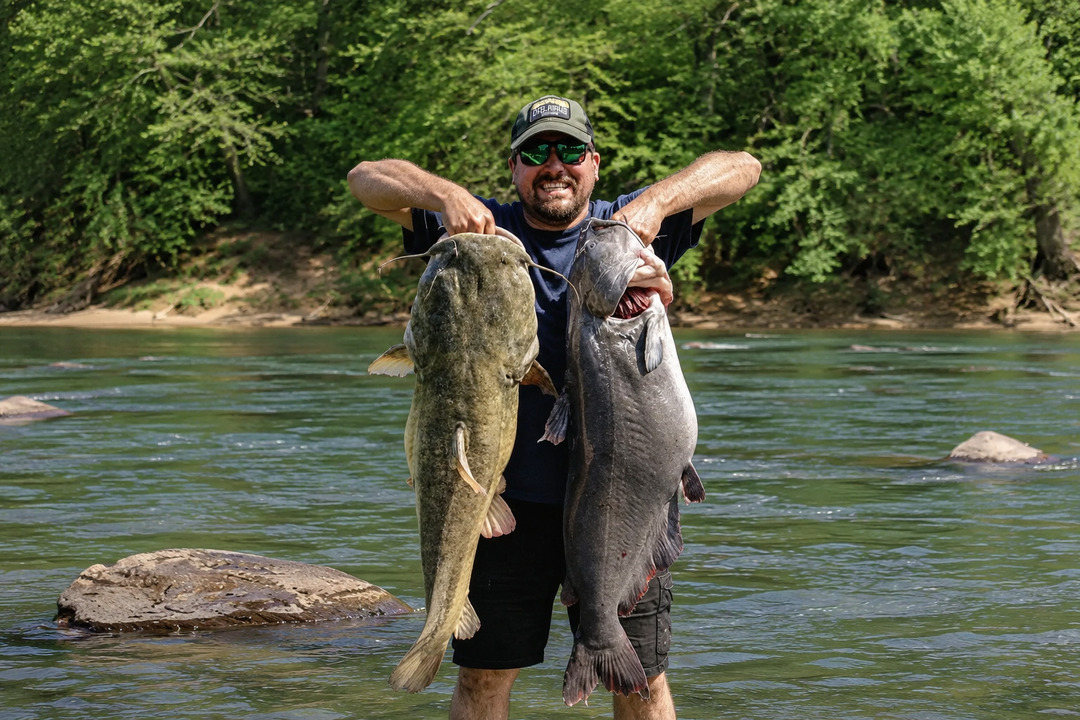
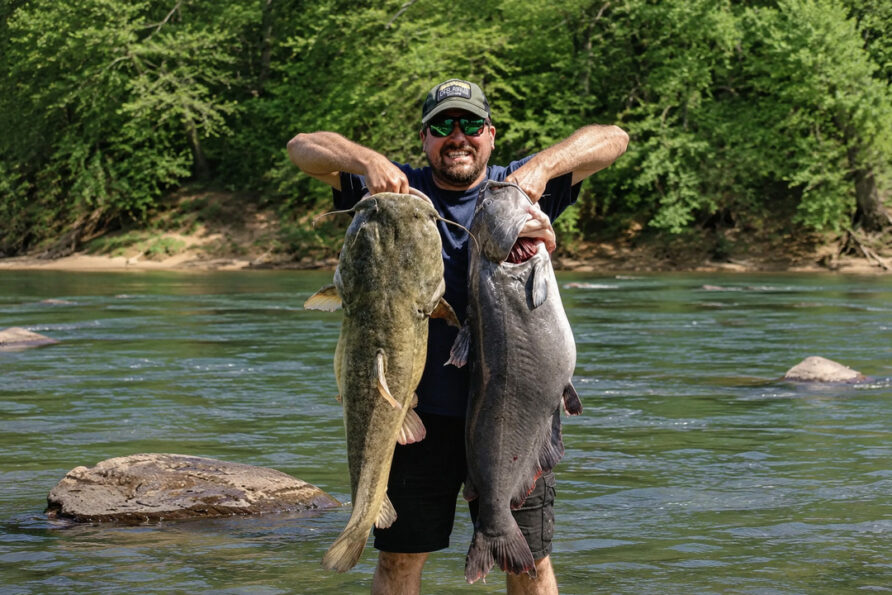
FWC has put the Apalachicola River under a closer catfish lens. The Apalachicola River catfish study is tracking channel, blue and flathead catfish to understand which species are present and whether non-native predators are changing one of Florida’s most biologically important river systems.
For anglers, that turns a familiar trophy destination into a fisheries-management question. The river is already one of Florida’s major catfish waters, but the new work asks what happens when prized sport fish and ecosystem pressures occupy the same current.
FWC Is Measuring More Than Catfish Numbers
FWC’s July 2026 research update says its Freshwater Fisheries Research and Management groups are monitoring catfish in the Apalachicola River. The stated goal is to assess the quality and species composition of Panhandle catfish fisheries and determine the effects of non-native blue and flathead catfish on the ecosystem.
That wording matters. This is not simply a survey designed to count big fish. Species composition can reveal whether the balance among catfish is changing. A river can still produce impressive catches while its underlying fish community shifts in ways that are harder to see from a boat.
Just as important, FWC has not announced a final ecological verdict. The update describes the question being studied, not a completed finding that blue or flathead catfish have already damaged the Apalachicola.
The Apalachicola River Catfish Study Has a Bigger Question
The Apalachicola is a complex river rather than a uniform channel. Main-river current, deep bends, tributaries, woody cover and floodplain connections create different feeding and refuge opportunities. Large predators can affect the system unevenly, depending on where they concentrate and what prey is available.
Blue and flathead catfish also do not behave as interchangeable predators. FWC describes larger blue cats as consumers of crayfish, mussels and fish, while flatheads feed on other fish, especially catfish and sunfish. That makes predator pressure a question of species, size, habitat and diet rather than simple abundance.
Species Balance May Matter More Than Total Catfish Numbers
A river can support plenty of catfish and still experience a meaningful ecological shift. If blue or flathead catfish become more dominant while native or long-established species decline, the overall catch rate may hide what is happening beneath the surface. That is why species balance can be more revealing than total abundance alone.
Size structure adds another layer. A population dominated by smaller fish creates a different feeding pattern than one containing more large predators capable of consuming bigger prey. Tracking length, weight and age classes can help managers determine whether predator pressure is expanding or simply fluctuating from year to year.
Location matters just as much. Flatheads concentrated around woody cover or deep outside bends may place pressure on prey communities that use those same habitats, while blue cats moving through open channels may interact with a broader range of forage. Habitat-specific patterns can therefore explain changes that a riverwide average might miss.
Taken together, those measurements can help FWC distinguish between a productive catfish fishery and a fish community undergoing a deeper transition. The key question is not simply whether blue and flathead catfish are present, but whether their numbers, size and distribution are beginning to change how the Apalachicola functions as an ecosystem.
The monitoring program becomes more useful when those differences are considered together:
| Species | Role in the study | Feeding pattern relevant to the question | Main management question |
|---|---|---|---|
| Channel catfish | Monitored alongside the other major cats | Aquatic insects, crayfish, mollusks, crustaceans and fish | Is its abundance or size structure changing? |
| Blue catfish | Identified by FWC as non-native | Larger fish eat crayfish, mussels and other fish | Is expansion altering prey or fish-community balance? |
| Flathead catfish | Identified by FWC as non-native | Strongly fish-oriented predator | Are resident fish experiencing added predation pressure? |
One total “catfish count” would miss the point. A river with similar overall abundance can function differently if the mix shifts toward larger, more predatory species.
Florida Has Seen Flathead Impacts Before
Concern about flatheads is not theoretical, but previous findings must be applied carefully. A north Florida flathead study in the Choctawhatchee River documented rapid expansion and a sharp decline in native spotted bullhead as the introduced predator became established. Researchers concluded that introduced flatheads can significantly affect native ictalurid catfish.
That history gives managers a reason to watch the Apalachicola closely, but it does not prove the same outcome is occurring there. Rivers differ in prey, habitat, flow and fish communities. The narrower lesson is that established populations of large non-native catfish can create ecological effects worth measuring.
That is where the current work gains weight. If FWC can separate normal year-to-year variation from a persistent shift in species composition, it will have a stronger basis for future management decisions.
Trophy Fish and Ecosystem Risk Can Exist Together
Anglers often see blue and flathead catfish through the lens of size, fight and opportunity. Fisheries managers must view the same fish through abundance, recruitment, prey consumption, competition and effects on other species.
Those perspectives do not have to cancel each other out. A non-native species can support a valued recreational fishery while also creating ecological pressure. Treating the issue as “good fish versus bad fish” oversimplifies both the sport and the science.
For serious catfish anglers, the useful position is to favor local data. Catch rates, size classes and trophy potential matter, but so do changes in smaller catfish, sunfish and forage species that support the river’s food web.
Anglers Could Become Part of the Information Stream
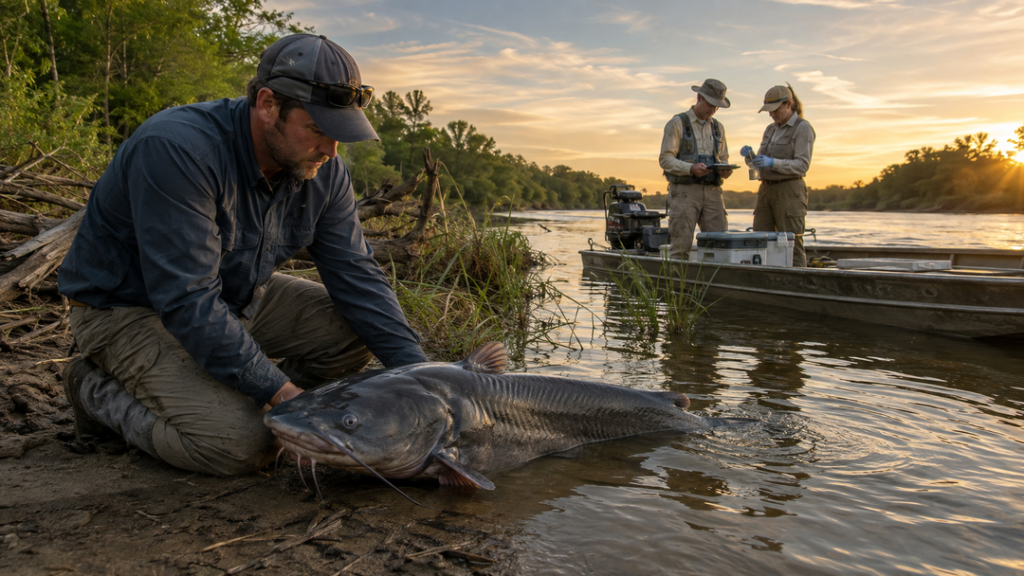
The project gives anglers another reason to pay attention to what they catch. Species identification matters because blue and channel catfish can be confused, particularly when body color is used as the main clue. Anal-fin shape, spotting and other features can help separate them.
Fishing observations can add context even when they are not substitutes for standardized sampling. Changes in where fish are caught, repeated captures of certain size classes or noticeable shifts in species mix can become useful signals when paired with formal fisheries work.
Still, one exceptional trip proves little. A night with several flatheads does not establish population growth, just as a slow day does not establish decline. Patterns over time carry more weight.
The Next Results Matter More Than the First Headline
Several signals will determine how significant this project becomes: whether blue or flathead abundance increases, whether channel catfish size or numbers change, what prey non-native fish are using, and whether effects appear concentrated in particular river reaches.
Management could eventually range from continued observation to harvest-focused strategies, but FWC’s July update announces no new regulation or control program. For now, the important development is that the agency is building an evidence base around a fishery where recreational value and ecological questions overlap.
The Apalachicola River catfish study is worth following for more than its potential to explain where big cats are thriving. Its real value will be showing whether strong catfish opportunity can coexist with a fish community that is not being quietly reshaped by non-native predators.