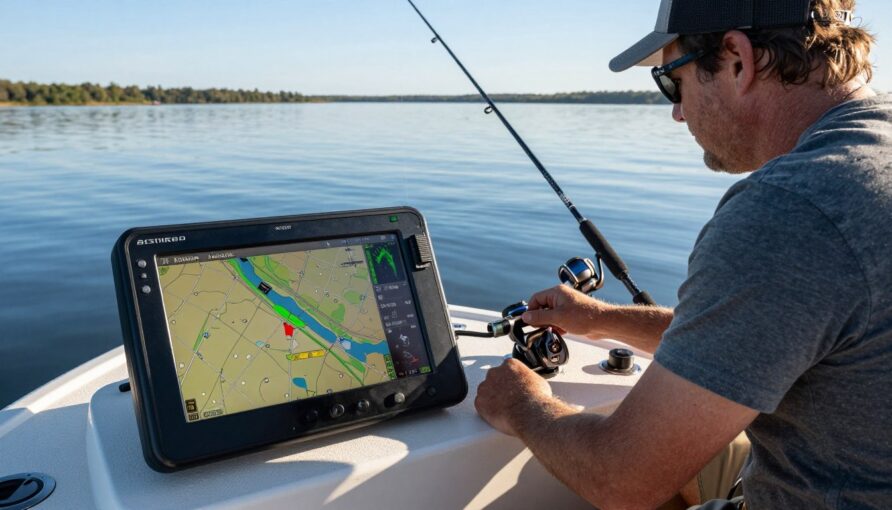
Fishing has changed a lot over the years. We no longer just use instinct and a rod. Now, we have advanced tools like fishing electronics.
Sonar technology, which started in WWI, is now in our fishing gear. The first portable sonar came out in the 1980s. Color displays and new features like side and down imaging have changed fishing.
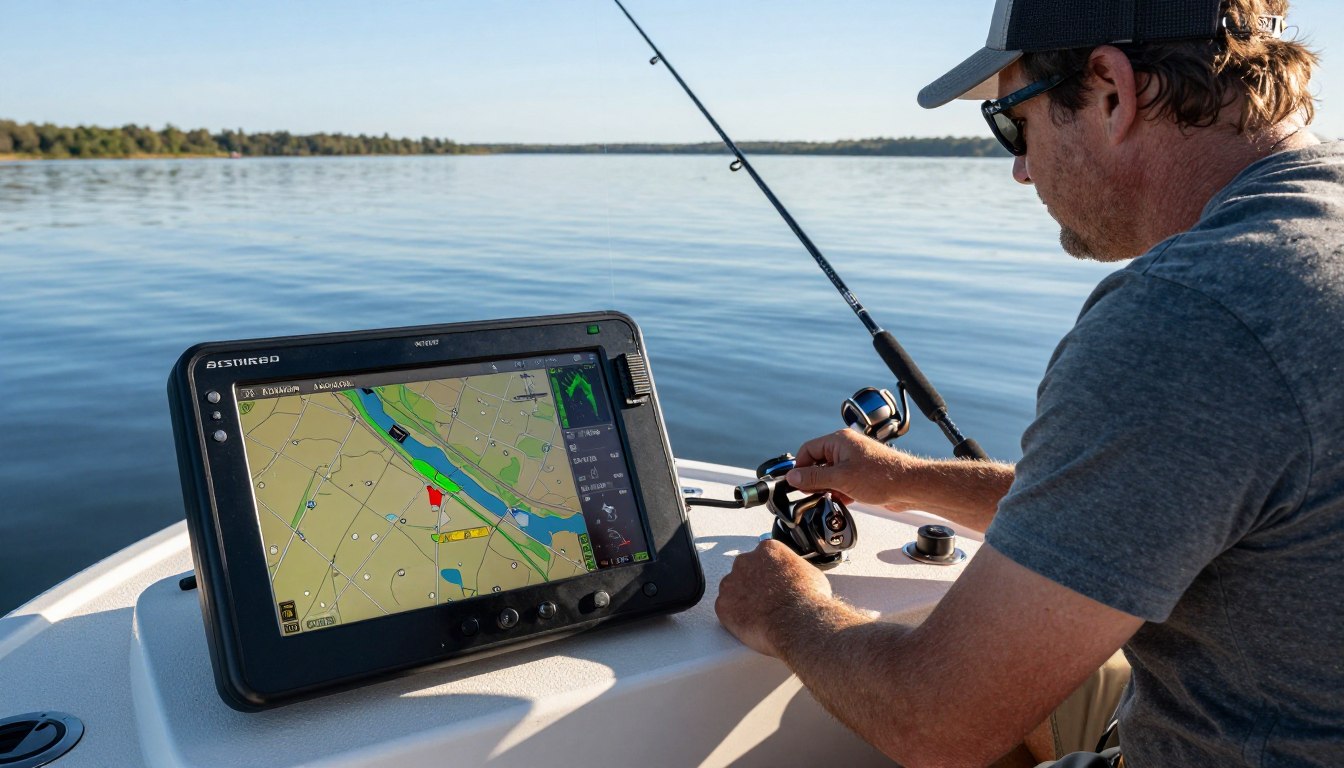
GPS systems help us navigate like a hawk. We can find the best spots again and again. Smart lures and underwater cameras give us a close-up look at what’s happening underwater.
Selecting the Right Tools
Choosing your fishing electronics is a big deal. It’s like picking the perfect tools for a secret agent. Do you choose a smart lure that flashes, or a sonar unit that’s reliable? It’s like picking the right wine for dinner, but with fish instead of guests.
The market today has lots of options. You can get the Humminbird MEGA 360 Imaging for a wide view underwater. Or the Garmin Force trolling motor for precise anchoring. There are also electronic baits that mimic sounds or movements. Are they just tricks? Sometimes, yes. But I’ve seen a $40 jig outdo live bait, showing we’re in a fishing revolution.
When picking your tools, think about these key points:
- Water Type: Freshwater or saltwater? Each has its own challenges.
- Boat Size: A kayak angler doesn’t need a huge screen; keep it simple.
- Target Species: Different fish react to different tech.
- Data Interpretation: Do you love decoding sonar, or do you prefer simple icons?
The best tool is the one you’ll use. A fancy device that sits idle is useless. It’s not about the newest gadget. It’s about finding the right tool for your fishing style and where you fish.
For more tips on using tech to improve your fishing, check out this data-driven practice. The right tools can make fishing not just successful but fun too.
Maximizing Efficiency
Fishing has become as precise as a surgeon’s work, thanks to GPS systems. This technology has turned fishing from a hopeful activity into a science. We no longer rely on luck or memory; we can map out our favorite spots with ease.
Techniques like vertical jigging with sonar feel like a video game. You can drop a lure right on a fish’s nose and see its reaction. This makes fishing an exciting experience. Trolling with GPS-guided autopilots lets you follow a productive path with robot-like precision.
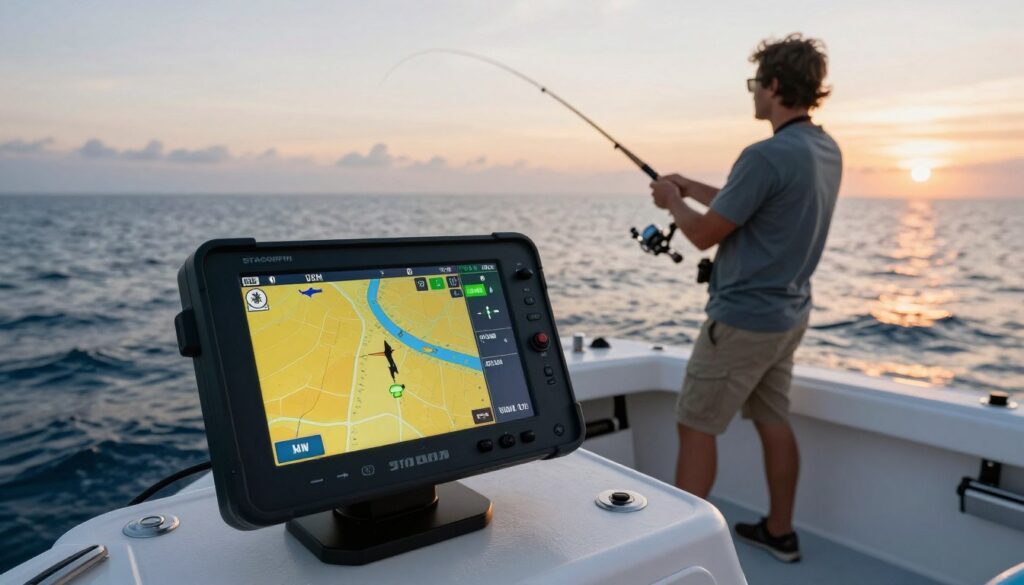
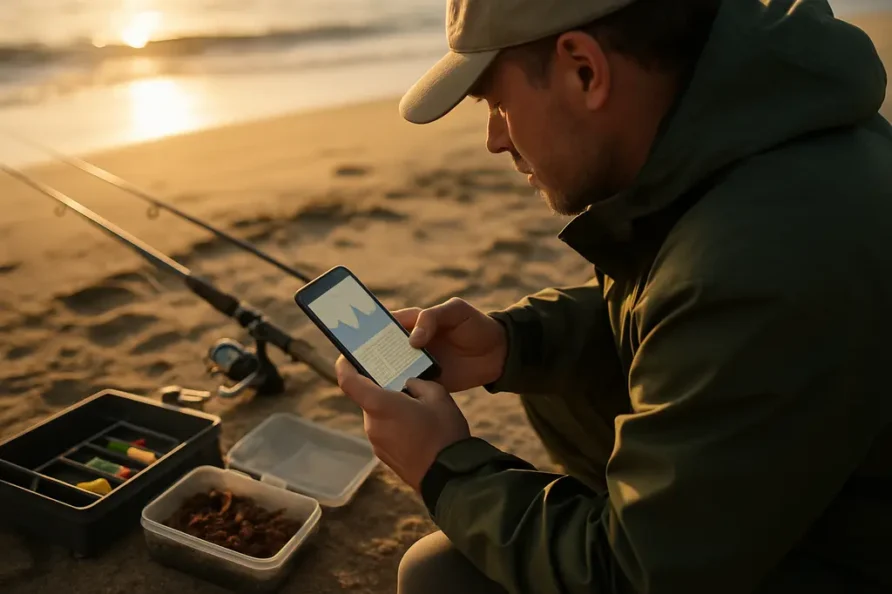
I’ve started using fishing analytics apps to log catches and weather. These apps predict fish locations with surprising accuracy. Imagine getting a tip from an AI that knows a bass’s habits: “Hey, that big bass is at the north cove. You might want to skip that meeting.”
While we’re not there yet, tools like Garmin LiveScope and Lowrance Ghost are getting us closer. The challenge is using all this data to improve our fishing. Understanding fish behavior through tech makes you a better angler and gives you a sense of pride when you catch a big one.
So, when you go fishing next, remember it’s not just about finding fish. It’s about understanding them. With the right tools and tech knowledge, you can take your fishing to new levels.
Troubleshooting Common Issues
Let’s explore the quirks of fishing electronics that can turn your dream trip into a comedy of errors. Imagine this: you’re all set for a fishing adventure, and your electronics decide to take a coffee break just as you find the motherlode of suspended crappie. It’s not just frustrating; it’s a classic case of technology letting you down at the worst possible moment.
Common gremlins include:
- Battery Life: Your trusty sonar unit may go dark after a few hours, leaving you adrift like a lost sailor.
- Connectivity Issues: A GPS blackout can transform you into a 15th-century explorer, navigating by the stars—if only your smartphone had more than 2% battery.
- Water Clarity: Underwater cameras are useless in murky waters, often presenting a green blur that could be a trophy bass or just a submerged shopping cart.
It’s not just about the gadgets; it’s about how you adapt when they fail. I’ve learned to carry a portable power bank the size of a car battery and always have a backup plan. This means packing a paper map, a compass, and the humility to admit that sometimes, the fish win.
Here are some practical fixes to keep your fishing electronics in top shape:
| Issue | Possible Solution | Additional Tips |
|---|---|---|
| Battery Drain | Use a high-capacity power bank | Charge devices overnight before your trip |
| Interference | Install ferrite cores on cables | Keep electronics away from trolling motors |
| Software Glitches | Regularly update firmware | Perform a factory reset if needed |
In the end, our reliance on technology is a Faustian bargain. When your fish finder dies, do you know how to fish, or have you become just a highly caffeinated button-pusher? Embrace the challenges, and remember that the essence of fishing lies in the experience, not just the electronics.
Stories of Tech-led Success
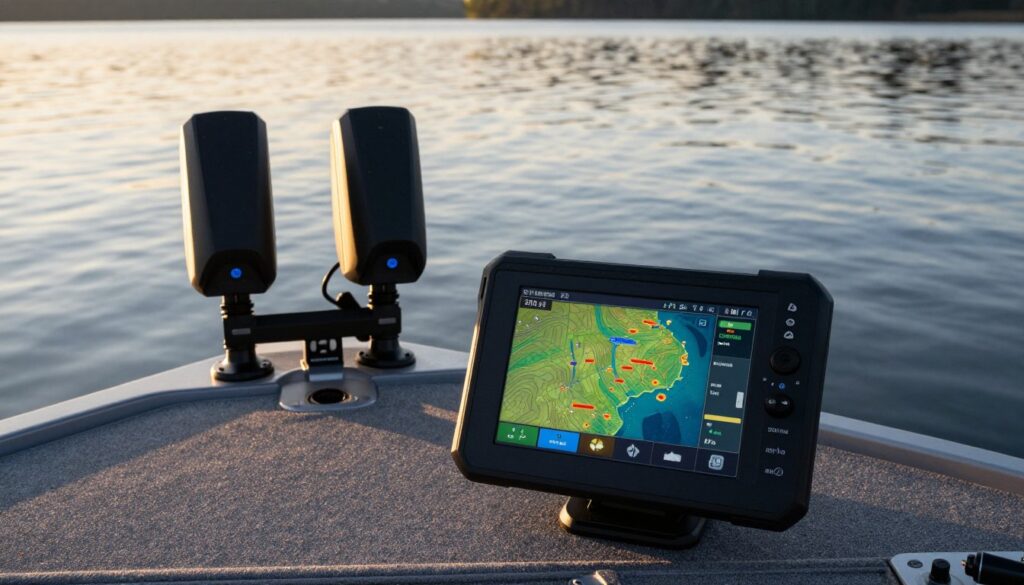
Imagine a tournament angler, intensely watching his Garmin LiveScope, tracking a bass like a stock trader. It’s not just fishing; it’s a game of strategy and tech. His screen shows every fish movement, making fishing a precise science.
Many anglers have changed their game with GPS systems. One kayaker mapped out reservoirs, marking spots months ahead. He returns with confidence, knowing where the fish are. His tech-savvy approach matches the best commercial fishermen.
A friend of mine, a “data nerd,” found big bass bite when pressure drops and water is 68°F. With this knowledge, he catches more fish than he can count. His phone buzzes with fish-related notifications. Who knew data could be so rewarding?
These stories show a truth: fishing success now mixes tech with humor. Anglers use side-scan imaging and smart lures to outsmart bass. The irony? Bass can’t resist. Yet, with tech, even skeptics believe in progress.