
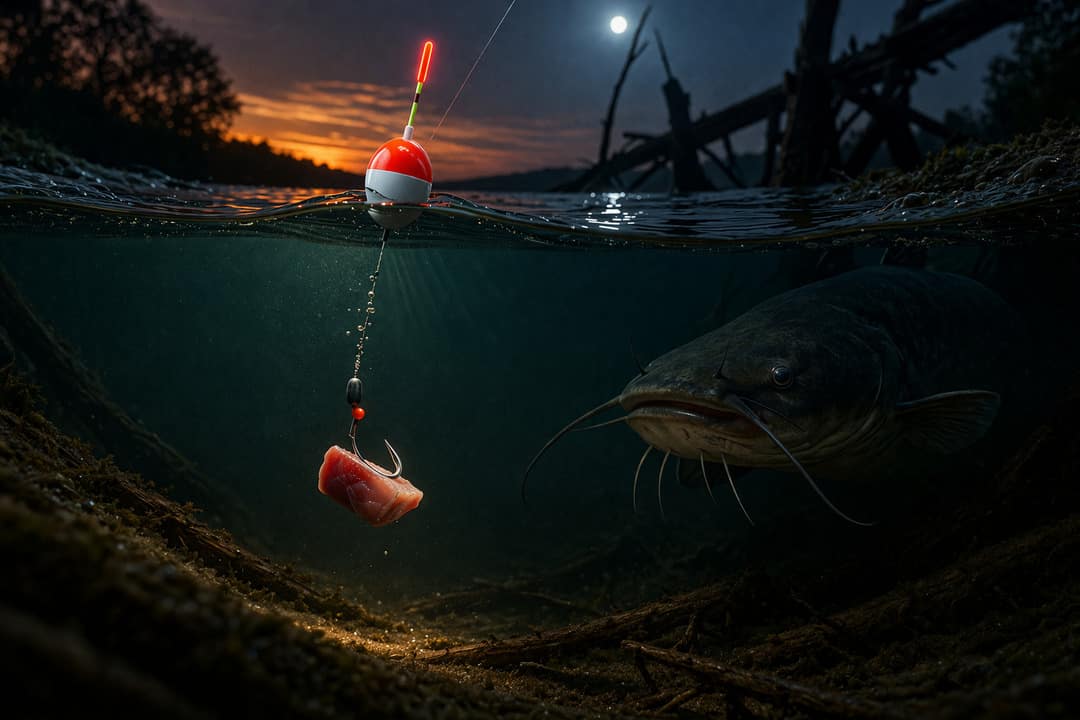

For years, I approached catfish fishing the way many anglers do keeping my bait planted firmly on the bottom. It’s a proven method, no doubt. But over time, I began to notice something that changed my entire approach: catfish don’t always feed down low.
That realization led me to experiment with the slip bobber rig for catfish, and the results were immediate. Instead of waiting and hoping fish would find my bait buried in mud or hidden among debris, I was presenting it directly in their line of sight suspended, visible, and far more effective.
This setup isn’t just a variation of traditional rigs. It’s a strategic shift that can dramatically improve your success under the right conditions.
What Makes the Slip Bobber Rig So Effective
At its core, the slip bobber rig for catfish is built around a simple concept: control the depth of your bait with precision.
Rather than letting your bait sink to the bottom, a sliding float (or bobber) allows you to position it at a specific depth in the water column. This is especially useful when catfish are cruising above the bottom, whether due to temperature changes, oxygen levels, or feeding patterns.
From my experience, this presentation does two critical things. First, it keeps your bait clean and unobstructed, avoiding mud, weeds, and debris. Second, it places the bait exactly where fish are actively feeding, rather than where we assume they should be.
That level of control is what makes this rig so powerful.
Ideal Conditions for Using a Slip Bobber Rig
The effectiveness of the slip bobber rig for catfish becomes most apparent in specific environments.
In shallow water, particularly during warmer months or nighttime feeding periods, catfish often move higher in the water column. This is when a suspended bait can outperform bottom rigs by a wide margin.
Fishing near structure is another scenario where this rig shines. Areas with submerged timber, docks, or vegetation can be difficult to fish with traditional setups due to snags. By suspending your bait above these obstacles, you significantly reduce the risk of getting stuck while still targeting active fish.
Heavy snag zones, in particular, are where I’ve found this rig to be invaluable. Instead of constantly retying lines, I can focus on presentation and bite detection, which ultimately leads to more fish landed.
How the Rig Improves Bite Detection
One of the most underrated advantages of the slip bobber rig for catfish is its ability to enhance bite detection.
Unlike bottom rigs, where subtle bites can go unnoticed, the float acts as a visual strike indicator. When a catfish takes the bait, the bobber moves sometimes dipping gently, other times disappearing entirely.
This immediate feedback allows for quicker reactions and better hooksets. In my own fishing, I’ve noticed that I miss far fewer bites when using this setup compared to traditional methods.
According to insights from slip bobber rig for catfish techniques outlined by Take Me Fishing (a program supported by the Recreational Boating & Fishing Foundation), floats are widely recognized for improving visibility and responsiveness during fishing.
That aligns perfectly with what I’ve experienced on the water.
Setting Up the Slip Bobber Rig Correctly
While the concept is simple, setting up the slip bobber rig for catfish properly is essential for success.
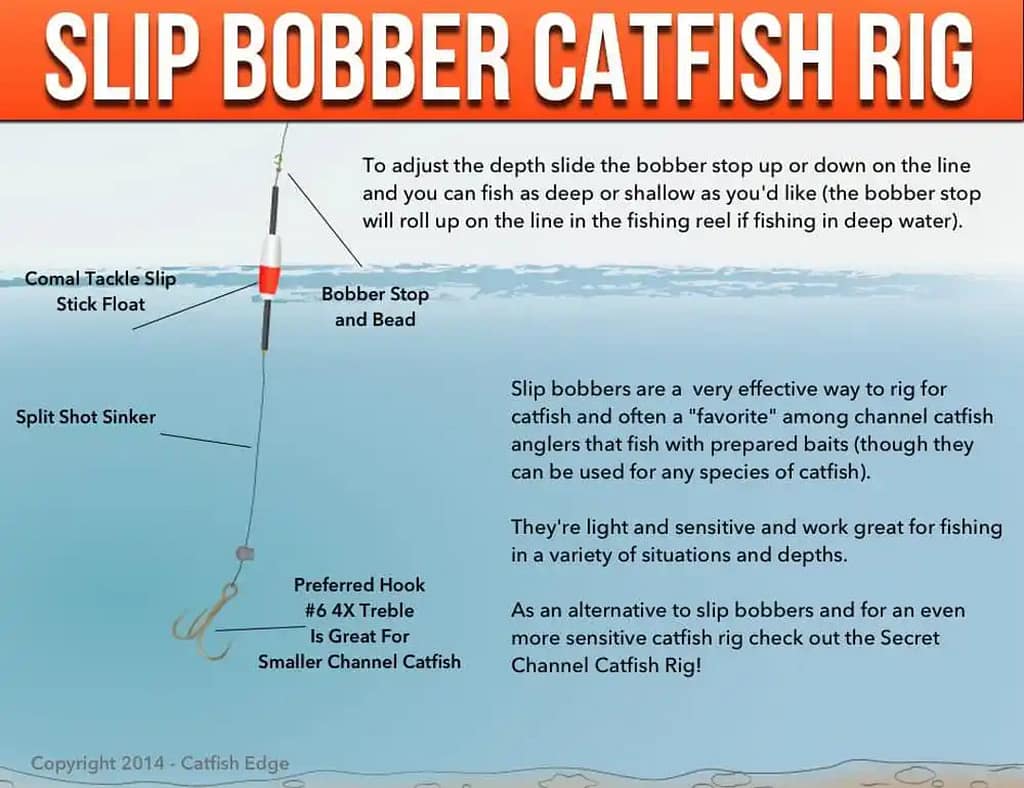
The key component is the adjustable bobber stop, which determines how deep your bait will sit. This allows you to fine-tune your presentation based on water depth and fish behavior.
Below the float, a weight helps stabilize the rig, while a leader and hook hold your bait. The balance between these elements is crucial too much weight and the bait looks unnatural; too little and it won’t stay at the desired depth.
In practice, I’ve found that small adjustments can make a big difference. Moving the bobber stop just a foot higher or lower can mean the difference between a slow day and consistent action.
Bait Presentation: Why Suspension Matters
What truly sets the slip bobber rig for catfish apart is how it presents bait.
Suspended bait behaves differently than bait on the bottom. It moves more naturally with the water, making it more appealing to fish. It’s also easier for catfish to locate, especially in murky conditions where visibility is limited.
In my experience, this is particularly effective during low-light periods, such as early morning or late evening. Catfish rely heavily on their senses to find food, and a suspended bait gives off stronger signals than one buried in sediment.
This subtle shift in presentation often leads to more aggressive strikes and higher catch rates.
Common Mistakes to Avoid
Even though the slip bobber rig for catfish is relatively straightforward, there are a few pitfalls I’ve learned to avoid.
One of the most common mistakes is setting the bait too shallow or too deep. Without proper adjustment, you may completely miss the feeding zone. Another issue is using oversized floats, which can reduce sensitivity and make it harder to detect subtle bites.
Line management is also important. Slack line can delay your response when a fish strikes, while overly tight line can interfere with the natural movement of the bait.
Paying attention to these details ensures that the rig performs at its best.
When to Choose This Rig Over Others
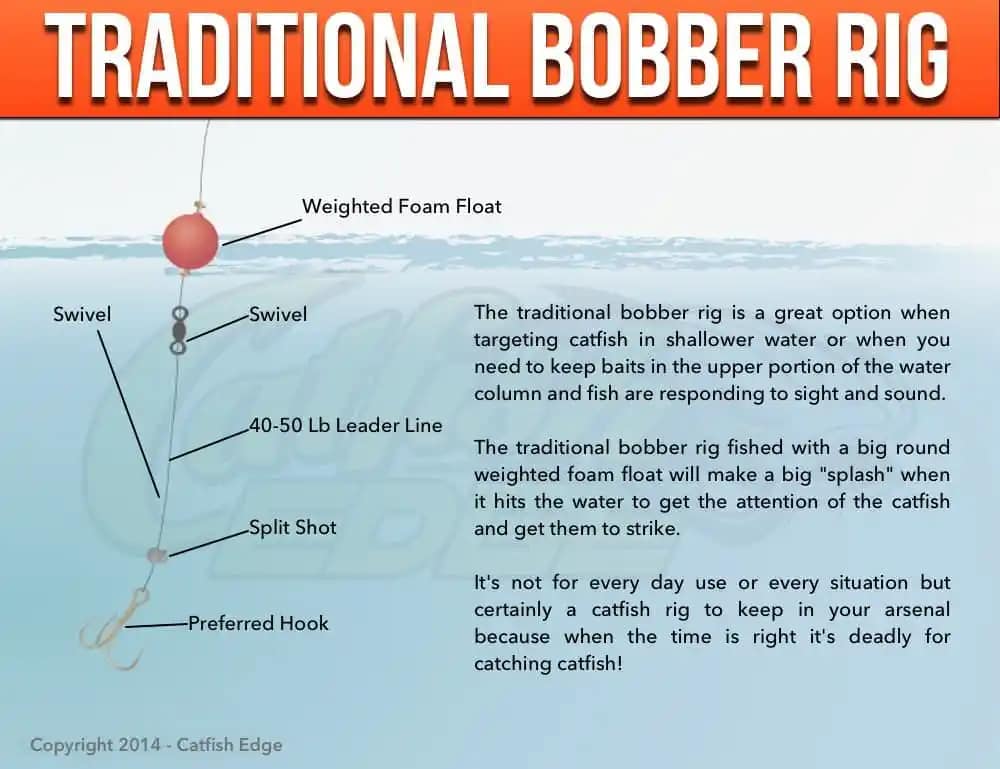
There are times when I still rely on traditional bottom rigs, especially in deep water or strong currents. But whenever I suspect that catfish are feeding off the bottom, the slip bobber rig for catfish becomes my go-to setup.
It’s particularly effective in:
- Shallow lakes and ponds
- Night fishing scenarios
- Areas with heavy structure or debris
In these conditions, the advantages of this rig become impossible to ignore.
Why the Slip Bobber Rig Deserves a Place in Your Setup
After spending time refining my approach, I’ve come to see the slip bobber rig for catfish as more than just an alternative it’s a strategic advantage when conditions demand a different presentation. By suspending bait at a controlled depth, this setup allows anglers to target fish that aren’t actively feeding on the bottom, opening up opportunities that traditional rigs often miss.
What makes this method stand out is its combination of precision and visibility. The ability to fine-tune depth, avoid snags, and clearly detect bites through the float transforms the fishing experience from passive waiting into a more responsive and engaging process. In environments like shallow water, structure-heavy areas, or nighttime conditions, that advantage becomes even more pronounced.
Ultimately, success in catfish fishing comes down to adaptability. No single rig works in every scenario, but the slip bobber rig consistently proves its value when fish behavior shifts. From my perspective, it’s a technique every serious angler should understand and keep ready because sometimes, the difference between an average outing and a productive one is simply fishing at the right depth.


