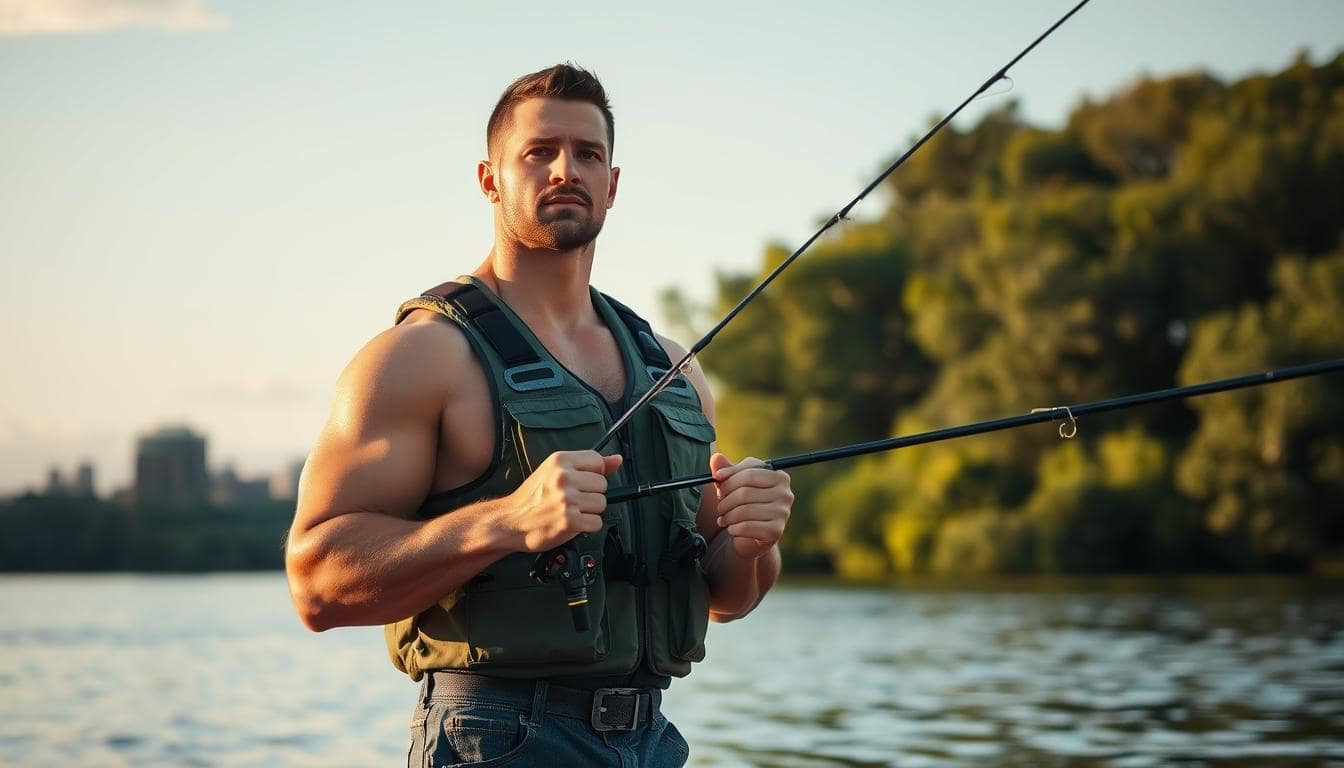

Let’s break the myth that fishing is just sitting around drinking beer. Real fishing is a demanding sport that shows who’s truly skilled.
I’ve seen men turn into jelly after just twenty minutes with a big yellowfin. That dream fight with a marlin? It’s like an Olympic weightlifting contest on a boat that’s trying to toss you off.
This isn’t about hitting the gym hard. It’s about how fitness turns you from a casual fisher into a water master. It’s like switching from playing checkers to three-dimensional chess in the wild.
Getting fit is key for those long offshore trips where every muscle matters. When a big fish bites, you’ll be ready. You won’t turn into jelly and let your catch get away.
Warm-Up Routines
Ever seen a cold engine start on a chilly morning? That’s your body without a warm-up – stiff and slow. Fishing needs your muscles to work smoothly, like a well-oiled machine.
Forget about gentle yoga stretches. We need targeted exercises for the muscles you’ll use all day. It’s not just getting ready; it’s getting your muscles ready to work.
The smart angler’s warm-up is like a mini rehearsal for fishing. It gets your body ready for the big day. Rotational exercises help with powerful casts. Shoulder mobility prepares you for endless retrieves. Leg exercises keep you stable on the boat.
Here’s your pre-fishing warm-up plan:
- Dynamic torso rotations – 30 seconds each side
- Shoulder circles – forward and backward, 15 each direction
- Bodyweight squats – 20 repetitions (yes, even before breakfast)
- Arm crossovers – 30 seconds to activate casting muscles
This routine takes less than five minutes but makes a huge difference. It helps you avoid injuries and get ready for that big catch. A good warm-up turns your body into a fishing machine.
The link to strength training is clear here. These exercises work the same muscles you’ve been strengthening. They turn your gym work into fishing success.
Remember: cold muscles don’t perform well and are prone to injury. Warm muscles are ready to help. Your fishing success depends on which muscles show up at the dock.
Strength Training Exercises
What makes a weekend angler different from a true aquatic warrior? It’s not just about looking good on the beach. It’s about gaining functional strength that boosts your fishing performance.
Strength training is like cross-training for the water. You need the strength of a winch, the spin of a baseball pitcher, and the stamina of a marathon runner. This is because you want to outlast a fish that’s trying to get away.
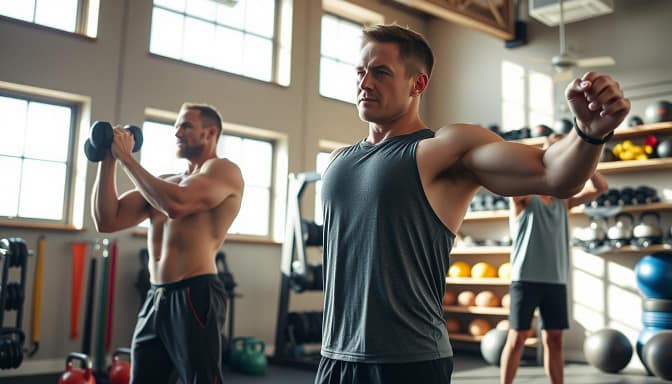
The right exercise for anglers mimics fishing actions. It targets every muscle group you’ll use while fishing. This includes reeling motions, casting, and stabilizing on moving platforms.
Core Foundation Exercises
Your core is key to fishing. It keeps you balanced on wobbly boats and powers your casts. These exercises build a strong core:
- Plank variations – Great for stability on uneven surfaces
- Russian twists – Builds power for casting
- Bicycle crunches – Works your core like pedaling
Upper Body Power Moves
Your arms and shoulders do all the work. They handle casting and reeling. These exercises boost your reeling and pulling power:
- Pull-ups – Strengthens your back and arms for pulling
- Dumbbell rows – Mimics setting the hook and reeling
- Shoulder press – Increases overhead strength for casting
Compound Movement Mastery
These exercises work many muscles at once, like fishing actions. They build the strength needed for long fishing sessions:
- Bench press – Strengthens your chest and arms for hook sets
- Push-ups – Builds strength without equipment
Strength training isn’t just for looks. It’s about being capable. The right exercise for anglers means you dominate fish with your functional strength.
| Exercise Type | Primary Muscles Worked | Fishing Application | Recommended Sets |
|---|---|---|---|
| Plank Variations | Core, Shoulders, Back | Boat Stability & Balance | 3 sets of 60 seconds |
| Dumbbell Rows | Back, Biceps, Shoulders | Reeling & Pulling Power | 3 sets of 12 reps |
| Russian Twists | Obliques, Core | Casting Rotation & Force | 3 sets of 20 reps |
| Pull-ups | Back, Arms, Core | Lifting & Landing Fish | 3 sets to failure |
| Shoulder Press | Shoulders, Triceps | Overhead Casting Endurance | 3 sets of 10 reps |
For a full fishing fitness program, check out our fisherman’s fitness guide. It’s like having a personal trainer who knows what it takes to win against fish.
The best exercise for anglers isn’t about looking good. It’s about performing well on the water. Build your functional strength, and you’ll see the difference when you catch that big fish.
Building Endurance
Building fishing fitness endurance turns you into a pro who can fish for eight hours straight. It’s not just about sitting for a long time. It’s about staying strong when the fish challenge you.
Circuit training boosts your heart and lungs for long fishing sessions. It’s like crossfit for anglers, but without the strict diet.
Working your lower body helps you last longer on the water. Strong legs and a stable core mean you can handle bumpy boats and long stands.
Try walking, jogging, or running during your lunch break. Even small activities like circling the parking lot or taking the stairs help. They build your endurance for long days on your feet.
Mental toughness is key when your arms ache. It’s about pushing through the pain to keep fishing. This separates the winners from the rest.
This fisherman’s fitness guide explains how endurance training helps you perform better. You’ll be ready for tough fishing without needing a long break to recover.
Change your body to be like an ultra-marathoner. This is key for tournament fishing. Being able to fish well while others struggle is a sign of true preparation.
Flexibility for Injury Prevention
Fishing injuries often go unseen, turning great catches into trips to physical therapy. While social media highlights the wins, it hides the injuries. These can include rotator cuff tears, back spasms, and strains from unprepared physical feats.
This isn’t about fancy yoga poses. It’s about functional flexibility – the kind that keeps you fishing. I’ve learned that fishing trips require more physical prep than most think.
Shoulder mobility is key during long casting sessions. Your rotator cuff is a hero that needs attention. Simple exercises can help you land the big catch without injury.
Hip flexibility is also critical, keeping you stable on a moving boat. Tight hips can lead to injuries. I’ve seen many anglers hurt their backs because they ignored hip mobility.
Rotational mobility is the real game-changer. It lets you fish efficiently without harming your spine. This is the difference between moving well and risking injury.
Flexibility work goes hand-in-hand with strength training. Together, they keep you balanced and injury-free. The best fishing stories don’t end with injuries.
Preventing injuries means looking at your body as a whole. Tightness in one area can cause problems elsewhere. Anglers who understand this fish longer and stronger, with fewer regrets.
Cool-Down & Recovery
The real workout begins when you stop reeling – welcome to the science of angler recovery. Think of your body as premium fishing gear that demands meticulous maintenance after every outing.
Nutrition becomes your secret weapon here. That gas station snack addiction? It’s sabotaging your exercise for anglers progress. Sugar might taste amazing, but it’s biological poison when you’re trying to rebuild muscle fibers.
Carbs wear you down while protein and vegetables – prepared correctly – become performance fuel. Your post-fishing meal should look more like a nutritionist’s dream than a college student’s fridge raid.
Sleep transforms from passive rest into active recovery. Those seven hours aren’t just downtime – they’re when your body performs its magic repair work. Quality sleep is the unsung hero of fishing fitness.
Implement a simple cool-down routine: 5 minutes of light stretching, hydration with electrolytes, and proper nutrition within 45 minutes of your last cast. Your tomorrow-self will thank you when you’re not moving like a rusty reel.
This recovery protocol turns soreness into strength, transforming your body into a more efficient fishing machine. Because even the best anglers need proper maintenance to perform consistently.
Weekly Plan
Ever tried building a fitness routine that actually survives contact with reality? It’s like trying to catch a marlin with dental floss – theoretically possible but practically absurd. The secret isn’t in finding more time; it’s in making your existing time work smarter.
Research shows it takes 21 days to form a habit. But let’s be real – most fishing fitness plans don’t survive 21 hours once Monday morning meetings hit. That’s why we’re building something that actually works for anglers with actual lives.

Your weekly plan should mirror your fishing calendar. Tournament season? Ramp up intensity. Off-season? Focus on foundation building. It’s periodization for people who have to explain to their boss why they’re doing lunges in the breakroom.
The 5-Day Angler’s Blueprint
This isn’t some generic fitness program. This is tactical preparation for those 14-hour days on the water when your body decides whether you’re going for the trophy or going home early.
| Day | Focus | Key Exercises | Fishing Benefit |
|---|---|---|---|
| Monday | Upper Body Strength | Pull-ups, Push-ups, Rows | Casting endurance & hook setting power |
| Tuesday | Cardio & Core | Rowing machine, Planks, Russian twists | Fighting big fish & boat stability |
| Wednesday | Active Recovery | Yoga, Walking, Mobility work | Injury prevention & flexibility |
| Thursday | Lower Body & Grip | Squats, Farmer’s walks, Grip trainers | Standing endurance & reel control |
| Friday | Sport-Specific Training | Casting practice, Balance exercises | Skill integration & muscle memory |
Notice what’s missing? Weekend workouts. Because you’ll either be fishing or recovering from fishing – and both count as training when you’re serious about fishing fitness.
The magic happens when you stop thinking about exercise as separate from fishing and start treating it as integrated preparation. That fishing workout isn’t just about getting fit – it’s about building a body that performs when the fish are biting.
Track your progress where it matters: on the water. Can you cast more accurately in the fourth hour? Fight fish without your arms turning to jelly? That’s your real feedback loop.
Consistency beats intensity every time. Getting up at the same time for two months creates more lasting change than two weeks of heroic efforts followed by six weeks of Netflix recovery.
Your fishing fitness journey should feel less like boot camp and more like sharpening your favorite knife – deliberate, purposeful, and directly connected to better results where it actually matters: on the water.
Conclusion
Fishing from shore seems easy, but it’s not. It’s a real challenge, like a sport. The best anglers aren’t just skilled; they can keep going even when it’s hard.
Strength training makes fishing better. It helps you stay steady in a moving boat. It also gives you the power to fish all day without getting tired.
Many anglers lose fish because they’re too weak. But the ones who train hard can keep going, even when it’s tough. Their hard work pays off with every cast.
Fishing is for athletes, not just experts. So, are you just hoping for fish, or are you ready to catch them?


