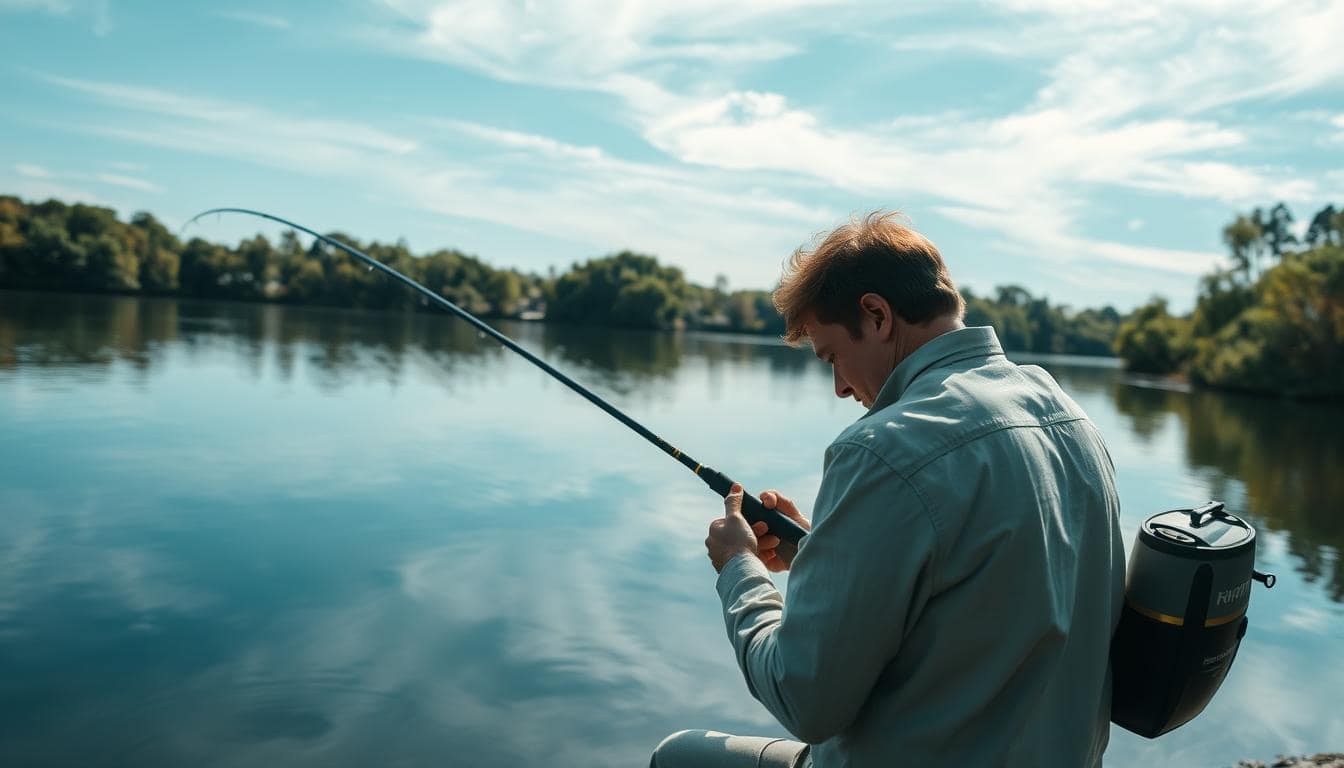

Let’s be honest about something. Spending a lot on gear doesn’t always mean you’ll catch fish. I’ve seen anglers with expensive setups fail when the fish stop biting.
What makes some anglers better than others? It’s not just about the gear. It’s what goes on in their minds. They have a clear vision, unlike others who struggle.
This isn’t just about waiting patiently. It’s about having a strong mindset, staying calm, and preparing mentally like elite athletes do. Your brain might be the most important tool you have.
We’re going to explore why your mindset is more important than your tackle. Get ready for some deep fishing truths we all know but rarely talk about.
Visualization Techniques
Mental rehearsal isn’t just a fad; it’s backed by science. It works better than any lucky charm. Your brain can’t tell the difference between imagining success and actually doing it. This trick turns anxiety into excitement.
Think of visualization as mental practice for fishing. You’re building muscle memory without wasting a single cast. When you’re on the water, your brain knows exactly what to do.
- Perfect cast simulation: Close your eyes and feel the rod loading perfectly
- Ideal retrieve mental movie: Visualize the exact cadence that triggers strikes
- Hook set rehearsal: Mentally practice timing that perfect connection
The science behind it is amazing. Your brain’s motor cortex works the same way during mental practice as it does when you’re fishing. You’re creating a blueprint for success that your body follows automatically.
| Visualization Type | Mental Focus | Real-World Result | Time Investment |
|---|---|---|---|
| Pre-cast rehearsal | Rod loading mechanics | Improved accuracy | 2 minutes daily |
| Retrieve pattern imaging | Cadence and rhythm | More strikes | 3 minutes daily |
| Hook set simulation | Timing and pressure | Better connection rate | 90 seconds daily |
| Success scenario building | Confidence reinforcement | Reduced anxiety | 5 minutes daily |
This isn’t just positive thinking; it’s preparatory thinking. You’re installing success software in your mind. The key to fishing success starts long before you hit the water.
Professional anglers swear by these techniques. They know that the mind catches fish before the rod does. Your brain is your most reliable fishing partner.
Begin with just five minutes a day. Imagine one perfect cast, one ideal retrieve, and one perfect hookset. Your mindset will shift from doubt to confidence. The water will be your proving ground, not your testing ground.
Handling Stress on Tournament Day
Watching adults freak out over fishing spots is like a nature show about emotional monkeys. The fish don’t care it’s competition day, but you’re freaking out. You might shake, make quick decisions, and lose focus.
Your body acts like a drama king, flooding you with stress hormones. Your heart races, and even strong lines feel weak. Sadly, this stress messes with your focus when you need it most.
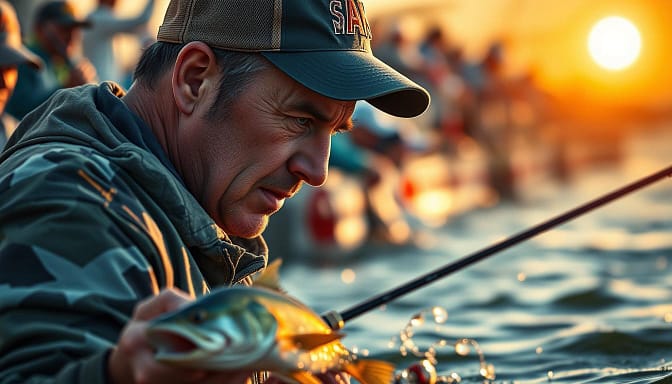
Learning to breathe deeply can help. Navy SEALs use a special breathing method to stay calm. Anglers can use it too, like when someone takes “your” spot. Breathe in for four, hold for four, breathe out for four, and pause for four. Do this until you calm down.
Having a pre-fishing routine helps you stay focused. Mine includes checking my gear, reviewing my plan, and listening to three songs. These habits keep my mind sharp, even when things get crazy.
Know what makes you lose it before it happens. Signs include:
- Starting sentences with “That guy always…”
- Re-tying knots that were perfectly fine
- Checking fish finder settings every ninety seconds
- Narrative-building about conspiracies against you
When you see these signs, it’s time to reset. Stop, breathe, drink water, and look at the horizon. Your tournament hopes aren’t lost unless your mind is.
It’s not about avoiding stress, but managing it. The angler who stays focused has a big advantage. While others freak out, your calm focus is your best tool.
Focus Drills for Anglers
Did you know catching more fish is all about training your mind? It’s not about your gear. In today’s world, staying focused for hours is a skill, not just willpower. This skill makes the difference between casual anglers and champions.
Start with environmental scanning, a technique from special forces. Every 15 minutes, look around: the water, the bank, the sky. It’s not just about finding fish. It’s about staying in the moment. You’ll catch more fish by focusing on what’s happening now.
Try bobber meditation next. It might sound weird, but it works. Set a timer for 20 minutes and watch your bobber. When your mind drifts, bring it back without judging. This drill helps you stay patient on slow days.
Then, try the smartphone detox drill. Leave your phone off or on airplane mode. It’s hard at first, but it pays off. You’ll notice changes in the water and fish behavior more easily.
For a bigger challenge, do the “single task” drill. Stick to one way of fishing for an hour. This drill helps you solve problems and think clearly. Your fishing mindset will become more focused and strategic.
Breathing techniques can also help. Try the 4-7-8 method to calm your nerves. It’s what helps athletes perform well under pressure. Fishing is a sport, and this method can help you stay calm.
These drills aren’t about becoming a meditation expert. They’re about improving your focus. The fish will bite more when you’re present and patient. Your fishing mindset is key.
Start with one drill each time you go fishing. Soon, you’ll notice you’re more focused and enjoy fishing more. Your mind is the most important tool you have on the water.
Resetting After Mistakes
Let’s face it: you’ll make mistakes. That trophy bass might spit out your hook. Your perfect cast could hit a hidden branch. Welcome to fishing, where humility is free.
The key difference between pros and weekend anglers isn’t avoiding mistakes. It’s how they handle them. While amateurs beat themselves up, pros use the “mental control-alt-delete.”
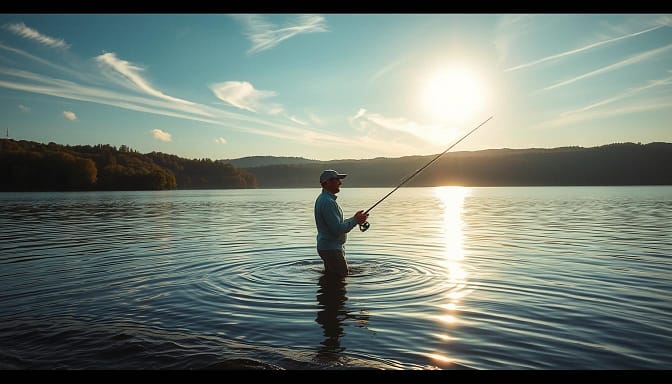
Turning mistakes into learning is key. Instead of saying “I’m terrible,” say “What’s this teaching me?” A missed strike can teach you about fish behavior. A bad knot shows you where to pay more attention.
Emotional control is what sets champions apart. Losing one fish shouldn’t ruin your day. Pros see fishing as a series of performances, not just one.
Try this next time you mess up:
- Take three deep breaths – oxygen calms your nerves
- Admit the mistake without judgment (“Well, that didn’t work”)
- Ask a constructive question (“What’s my next move?”)
This isn’t just psychology. It’s what makes consistent performers different. As top tournament anglers know, it’s about managing emotions, not avoiding them.
The best anglers see mistakes as learning points, not failures. They’re experts at quick resets, moving on to the next cast.
Your mental game doesn’t need to be perfect. It just needs to be resilient. Laughing at a lost giant shows true emotional intelligence.
Professional Insights
Ever wonder why pro anglers seem to play chess while we play checkers? I interviewed dozens of top competitors. They don’t use magical lures; it’s their mental game.
These pros fish with the same intensity as chess grandmasters. They’re not just casting lines; they’re making strategic moves in a liquid chessboard.
Elite anglers prepare like military strategists. They study weather, water temperatures, and fish migrations with great detail. It’s not just fishing; it’s aquatic forensics.
They turn random casting into systematic problem-solving. Instead of hoping for bites, they test hypotheses. Each cast is data collection.
Under pressure, they make decisions like emergency room surgeons. They stay focused yet emotionally detached. It’s intense focus with emotional distance.
Here’s how pros differ from amateurs:
| Aspect | Amateur Approach | Professional Mindset |
|---|---|---|
| Preparation | Last-minute gear check | Season-long pattern analysis |
| Problem-Solving | Random lure changes | Systematic hypothesis testing |
| Decision-Making | Gut feelings | Data-driven choices |
| Mistake Response | Frustration | Immediate adjustment |
| Focus Duration | Intermittent | Sustained concentration |
Pro anglers experience the same mental health benefits as recreational anglers. Their focus is intense, like a moving meditation.
In competition, pros don’t panic. They use their mental frameworks like emergency protocols. They don’t get frustrated; they analyze.
This approach turns fishing into a high-performance sport. It’s not about working harder; it’s about thinking smarter. The water is their chessboard, and each cast is a strategic move.
Conclusion
Let’s face it, you’ve likely spent more time picking your fishing rod than training your mind. It’s ironic that we focus on gear but ignore our mental game. We’ve looked at how to visualize, manage stress, stay focused, and adopt a pro mindset.
The truth is, mental preparation is key, not just a bonus. It’s what makes the difference between casual anglers and those who catch fish regularly.
Think of it as advanced fishing psychology. It’s where flow and mindfulness meet, making every cast a meditation. It’s not just about catching fish; it’s about becoming a sharper, more resilient person.
The water doesn’t care about your fancy lures if your mind is distracted. So, when you gear up, remember the real prize is your focus, not just the fish. Tight lines and sharp minds win this game.


