
Angler heat fitness starts long before the first bait hits the water. Hot weather can make a simple cast feel like swinging a wet towel, and a long fight with a fish can turn sloppy fast if your body is cooked before the bite even comes. I treat high-temperature fishing like tournament prep: plan the launch, pace the work, cool the body, and protect decision-making from heat fatigue.
For sport fishing crews, the goal is not to act tougher than the forecast. The goal is to keep hands steady, eyes sharp, and judgment clean. Heat affects casting rhythm, knot tying, anchor work, kayak balance, and release care. A good hot-day plan helps you fish harder in the right windows and back off before poor choices start stacking up.
Angler Heat Fitness Starts Before Launch
The first mistake I see is treating heat as a problem that begins at noon. By then, you may already be behind. Start the day with a lower heat load: lighter clothing, a brimmed hat, cold fluids ready, shade planned, and heavy deck chores handled early if conditions allow. Think of it like setting drag before the hookset. Waiting until the reel screams is bad mechanics.
Angler Heat Fitness Acclimation Plan
A practical angler heat fitness block should build exposure gradually instead of jumping from air conditioning to an eight-hour river grind. The research notes provided for this article cite U.S. NIOSH guidance recommending gradual heat exposure over 7 to 14 days. For anglers, that can mean short casting sessions, walking the bank in warm conditions, loading the boat in the morning heat, or practicing kayak launches without turning the session into a punishment contest.
Keep the early sessions boring on purpose. If you cannot tie a clean knot, keep your balance, or back the trailer without feeling foggy, your body is giving you useful feedback. Take it seriously. Heat prep is not about winning a driveway workout. It is about being useful at hour six on the water.
Pre-Cooling Without Overcomplicating It
Pre-cooling is one of the easiest tools anglers can use. Cold fluids before launch, a cold towel during rigging, or a brief cool-down in the truck before pushing off can reduce early heat strain. The supplied research notes report that pre-cooling strategies before endurance exercise in hot environments can improve performance outcomes by about 3% to 8%, though the exact effect depends on the method, conditions, and the person.
My practical version is simple: drink cold fluids before leaving the ramp, keep a cooler arranged so drinks are reachable, and avoid burying towels under bait trays and tackle boxes. If the plan takes ten minutes to set up, crews will skip it when the bite is on.
Cooling Tactics That Hold Up On Deck
Cooling gear only helps if it fits the way anglers actually move. A bass angler working a trolling motor, a catfish crew setting anchors, and a kayak angler paddling a wind-blown flat all need hands free and gear that does not interfere with safety. Cooling should support fishing mechanics, not create clutter underfoot.
Internal Cooling For Longer Work
Internal cooling means using cold or ice-based fluids to help manage heat strain. A systematic review found that internal cooling methods can prolong time to exhaustion and reduce core temperature, sweat rate, and perceived thermal strain during exercise in the heat internal cooling review. For anglers, that finding lines up with what many crews feel on deck: cold fluids can make hard work feel more controlled.
Do not turn this into a chugging contest. Sip regularly, keep fluids accessible, and match the plan to the day. Long anchor pulls, repeated casts with heavy lures, and paddle sessions all raise workload. If you wait until your mouth is dry and your casting hand is clumsy, you waited too long.
Head, Face, And Neck Cooling During The Bite
Head, face, and neck cooling can be useful because it is quick and easy between casts. A June 2025 systematic review and meta-analysis found that cooling these areas may not always produce significant changes in fixed-intensity or self-paced performance, but it typically improves thermal comfort and reduces thermal sensation head and neck cooling review.
That matters in fishing. Comfort affects patience. Patience affects lure speed, drift control, hookset timing, and fish handling. A cold towel around the neck while retying, a water spray during a slow bite, or shade during bait checks can keep you from rushing decisions. That is quiet performance work, and it counts.
Hydration, Clothing, And Rest Timing
Heat management gets ugly when anglers treat water, clothing, and rest as separate chores. They work together. Loose, breathable, light-colored clothing reduces heat load. Planned breaks create space to drink and cool down. Hydration supports attention and muscle control. Skip one piece and the whole system gets wobbly.
Make Fluid Loss Visible
The research notes cite sports medicine guidance that losing more than 2% to 3% of body mass through sweat can impair performance and physiological function. On the water, you do not need a lab to respect that. If your shirt is soaked, your urine is dark after the trip, or you stop needing bathroom breaks during a long hot session, your fluid plan needs work.
- Pack cold fluids where every angler can reach them without digging.
- Set a drink cue, such as every bait check, every drift reset, or every move to a new spot.
- Use shade breaks before symptoms force the issue.
- Keep extra fluids for the ride home, not just the fishing window.
If you want a broader training base for long outings, I like pairing heat planning with strength and conditioning work like these angler fitness tips. Better legs, hips, grip, and trunk control make hot-day tasks feel less draining.
Rest Before Skill Drops
Do not wait for dramatic warning signs. Heat usually steals performance in small bites first. Your casts land short. You miss simple line checks. You rush a fish at the net. You forget to wet your hands before release. That is the time to pause, not after someone feels awful.
Use short, planned rests during the hottest period. On a boat, rotate who handles anchors, net work, and bait duties. On the bank, pick a shaded staging spot before you start walking. In a kayak, plan pull-outs or low-effort drift lanes. The best rest break is the one you take while you still feel capable.
Boat, Bank, And Kayak Adjustments
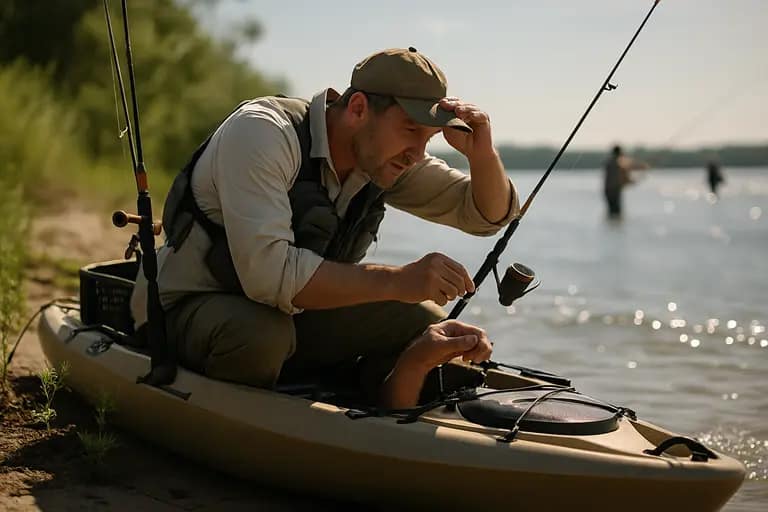
Hot-day fishing is not one-size-fits-all. Boat crews can carry more ice, fluids, towels, and shade. Bank anglers may walk farther with less gear. Kayak anglers have less space and more direct sun exposure. Your setup should match the platform.
Boat Crews Need Deck Discipline
On boats, clutter becomes a heat problem because tired feet trip over loose coolers, towels, cast nets, and anchor lines. Keep cooling gear in one known place. Put drinks in a cooler that opens without moving rods. If you use a fan at the dock, during staging, or around camp, pair moving air with fluids and shade rather than pretending it replaces them.
Assign roles before the bite gets hot. One angler watches rods, one handles the net, one manages lines or anchor rope. Clear roles reduce wasted movement, and wasted movement is expensive in high heat.
Bank And Kayak Anglers Need Exit Plans
Bank anglers should plan the walk back before walking in. That shaded bank may feel close at sunrise and brutal at 2 p.m. Carry less tackle, choose proven rigs, and avoid changing presentations every five minutes. Efficiency is cooling.
Kayak anglers should be even more conservative. Balance and re-entry skills matter, but heat makes fine motor control and judgment less reliable. Keep cold fluids secured, use sun protection that does not restrict paddling, and shorten runs against wind or current. A safe return is part of the fishing plan, not a separate topic.
- Fish early or late when possible, then reduce workload during peak heat.
- Stage shade, fluids, and cooling towels before the first cast.
- Use fewer, higher-confidence presentations to reduce wasted motion.
- Stop and reset if casting accuracy, balance, or knot quality drops.
Why Angler Heat Fitness Changes Hot-Day Decisions
Angler heat fitness is not about acting invincible. It is about making better calls while the weather is trying to make you careless. Heat affects the angler first, then the tactics. Once your body is behind, you fish too fast, move too often, miss signs from the water, and handle fish with less care.
Build angler heat fitness around repeatable habits: gradual exposure, cold fluids, head and neck cooling, breathable clothing, shade breaks, and platform-specific planning. None of those steps are flashy. They are the fishing version of sharp hooks and fresh line. You may not brag about them at the ramp, but they show up in cleaner casts, steadier hooksets, smarter releases, and safer rides home.
Hot weather will always test anglers. The crews that perform best are rarely the ones making the most noise about toughness. They are the ones who planned the heat before launch, watched each other during the grind, and knew when to push and when to pause.


