After a brutal run of summer heat, angler fitness tips need to be more than gym talk. Tournament season asks your body to cast clean, lift safely, stay sharp in humidity, and make good decisions after hours on deck. I train for fishing the same way I train for a long athletic event: build heat tolerance, protect the back and shoulders, fuel the work, and recover before the next launch.
Angler Fitness Tips After The Heat Break
The first mistake I see is treating the first cooler morning like a free pass to go full throttle. Heat stress can still matter after peak summer, especially on flat water with little shade. A smarter plan is to keep heat exposure controlled and gradual, rather than bouncing between air conditioning and hard midday workouts.
Angler Fitness Tips For Morning Workouts
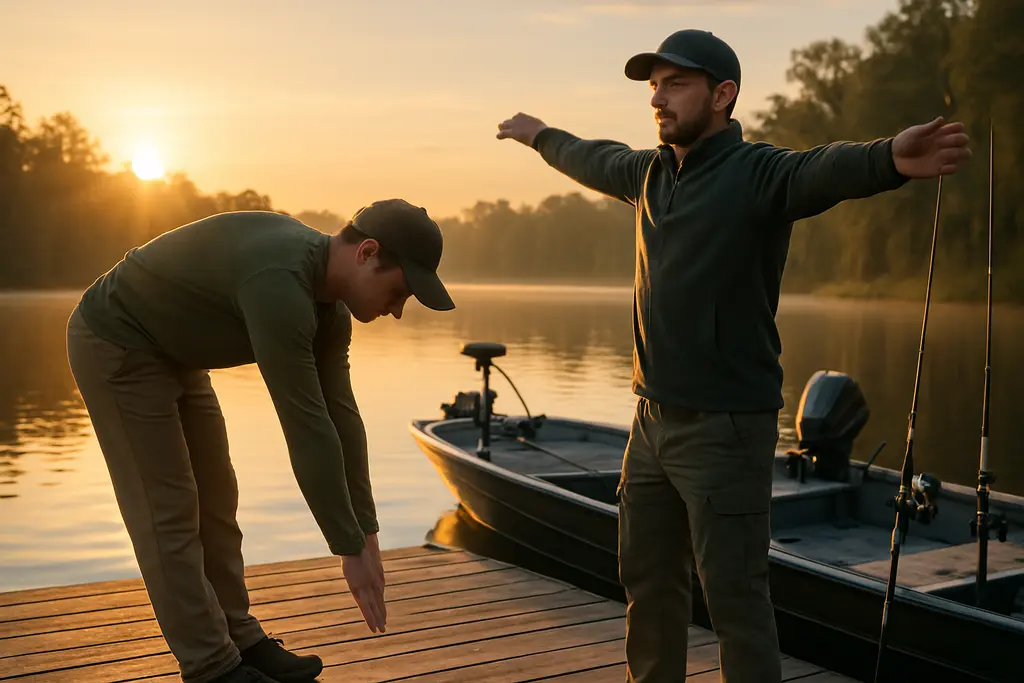
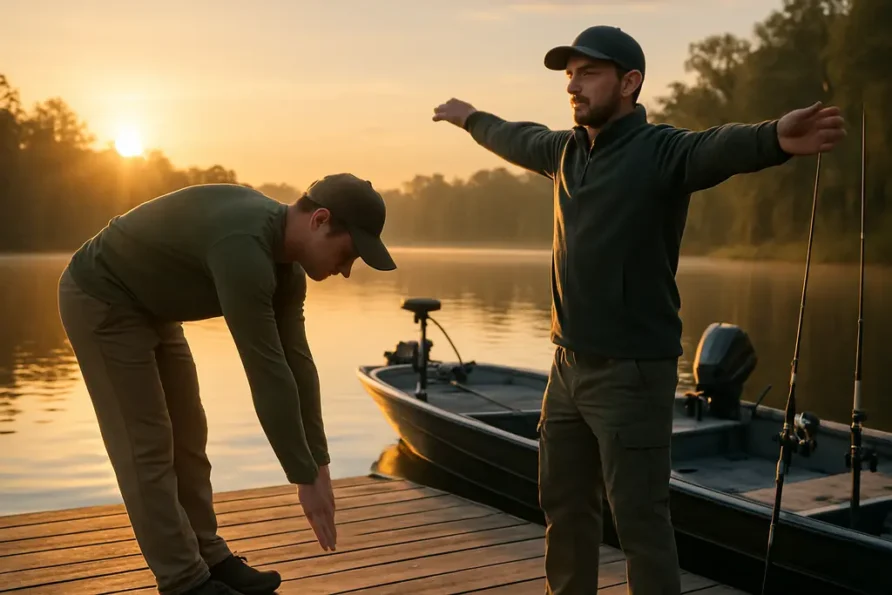
Use the morning like a practice window, not a punishment session. Start with 20 to 30 minutes of brisk walking, rowing, cycling, or easy jogging before adding casting drills. Then finish with five minutes of smooth overhead reaches, hip hinges, and trunk rotations. That sequence wakes up the legs and spine before the rod hand starts working.
Heat acclimatization is a real training target. Repeated exercise in hot environments over 10 to 14 days can improve sweat response, lower heart-rate strain during heat stress, and reduce perceived effort, according to a review on heat illness in sport. For anglers, that means you do not need hero workouts. You need steady exposure, smart pacing, and planned cool-downs.
How To Scale The First Two Weeks
Think of the first two weeks as preseason camp for tournament fishing. On day one, keep the workout easy enough that you could still tie knots with steady hands afterward. By days four through seven, add short casting blocks: ten casts to a target, walk back, breathe, repeat. By days eight through fourteen, pair conditioning with boat-day movements such as stepping up and down, carrying a tackle bag, and bracing your stance as if a fish is pulling hard.
These angler fitness tips work best when you track simple feedback. Note sleep, morning energy, thirst, and whether your casts get sloppy late. If the answer is yes, reduce the next session instead of forcing more volume. Fitness for fishing is not about proving toughness; it is about staying accurate when the sun and clock start leaning on you.
Build Strength That Holds Up On Deck
Fishing strength is not bodybuilding strength. It is the ability to hinge, rotate, brace, pull, and repeat without turning your lower back into a complaint department. The deck does not care how much you bench. It cares whether you can keep balance while reaching for a net, setting a hook, or lifting a cooler without twisting under load.
The Deck-Ready Strength Circuit
I like three strength sessions per week after summer, with at least one easy day between them. Keep the movements clean and stop before form breaks. Use a load that lets you finish every rep without holding your breath or yanking through your spine.
- Hip hinge: Romanian deadlift, kettlebell deadlift, or unloaded hinge for 3 sets of 8.
- Anti-rotation core: Pallof press or suitcase carry for 3 controlled rounds per side.
- Pulling strength: cable row, band row, or dumbbell row for 3 sets of 10.
- Shoulder control: band external rotation and wall slides for 2 sets of 12.
- Leg endurance: step-ups or split squats for 3 sets of 8 per leg.
This is where fishing tactics and training overlap. A stronger hinge helps you load gear without rounding your back. Better anti-rotation strength helps you hold posture during a hookset. Stronger legs reduce the urge to lean on your lower back when the boat rocks or you crouch near the livewell.
If you want a deeper sports-first take on why conditioning matters on the water, I like pairing this approach with angler fitness matters because tournament performance is built before launch.
Fuel And Hydrate Like An Endurance Angler
Long tournament days can feel like a slow endurance event with sudden sprints. You may spend hours scanning water, casting, moving gear, and managing fish care, then hit a burst of hard effort when the bite turns on. Your food and fluid plan should match that rhythm.
Carbs, Fluids, And Gut Practice
A 2026 PubMed-indexed systematic review reported that carbohydrate intake during endurance exercise in heat can increase time to exhaustion by 13 to 19 percent and time-trial performance by 3 to 12 percent, though results were not consistent across all studies; the authors also stressed practical tolerance in hot conditions carbohydrate review. That is useful for anglers because tournament fuel only helps if your stomach accepts it on a rocking boat.
Practice your boat-day snacks during training, not on the morning of a money event. Try small portions every 30 to 45 minutes during longer sessions: a banana, a rice cake with nut butter, a sports drink you already tolerate, or a simple sandwich cut into halves. Pair that with regular fluid intake instead of waiting until you feel drained.
One of my favorite angler fitness tips is to weigh before and after long practice days when conditions are hot. The research notes provided for this piece point to performance concerns when body-mass loss climbs past 2 percent during outdoor activity. You do not need to obsess over the scale, but you should learn your personal sweat pattern. Heavy sweaters may need more fluid and electrolytes than the buddy who barely dampens a shirt.
Pack The Cooler With A Plan
Your cooler should not look like a gas-station dare. Build it like a sideline fuel station: water, an electrolyte option, easy carbs, and protein for after weigh-in. Keep the first snack easy to reach so you do not skip it during the best morning bite. If caffeine is part of your routine, test timing during practice and avoid turning it into a substitute for food, sleep, or fluids.
Recover Between Hot Practices And Weigh-Ins
Recovery is where many anglers give away the next day. They prep tackle until midnight, sleep hot, wake stiff, and wonder why the first hour feels like casting through wet concrete. After summer heat, the goal is to bring body temperature down, refill the tank, and keep joints moving without adding stress.
Cool Down Before You Gear Down
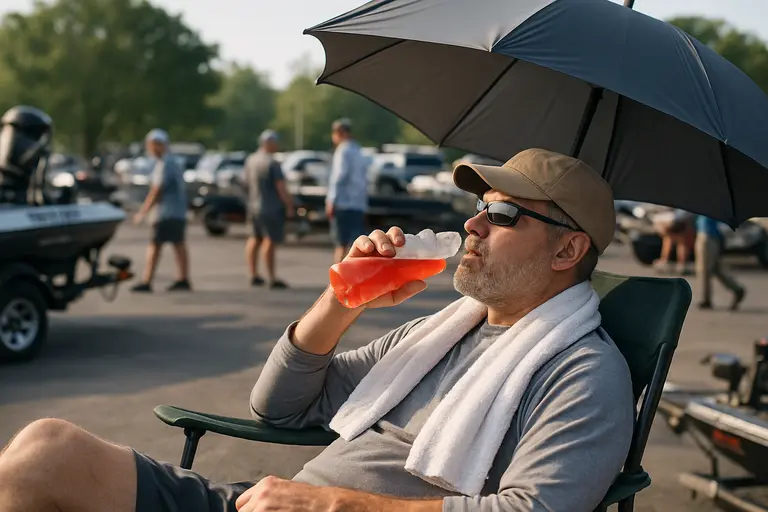
After a hot session, take five to ten minutes before heavy cleanup. Walk slowly, breathe through the nose if you can, and sip fluid. Use shade, cool towels, or a cool shower once you are off the water. The research notes for this assignment support cooling strategies before, during, or after hot exercise to improve comfort and manage heat strain. Keep it practical: shade breaks, cold towels, and a cooler stocked for the athlete, not just the bait.
Sleep deserves the same respect as rod selection. The research notes also state that athletes in rigorous training often need 8 to 10 hours of sleep and that hot conditions can disrupt sleep quality. For tournament anglers, that means prep earlier, keep the room cool, and avoid late caffeine if it hurts your sleep. A crisp hookset starts with a rested nervous system.
Mobility For The Casting Chain
Before bed or after a shower, run a short mobility circuit: open-book rotations, hip flexor stretches, calf raises, and gentle forearm flexor stretches. Keep it easy. This is not another workout. It is maintenance for the casting chain: feet, hips, trunk, shoulder, elbow, wrist, and grip.
Use pain as information, not as a badge. If a movement causes sharp pain, stop and get qualified guidance. If it feels like normal training stiffness, reduce volume, move lightly, and focus on sleep and food. Tournament season rewards the angler who can stack good days, not the one who burns the whole engine in one practice.
Angler Fitness Tips For Tournament Season
The strongest tournament plan is simple enough to repeat. Two or three strength sessions, two conditioning sessions, short casting practice, heat exposure that builds gradually, and recovery that starts before you feel wrecked. That is the working formula I trust after summer heat.
Use angler fitness tips as part of your fishing system, right beside line choice, bait rotation, electronics, and weather reading. Train your body to handle the day, then let your fishing brain do its job. When your legs are steady, your core is braced, your fluids are planned, and your hands are calm, you make cleaner choices from first cast to weigh-in.