
Wind direction catfish fishing is not about chasing a superstition. It is about understanding how moving air pushes surface water, bait, scent, foam, insects, and warmer water toward certain banks before catfish ever arrive. The angler who reads wind correctly often finds feeding lanes faster than the angler who simply casts from the calmest shoreline.
Catfish anglers already know that current matters, but wind can create its own kind of current on ponds, lakes, reservoirs, and slow river backwaters. That same movement-first idea shows up in drift fishing tactics, where controlled movement helps anglers cover more productive water instead of waiting in one dead zone.
Wind Direction Catfish Fishing Starts With the Food
Wind does not magically make catfish hungry. It moves the things catfish use to find food. Surface debris stacks along one bank. Small baitfish follow plankton, insects, and disturbed shoreline food. Scent can travel differently when wind pushes water across a flat or into a corner.
That is why the windblown bank deserves attention. It may look rougher, harder to cast, and less comfortable, but it often has more life than the calm side. Leaves, foam, bugs, and bait activity are not clutter; they are clues. That makes wind-driven water movement especially useful when bait scent needs help spreading through Florida catfish waters.
The mistake is choosing comfort first. A calm bank may be easier to fish, but easy water can be empty water. The food moves first, and catfish often follow after the bank starts receiving that movement.
The Windblown Bank Is Not Always the Whole Answer
The old advice to “fish the windy side” is useful, but too simple. A hard wind pounding shallow mud may make casting difficult and scatter bait. A steady wind pushing into a gradual bank with nearby depth can create a much better setup.
The best windblown banks usually have something extra: a drop-off, point, creek mouth, grass edge, riprap, bridge shade, or deeper water within casting range. Wind moves food into the area, but structure gives catfish a reason to stay.
Look for where wind meets a feature. A bare shoreline may collect foam. A windblown point may collect bait. A bridge piling may break wave action and give catfish a softer pocket to hold in. That small difference separates a busy bank from a productive one.
Scent Travels Differently When Water Is Moving
Catfish rely heavily on smell. The Florida Fish and Wildlife Conservation Commission notes that catfish use sensory cells in their whisker-like barbels to locate food and respond well to strong-odor baits such as chicken liver, shrimp, cut mullet, and commercial stink baits.
If the wind pushes water across a flat, a strong-scent bait may reach fish cruising along the edge. If wind pushes into a pocket, scent can collect instead of drifting away. If wind blows directly against current in a river, line control and bait placement become harder.
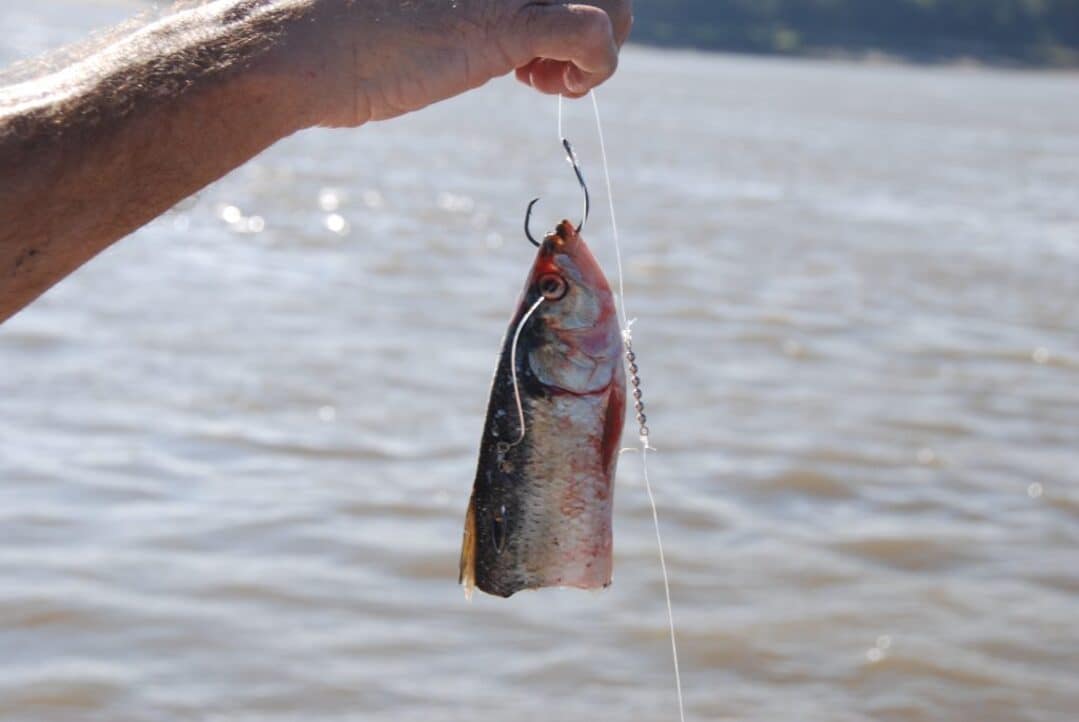
This is where bait choice and casting angle work together. Put oily cut bait, shrimp, or stink bait where scent can move naturally. Avoid dropping bait behind dead weeds or in slack water where smell sits without traveling. Scent needs direction as much as it needs strength.
Warm Water and Shade Can Change the Best Bank
Wind can move warmer surface water, but that does not always help. In cooler weather, a windblown bank that receives slightly warmer surface water and bait can be excellent. In hot summer conditions, fish may prefer shaded edges, deeper water, or current where oxygen and comfort are better.
Florida anglers have to read heat carefully. A breezy afternoon may improve bank comfort for anglers without improving the bite in shallow water. If the windblown side is hot, shallow, muddy, and lifeless, the better target may be a shaded wind edge or deeper corner nearby.
Use wind as a starting signal, not a final answer. Catfish still need a feeding advantage. That advantage may be food, scent, reduced light, cooler water, or soft current close to structure.
A Simple Wind Reading Table Before You Cast
Before setting rods, match the wind to the water in front of you. The goal is to find where wind creates a feeding lane, not just where it makes the surface choppy.
| Wind Situation | What It May Create | Best Catfish Move |
|---|---|---|
| Steady wind into shallow bank | Food and debris pushed tight to shore | Cast near first drop-off |
| Wind into a point | Bait forced around a travel edge | Fish both sides of the point |
| Wind into riprap | Stirred food and broken current | Target pockets and seams |
| Wind across open flat | Scent and bait movement | Cast along the downwind edge |
| Wind into muddy corner | Collected scent and runoff | Use stronger bait near color line |
| Wind against river current | Confused line control | Fish softer seams or protected pockets |
This table works best when paired with observation. If the windy side has no bait flickers, no foam line, no scent lane, and no nearby depth, it may not be worth fighting.
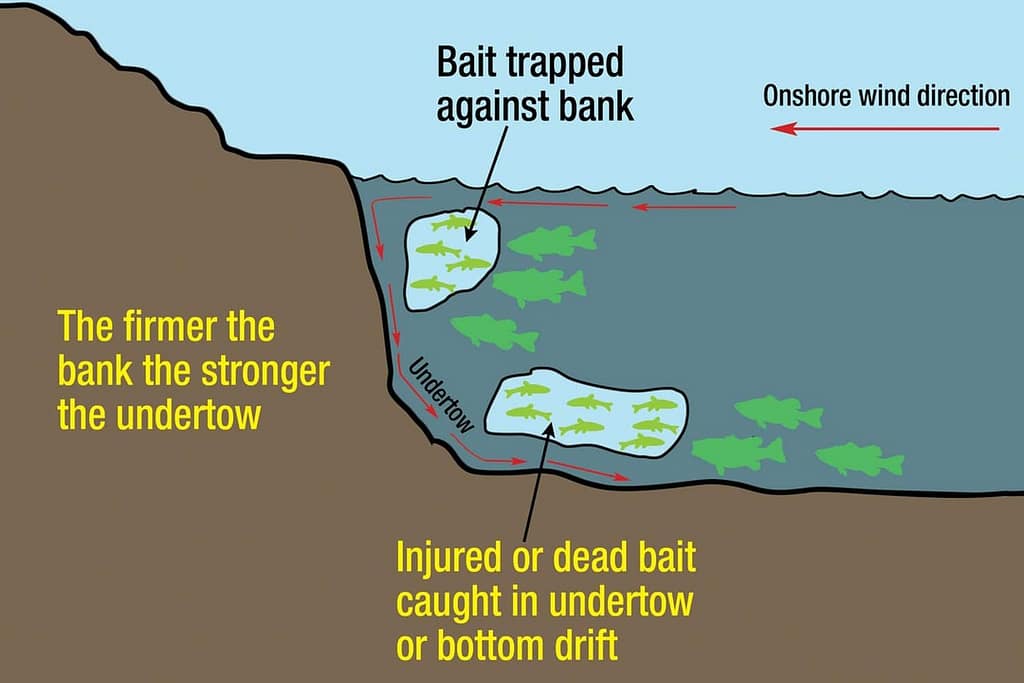
The Pressure Point Is Casting Where the Wind Helps, Not Hurts
Wind creates opportunity, but it also exposes bad decisions. Too much slack line hides bites. Light sinkers roll. Loose rod placement turns into tangled gear. A strong crosswind can pull bait away from the intended lane before catfish ever find it.
The practical fix is heavier weight, lower rod angles, tighter line control, and shorter casts when needed. Catfish do not always require long distance. Sometimes the most productive bait is 15 yards out, sitting where wind pushes food against the first break.
Wind direction catfish fishing rewards anglers who think before they cast. The next advantage is not guessing which bank “feels” right, but watching where surface life gathers, where scent can travel, and where catfish can feed without fighting rough water. The wind is already organizing the lake; the smarter angler lets it narrow the search.


