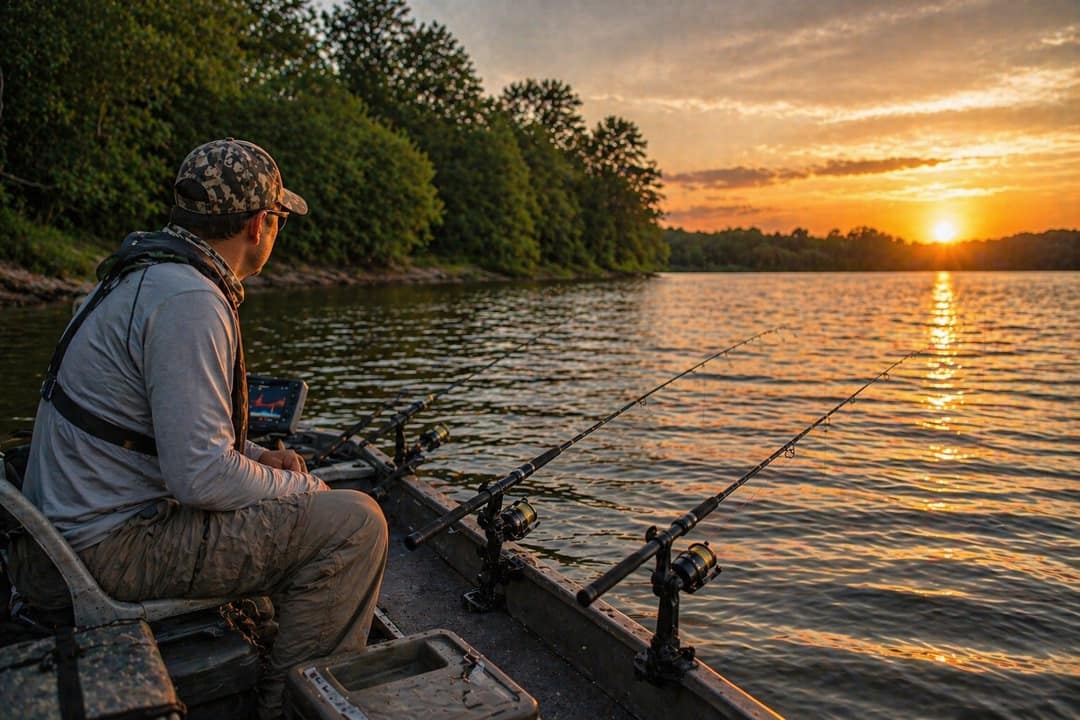

Catfish fishing is changing because more anglers are learning that patience alone is not always enough. When the bite goes quiet, the most productive move is often not changing bait, but changing the way that bait moves through the water.
Why Drift Fishing Matters Now
I use drift fishing for catfish when the water feels too large, too quiet, or too uncertain to fish one fixed spot with confidence. It is one of the most practical techniques for anglers who are not getting bites while sitting still, especially in lakes, reservoirs, broad rivers, and unfamiliar water.
Traditional bottom fishing has its place. A well-placed bait near structure can produce excellent fish. But when catfish are scattered, roaming, or feeding across wide flats, staying anchored in one location can turn into a long wait with little information. Drift fishing solves that problem by turning every minute on the water into a search pattern.
Instead of asking catfish to find one stationary bait, drift fishing moves bait naturally across likely feeding zones. That makes it both a catching technique and a locating strategy.
Understanding Drift Fishing For Catfish
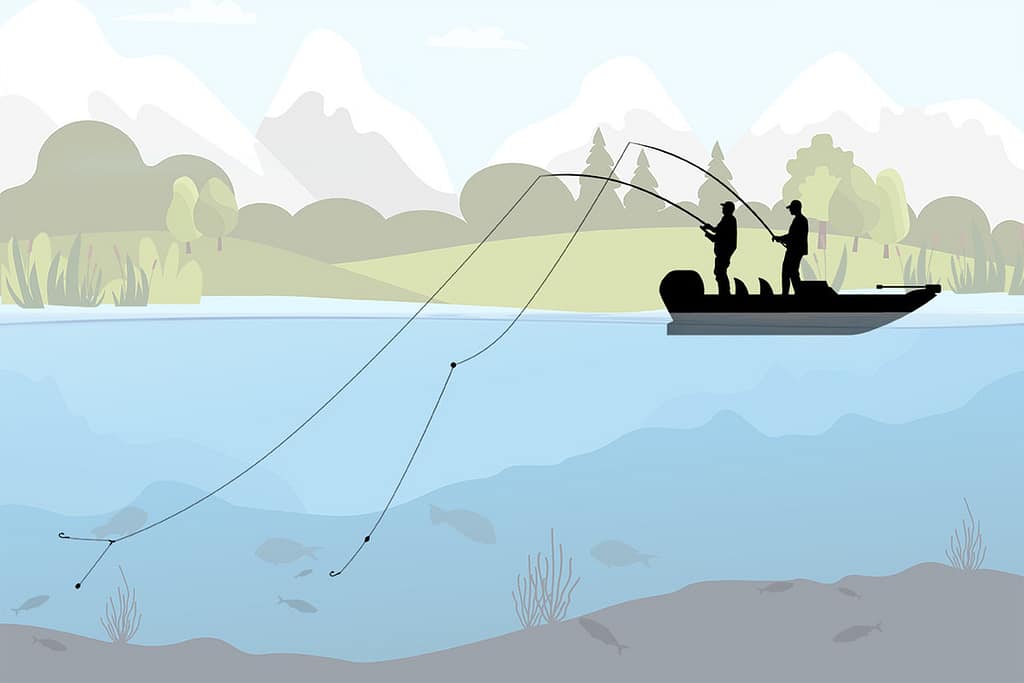
At its core, drift fishing is controlled movement. The angler allows wind, current, or slow boat control to move baits across the bottom or slightly above it. The goal is not speed. The goal is coverage.
Catfish rely heavily on scent, vibration, and bottom structure. A drifting bait gives them something that feels natural: food moving through their environment. In lakes, that may mean dragging cut bait across a shallow flat near a channel. In a reservoir, it may mean easing along a ledge. In a slow river, it may mean allowing current to move bait through deeper travel lanes.
The best drift fishing is deliberate, not random. I am not simply floating and hoping. I am selecting a zone, controlling speed, watching rod tips, monitoring bottom contact, and adjusting until the pattern becomes clear.
When Sitting Still Stops Working
The most obvious time to use drift fishing is when a stationary setup produces no bites. If I have given a strong location enough time, used fresh bait, and still seen no meaningful action, I treat that silence as information.
Catfish may not be inactive. They may simply not be where I placed the bait.
This is especially common during transitional conditions. Weather changes, water temperature shifts, pressure changes, and fluctuating water levels can move catfish out of predictable holding spots. A hole that produced yesterday can be empty today. A shoreline that looked perfect at sunset may be quiet because fish are feeding farther out.
Drift fishing allows me to stop defending one spot and start reading the water. That distinction matters. Instead of assuming the fish should be where I want them to be, I let the technique show me where they actually are.
When You Do Not Know Where The Fish Are
Unfamiliar water is where drift fishing becomes especially valuable. On a new lake or reservoir, it is easy to waste time guessing. A bank may look promising, a point may seem obvious, and a channel bend may feel right, but appearances can mislead.
When I do not know where the fish are, I use drift fishing to survey water efficiently. I begin with areas that offer logical catfish travel routes: flats near deeper water, creek-channel edges, submerged points, gradual breaks, and wind-blown shorelines. The objective is to cover enough bottom to find contact.
One bite can reveal more than an hour of staring at a motionless rod. Two bites along the same depth line can define a pattern. Several bites near a specific contour can turn a large, confusing body of water into a manageable fishing plan.
This is why drift fishing is so useful for anglers who are learning a new fishery. It transforms uncertainty into feedback.
Reading Water Before The Drift
Effective drift fishing begins before the bait touches water. I look for places where catfish are likely to travel or feed, not just places that are easy to drift.
Wind direction is important. A light wind can move a boat or kayak at a useful pace. Strong wind can make bait drag too fast or lift unnaturally. Current can be helpful in rivers, but it must be managed carefully so the bait stays near the bottom without constantly snagging.
Depth changes matter even more. Catfish often move along edges because edges concentrate food. A flat that drops into a channel, a submerged roadbed, a creek mouth, or a gradual slope can all function as underwater highways.
The best drift line usually crosses multiple possibilities. I want my bait to pass through different depths, textures, and transitions. That gives me more information than drifting across uniform bottom.
Choosing The Right Drift Rig
A drift rig for catfish should keep bait in the strike zone while reducing snags. The setup does not need to be complicated, but it does need to match conditions.
A common approach uses a sliding sinker, swivel, leader, and circle hook. The sinker maintains bottom contact, while the leader allows the bait to move naturally. Some anglers add a small float near the hook to lift the bait slightly above mud, weeds, or debris. That small adjustment can make a major difference when fish are feeding just off bottom.
Weight selection is critical. Too much weight makes the bait plow unnaturally. Too little weight causes the rig to lose bottom contact. I want the sinker to touch bottom intermittently, not drag like an anchor.
Circle hooks are particularly useful because drift bites often develop under steady pressure. Instead of striking aggressively, I let the rod load and then reel firmly. This improves hook placement and reduces missed fish.
Best Baits For Drift Fishing
The best bait for drift fishing must release scent while staying securely on the hook. Since the bait is moving, soft baits that tear away easily can become frustrating.
Cut bait is one of my preferred options because it gives off scent and mimics natural forage. Pieces of shad, bluegill, tilapia, or other legal local baitfish can be excellent where allowed. Shrimp, worms, and prepared catfish baits can also work, though bait security becomes more important when dragging across bottom.
Freshness matters. Catfish will eat strong-smelling bait, but there is a difference between scent-rich and useless. A washed-out bait that has lost its oils is less effective. During long drifts, I check bait often enough to ensure it is still present and productive, but not so often that I interrupt the pattern unnecessarily.
Controlling Speed And Presentation
Speed is the difference between drift fishing and simply dragging bait. Too fast, and the bait looks unnatural or passes fish before they can commit. Too slow, and the technique loses its advantage over stationary fishing.
I prefer a slow, steady movement that keeps the bait near bottom. In light wind, that may happen naturally. In stronger wind, a drift sock, anchor adjustment, or controlled trolling motor can help slow the boat. From a kayak, paddle positioning and wind angle become part of the presentation.
The strike often reveals whether the speed is right. Short taps without hookups can mean the bait is moving too quickly or the hook is poorly exposed. Heavy snags may indicate too much bottom contact. Clean, steady rod loads suggest the rig is moving through the strike zone correctly.
Drift Fishing From A Boat, Kayak, Or Shore
Most anglers associate drift fishing with boats, but the principle can apply in different ways. A boat gives the most control because it allows long, planned passes over structure and depth changes. A kayak provides stealth and precise movement, especially in smaller reservoirs or slow rivers.
Shore anglers can adapt the method by using current. In a river, casting slightly upstream and allowing the bait to move naturally along the bottom can imitate a controlled drift. The challenge is avoiding snags and maintaining contact without constantly pulling the bait out of position.
The platform matters less than the principle: move bait through likely catfish water with enough control to detect bites and manage presentation.
Common Mistakes Anglers Make
The most common mistake is drifting too fast. Many anglers underestimate how slowly catfish prefer a bait to move. If the bait is skipping, spinning, or dragging unnaturally, it may pass through good water without drawing a serious bite.
Another mistake is failing to mark productive zones. When a fish bites during a drift, that location matters. I pay attention to depth, structure, wind angle, bottom type, and position. If a second fish comes from the same kind of water, I repeat the drift.
Anglers also make the mistake of treating drift fishing as a last resort rather than a primary search method. Used correctly, it can be the fastest way to build a pattern at the beginning of a trip.
Why Drift Fishing Builds Better Anglers
What I appreciate most about drift fishing for catfish is that it forces anglers to pay attention. A stationary rod can make fishing feel passive. Drift fishing demands interpretation. Every snag, tap, pull, missed strike, and depth change becomes part of the story.
It also teaches humility. The fish may not be where the map, the bank, or the previous trip suggested they would be. Drift fishing keeps the angler honest by testing water instead of relying only on assumptions.
For serious catfish anglers, that is a major advantage. The technique improves water reading, bait control, rigging decisions, and strike detection. Even when the final strategy becomes anchoring on a productive zone, drift fishing often helps identify that zone first.
Conclusion
The best time to use drift fishing for catfish is when sitting still is not producing and when the location of fish is uncertain. That makes it especially valuable today, as anglers face changing weather, pressured waters, shifting seasonal patterns, and large fishing areas that cannot be solved by guesswork alone.
The opportunity is clear: drift fishing turns dead water into searchable water. It helps anglers cover ground, locate active fish, and refine their understanding of where catfish are feeding. The risk is equally clear: without movement, an angler can spend hours waiting in the wrong place.
For anyone serious about catching more catfish, drift fishing is not just another technique. It is a smarter way to think about the water.


