
A Florida angler could legally pull a catfish heavier than the current state record from a trotline and still have no claim to that record. That sounds contradictory until you understand the distinction at the center of Florida catfish trotline rules: legal harvest and record eligibility are governed by different standards.
Florida permits recreational use of trotlines for nongame fish in qualifying waters, while the freshwater state-record program requires a fish to be caught by an active hook-and-line method. The result is a rule serious trophy anglers should understand before—not after—a giant fish comes over the side of the boat.
A Legal Catfish Is Not Automatically a Record Catfish
Florida classifies catfish as nongame freshwater fish for the methods relevant here. Under the state’s freshwater fishing methods, nongame fish may be taken with bush hooks, setlines and trotlines where those methods are otherwise lawful.
For personal use, those passive methods are limited to 25 hooks total. Trotlines, bush hooks and setlines must also be clearly and legibly marked with the harvester’s name and address.
So yes, a large blue, flathead or channel catfish may be legally harvested on a properly operated trotline in water where trotlines are permitted.
But legal harvest answers only one question.
The state-record program asks another: How was the fish caught?
Florida’s freshwater state-record requirements say a qualifying record fish must be caught legally using an active hook-and-line method. FWC specifically excludes bush hooks, setlines and trotlines.
That exclusion does not make the trotline catch illegal. It simply makes it ineligible for that particular recognition program.
Florida Catfish Trotline Rules Start With the 25-Hook Limit
The 25-hook rule deserves more attention than it usually gets.
For recreational personal use, the limit applies to bush hooks, setlines and trotlines collectively under the applicable nongame-fish provision. Once the operation moves beyond the recreational framework, commercial licensing requirements can come into play.
The gear also has to be used where trotlines are lawful. Florida contains waterbody-specific exceptions, seasonal restrictions and time-of-day limits, so an angler cannot assume a legal method on one river or lake is automatically legal on the next one.
That makes location part of the rule.
The safest preparation is to check the exact water before setting gear rather than relying on what was legal on a previous trip.
Bait rules deserve the same attention. Florida allows trotlines to be baited for nongame fish, but live game fish and parts of game fish cannot simply be used interchangeably with rod-and-reel bait. The distinction is covered more fully in the site’s guide to Florida catfish live bait laws.
The Record Rule Changes Everything for Trophy Hunters
An angler fishing for food may have little reason to care whether a legal trotline catch qualifies for a certificate.
A trophy hunter should care before the first hook goes into the water.
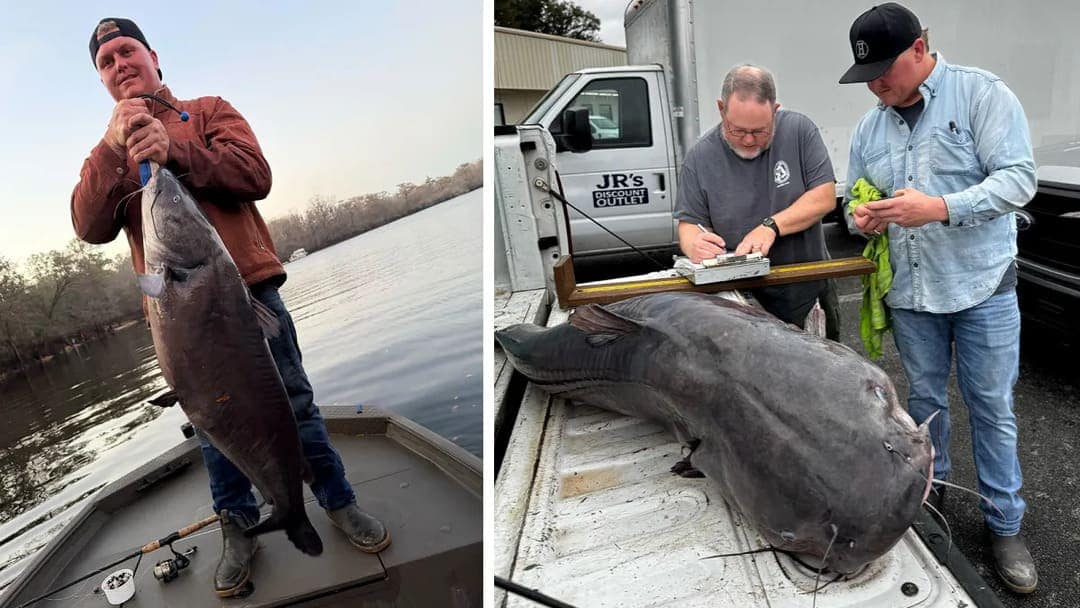
Florida’s current freshwater records show just how high the stakes can be. The channel catfish record stands at 44.5 pounds, caught from Lake Bluff in 1985. The flathead record is 69.9 pounds from the Yellow River in 2020. The blue catfish record reached 73.6 pounds after Justin Hodge’s Suwannee River fish was certified in February 2026.
Now imagine a legally set trotline produces a 75-pound blue.
That fish could be remarkable. It could be larger than the certified record. It could be photographed, weighed and talked about for years.
It still would not qualify as Florida’s official freshwater state record because the method fails the program’s active-hook-and-line requirement.
That is the article’s most important distinction:
Size alone does not create a record.
The catch method is part of the achievement being recognized.
Record Eligibility Begins Before the Bite
Florida’s state-record process has several safeguards beyond the fishing method.
A potential record must be legally caught in Florida freshwater. The angler must have the appropriate freshwater license or qualify for an exemption. FWC also requires an official weighing process using a certified scale, and for species other than largemouth bass, an FWC fisheries biologist must physically inspect and certify the fish.
Anglers are advised to keep a potential record alive when possible. If that cannot be done, FWC recommends placing the fish in ice water rather than freezing it, because freezing can dehydrate the fish and reduce weight.
These requirements expose a common trophy-fishing mistake: anglers sometimes start thinking about record certification only after an unusually large fish has already been caught.
By then, the most important decision may already have been made.
The method comes first.
If the goal is an official record, anglers need to fish with eligible tackle from the start.
Trotlines Still Have a Legitimate Place in Florida Catfishing
None of this makes trotline fishing inferior.
It serves a different purpose.
Where legal, a properly operated trotline can cover multiple positions through the night and target nongame species efficiently. For anglers harvesting catfish for the table, it remains a traditional method with a clear place in Florida freshwater fishing.
The mistake is treating every legal catch as eligible for every recognition program.
A tournament can impose one set of rules. FWC harvest regulations can impose another. A state-record program can use a narrower standard still.
Serious anglers should think of those as overlapping rulebooks rather than one universal definition of a valid catch.
That is especially important when a fishery contains genuine record potential. Florida already has a 73.6-pound certified blue catfish, a 69.9-pound flathead and a channel-cat record that has stood for decades.
The next extraordinary fish could come from water where trotlines are perfectly lawful.
How it is caught will determine what happens next.
Decide Whether You Are Chasing Fish or Chasing the Record
Before setting a trotline, an angler should answer a simple question: what is the goal of the trip?
If it is legal recreational harvest, verify that trotlines are permitted on the water, stay within the personal-use hook limit, mark the gear correctly and follow the applicable bait and local rules.
If the goal is to challenge a Florida record, use an eligible active hook-and-line method instead.
That decision cannot be repaired afterward.
A monster catfish does not become record-eligible because someone later realizes how much it weighs, and a legal trotline catch does not become illegal merely because the record program will not accept it.
That is why Florida catfish trotline rules deserve more than a quick glance at the 25-hook limit.
The real lesson is that legal and record-eligible are not the same thing.
For most anglers, that distinction will never matter.
For the person staring at the biggest catfish of a lifetime, it may matter more than anything else.


