
Florida catfish live bait laws did not receive a statewide rewrite for 2026–2027, but the bait bucket is still easy to get wrong. A live bluegill can be legal on rod and reel yet illegal on a trotline, while an ordinary baitfish can become a problem when moved to another waterbody. The real rule is not a list; it is a chain of decisions.
That legal-first approach belongs in any Florida catfish strategy: identify the bait, its source, and the planned presentation. The safest anglers think in terms of species, source, and setup, not simply whether a catfish will eat it.
Florida Catfish Live Bait Laws Start With Three Questions
First, is the species allowed? Florida’s state bait-use rules prohibit black bass, peacock bass, and any part of those fish as bait. Live goldfish and carp are also prohibited for taking freshwater fish, while other live nonnative fish carry strict transport limits.
Second, where did the bait come from? Wild panfish have an allowance tied to the angler who caught them. Small panfish from licensed aquaculture have a separate purchase rule. Fish collected with nets, seines, or traps must come from legal gear used in a waterbody where that gear is permitted.
Third, how will it be fished? Whole pickerel or bream, including bluegill and other panfish, may be used with rod and reel or pole and line. They may not be placed on trotlines, bush hooks, or another method.
Bluegill Is Legal, but Ownership and Method Matter
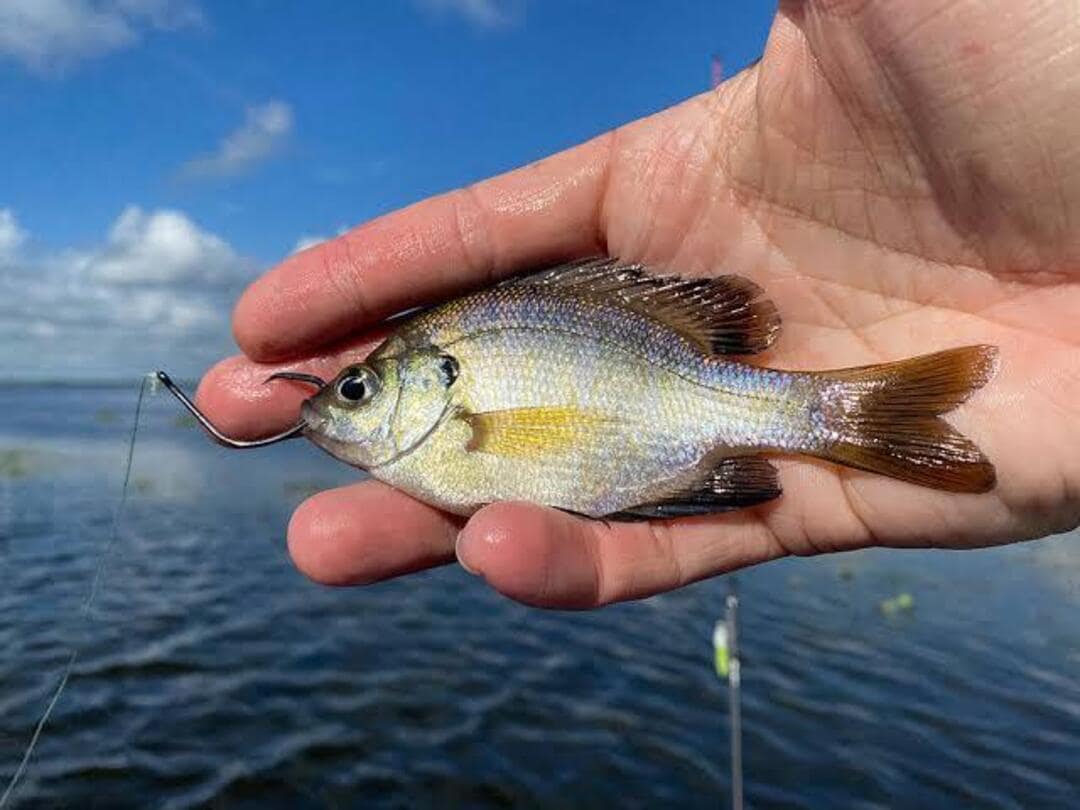
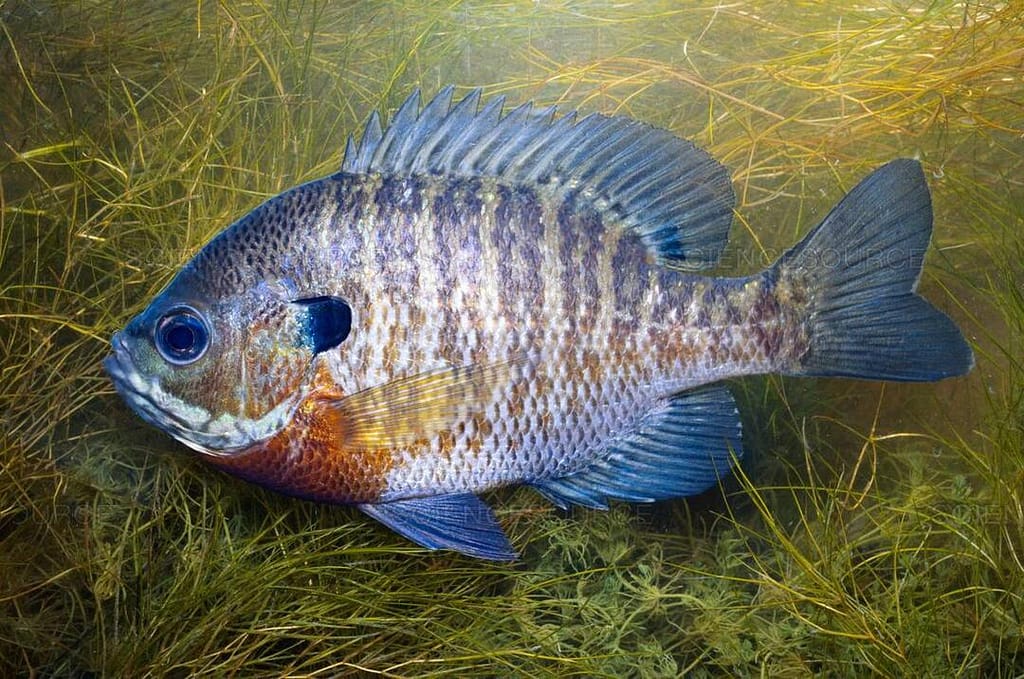
Bluegill is a freshwater game fish in Florida, so wild fish must be taken by pole and line or rod and reel. Once caught legally, whole bluegill or pieces may be used for sportfishing by the angler who caught it. The rule ties that allowance to the catcher, so accepting another angler’s wild bream creates needless risk.
The statewide aggregate limit is 50 panfish per angler per day, but named waters and Fish Management Areas may impose lower limits or size restrictions. Bluegill kept for bait still count as harvested fish, so a full bait tank can create the same possession issue as a full cooler.
Panfish under four inches in total length may also be purchased and used as bait when raised by a licensed aquaculture facility. That exception does not turn every shop-bought sunfish into legal bait; the source and size still matter.
A Fast Decision Table for Common Catfish Baits
The useful question is whether the bait remains legal from capture or purchase through the final hook.
| Live bait | Statewide baseline | Main condition or risk |
|---|---|---|
| Golden shiners or freshwater shrimp | Generally allowed | Use legal collection gear and check local rules |
| Small shad or other nongame fish under 8 inches | Generally allowed | Confirm species, collection method, and transport status |
| Wild bluegill or other panfish | Allowed with conditions | Catch it legally; bag, size, and rod-and-reel rules apply |
| Hatchery panfish under 4 inches | Allowed with conditions | Must come from a licensed aquaculture facility |
| Black bass or peacock bass | Prohibited | No whole fish or parts may be used |
| Live goldfish or carp | Prohibited as freshwater bait | Do not use them for taking freshwater fish |
| Other live nonnative fish | Transport is restricted | Variable platys and fathead minnows are the stated exceptions |
“Legal bait” is incomplete shorthand. A lawful species can become unlawful because of its source, transport history, capture method, size, limit, or intended fishing gear.
Bait-Catching Gear Can Change the Answer
Florida allows qualifying bait to be collected with narrowly defined equipment: cast nets with no more than one-inch stretched mesh, dip nets up to four feet across, minnow seines up to 20 feet long and four feet deep, and minnow traps up to 24 inches long and 12 inches in diameter with a one-inch funnel opening. Local rules may prohibit some of these tools.
Any game fish caught by those bait-taking methods must be released immediately. A bluegill in a legal cast net is not legal live bait. Catch the same species by rod and reel, remain within the applicable limits, and use it on legal hook-and-line gear, and the result changes. Gear can change legality before the fish reaches the catfish rig.
Collecting bait for personal use also does not authorize selling it. Bait taken for sale requires the appropriate commercial license.
Trotlines, Transport, and Local Rules Are the Pressure Points
Trotlines create the sharpest trap. Live game fish, or any part of a game fish, cannot be used on them. The bait rule separately bars whole pickerel or bream, and their parts, from trotlines and bush hooks. A bluegill legal on a heavy rod beside the boat is not legal on the nearby trotline.
Transport is the next pressure point. Live nonnative fish generally may not be transported to or between waters for bait, except variable platys and fathead minnows. Goldfish and carp remain prohibited as live freshwater bait. Aquarium origin, availability in a canal, or legality in another state is not permission to move a fish in Florida.
Finally, the waterbody gets the last word. Florida’s waterbody-specific regulations include reduced panfish limits, size rules, cast net or minnow seine bans, trotline schedules, and circle hook requirements for larger natural baits. Check the named lake or river, posted access rules, and current regulations before collecting bait or setting gear.
Build the Bait Plan Before the Bait Tank
A clean bait plan takes less time than explaining a questionable bucket. Identify the fish, confirm whether it is game or nongame, note whether it was caught or purchased, verify the capture method, count it toward applicable limits, match it to the gear, and check the exact waterbody.
Legally purchased shiners or clearly identified nongame baitfish often create fewer gray areas than a mixed bucket of wild panfish. Bluegill remains a legitimate option, but only when the angler, harvest method, limits, rig, and location all line up.
Florida catfish live bait laws are less about banning live bait than controlling how fish move through the system. Treating legality as part of bait selection keeps the focus where it belongs: presenting the right bait to the right catfish without turning a sound fishing decision into an avoidable violation.


