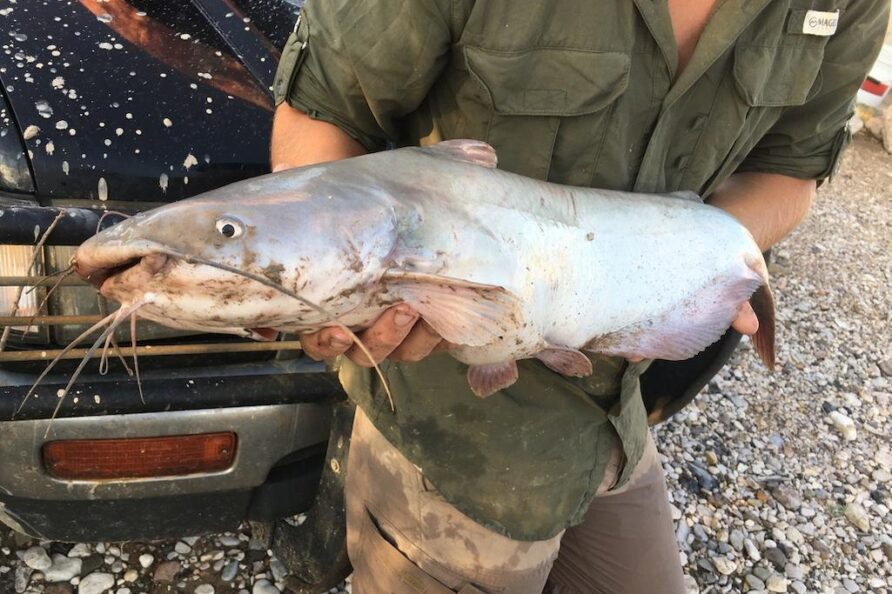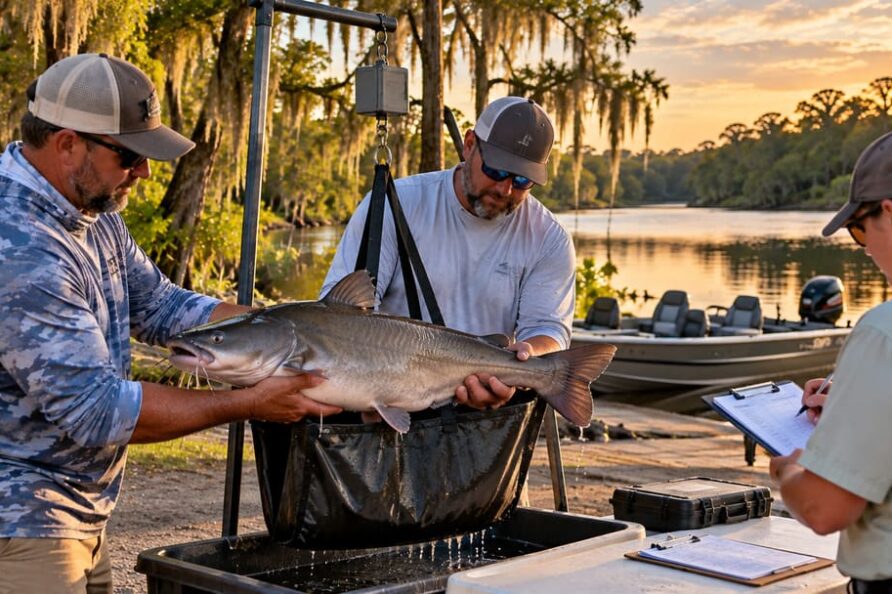
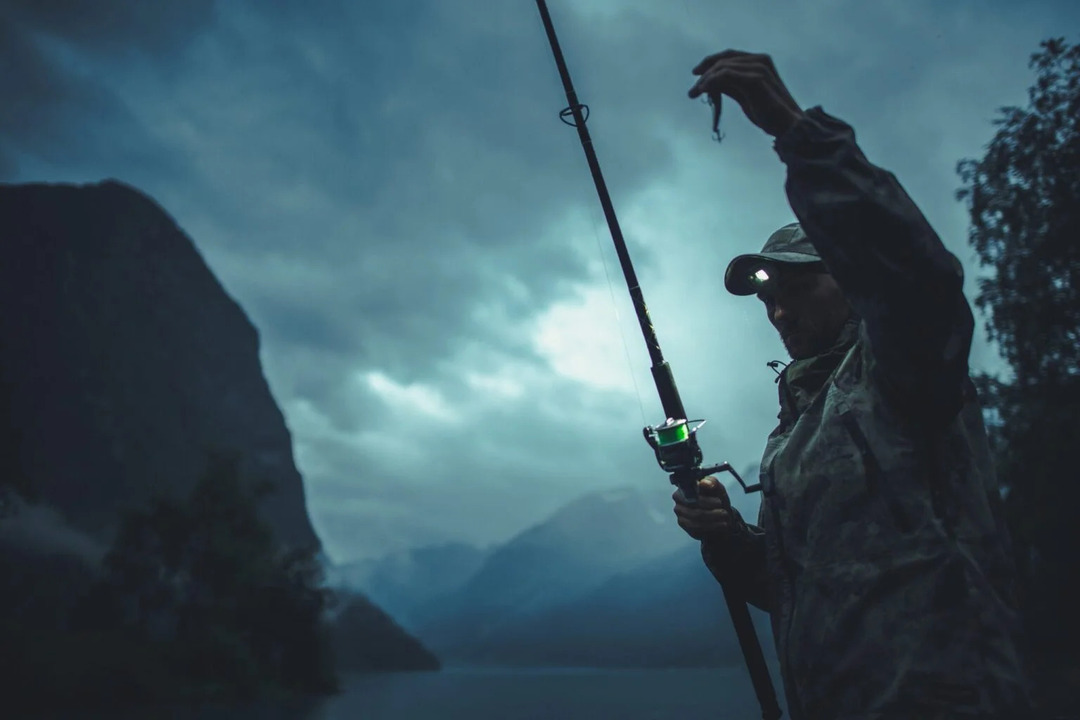

Flatheads do not spend an entire September day waiting in one depth for an angler to find them. If you want to catch flathead catfish consistently in Florida right now, think in two parts: where the fish hold in daylight, and where they can feed efficiently after dark.
That distinction is especially useful on the Apalachicola River, where the current seasonal fishing forecast points anglers toward deep structure during the day and adjacent shallow sandbars at night. Random shallow water is not the target; shallow water connected to a known daytime holding area is.
Catch Flathead Catfish by Starting With the Daytime Hide
Flatheads are structure-oriented fish. During daylight, especially in warm weather, they often relate to submerged timber, deeper pools, channel edges and other cover that gives them security.
The Apalachicola forecast recommends live bream or shad around deep-water structure during the day. Florida’s flathead catfish profile also describes flatheads as fish predators that commonly feed on catfish and sunfish and bite best at night while using shallow water in search of food.
The practical move is to spend the final hours of daylight scouting rather than simply soaking bait.
Mark the best cover, then ask where a fish leaving it could travel without crossing featureless water. A submerged bar, shallow shelf, inside bend or gradual break leading toward baitfish is more valuable than a flat that happens to be shallow.
Daytime cover starts the pattern.
Once you know that point, the night route becomes easier to read.
Adjacent Shallow Water Beats Random Shallow Water
“Fish shallow after dark” is advice that can waste an entire night if taken literally.
Flatheads do not need to patrol every shallow bank. They need food, manageable current and a route that connects feeding water to secure cover.
The key word in the current Apalachicola pattern is adjacent. A sandbar beside a deep hole, channel edge or timber field gives a flathead an efficient move from resting water into feeding water. That is very different from choosing an isolated shallow flat simply because the depth finder says four feet.
Look first for:
- A shallow bar immediately beside deep structure
- A channel lip climbing onto a flat
- A timber line ending near open feeding water
- A creek mouth meeting a shallow shelf
- A soft-current edge beside stronger main-river flow
Connected water is better water.
The shortest useful route often deserves the first bait.
The First Three Baits Should Cover the Route
One of the easiest mistakes after sunset is throwing every bait onto the same shallow flat.
A better spread tests the movement itself.
Place the first bait near the edge of the daytime cover. Put the second on the transition where deep water begins climbing. Place the third on the shallow feeding zone.
| Bait Position | What It Tests | Best Clue |
|---|---|---|
| Deep structure edge | Fish that have not moved far | Timber, hole lip, channel edge |
| Transition zone | Fish traveling between cover and food | Ledge, slope, current seam |
| Shallow sandbar | Actively feeding fish after dark | Baitfish, softer flow, bar edge |
If the shallow rod gets the first serious bite, fish may already be moving. The structure rod keeps producing, the shift may be limited or delayed. If the transition bait gets hit repeatedly, you may have found the route instead of either destination.
Let the fish define distance.
Do not assume they must move 50 yards, 200 yards or all the way onto the crown of a sandbar.
The point of the spread is to learn something.
Live Bream and Shad Have to Keep Working
Flathead anglers sometimes talk about bait species as though choosing the correct fish solves the entire problem.
It does not.
A weak bait pinned badly against bottom is not the same presentation as a healthy bait transmitting movement through the water. Keep live bait in good condition, keep the hook gap exposed and give the bait enough freedom to work without allowing it to wedge deep into timber.
That is where a broader catfish tournament baits plan becomes useful. Bait condition, rig control and species selection can matter more during a long night than simply carrying a bucket containing something alive.
There is also a legal side to the bait decision. Florida’s freshwater bait rules allow certain angler-caught panfish or their parts to be used as sportfishing bait under specific conditions, while restrictions apply to how bream may be used with some fishing methods. Check the rule before building the night’s bait plan.
Good bait still needs control.
A lively offering that immediately swims into an unreachable brush pile has not improved your odds very much.
Current Can Rewrite the Night Route
A good daytime-to-night pattern is not permanent.
River stage and current can change how far flatheads move and which edge becomes comfortable. Stronger flow may push baitfish and predators toward softer seams. Lower flow can make a shallow sandbar easier for fish to use.
That makes current one of the best clues to read after sunset.
Watch where drifting debris changes speed. Look for an eddy forming behind a bar. Pay attention to a narrow strip of quiet water beside harder flow. Those boundaries can concentrate food while giving a large flathead somewhere to hold without spending unnecessary energy.
Current shapes the feeding lane.
If the daylight structure looked right but the bite dies after dark, do not immediately change every bait in the boat. Test the nearest transition and shallow feeding water first. The fish may have changed location while your rig stayed exactly where it was.
Keep one bait near the transition, too. It gives you a reference point and can intercept fish moving either direction.
Follow the Fish Instead of the Clock
The best way to catch flathead catfish after dark is not to start shallow and hope. Start with evidence.
Find the deep cover before sunset. Identify the closest useful sandbar, shelf or low-current feeding area. Spread baits across the structure, transition and shallows, then allow the first serious bites to tell you how far the fish have moved.
September flatheads can make an angler feel as though two different rivers exist in the same place—one during daylight and another after dark.
That is the opportunity in the current pattern. Anglers who adjust with the fish can turn a daytime holding area into a night route instead of stubbornly fishing yesterday’s depth.
The mistake is not failing to find the flatheads.
It is finding where they spent the afternoon and expecting them to stay there all night.