
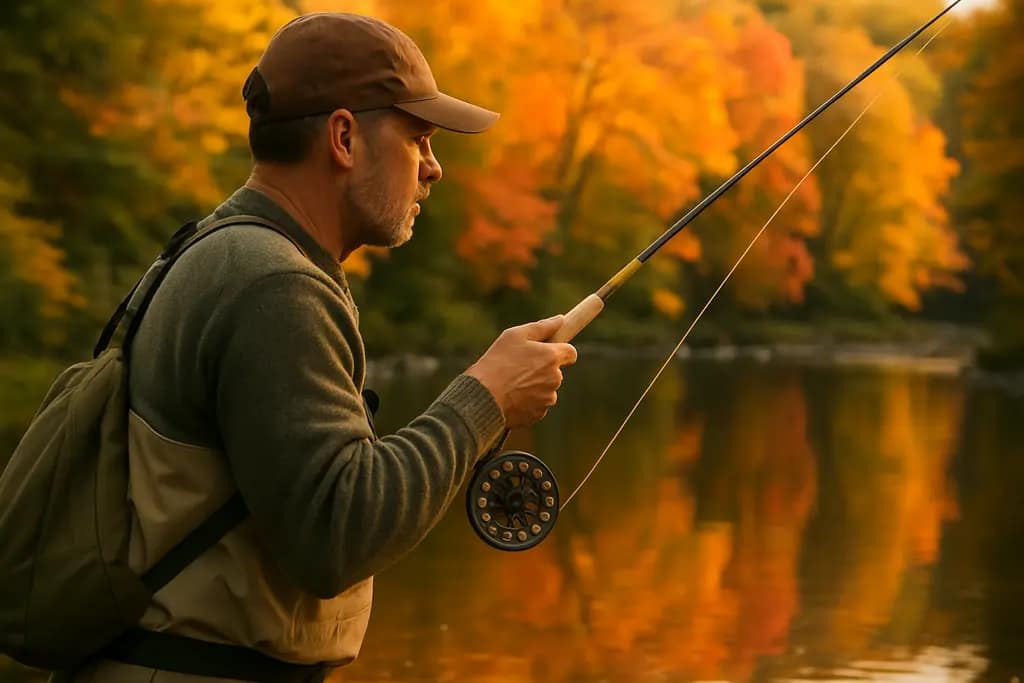

The Vermont Autumn Bite rewards anglers who pack for changing depth, colder water, shorter daylight, and fish that are feeding hard before winter. I like fall fishing because it forces clean decisions: pick the right water, match the right depth, and keep gear simple enough that you can change fast without turning the boat deck or riverbank into a tackle-yard garage sale.
Vermont Fish & Wildlife notes that fall can offer strong fishing for warm-water species such as bass and pike, with moving baits around shallow structure and slower methods for deeper or offshore structure Vermont fall fishing. That is the practical starting point. You are not packing for one pattern. You are packing for a day that may start slow, warm slightly, then open a feeding window that lasts just long enough to make you wish you had retied before lunch.
Reading The Vermont Autumn Bite
Fall gear choices in Vermont should begin with water temperature and fish position, not with whatever lure is still tied on from August. As water cools into the mid-50s Fahrenheit, the research points to smallmouth bass shifting from deeper summer zones toward shallow rocky points and flats in roughly 2 to 15 feet. That does not mean every fish is on the bank. It means your setup should let you test shallow rock quickly, then slide deeper without changing your whole system.
Vermont Autumn Bite Depth Cues
For smallmouths, I would rig one rod with a shallow-running crankbait or suspending stickbait and another with a bottom-contact jig. The first rod covers active fish on flats, points, and rock transitions. The second rod slows the pace when the bite drops closer to bottom. That is the core Vermont Autumn Bite adjustment: use moving baits to find fish that are chasing, then keep a slower tool ready for fish that follow but do not commit.
If weeds are still healthy in late September or October, bass and pike may use the outside edges in 2 to 10 feet. Spinnerbaits, stickbaits, and topwater plugs all have a place there because they cover water and show up well around scattered vegetation. Once the weed edge thins or the fish pull off the structure, a jig, drop-shot, or other slower presentation makes more sense. The best fall anglers I know do not argue with the fish; they let the first hour tell them whether speed or contact is winning.
Line And Rod Choices For Fast Adjustments
Keep rod selection practical. A medium-power spinning outfit handles small jigs, drop-shots, and finesse plastics. A medium or medium-heavy casting rod covers spinnerbaits, crankbaits, and stickbaits. If you are fishing pike water, inspect leaders and main line often because teeth and fall weeds can shred weak spots. I like a small box with three lure groups: search baits, bottom baits, and finesse baits. That keeps the cockpit calm and lets you respond to fish behavior changes without wasting the best feeding window; this broader piece on fish behavior changes pairs well with that mindset.
Gear Changes For The Vermont Autumn Bite
Boat anglers targeting lake trout or landlocked salmon during fall feeding and spawning-migration periods should think in terms of control. Ledges, reefs, and near-shore structure call for repeatable depth management rather than random trolling passes. The research supports spoons and deep divers, with downriggers or weighted lines used to reach the 25 to 45 foot band. That range is deep enough that guessing becomes expensive. Mark the depth, run a clean spread, and make turns that keep lures working near the structure instead of swinging wildly away from it.
Boat Trolling Adjustments
For trolling spoons, check hooks before the first pass. A spoon with a dull hook is just jewelry. Carry split-ring pliers, replacement trebles or singles where allowed, and a file. If you are using downriggers, test release tension before you set the spread. If the release is too tight, light strikes may never show. If it is too loose, waves and weeds will pop it before your lure reaches the target zone.
Weighted lines and divers need the same discipline. Change one variable at a time: depth, lure size, color, or speed. If you change everything after one missed fish, you will not know what helped. In autumn, fish may feed in short bursts, so I would rather make three controlled passes over a ledge than wander across a basin with no plan.
Warm-Water Lure Swaps
For bass and pike, use color and vibration as tools, not decorations. In clear water, natural crankbait and stickbait finishes often make sense. Under low light, wind ripple, or stained water, a bolder profile or more vibration can help fish locate the lure. Topwater plugs are worth keeping in the box during early fall, especially around shallow weeds, but do not let one splashy strike trap you into fishing the surface all day. If the follows stop, move subsurface and slow down.
- Pack shallow crankbaits, suspending stickbaits, spinnerbaits, and one topwater plug for active fish.
- Carry jigs, drop-shot weights, and compact plastics for deeper or less aggressive fish.
- Bring small panfish jigs in 1/16 to 1/32 ounce with plastics or worm tips for deeper pond and lake edges.
- Keep hook files, spare leaders, split shot, and a headlamp in the same dry pocket.
Trout Stream Adjustments For Autumn Hatches
Vermont trout water asks for a different kind of restraint in fall. The research identifies Blue-Winged Olive activity from September through November, with small flies in the #18 to #22 range listed for Vermont waters Vermont hatch chart. That means your fly box should shift toward small dries, emergers, and nymphs that can work in clear, lower water without landing like a dropped sandwich.
Small Fly Presentation
Carry Sparkle Dun-style dry flies and small RS2 emerger patterns for BWO activity. Just as valuable, keep Pheasant Tail Nymphs in #14 to #20. During an emergence, trout may take just under the surface film before they commit to visible dries. An unweighted nymph or emerger fished high can outproduce a dry fly if the fish are bulging but not breaking the surface.
Leader choice matters because late-season freestone streams can run clear and low. A 4X to 6X tippet range fits the smaller flies in the research. Do not go lighter just to feel fancy; go lighter when the water clarity, fly size, and fish response call for it. If you are breaking fish off or losing control in current, step back up. Presentation is not only about invisibility. It is also about turning the fly over and landing it where the trout can eat it.
Midday Fly Box Planning
Fall mornings can be quiet until the water warms enough to stir insect activity. On overcast days, the better surface window may build around midday or early afternoon. Pack so you can switch from a small nymph rig to a dry-and-emerger setup without rebuilding from scratch. I pre-rig leaders at home and keep small split shot separated by size, because fumbling with cold fingers is how good hatch windows get wasted.
Safety And Efficiency On Cold Fall Water
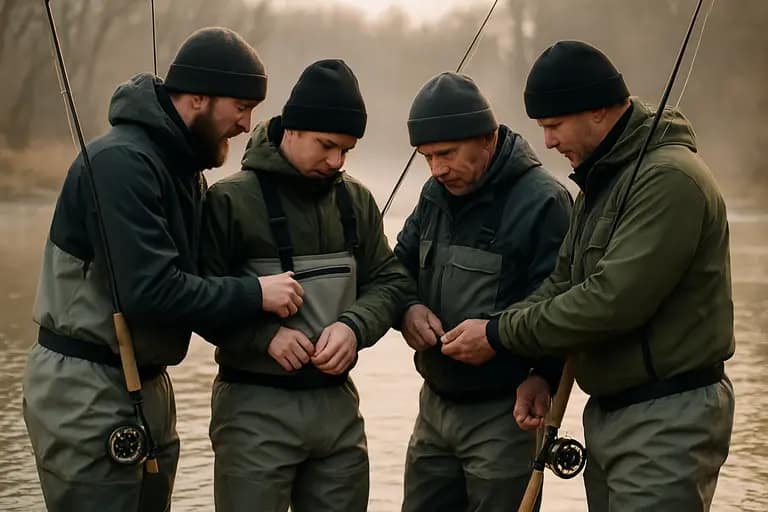
Cold water changes the cost of every mistake. Breathable chest waders, a wading belt, and boots with dependable traction are more than comfort items on slick autumn rivers. Whether you prefer felt where legal or rubber with studs, the goal is firm footing while you cast, mend, and move. Low water can expose polished rock, and falling in 50-degree water is not a funny fishing story while it is happening.
Wading Gear That Supports Fishing
Dress in layers that manage moisture. A dry base layer, insulating mid-layer, and rain shell let you handle a cold start, a warmer midday hatch, and a damp walk back to the truck. Fingerless gloves help with knot tying while still taking the bite out of a cold reel seat. Keep a dry bag with spare socks and a warm top. It takes little space, and it can save a trip after one bad step.
Shorter daylight also changes the kit. A headlamp belongs in your pack even if you plan to quit before dusk. Fall feeding windows can stretch close to dark, and walking out along a rocky bank by phone light is poor planning. I also like brighter fly indicators or high-visibility lure accents during dim light, not because fish need a fashion show, but because the angler needs to track the presentation.
Why The Vermont Autumn Bite Rewards Prepared Anglers
The Vermont Autumn Bite is not about carrying more gear; it is about carrying gear that answers the most likely questions. Are fish shallow and chasing? Start with crankbaits, stickbaits, spinnerbaits, or topwater plugs. Are they deeper or less willing? Pick up the jig, drop-shot, weighted line, or controlled trolling spread. Are trout feeding on tiny olives? Scale down the fly, lighten the tippet, and watch the surface film before rushing to a dry.
My best advice is to pack in modules: one bass and pike box, one trout hatch box, one trolling repair kit, and one cold-water safety pouch. That keeps decisions clean when the bite turns on. Vermont fall fishing can be generous, but it is rarely patient. The anglers who adjust fastest usually look lucky from the outside. From the inside, they are just ready.


