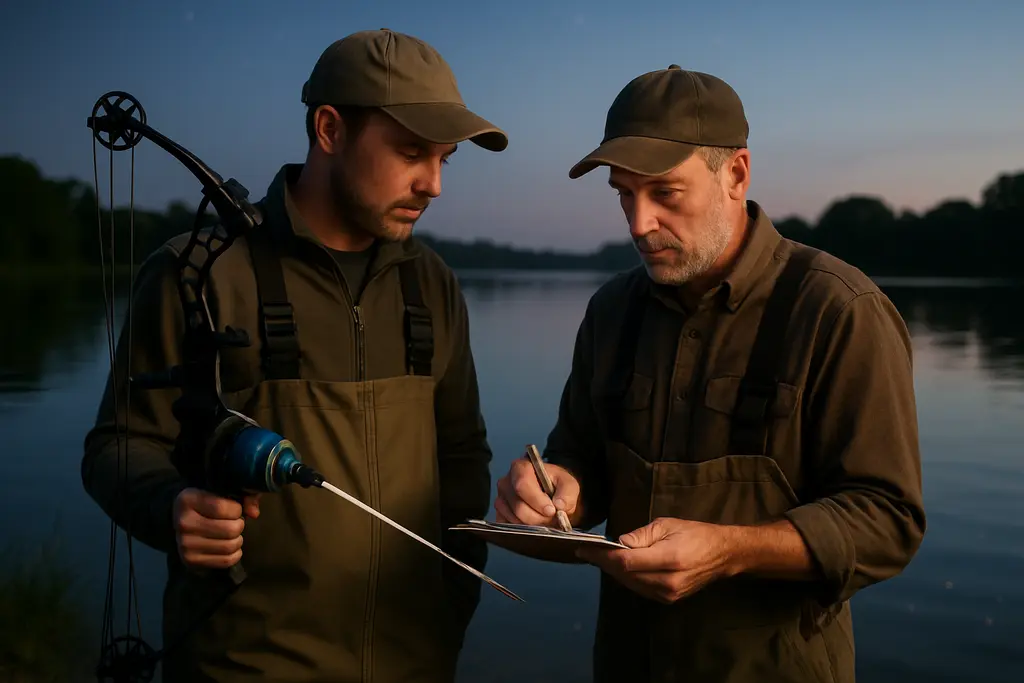
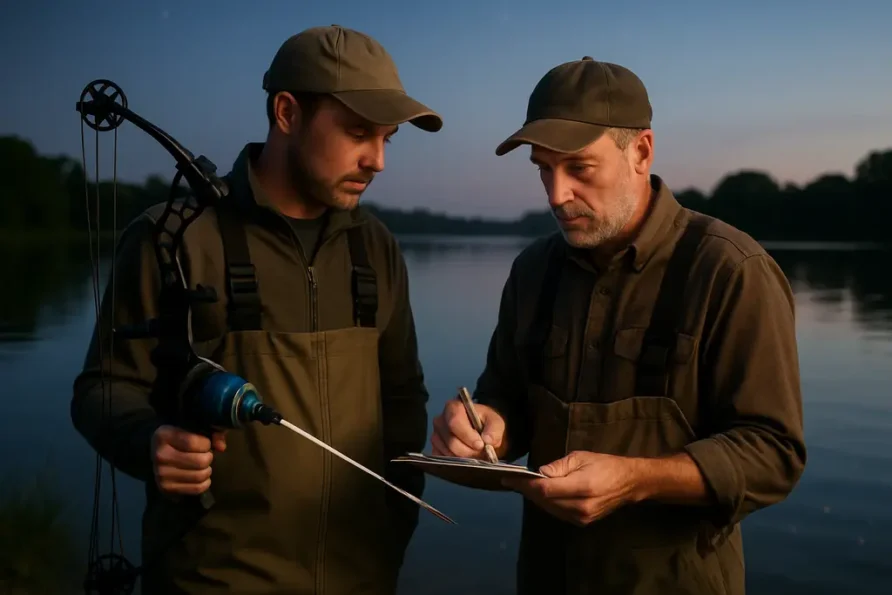
New Jersey bowfishing can be a sharp, exciting way to target rough fish and certain invasive or listed species, but the rules decide what you can shoot, where you can shoot, and which gear is legal. As of October 13, 2026, the current Fish Code is the 2026-2030 Fish Code, amended and effective on February 17, 2026. That matters for anglers because bowfishing is not treated like casual target practice with fish involved; it is a regulated freshwater fishing method with species limits, equipment standards, and local access checks.
I like bowfishing because it rewards preparation. You are reading water, controlling light angle, judging distance through refraction, and making fast species calls before you loose an arrow. The catch is simple: a great shot on the wrong species or in the wrong town can turn a clean trip into a headache. Build your plan around the regulation first, then tune the tactics.
New Jersey bowfishing Rules That Shape The Trip
Species You Can Target
Under the New Jersey freshwater bowfishing rules provided in the research, anglers may take only specific listed species with bow and arrow when a line is attached. The allowed list includes carp, including bighead, common, grass, and silver carp; American eels; flathead catfish; American shad in the Delaware River only; gizzard shad; snakeheads; suckers; and hybrids of those listed species. That list should drive your night plan, your daytime scouting, and your decision to pass on any fish you cannot identify confidently.
- Confirm the species before the shot. If the fish is not on the listed bowfishing species list, do not shoot.
- Use a line-attached arrow. The rule described in the research requires bowfishing arrows to be attached to a line.
- Carry the right license. NJ Fish & Wildlife material states that a valid freshwater fishing license is required and a hunting license is not required for bowfishing license note.
- Leave turtles alone. Freshwater regulations do not allow turtles to be taken with a gun or bow and arrow.
Seasons, Waterbodies, And Local Bans
The research states there are no season restrictions for the listed bowfishing species in waters where bowfishing is allowed, so the method may be used at any time of year for those species. That does not mean every shoreline, ramp, pond, or town is open. Some municipalities have banned the discharge of bow and arrow, whether tethered or untethered, within their jurisdiction. Before you rig lights and roll to a launch, check the municipality or waterbody owner.
Trout-stocked lakes and ponds deserve extra care. The research notes that some trout-stocked waters have closures during pre-season stocking periods, and bowfishing provisions do not generally allow trout or other non-listed species to be taken by bow. Treat trout waters as high-check zones: review the waterbody status, read signs at access points, and be ready to fish somewhere else if the rules do not line up cleanly.
Gear Setup And Legal Equipment
New Jersey bowfishing Gear Checks Before Launch
For New Jersey bowfishing, legal gear starts with a bow capable of firing a single projectile only. The research identifies longbows, recurve bows, compound bows, and crossbows as fitting the bow category, provided the setup is legal under the rule. Air bows and multi-barreled bows capable of firing more than one projectile are not legal under the regulations described in the research.
Your pre-launch gear check should be boring in the best possible way. Look at the arrow point, confirm the line is secured, test the reel or retrieval system, and inspect the bowstring or crossbow serving before you leave the driveway. A snapped line or jammed reel is not just inefficient; it can mean losing a fish, losing an arrow, or creating a hazard around the boat. Bowfishing already compresses timing, aim, and retrieval into a few seconds. Do not let loose hardware be the weak link.
Crossbow Standards And Transport Habits
Crossbows are legal for bowfishing statewide except in Greenwood Lake, according to the research. They must meet restricted specifications: a minimum stock length of 25 inches, minimum draw pull or draw weight of 75 pounds, and a working safety mechanism. Crossbows must be hand-held, not permanently mounted, and must be uncocked during transport or when not actively fishing.
That last point should shape how you run the boat. If you are moving between spots, crossing a no-shoot area, loading at the ramp, or talking with another vessel, uncock the crossbow. Store arrows and lines so they do not tangle around feet, cleats, or batteries. Night bowfishing already asks your crew to manage light, current, glare, and deck space. Simple transport habits keep the trip calm and legal.
Trip Tactics Under The Rules

Build The Plan Around Identification
The regulation list is also a tactical filter. Bowfishing success is not just seeing a fish; it is seeing enough detail to make the right call. Carp, suckers, shad, eels, flathead catfish, and snakeheads do not all present the same shape or behavior at the surface. If the water is stained, wind-chopped, or glare-heavy, slow down. Shift boat angle, reposition the light, or pass. The best bowfishers I know have one habit in common: they do not let excitement outrun identification.
For practical trip planning, match your route to waters where the listed species are realistic targets and where local rules allow discharge of bow and arrow. This is where a regulation-first mindset helps you fish better. You spend less time second-guessing and more time making clean shots. For a broader planning approach that fits this habit, I like pairing rule checks with tactics from smarter regulation planning.
Delaware River Details
The Delaware River between New Jersey and Pennsylvania has its own specific rule section. Under N.J.A.C. 7:25-6.20, bowfishing and related methods are permitted there for carp, shad, catfish, suckers, and snakeheads; arrows must have line attached; and crossbows must meet the same 25-inch stock length, 75-pound minimum draw weight, working safety, hand-held, and non-permanently mounted requirements. That Delaware River regulation was last amended on July 25, 2023 for certain administrative updates Delaware River rule.
From a fishing standpoint, the Delaware demands discipline. Big water can tempt anglers to shoot fast because a fish may slide out of the light cone in seconds. Resist that urge if the species call is not clear. Keep the boat positioned so the shooter has a clean lane, and keep the retrieval line away from motors, anchor lines, and other crew members. If you are working current, assign one person to boat control and one person to shooting rather than asking the shooter to do everything at once.
Smarter New Jersey bowfishing Trip Decisions
Pre-Launch Routine For Cleaner Fishing
A smart trip starts before the first light hits the water. Confirm your freshwater fishing license, review the target-species list, check whether the waterbody has trout-related closures, and call or review municipal rules if a town ban might apply. Then inspect the bow, line, reel, arrow, safety mechanism, and storage setup. That routine is not fancy, but it keeps you focused on fishing instead of fixing preventable problems at the ramp.
New Jersey bowfishing rewards anglers who can blend rule awareness with steady shooting habits. Treat every trip like a precision sport: identify first, shoot second, retrieve cleanly, and pass on anything that does not match the legal list. That approach protects the resource, respects local rules, and gives you more productive time on the water.