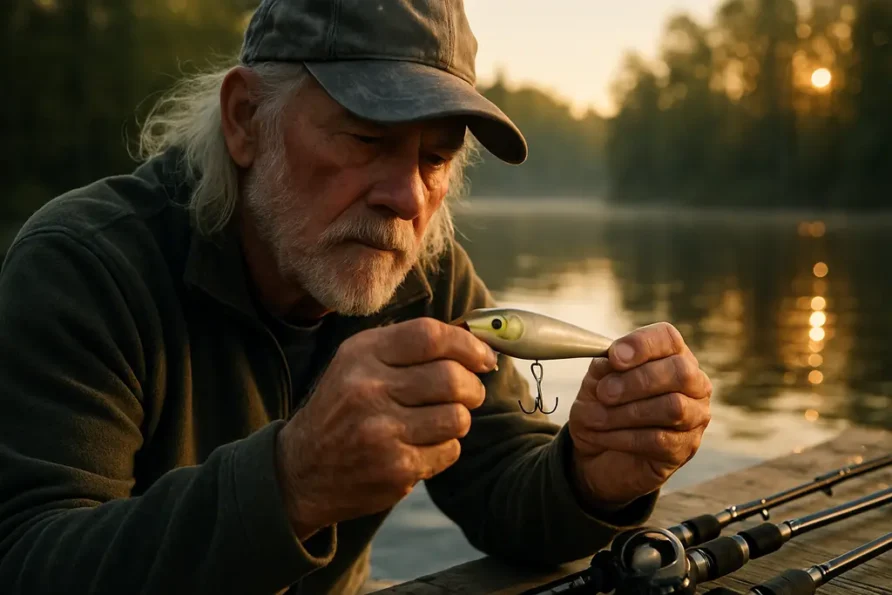
Rick Clunn’s topwater strategy tips are a useful reminder that surface fishing is not just a shallow-bank trick. For bass anglers, the real lesson is control: control the pause, control the sound, control the angle, and control your confidence when the fish are not sitting where the obvious playbook says they should be.
Clunn’s recent topwater comments, including observations published in 2026, point toward a practical pattern. He keeps surface baits in play during hot late-summer and early-fall periods, but he does not fish them lazily. He adjusts size, retrieve speed, pauses, sound, and casting targets based on baitfish position, current, and how bass are likely to feed upward. That is good coaching for weekend anglers and tournament anglers alike: do not retire the surface box just because the water feels warm or the fish mark deeper.
Topwater Strategy Tips Built Around The Pause
Topwater Strategy Tips For Sound And Stillness
The pause is the part of the retrieve many anglers rush. Clunn has emphasized that pausing sound-producing topwaters can draw aggressive strikes around beds and roaming smallmouths, especially when the bait keeps making sound while sitting still, according to MidWest Outdoors. That is not a call to stop every bait for ten seconds on every cast. It is a call to give bass a target they can inspect, track, and finally commit to.
Those topwater strategy tips are easiest to apply when you treat each cast like a short test. Start with a quick burst to make the lure visible. Then kill it near a high-percentage spot: beside a dock post, over a bed, along a current seam, or at the outside edge of bait activity. If a fish rolls and misses, resist the beginner habit of ripping the lure away. Let it sit, twitch it once, and keep the bait in the strike zone.
How Long Should The Pause Last?
The research does not give a fixed pause count from Clunn, so do not pretend there is a magic number. The better approach is to read the fish. If bass are chasing hard, a short pause may be enough. If they follow without striking, make the stop longer and keep the bait from jumping too far forward. With sound-producing baits, Clunn’s point is that the lure can continue to offer a cue even while motion stops. That gives hesitant bass one more reason to close the distance.
I like to practice this with a simple rhythm: move, stop, observe. Watch the rings around the bait. Watch for a boil behind it. Watch your line, because not every surface bite looks like a fireworks show. Many good bass simply sip, push water, or pull the bait under after staring at it longer than your patience wanted to allow.
Reading Water Before Picking A Surface Bait
Current, Points, And Feeding Windows
In an article published on October 4, 2026, Clunn explained that he pays attention to dam generation schedules and current-related areas such as channel edges and points because moving water can concentrate bait and position bass to feed, according to Livingston Lures. That is a sharp tournament habit, but it works for everyday fishing too. Before you pick a topwater, ask where food is being pushed, trapped, or lifted toward the surface.
These topwater strategy tips matter because topwater fishing is often treated as a mood choice. In reality, it should be a location choice first. If bait is rising on a point, if wind is pressing forage against a bank, or if current is sliding over a channel edge, bass holding below may still feed up. Clunn referenced summer U.S. Opens at Lake Mead in July and August where bass positioned 20 to 30 feet down still came up to strike surface baits when forage was rising. The practical takeaway is clear: depth alone should not scare you away from a topwater if the food chain is pointed upward.
Smaller Baits In Heat And Early Fall
Clunn’s October 4, 2026 comments also favored smaller topwaters in early fall, including chugger-style baits and the Livingston Walking Boss, paired with quicker, erratic retrieves and pauses. That is a useful correction for anglers who automatically reach for the biggest walking bait in the tray as fall approaches. If bass are not shallow or are feeding on smaller forage, a more compact lure can be easier to work fast, stop sharply, and keep looking natural.
Small does not mean timid. A little chugger can spit, stall, and restart in tight windows around cover. A walking bait can slide side to side over a point, then freeze long enough for a fish below it to rise. The key is not just lure size; it is the action you can create with that size. For a related casting plan, this breakdown on topwater bait casting connects angles, pauses, and cover choices in a way that fits well with Clunn’s surface approach.
Retrieve Control, Hooks, And Boat Position
Rod-Tip Height Changes The Wake
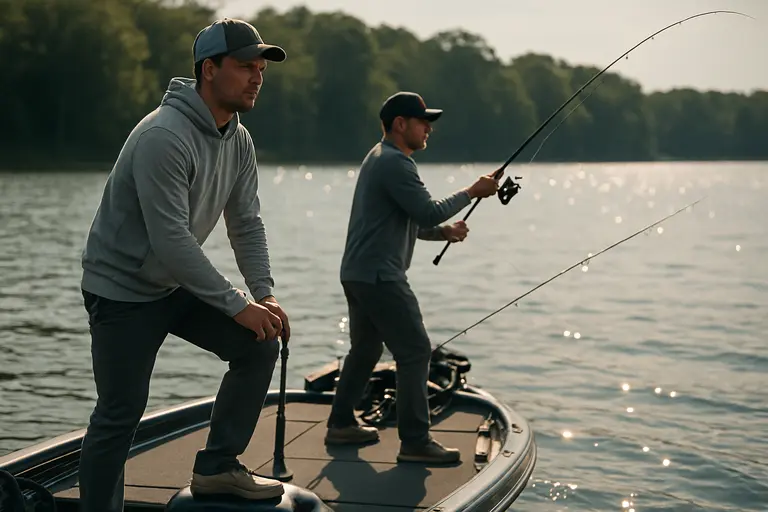
Clunn’s retrieve details are worth slowing down over. When burning a topwater such as the Livingston BullNose, he begins with a high rod tip to create a wake, then gradually lowers the rod tip as the lure comes back so the bait continues to show disturbance. That is a small mechanical habit with a big training value. Your rod tip is not just along for the ride; it controls line angle, wake shape, and how easily the lure stays working.
Practice these topwater strategy tips on a calm stretch of water where you can see the lure clearly. Make one cast with the rod held high for the full retrieve. Make the next with the tip low. Then make a third cast where you start high and lower the tip as the bait nears the boat. Watch how the bait changes. You are teaching your hands to feel how line angle affects the lure, instead of guessing during the best bite window of the morning.
Feathered Trebles Give Bass A Target
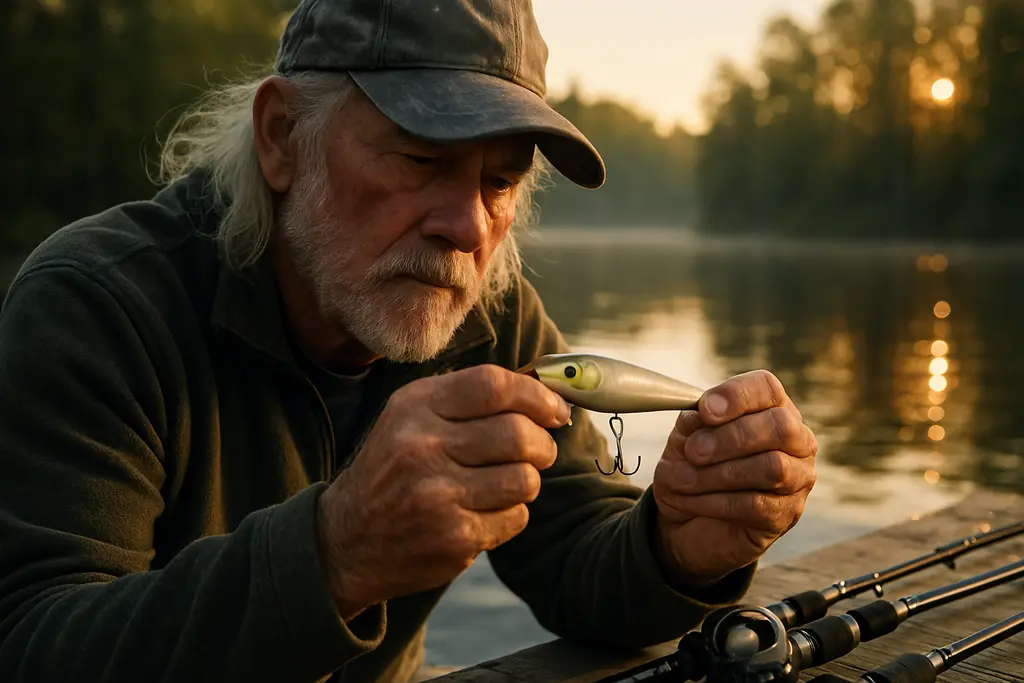
Clunn also uses feathered rear treble hooks on BullNose baits to give smallmouths a visual focal point. That is a simple adjustment, and it fits the pause-first thinking. When the lure stops, the feather can still breathe and flare slightly in the water. For a fish tracking from behind, that rear target can help focus the strike.
Before swapping hooks, match size and weight carefully so you do not ruin the bait’s balance. The research supports the use of feathered rear trebles as part of Clunn’s setup, but it does not provide a universal hook size for every topwater. Test the bait beside the boat after any hook change. If it sits wrong, rolls too much, or loses its action, back up and adjust.
- Start with the food. Look for bait activity, current seams, points, channel edges, or wind-pushed forage.
- Use the pause on purpose. Stop the bait beside cover, over likely holding spots, or after a missed strike.
- Downsize when needed. Smaller topwaters can support fast, erratic retrieves with clean stops.
- Control rod angle. Begin high to build wake, then lower the tip during the return when that action fits the bait.
- Check hook balance. Feathered rear trebles can add a target, but the lure still needs to run correctly.
Why Rick Clunn Topwater Lessons Matter
A Better Practice Plan For Bass Anglers
The value in Clunn’s advice is not that every angler needs the exact same bait box. The value is the decision process. He is looking at forage, water movement, bass position, retrieve shape, sound, and visual triggers before deciding whether a surface lure belongs in his hand. That is how serious anglers avoid fishing memories instead of conditions.
Build a practice session around one variable at a time. Spend 20 minutes changing only pause length. Then spend 20 minutes changing only rod-tip height. Then change only bait size while fishing similar water. That structure teaches cause and effect. Random lure swapping may feel active, but it often hides the reason a fish finally bit.
The strongest of these topwater strategy tips is also the most encouraging: bass may still come up when the setup is right. Hot water, deeper marks, or early-fall transition conditions do not automatically end the surface bite. If forage is moving up, current is creating a feeding lane, and your lure can pause, call, and restart without leaving the strike zone, a topwater still deserves time on the deck.