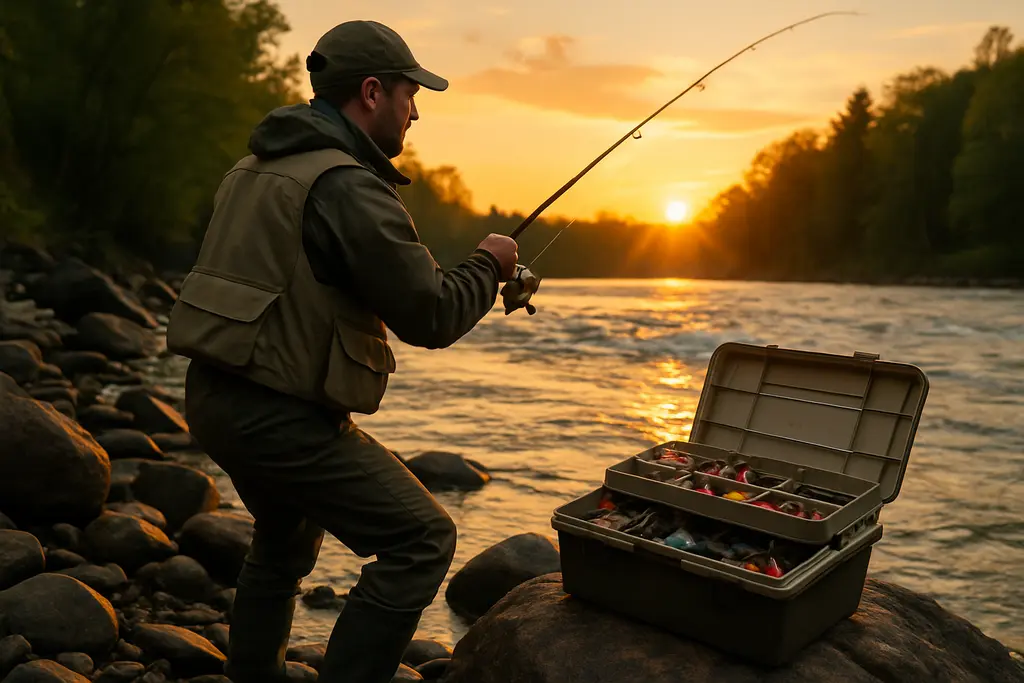
New anglers hear big fish stories, buy one oversized hook, and hope the river fills in the blanks. That is a rough way to learn. Smart big cats gear starts with a balanced setup: enough rod to steer a heavy fish, enough line to handle current and cover, and terminal tackle that keeps bait in the strike zone. For big river catfishing, the Missouri Department of Conservation describes rods in the 7- to 10-foot range, medium-heavy to heavy power, with 30- to 50-pound monofilament or, for some anglers, 80-pound braid Missouri Department of Conservation guidance.
I like new catfish anglers to think less like shoppers and more like boat crews preparing for a tournament day. Every item should earn its space. If it helps you cast farther, hold bottom, land fish cleanly, release fish safely, or stay comfortable long enough to fish well, it belongs. If it only looks tough in the cart, leave it at home.
Big Cats Gear Starts With Matched Power
Power does not mean clumsy. A heavy catfish setup still needs balance. The rod, reel, line, leader, hook, and sinker should work as one system. If one piece is too light, that weak link shows up under pressure. If every piece is oversized, you lose casting control and may struggle to read light bites.
Big Cats Gear Rod And Line Basics
Good big cats gear is matched to the water first. Long bank casts, strong current, deep holes, and big baits call for more rod than a pond combo. Research cited for large catfish in major U.S. rivers points to heavy-action rods from 7 to 10 feet with 20- to 65-pound line ranges 2026 rod testing roundup. That range gives a new angler a practical lane: do not bring a light panfish rod to a blue cat or flathead job.
For bank fishing, the longer end of that rod range can help with casting distance, line angle, and keeping line above near-bank snags. From a boat or while drifting, a shorter heavy rod can be easier to manage in close quarters, especially when several rods are spread across holders. The key is not chasing the longest rod on the rack. Choose a rod you can cast accurately and control after the hook loads.
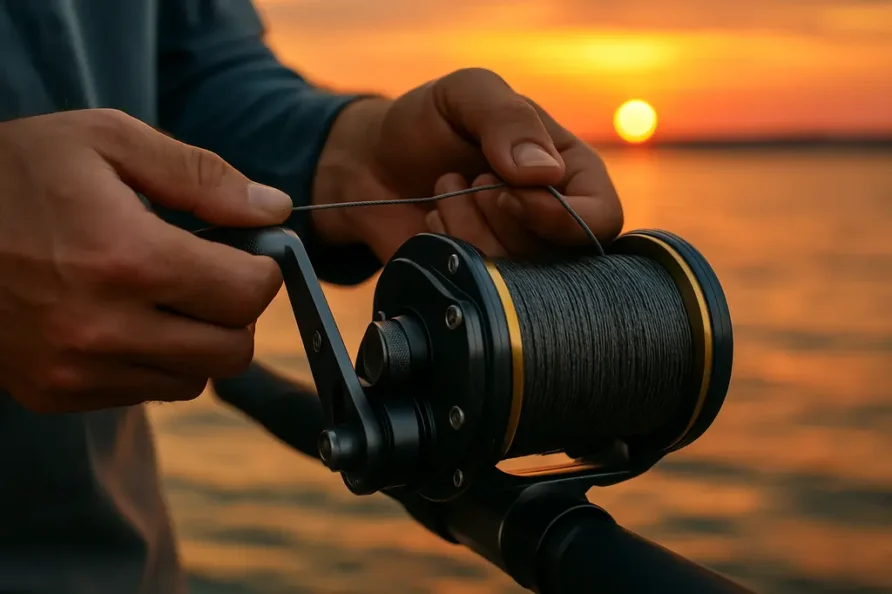
Line choice should follow the same thinking. Monofilament in the 30- to 50-pound class has been a common big-river choice in the research notes, while some anglers step up to 80-pound braid. Mono gives stretch, which can help cushion surges. Braid offers thinner diameter and strong feel, but it also asks for cleaner drag settings and better knot care. New anglers should practice knots at home until tying them feels boring. Boring knots land fish.
Reels That Keep Pressure Steady
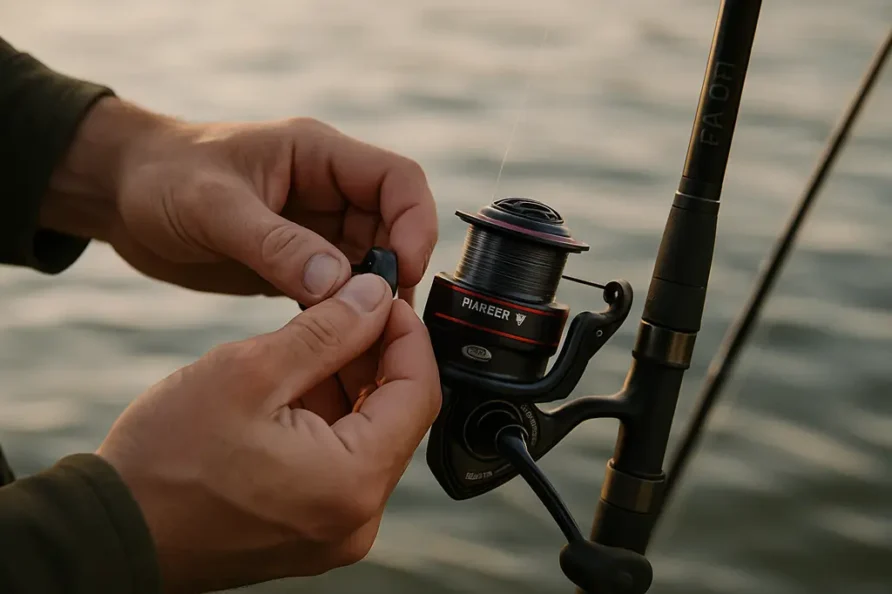
A reel for large catfish needs three practical traits: line capacity, a smooth drag, and a handle you can crank under load. Many big-cat anglers favor bait-casting reels for power in heavy drift or deep water, while spinning reels can still make sense for lighter action or smaller catfish. The best starter choice is the reel you can operate without fumbling in the dark, because catfish do not wait for you to remember how the spool release works.
If you use a bait-caster, practice controlled casts before soaking expensive bait near timber. If you use spinning gear, watch for line twist and keep the spool filled properly. Either way, set the drag before the bait hits the water. A drag locked down like a trailer hitch can pull hooks or break line. A drag set too loose gives a big fish free access to cover. Aim for steady pressure, then let the rod do part of the work.
Terminal Tackle That Handles Current
Terminal tackle is where many new anglers try to save pennies and lose dollars. Big catfish have thick mouths, big shoulders, and a talent for finding the worst nearby snag. Your rig does not need to be fancy. It needs to hold bait, present naturally, and survive the first hard run.
Circle Hooks And Leaders
For blue and flathead catfish river rigs, 6/0 to 8/0 circle hooks are commonly used in the research notes, with circle-hook designs intended for thick mouths and to help reduce gut-hooking. That matters because a circle hook is not fished like a bass jig. Do not swing like you are chopping firewood. Let the rod load, tighten into the fish, and keep pressure steady.
Leader material should be strong enough for abrasion around rocks, wood, mussel beds, and boat hardware. The Missouri setup noted in the research uses leaders such as 50-pound mono in an 18-inch length for drift or main-channel rigs. That is a sensible starting point because it is simple to tie, easy to inspect, and quick to replace after a rough fish or snag.
Sinkers, Swivels, And Rigging
Sinker weight is not about showing off. It is about holding the bottom or drifting at the right pace. Heavy slip sinkers from 3 to 8 ounces, two-way swivels, and 18-inch leaders are noted as standard pieces in drift or main-channel fishing setups in the research. If your bait rolls too fast, you are not fishing the spot you think you are fishing. If it anchors too hard, it may wedge into cover.
| Gear Piece | Practical Starting Point | What It Solves |
|---|---|---|
| Rod | 7- to 10-foot medium-heavy or heavy | Casting distance, hook pressure, fish control |
| Main Line | 30- to 50-pound mono or heavier braid option | Current, abrasion, heavy fish |
| Hook | 6/0 to 8/0 circle hook | Better corner-mouth hookups with steady pressure |
| Sinker | 3- to 8-ounce slip sinker | Bottom contact in current or drift |
| Leader | About 18 inches of strong mono | Abrasion resistance and quick rig changes |
Pack Big Cats Gear For Current, Cover, And Safety
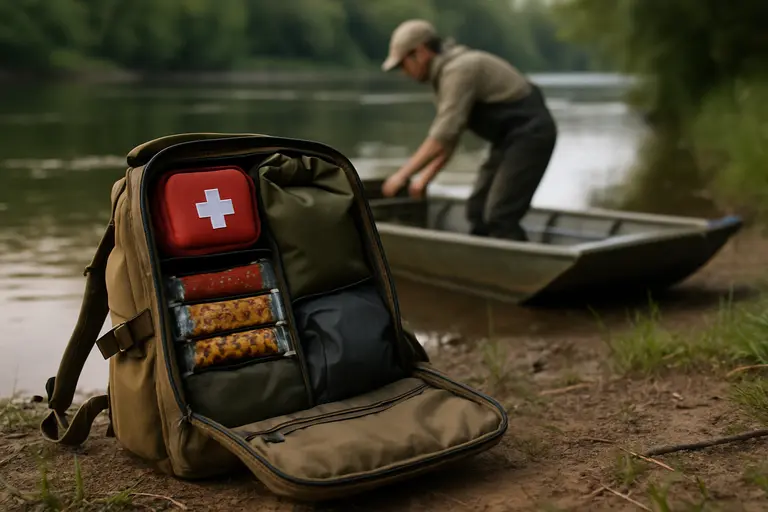
A clean pack beats a crowded pack. You want enough tackle to adjust, not so much that you spend the bite window digging through a plastic junk drawer. I separate my catfish box into hooks, swivels, sinkers, leaders, and tools. That sounds basic because it is. Basic organization saves trips.
Safety Pieces New Anglers Skip
Do not let big cats gear push safety gear out of the bag. Polarized sunglasses help cut glare and make it easier to spot shallow cover. Sun protection, including a hat and protective clothing, keeps you fishing longer. Pliers or forceps are not optional; they protect your hands, help remove hooks, and make rig fixes faster. If you fish at night, organize tools before dark so you are not handling hooks by feel.
Carry your license and check current rules before you fish. Regulations can change by state, waterbody, and species, and catfish rules may include size or harvest details. If you need a planning refresher, this site’s piece on fishing regulations changes is a smart pre-trip read.
Match Your Pack To The Water
Bank anglers usually need a different pack than boat crews. From the bank, you may want longer rods, extra sinker sizes, more leader material, and a landing plan before the first cast. In a boat, rod storage, drift angle, and quick re-rigging matter more. Around wood or heavy cover, bring extra hooks and leaders. In clearer water or with smaller bait, avoid oversized terminal tackle that kills bait movement.
- Rig two rods at home so your first cast is not a parking-lot knot test.
- Carry at least two sinker weights so you can adjust to current speed.
- Pre-tie leaders and store them flat or wrapped to prevent kinks.
- Bring pliers, line cutters, and a small light for night rigging.
- Keep bait tools separate from hook-removal tools for cleaner handling.
- Inspect line after every snag, scrape, or landed fish.
That checklist is not glamorous, but it is how new anglers stop donating tackle to the river. The angler who can re-rig calmly after a breakoff stays in the rotation. The angler who brought one hook and one sinker becomes a spectator.
Big Cats Gear For Your First River Plan
Your first serious catfish trip should be simple: one or two matched rods, line strong enough for the river, circle hooks in the right size range, several sinker weights, strong leaders, swivels, pliers, sun protection, and current regulations. That setup lets you learn fish behavior instead of fighting your equipment all day.
The best part of building a first kit is that it teaches you to read the water. If your sinker will not hold, the current is telling you something. If your leader comes back scuffed, the bottom is telling you something. If your long rod helps clear near-bank rocks, the bank is telling you something. Listen to those clues and adjust one piece at a time.
Big catfish reward patience, but they also reward preparation. Bring gear with enough backbone, keep the rig clean, and practice the slow, steady pressure that circle hooks require. Do that, and your first river setup will feel less like a pile of tackle and more like a working system built for heavy fish.