
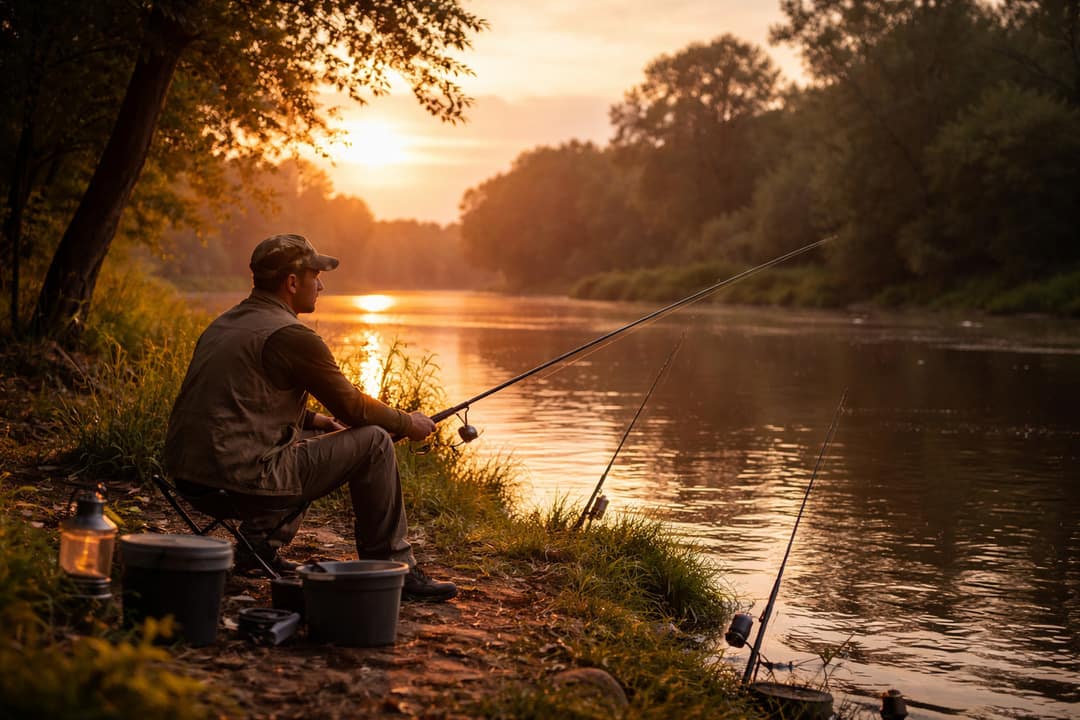

It is easy to think catfish fishing is all about bait, luck, or staying out late enough for something to happen. In my experience, the real difference usually comes down to discipline: knowing when to wait, when to react, and when to move.
That matters right now because more anglers are chasing faster results and treating every cast like an instant test. Catfish do not usually reward impatience. They reward anglers who understand how scent moves through water, how fish commit to a bait, and how quickly a good opportunity can be lost when the response is wrong.
Why Patience Is A Tactical Advantage
One of the biggest mistakes I see in catfish fishing is the urge to do too much. Anglers recast too often, check bait too frequently, or abandon a spot before the fish has had time to find the offering. Catfish are not always visually hunting in the same way that bass or other aggressive feeders might. Much of the game is about scent, current, and confidence.
When I set out bait for catfish, I do not expect instant feedback on every cast. I expect the bait to begin working for me in stages. First, it settles. Then the scent begins to spread. Then, if I have chosen the location well, that scent starts pulling fish toward the area. That process takes time, and it rarely works on an impatient schedule.
This is where many anglers quietly sabotage themselves. They assume no immediate bite means no fish. In reality, a catfish may already be moving toward the bait long before the rod loads up. By lifting the rig too soon, an angler can erase the very opportunity that was developing.
That is why the best catfish fishing tips are often less about constant action and more about understanding the rhythm of the species. Catfish can be methodical, and successful anglers should be, too.
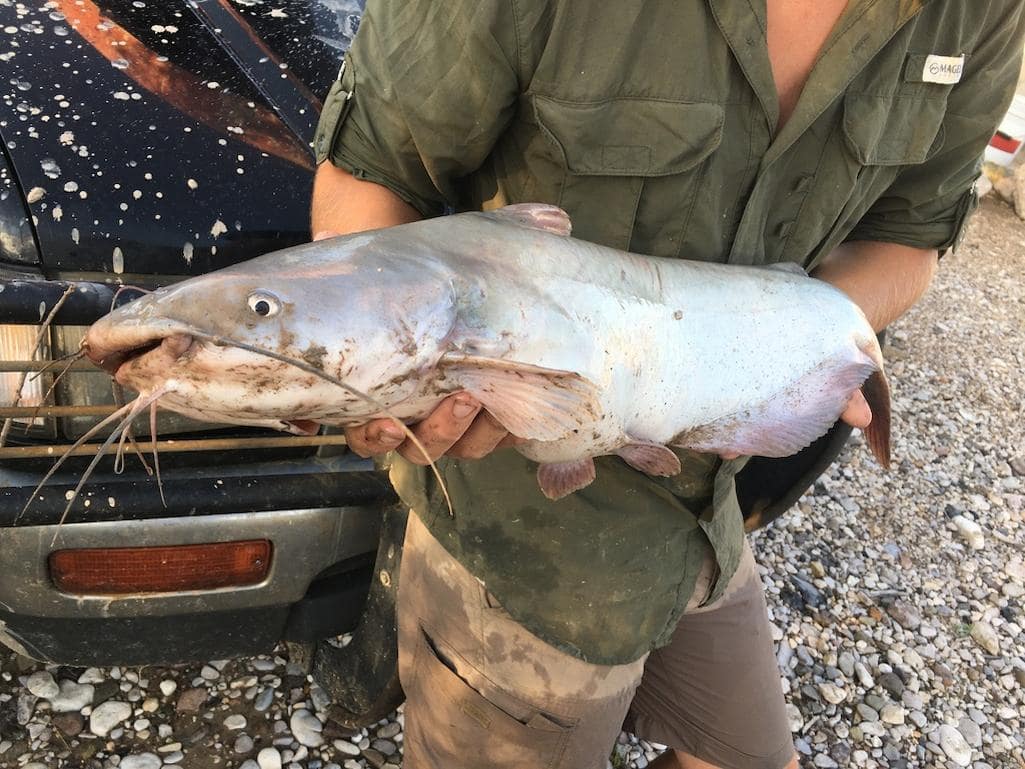
How Scent Trails Really Work
Catfish are built to detect opportunity in conditions where other fish struggle. In stained water, low light, or current, scent is not a secondary factor. It is often the main invitation.
I think of scent as a moving signal rather than a static cloud. In still water, that signal gradually expands around the bait. In current, it stretches downstream and creates a trail that fish can follow back to the source. That means the bait is doing more than simply sitting on bottom. It is actively advertising.
The practical lesson is simple: bait needs time in the water to become effective. A fresh placement may be technically fishable, but it often becomes more attractive after it has been sitting long enough to establish a scent line. This is especially true with catfish baits that are oily, bloody, or naturally pungent.
What matters most is resisting the urge to interrupt that process. If the bait is secure, the presentation is clean, and the location is promising, I would rather give the setup time to work than keep resetting it for the sake of feeling busy.
The 15 To 30 Minute Rule
I treat each spot like a decision with a clock attached to it. In many situations, 15 to 30 minutes is a sensible window before moving. That range is long enough for scent to begin spreading and for nearby fish to respond, but short enough to keep the session moving if the location is dead.
This is not a rigid law. Current, water temperature, depth, and fish density all affect timing. Still, the 15-to-30-minute range gives structure to the session and prevents two common errors: leaving too soon and lingering too long.
The table below shows how I think about that window in practical terms.
| Time In Spot | What May Be Happening | My Read Of The Situation |
|---|---|---|
| 0–10 minutes | Bait settles and scent begins dispersing | Too early to judge the spot fairly |
| 15–20 minutes | Fish in the immediate area may begin investigating | This is often the first meaningful evaluation point |
| 25–30 minutes | Active fish usually have had time to locate the bait | If nothing has happened, I consider moving |
| 30+ minutes | The spot may still produce, but odds begin to flatten without signs | I move unless conditions strongly suggest staying |
That kind of structure matters because catfish fishing can blur into guesswork if every decision is emotional. I prefer to make moves based on a system. If the location has good depth, cover, current seam, or an obvious feeding lane, I may stay closer to 30 minutes. If the spot looked marginal to begin with, I might call it at 15.
What To Do When You Finally Get Bit
Waiting well is only half the job. The other half is reacting correctly when the moment comes.
This is where anglers often undermine a good setup. They have been patient, they have let the bait work, and then the rod finally signals a fish. Instead of letting the hook system do its job, they deliver a dramatic hookset that can pull the bait away or reduce hookup efficiency.
With circle hooks, the smarter move is usually the calmer one. I do not snap the rod upward. I begin reeling and let steady pressure build. As the fish moves off and the line tightens, the hook rotates into position. That is the design. A violent jerk is often unnecessary and sometimes counterproductive.
The most important reaction points are straightforward:
- Stay calm when the bite comes
- Pick up the rod with control
- Start reeling rather than jerking hard
- Let pressure load the hook
- Keep the line tight once the fish is connected
That sequence sounds simple, but simplicity is exactly the point. Catfish anglers sometimes lose fish because they turn a clean, high-percentage situation into a rushed, low-percentage one. The bite is not the time to panic; it is the time to execute.
Why Circle Hooks Change The Whole Approach
Circle hooks are more than a tackle preference. They reshape the way an angler thinks about bites.
Traditional J-hooks often encourage aggressive hooksets. Circle hooks encourage patience before and during the hookup. That changes the rhythm of the entire presentation. You are less focused on striking hard and more focused on allowing the fish to move, the line to come tight, and the hook to seat properly.
For catfish, that is a strong match. These fish often mouth, move with, or gradually commit to bait in a way that rewards measured pressure over explosive reaction. In other words, circle hooks reinforce the same principle that improves the rest of catfish fishing: restraint.
I have found that anglers who trust circle hooks tend to fish more cleanly overall. They wait longer, watch more carefully, and react more efficiently. The tackle supports the mindset.
Reading The Difference Between Dead Water And Developing Action
One of the hardest skills in catfish fishing is distinguishing between a bad spot and a spot that simply needs more time. That judgment improves only with repetition, but there are signs I pay attention to.
If a spot has depth change, nearby cover, a current break, or a natural travel lane, I am more willing to be patient. If I have confidence in the structure, I am less likely to second-guess a quiet first 10 minutes. On the other hand, if I rushed into a featureless area and have no real reason to expect fish movement, I will not force optimism onto weak water.
I also pay attention to subtler indicators. Light taps, line twitching, bait disturbance, or even repeated bait loss can suggest fish interest. Those are not failures. They are clues. A place that is showing small signs of life may deserve more time than a place that feels completely empty.
That said, patience should not become stubbornness. Effective catfish fishing is patient, not passive. The goal is to give a quality spot enough time to work, then move decisively if the evidence is not there.
Building A More Disciplined Catfish Routine
When I want to improve my odds, I return to a disciplined routine rather than chasing random adjustments. The most productive catfish sessions often come from repeating a reliable sequence with focus.
A strong routine looks like this:
- Choose a spot with an identifiable reason fish should use it
- Set the bait and let scent begin working
- Avoid unnecessary recasting or constant checking
- Give the spot 15 to 30 minutes
- React smoothly when a bite comes
- Move with purpose if the window closes without signs
That routine may not look flashy, but it is highly effective. It replaces restless fishing with intentional fishing. Over time, that difference compounds. Better timing leads to fewer wasted casts, fewer pulled baits, more efficient hook placements, and more fish landed.
Why This Matters Right Now
Catfish fishing remains one of the most accessible forms of angling, but accessibility can create the illusion that technique does not matter. I think the opposite is true. Because catfish will often forgive imperfect gear and simple presentations, the real edge comes from how an angler manages time, reads the moment, and trusts the process.
Right now, when so much modern fishing culture emphasizes speed, constant movement, and instant feedback, catfish offer a useful correction. They reward patience with purpose. They reward the angler who lets bait soak long enough for scent to travel, who resists the impulse to overwork a spot, and who stays composed when the rod finally loads.
That is why this approach matters now more than ever. The anglers who catch more catfish are not always the ones doing the most. Very often, they are the ones doing less at the right time, then doing exactly enough when it counts.


