
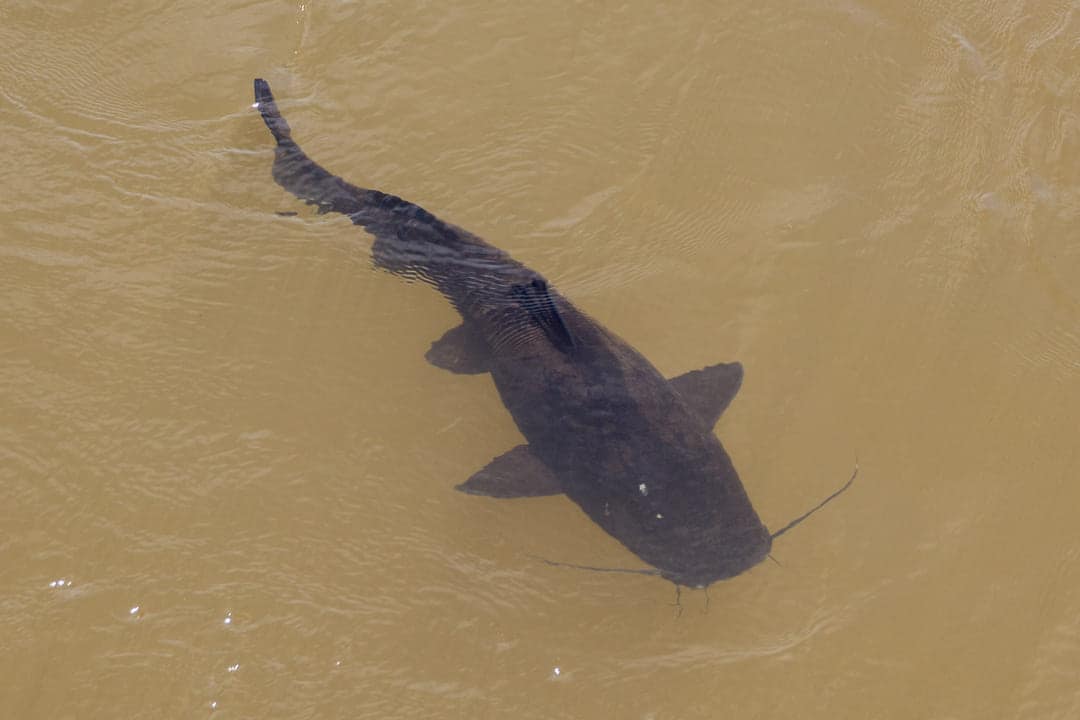

Falling water catfish patterns can punish anglers who stay locked on yesterday’s shoreline. When water drops, food movement changes, flooded cover drains, and catfish often slide away from the easy bank bite toward channels, holes, ledges, and sharper edges. The problem is not that the fish disappeared; the angler may simply be fishing water the catfish already abandoned.
This is especially frustrating after a strong rain bite. A bank that came alive during runoff can fade fast once the water starts pulling back. That same timing pressure appears in post-rain catfish fishing, where runoff can open a bite window that does not stay open forever.
Falling Water Catfish Patterns Start at the Edge
Rising water gives catfish access to newly flooded grass, shallow drains, low banks, and fresh food. Falling water does the opposite. It removes access, weakens shallow scent trails, and forces fish to reposition before they are stranded in poor feeding water.
The first place to check is the edge where shallow water meets the first safe retreat. That may be a ditch mouth, creek channel, outside bend, old roadbed, pond drain, or drop-off. Catfish do not always run straight to the deepest hole, but they usually move toward water that gives them security.
The biggest mistake is casting into the flooded cover after the food has already pulled out. The edge becomes the map once water starts dropping.
Flooded Banks Lose Value When Food Stops Moving
Flooded banks are attractive because they hold worms, insects, crawfish, small fish, and organic material. But when water falls, that food source becomes less stable. Baitfish may leave the shallows. Water can turn too thin. Scent no longer moves through the same route.
If a flooded shoreline was productive the day before, fish it briefly, but do not marry it. Test the mouth of the flooded area and the nearest break into deeper water. Catfish may pause at the exit before sliding farther out.
This is a good time to shorten the experiment. Fresh bait, one angle change, one depth change, then move. Falling water rewards faster decisions than stable water.
Channels and Holes Become More Important
As water drops, channels and holes regain importance because they concentrate movement. Catfish use them as travel lanes, resting areas, and feeding edges. A deep hole near a shallow flat can be especially strong if fish are pulling out of newly drained cover.
The FWC’s catfish guidance notes that channel catfish spawn in holes and crevices in flowing water, and that catfish use smell to locate food, making strong-odor baits useful. That combination makes holes, seams, and bottom routes more important when falling water tightens fish movement through catfish habitat areas.
Do not assume the deepest part of the hole is always best. The upstream lip, downstream exit, side seam, and inside edge may hold feeding fish while the deepest pocket holds resting fish.
Bait Placement Should Tighten as Water Drops
When water spreads out, anglers can spread out. When water falls, bait placement should become sharper. Instead of covering random bank water, put baits at exits, corners, drains, channel edges, and deeper seams.
This is also when bait size and scent matter. Strong-smelling bait helps fish locate the offering as lanes narrow. But oversized bait can sit untouched if fish are moving cautiously or feeding on smaller washed-out forage. A mixed spread is better than one stubborn presentation.
| Falling Water Signal | What It Means | Better Adjustment |
| Exposed grass | Fish leaving flooded cover | Cast to nearest drop |
| Weakening inflow | Food movement slowing | Fish the mouth, then move |
| Mud line dropping | Water recently pulled back | Target deeper edge |
| Baitfish leaving bank | Feeding lane shifted | Follow them outward |
| Snags now visible | Shallow cover losing value | Fish outside cover line |
| Current tightening | Fish using narrow lanes | Cast to seams and exits |
The goal is to intercept movement. Catfish may still feed, but the feeding lane is usually smaller than it was during high water.
Use Gauges Before You Guess
River anglers should check water trends before leaving home. A river can look normal at the ramp while upstream flow tells a different story. Falling water may not ruin the trip, but it should change the plan.
The U.S. Geological Survey’s real-time streamflow data helps anglers see whether a river is rising, falling, or holding steady. That does not replace local observation, but it prevents one of the worst mistakes in catfishing: fishing a memory instead of current conditions.
On ponds and lakes without gauges, use shoreline clues. Wet mud lines, exposed roots, stranded grass, shrinking puddles, and receding stain marks all show where the water recently stood. Catfish may have followed the retreat.
The Risk Is Staying Shallow Too Long
Falling water creates a psychological trap. Anglers remember the bite when water was higher and keep casting to the same bank because it feels close to working. Meanwhile, catfish may be staging just outside the visible zone.
A good falling-water plan uses time limits. If the shallow edge does not produce after fresh bait and a clean cast, slide toward the nearest deeper route. If the first break is quiet, test the channel. If the hole has no life, look for moving water or bait activity.
Falling water catfish trips are not lost trips. They are adjustment trips. The opportunity belongs to anglers who move with the fish, tighten their targets, and stop trusting yesterday’s waterline. When the water pulls back, the cast should pull back with it.


