
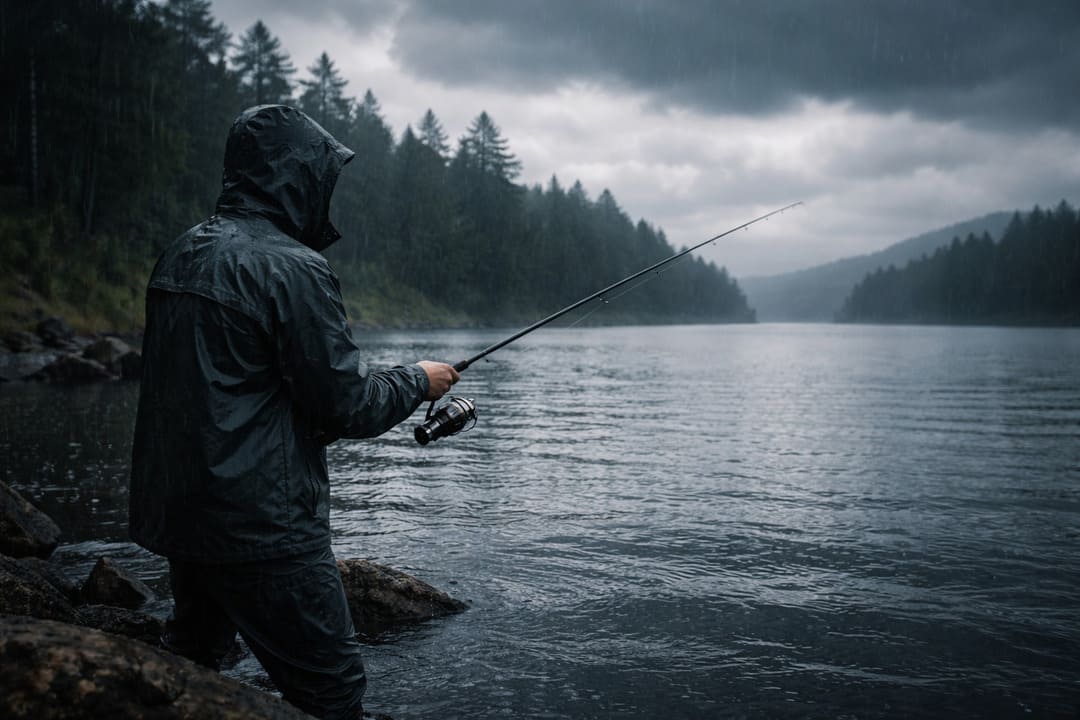

A passing storm changes more than the sky. In ponds and rivers, it can reset the entire feeding equation for catfish, turning ordinary water into a short-lived window of real opportunity.
I have long viewed rain not as a disruption to catfish fishing, but as a trigger. When conditions line up, the period immediately after a storm can be the most productive stretch an angler sees all week, especially in smaller waters and moving systems where runoff quickly reshapes the food chain.
Why Rain Changes The Bite
The reason is straightforward, but the effect is dramatic. Rain pushes organic material, insects, small forage, and loose food sources off the bank and into the water. What looks like muddy inconvenience from shore often functions like a dinner bell below the surface. Catfish, built to locate food through scent and vibration, respond quickly when runoff begins delivering a concentrated stream of feeding opportunities.
That matters most in places where incoming water has immediate influence. In rivers, fresh current lines can transport food downstream and stack it along seams, eddies, and slower edges. In ponds, rainwater can wash debris and forage into the margins, creating temporary feeding lanes where catfish move shallow and feed with confidence.
Just as important, rainfall can improve water conditions in another way: oxygen. Fresh inflow and surface disturbance often raise dissolved oxygen levels, especially in warm weather or in stagnant water that has become less comfortable for fish. Catfish already tolerate conditions that stress other species, but better oxygen combined with a sudden food influx often produces the kind of aggressive behavior anglers notice right away. The storm does not simply move catfish; it gives them a reason to feed harder.
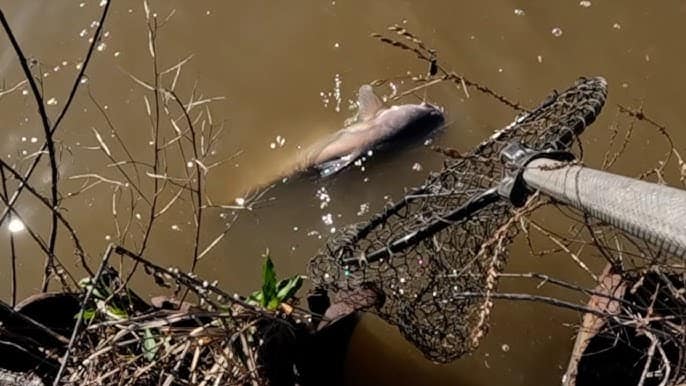
Why Ponds And Rivers Often Shine First
Not every body of water responds the same way to rain. Large reservoirs can take longer to show clear change, and the effects may be spread across too much water to feel immediate from the bank. Ponds and rivers are different. They react fast, and that speed is exactly what makes them so attractive after a storm.
In rivers, current does the organizing. Rain intensifies flow, dislodges food, and creates predictable travel lanes. Catfish do not need to roam aimlessly when food is literally coming to them. They can hold behind current breaks, along channel edges, near logjams, or below inflows and let the water do the delivery work.
Ponds are more subtle, but often just as good. A ditch, culvert, spillway, or low bank where runoff enters the water can become the focal point of the entire pond. That inflow brings scent, cooler water, and edible material into a confined area. In many cases, the best post-rain action happens surprisingly close to shore, where runoff first meets the pond and spreads out.
The weather itself can amplify the moment. Cloud cover reduces light penetration, shoreline traffic often drops, and pressure changes can accompany that period of unsettled conditions. The result is a quieter, lower-light environment that can make catfish feel even more comfortable moving and feeding.
When The Window Opens
Timing matters. The most productive stretch is often not during the hardest part of the storm, but immediately after the rainfall eases or stops. That is when runoff continues moving, debris remains suspended, and the water is still freshly energized without becoming impossible to fish.
In my experience, the prime window usually falls into three phases:
- The first phase is the initial runoff period, when food first starts washing in and catfish begin to reposition.
- The second is the sweet spot just after the storm, when inflow remains active and fish often feed most aggressively.
- The third is the taper, when the water begins settling but catfish are still working recently activated feeding zones.
That window can last an hour or stretch through much of the evening depending on rainfall intensity, water level, and the size of the system. Smaller waters often react faster and fade faster. Rivers with sustained runoff can stay productive longer.
Where I Would Start Fishing
Location becomes more important than almost anything else after rain. Rather than casting randomly, I would begin by looking for places where moving water meets structure or slack water. These are natural intercept points.
| Post-Rain Location | Why It Produces | Best Approach |
|---|---|---|
| Creek or ditch inflow | Food and scent are concentrated here | Fish just off the current edge |
| River seam | Catfish can feed without fighting full current | Anchor bait on the slower side |
| Spillway or culvert mouth | Strong inflow pulls forage into a tight zone | Cast beyond the turbulence and drag back |
| Mud line transition | Dirty and clearer water often meet where fish patrol | Place bait on the color change |
| Downstream of cover | Logs and rocks break current and collect food | Present bait on the downstream side |
That table only works if it guides actual decision-making, and here it does. After rain, the best water is rarely “the whole pond” or “the whole river.” It is the place where inflow, cover, and reduced current overlap.
What I Would Throw And Why
Bait selection after rain should match the mood of the fish and the character of the water. Because runoff often stains the water and spreads scent through the system, strong-smelling offerings become even more effective. Cut bait, chicken liver, shrimp, nightcrawlers, and prepared stink baits all make sense in these conditions.
The presentation should stay simple. A bottom rig remains the most reliable option because most of the food being washed in is moving along or near the bottom. I prefer to let the bait soak in place rather than overwork it. In flowing water, the goal is not to chase fish but to place the bait where feeding fish are already waiting.
One factor many anglers underestimate is safety. High water, unstable banks, and fast current can turn a productive session dangerous in a hurry. Monitoring changing water levels through tools like catfish fishing after rain conditions can help frame the opportunity more intelligently before heading out.
Why This Matters Right Now
This pattern matters because it offers one of the clearest examples of how weather directly improves fishing rather than simply complicating it. For anglers trying to make smart decisions with limited time, the hours after rain are not random luck. They are a measurable, repeatable shift in fish behavior driven by food movement, oxygen, and positioning.
That is why I continue to treat post-storm periods as premium catfish opportunities, especially in ponds and rivers. When rain washes food into the water, refreshes the system, and pushes catfish into feeding mode, the bite can turn from slow to explosive with remarkable speed. Right now, in a season when storms can arrive suddenly and water temperatures are climbing, recognizing that window may be the difference between an average outing and the best catfish session of the month.


