
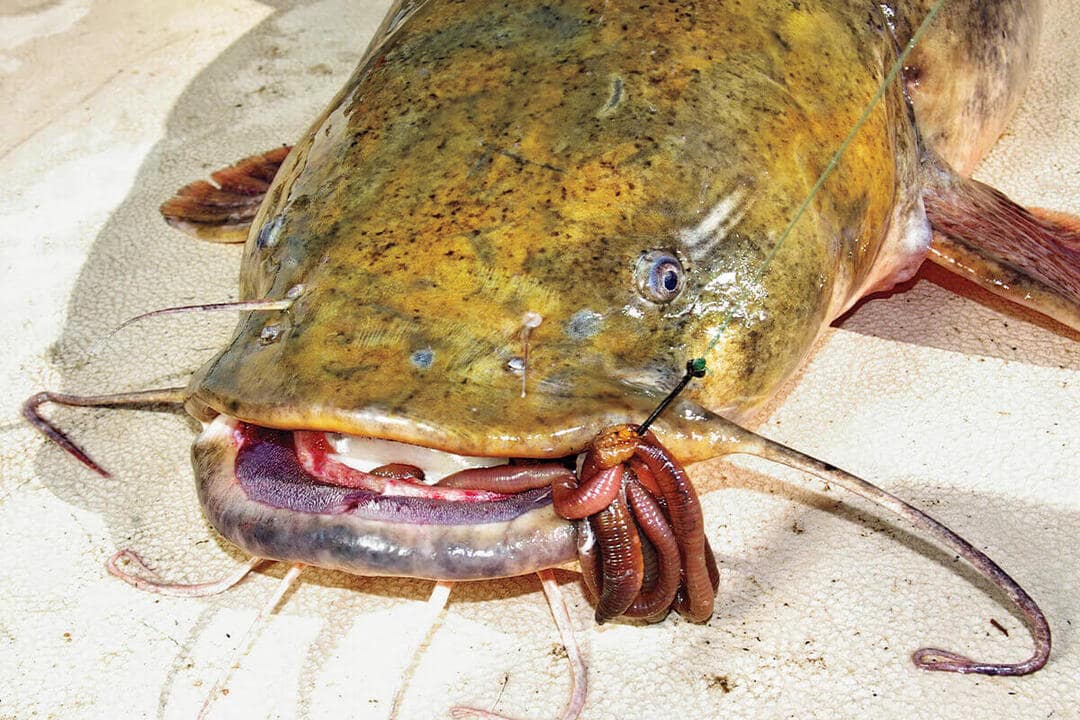

The flathead catfish pre-spawn bite is one of the most overlooked windows in freshwater fishing because it happens before many casual anglers realize the season has shifted. As water warms and fish begin positioning closer to spawning areas, live bait anglers get a narrow chance to target flatheads while they are still feeding with purpose.
That makes this more than a routine seasonal update. After big-cat stories have already pushed attention toward record-class blue catfish and trophy movement, the flathead bite gives anglers a more tactical question: who can read the water before everyone else catches on?
The Flathead Catfish Pre-Spawn Bite Rewards Timing, Not Guessing
Flatheads have a reputation for being stubborn, nocturnal, and hard to pattern. Some of that reputation is deserved. They are structure-oriented predators, and they do not always behave like channel cats or blue cats that may roam more freely for scent trails.
The pre-spawn period changes the equation. Before spawning fully takes over, flatheads can become more predictable because they begin staging around cover, deeper edges, current breaks, and areas that offer access to suitable nesting structure. They are not magically easy to catch, but their movement starts to make more sense.
That is why timing matters. The current Iowa fishing report already gives anglers the practical clue they need: flatheads are showing pre-spawn activity, with small shiners or bluegill fished on the bottom as the recommended approach. For serious catfish anglers, that is not just a bait note. It is a seasonal signal.
The opportunity is predictable aggression. Flatheads are not feeding randomly in every stretch of water. They are becoming more catchable in places that line up with their biology, comfort, and spawning preparation.
Live Bait Matters Because Flatheads Are Built Differently
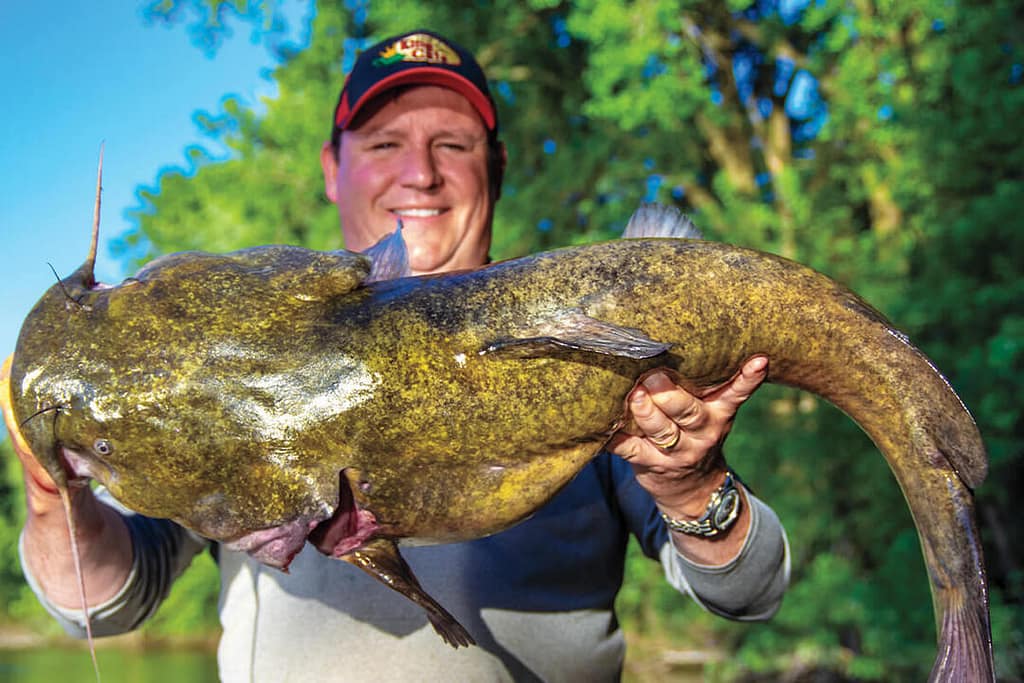
Flatheads are not just scavengers. They are powerful predators that often prefer live prey, especially when they grow larger. That makes the live bait piece central to this bite window.
A small shiner or bluegill fished on the bottom does two things well. It keeps the presentation natural, and it puts movement where a flathead expects to find vulnerable prey. During the pre-spawn phase, that can be more convincing than dead bait sitting motionless in the wrong water.
The mistake is thinking live bait alone solves everything. A lively bait in a dead zone is still a bad presentation. The bait needs to be placed where flatheads already want to travel or hold: near wood, undercut banks, deep holes, rock edges, current seams, and transition routes between feeding water and spawning cover.
This is why flathead anglers often sound more like hunters than casual fishermen. They are not simply casting and waiting. They are placing bait near ambush points. The best setups feel intentional, almost surgical.
The Right Water Is More Important Than The Right Rod
Gear matters, but location matters first. A strong rod, heavy line, and sharp hook cannot compensate for fishing empty water. During the pre-spawn period, anglers should start with the river or lake structure, then build the rig around that decision.
Flatheads often favor cover that gives them security and feeding access. Logs, snags, deep pools, low-gradient river stretches, and areas below dams can all be part of the picture. The flathead catfish habitat profile is useful because it highlights how these fish relate to deep pools, sluggish river sections, reservoirs, and areas below major impoundments.
That habitat preference should change how anglers fish. Instead of spreading rods randomly across open water, a smarter approach is to target the edges of high-value structure. Place bait close enough to be found, but not so deep into cover that every bite becomes an instant snag.
The key is controlled proximity. Flatheads like cover, but anglers still need enough room to turn the fish after the bite. That balance separates a smart setup from a donation to the logjam.
Bottom Fishing Is Simple, But It Cannot Be Lazy
The advice to fish live bait on the bottom sounds easy, and that is part of the problem. Beginners hear “bottom” and assume any sinker-and-hook setup will do. Pre-spawn flatheads require a cleaner presentation.
A good bottom setup should keep bait near the strike zone without pinning it unnaturally. Too much weight can make live bait look dead or trapped. Too little weight can let the bait drift out of position. The rig should match current, depth, and cover.
Hook placement matters too. Live bluegill or shiners need to stay active without being damaged so badly they stop moving naturally. Anglers also need to follow local bait rules, especially when using live fish. Legal bait use can vary by state, waterbody, and species, so the fastest way to ruin a good trip is to ignore regulations before launching.
Here is a practical comparison for reading the pre-spawn flathead setup:
| Factor | Weak Approach | Smarter Approach |
|---|---|---|
| Bait choice | Random dead bait in open water | Legal live shiner or bluegill near structure |
| Location | Casting blindly from the easiest bank | Targeting cover, holes, seams, and transitions |
| Weight | Same sinker everywhere | Weight matched to current and depth |
| Timing | Fishing only when convenient | Prioritizing evening, night, and stable conditions |
| Patience | Moving after a few quiet minutes | Giving high-value water time to produce |
The takeaway is clear: bottom fishing works best when it is deliberate. Flatheads may be aggressive before the spawn, but they still reward anglers who put bait in the right lane.
The Biggest Mistake Is Fishing The Spawn Too Late
Many anglers wait until they hear everyone talking about spawning catfish. By then, the best flathead opportunity may already be shifting. Once fish are locked into spawning behavior, feeding can become less reliable, especially around nesting activity.
The pre-spawn window is different because fish are still preparing, feeding, and moving. They may be easier to intercept before they commit fully to nesting structure. That makes this period valuable for anglers who want a real shot at a bigger fish rather than a late reaction to old information.
The broader catfish season still has plenty of life after this window, but the tactical edge changes. Pre-spawn is about staging and feeding. Spawn is about cover and protection. Post-spawn is about recovery and movement. Treating all three the same is one reason anglers miss fish they should have caught.
This is the pressure point: the window can close fast. A few degrees of water temperature, a weather swing, a river rise, or increased fishing pressure can change the pattern. The anglers who benefit are usually the ones already adjusting before the bite becomes obvious.
The Next Clues Are Water, Bait, And Pressure
The next few weeks should be read through three signals. First, water temperature and stability. Flatheads respond better when conditions support movement and feeding instead of shocking them into inactivity. Second, bait presence. If shiners, bluegill, and other forage are active around structure, flatheads have a reason to be nearby. Third, fishing pressure. Easy access points can get crowded once the word spreads.
Anglers should also watch current. Too much current can push bait and fish into protected zones. Too little current can reduce natural food movement. The sweet spot is often not the strongest flow, but the edge where food, cover, and comfort overlap.
A serious flathead approach does not need to be complicated. Pick a high-percentage stretch. Use legal, lively bait. Keep the presentation near bottom structure. Give the spot time. Move only when the water stops making sense.
That is the value of the flathead catfish pre-spawn bite. It gives anglers a short, useful window when big fish are not just hiding in mystery; they are preparing, feeding, and becoming more readable. The smart play now is not to wait for the season to announce itself. It is to fish like the move has already started.


