


Catfishing rewards patience, but it punishes guesswork. Right now, when more anglers are simplifying their tackle and relying on finesse rather than force, knowing how to read a bite has become one of the most important skills on the water.
I have seen the same mistake repeat itself across riverbanks, farm ponds, and reservoir flats: the rod tip flickers, adrenaline spikes, and the angler jerks far too soon. In catfishing, the difference between a missed fish and a solid hookup often comes down to one discipline above all others reading the bite.
Why Bite Interpretation Matters More Than Ever
Many anglers come to catfish with habits borrowed from bass fishing or other fast-reaction styles. That is where trouble starts. Catfish rarely behave like aggressive sight-feeding predators that explode on a moving target. They are methodical. They investigate. They test. They commit on their own timeline, not ours.
That feeding style changes everything about how I watch a rod, manage line tension, and decide when to react. A catfish often does not strike in one clean, unmistakable motion. Instead, it may approach the bait, mouth it lightly, reposition it, and only then move off with confidence. If I respond to the first sign of life at the rod tip, I am often not setting the hook into a fish at all. I am simply pulling bait away from a catfish that has not finished deciding.
That is why bite reading is not a minor skill. It is the skill that turns activity into catches.
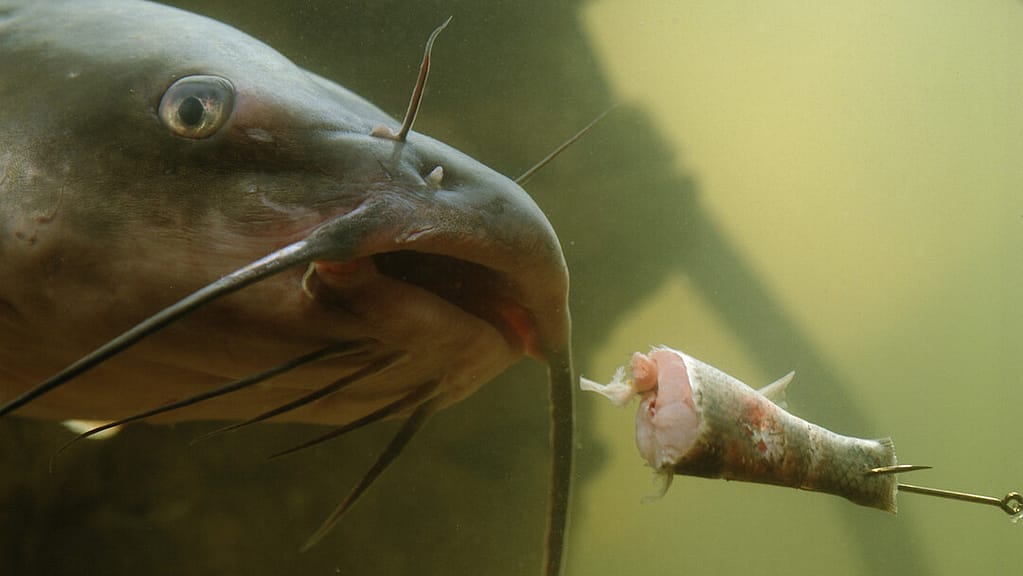
How a Catfish Actually Approaches Bait
To understand what the rod is telling me, I first have to understand what the fish is doing below the surface. Catfish are built to feed in low visibility, stained water, and on the bottom, where scent matters more than flash. They are exceptionally good at locating food by following odor trails and using sensory organs around the mouth to examine what they find.
That means a catfish often arrives at the bait before it truly takes it. It may hover, nudge, mouth, and reposition the offering. Those early signals can appear subtle from above: a faint tick, a light bounce, a small vibration in the rod tip. None of that necessarily means the fish is ready for me to react.
The hardest lesson in catfishing is that visible movement is not always the same thing as commitment. A moving rod tip can reflect curiosity, not capture.
Reading the Three Most Common Bite Signals
Most catfish bites fall into a simple progression, and once I learned to separate these stages, my hookup rate improved dramatically.
| Rod Tip Signal | What The Catfish Is Likely Doing | Best Response |
|---|---|---|
| Light twitching | Investigating or brushing the bait | Wait and watch |
| Repeated taps | Mouthing or nibbling without fully taking it | Stay patient, maintain tension |
| Steady pull or rod bending | Committed and moving off with the bait | Reel into the fish or lift steadily |
This sequence matters because each stage requires a different level of restraint. The first two invite patience. The third invites action.
Light twitching often means the fish has found the bait but has not committed to swallowing or moving away with it. Repeated taps usually suggest the bait is being tested. The fish may be repositioning it in its mouth, or simply sampling it. The steady pull is different. That is the moment the fish has taken possession of the bait and is beginning to move with enough purpose that the rod starts to load.
When I see that steady load develop, I know I am no longer reading interest. I am reading intent.
Why Anglers Miss Fish By Reacting Too Early
Most missed catfish are self-inflicted. The angler sees motion, interprets it as a strike, and snaps the rod upward with force. That aggressive response may work in techniques built around reaction bites, but in catfishing it often rips the bait away before the hook ever finds purchase.
This is especially true when fishing soft or natural baits that catfish can mouth without resistance. Chicken liver, cut bait, nightcrawlers, and punch baits can all produce ambiguous signals in the first seconds of contact. A fish may be on them without being truly hooked.
I have learned to distrust my own urge to swing fast. Excitement is understandable, but the best catfish anglers train themselves to delay action until the rod tells a fuller story. They are not passive. They are observant. They let the fish finish the process.
That is a subtle distinction, but an important one. Patience in catfishing is not inactivity. It is timing.
The Circle Hook Advantage
Circle hooks have changed how many anglers approach catfish, and for good reason. Unlike traditional J-hooks, a circle hook is designed to catch in the corner of the mouth as the fish moves away and pressure builds. That design rewards restraint.
In many situations, when I am fishing a circle hook, I do not perform a dramatic hookset at all. I let the rod load under steady pressure, then begin reeling while lifting smoothly. The fish, already moving off with the bait, effectively hooks itself as the line tightens and the hook rotates into position.
That is why anglers using circle hooks often improve once they stop trying to “set” them in the old-fashioned sense.
A few practical rules make the system work:
- Let the fish create steady pressure before reacting.
- Keep the line reasonably tight, not slack.
- Start reeling instead of jerking violently.
- Lift the rod in a smooth, controlled motion.
When anglers complain that circle hooks miss fish, the problem is often not the hook. It is the timing. The hook works best when the angler does less, not more. For a technical overview of proper hook design and fish-handling considerations, reading the bite remains closely tied to broader best practices in modern angling.
What Rod Position and Tension Reveal
Bite reading is not only about the fish. It is also about how the tackle is set up. A poorly positioned rod or a line with too much slack can hide useful information. Too much tension, on the other hand, can make minor contact look bigger than it is.
I prefer a setup that lets the rod tip communicate clearly without forcing the fish to feel immediate heavy resistance. That balance is especially important from the bank, where anglers often place rods in holders and watch from a short distance. If the drag is locked down too tightly and the line is rigid, the bite can look abrupt and confusing. If everything is too loose, early signals disappear altogether.
The goal is feedback. I want to see the difference between curiosity and commitment. That only happens when the rig is tuned to transmit bite stages honestly.
The Difference Between Nibbling and Taking
One of the most useful mental shifts in catfishing is learning that not every contact deserves a response. A catfish can interact with the bait in ways that create movement but do not yet create a hooking opportunity.
I think of nibbling as a conversation and taking as a decision. The fish may inspect the bait for several seconds or even longer before making that decision. During that period, the rod can telegraph enough activity to mislead an impatient angler. That is why I watch for progression, not just motion.
Here is the distinction I rely on most:
- Nibbling creates intermittent, uncertain movement.
- Taking creates sustained direction and load.
That sustained load is everything. It is the clearest sign that the fish is no longer merely sampling the bait. It has turned away with it, and the mechanics of a proper hookup can finally begin.
Why This Skill Separates Consistent Anglers From Casual Ones
Anyone can get lucky during a heavy feeding window. Not everyone can capitalize on subtle bites, cautious fish, or pressured water. Reading the bite is the skill that keeps catch rates steady when conditions are less forgiving.
It also reflects a larger truth about catfishing: success comes less from dramatic action than from controlled observation. The best anglers are not always the ones casting the farthest or using the most complicated rigs. Often, they are the ones who understand what the rod is saying and have the discipline to wait one beat longer.
That discipline can feel unnatural at first. Every instinct says to react when the rod moves. But catfish reward anglers who suppress that instinct and let the pattern unfold.
Conclusion
In catfishing, the bite is rarely just a bite. It is a sequence, a story told in taps, tremors, and pressure. The anglers who learn to read that story correctly stop mistaking investigation for commitment, and they start converting more chances into landed fish.
That matters right now because modern catfishing is increasingly defined by efficiency, clean hookups, and smart technique rather than brute force. Reading the bite is not just a useful trick. It is the skill that brings patience, tackle, and timing into alignment and that is what puts more catfish on the bank.


