
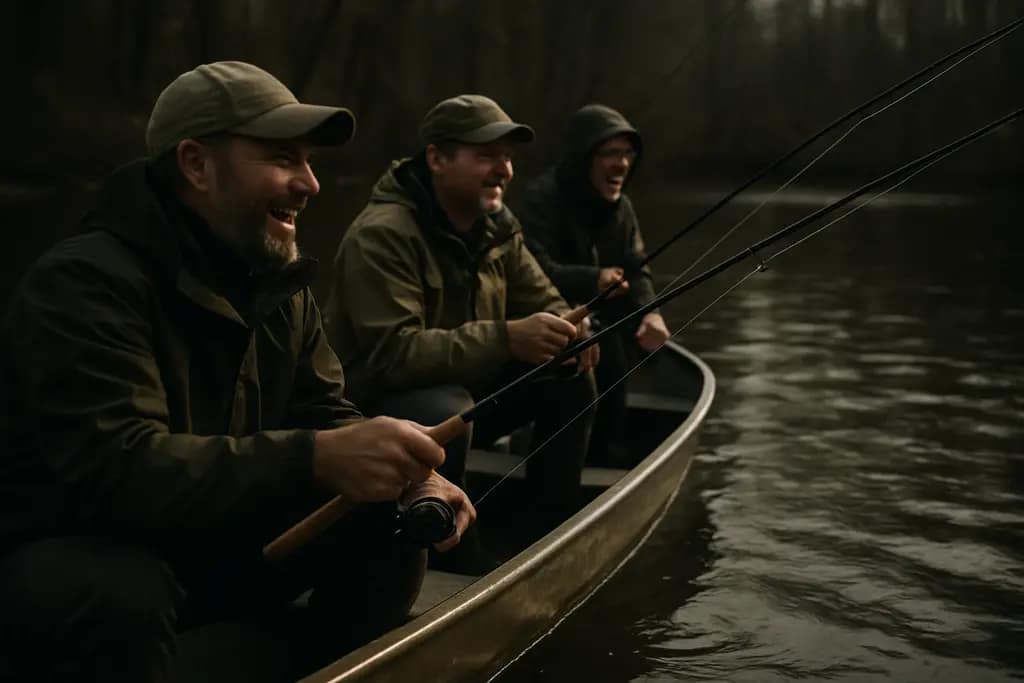

Murky water fishing gets a lot easier when you stop treating stained water like a mystery and start treating it like a fish-behavior problem. Recent research on schooling fish shows that low visibility can change how fish space out, align, and respond to food cues. That matters for sport anglers because the first bite in dirty water often depends on whether your bait reaches the group, gives them enough time to detect it, and triggers a reaction that nearby fish can follow.
Let’s be clear about the evidence. The strongest research here comes from controlled studies on species such as three-spined sticklebacks and Redside Dace, not every bass, catfish, trout, or panfish you might target. Still, the patterns are useful: turbidity can tighten group behavior, slow first detection, and change how fish coordinate under flow. I use those findings as decision prompts on the water, not as magic rules carved into a tackle box.
Why Murky Water Fishing Changes The School
In clear water, fish can use sight over longer distances. In turbid water, the visual window shrinks. The smart angler’s question is not, “Can they see my lure?” It is, “How are they staying organized when sight gets worse?” A study published on September 9, 2026, found that three-spined stickleback shoals became more cohesive and more aligned when turbidity rose to about 10 NTU compared with clear water conditions Royal Society study. That points to a practical idea: in stained water, fish may not be scattered randomly. They may be using tighter spacing and shared direction to keep the group functioning.
Murky Water Fishing Starts With Cohesion
For anglers, cohesion means your cast should not only target a single fish-looking spot. It should target the place where a group can hold together: a current seam, a sheltered edge, a depth break, the inside of a bend, or the slower side of structure. The study does not tell us that all sportfish do this the same way, but it supports a useful habit: make repeated casts to compact holding zones instead of spraying casts across a wide flat with no plan.
If fish are closer together in low visibility, a bait that enters the group’s lane has a better chance of being noticed by more than one fish. That does not mean you need louder, larger, or faster every time. It means placement becomes more valuable. In dirty water, a lure five feet outside the group may be invisible; one moving through the group’s travel path may get inspected, bumped, followed, or eaten.
Group Size Changes Detection Speed
The same stickleback work found that fish took longer to attack a food stimulus in turbid water than in clear water, but larger groups of six or ten fish attacked faster than smaller groups under murky conditions. Small groups, though, appeared to benefit strongly from tighter cohesion and alignment. That gives anglers a clean takeaway: low visibility can slow the first response, but group behavior can help fish recover some of that delay.
On the water, that argues for patience after a well-placed cast. If your lure lands in stained water near cover or a seam, do not rip it out after two seconds just because nothing happened. Let the bait stay in the strike zone longer. Use pauses, shorter pulls, bottom contact, or a slower drift so the first fish that notices it has time to react. Once one fish responds, nearby fish may respond faster because the group is already coordinated.
How Flow Shapes Group Alignment
Turbidity is only half the story. Flow can stretch or squeeze the fish’s options. A 2024-2025 experiment with Redside Dace exposed to suspended sediment around 10 mg/L, about 4.2 NTU, found that sediment increased polarization at higher flow speeds from 20 to 60 cm/s. Cohesion was affected more by flow speed than by sediment; spacing decreased with increasing flow, while sediment did not significantly reduce cohesion in that treatment Redside Dace study.
Fast Water Can Stretch The School
That finding is a great reminder for river and spillway anglers. Fish in faster, stained water may still face the same way even if they are not packed as tightly. Translation: don’t assume dirty current creates one tight ball of fish. In faster flow, individuals may be spaced out along a seam, chute, or current edge while still holding a shared orientation into the flow.
Cast placement should match that shape. Instead of dropping one bait in one pocket and leaving, work the lane. Start upstream or up-current of the suspected holding line, then let the bait pass through several possible fish positions. If the water is pushing hard, keep the presentation controlled enough that it does not rocket past them before detection can happen.
Use Alignment To Place Casts
Alignment gives you a casting angle. If fish are likely oriented into flow, bring your bait from a direction that looks natural within that lane. Across-and-down presentations can work when they swing into the line of fish, but a bait that sweeps too fast across their noses may leave the detection window too quickly. Upstream casts, controlled drifts, and slow pendulum swings can keep the lure visible or detectable longer.
For bank anglers, this means fan casting should still have structure. Make one cast tight to the seam, one slightly inside it, and one slightly outside it before moving. Boat anglers can use short controlled moves rather than long drifts that skip over the best water. If you want a deeper look at visibility cues, this related piece on water clarity and light pairs well with the behavior research.
Presentation Adjustments For Low Visibility
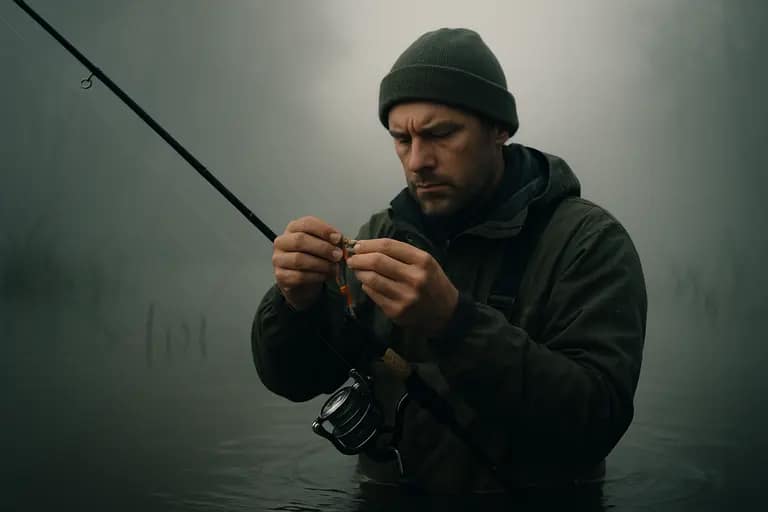
The research does not prove a single perfect lure color, sound, or bait size. What it does support is a slower detection mindset. In turbid water, fish may need more time or closer range to respond to food cues. That should shape retrieve speed, casting angle, and how long you keep a bait in high-percentage water.
Give Fish Time To Find The Offering
Start with a retrieve that has built-in pauses. A jig dragged and paused, a soft plastic lifted and held, a bait soaked near a seam, or a crankbait deflected and briefly stopped can all extend the encounter. The key is not laziness; it is controlled exposure. Let the bait spend time where a coordinated group can detect it.
For murky water fishing, I like to count the lure down, touch the bottom or cover if the area allows it, then slow the first few feet of movement. If nothing happens, adjust one factor at a time: longer pause, slightly different angle, or a cast that rides closer to the current break. Changing everything at once makes it hard to learn what the fish are telling you.
Watch For Chain Reactions
In low visibility, the first contact may not be a crushing strike. It may be a tick, a bump, a swirl, a missed swipe, or a fish following close to the bank or boat. Treat that as information. If one fish reacted, the group may be nearby. Repeat the cast to the same lane before moving. Then change depth or speed only if the second cast gets no feedback.
This is where disciplined anglers beat random casters. Mark the exact stretch where the contact happened. Was it the head of the seam, the tailout, the down-current side of wood, or the first deeper water off a flat? Group cohesion research supports the idea that nearby fish may be coordinating, so one clue deserves a few careful follow-up casts.
Murky Water Fishing Decisions On The Water
A sharp murky water fishing plan is simple: find places where fish can stay organized, slow the first detection window, and work likely lanes with repeatable casts. In moderate turbidity, tighter cohesion and stronger alignment may help groups deal with limited visual information. In higher flow, spacing may change, but direction can still matter. That means your best casts often run with the fish’s holding angle, not across it at random.
Use the science as a field checklist. If the water is stained but moderate, tighten your targets around seams, edges, and cover. If the current is stronger, lengthen your target zone along the flow line. If bites are late or light, slow the retrieve and repeat casts after any sign of contact. Murky water fishing rewards anglers who think like observers first and casters second: read the group, feed the lane, and let the fish’s behavior sharpen your next move.


