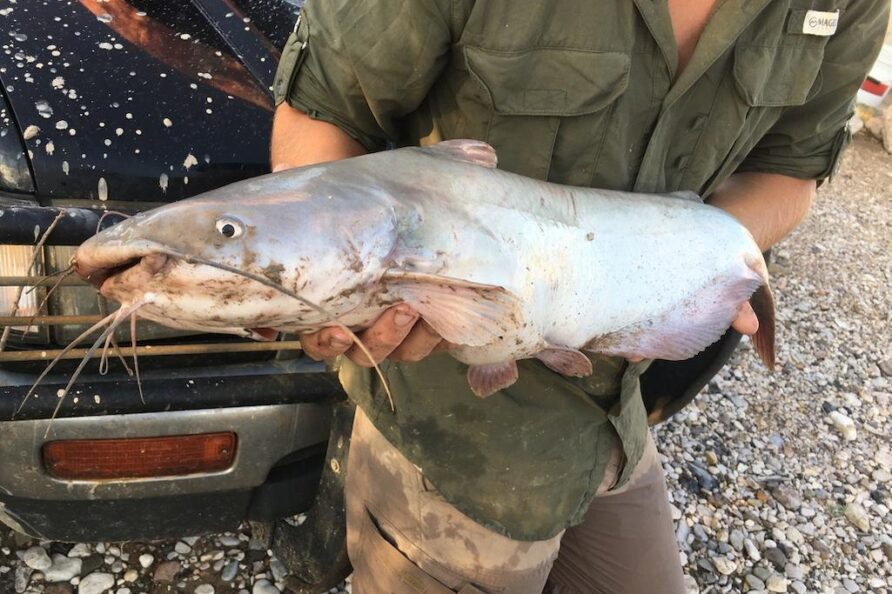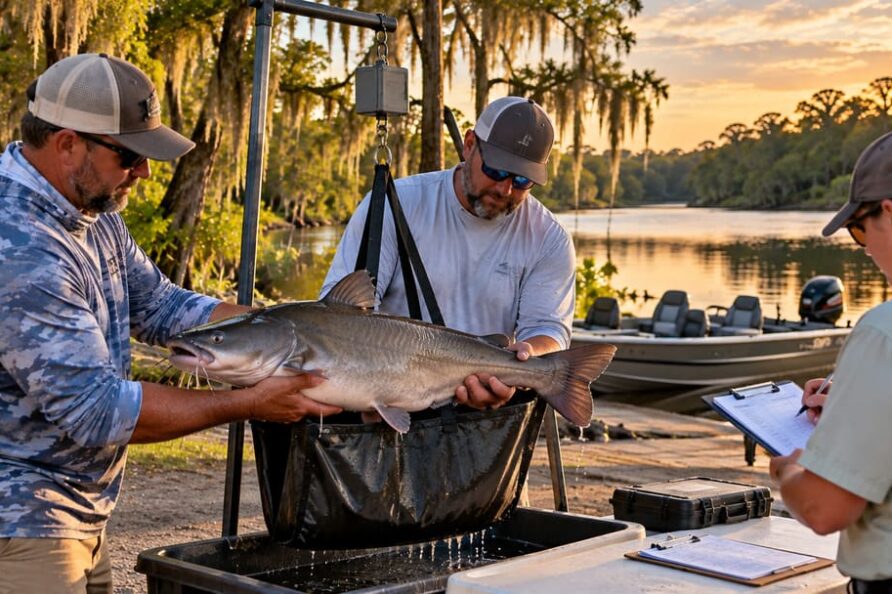
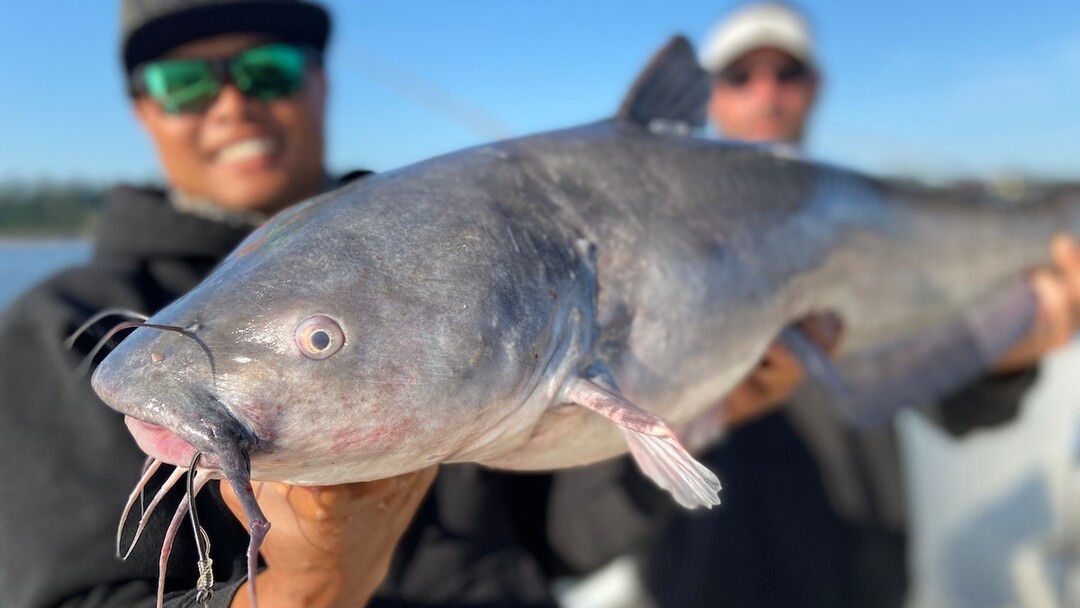
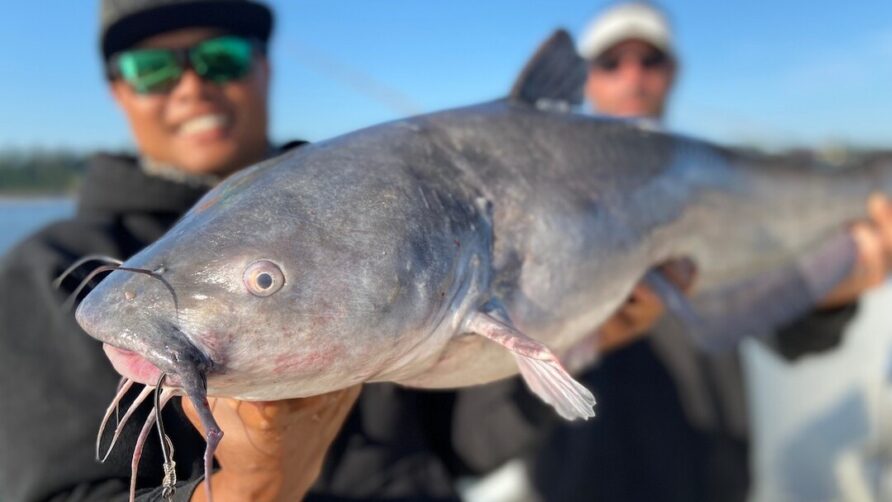
The May blue catfish bite is still giving anglers a reason to pay attention, even with low flows shaping the lower Susquehanna River. When fish continue showing up around the Conowingo Dam pool and near the river mouth under less-than-perfect current conditions, the story is not just that catfish are biting; it is that smart anglers are learning how blue cats adjust when the water changes.
Low water can frustrate fishermen who rely on heavy current to position fish, but it can also reveal the real structure of a catfish bite. The best blue cat anglers are not simply waiting for ideal conditions. They are reading current, watching depth, and putting baits where big fish still have a reason to feed.
Why The May Blue Catfish Bite Still Matters
May is one of those months when blue catfish behavior starts to feel more deliberate. The water has warmed enough to increase activity, baitfish are moving, and larger fish often begin using predictable travel routes before spawning behavior changes the rhythm. That creates a useful window for anglers who understand structure and are willing to adjust.
The latest interest around the lower Susquehanna River fits that pattern. Anglers are still catching blue catfish around the Conowingo Dam pool and near the river mouth despite very low flows from the dam, which makes the bite more interesting than a simple “fish are active” update. The fish are not disappearing because the flow is light. They are repositioning.
That distinction matters. Many catfish anglers think of current as the whole equation, especially in river systems. Current is important, but blue cats are opportunistic. They use edges, holes, channel changes, bait concentrations, and scent lanes even when water movement is reduced. Low water changes the puzzle; it does not erase the opportunity.
The May blue catfish bite is also useful because it gives anglers a timely lesson: do not abandon productive fisheries just because the conditions are not textbook. Better fishing often comes from understanding what changes first.
Low Water Forces Better Decisions
Low flows make fishing more demanding because they reduce obvious feeding lanes. When water is moving hard, anglers can read seams, eddies, and current breaks more easily. A bait placed in the right line sends scent downstream and reaches fish that are already positioned to feed. In low water, that line may weaken.
That forces anglers to become more precise. Instead of relying on flow to distribute scent and move bait naturally, they need to think harder about where blue cats can hold, travel, and intercept food. Deep pockets, channel edges, rock transitions, bridge structure, flats near the river mouth, and the edges of the dam pool all become more important.
This is where low-water catfishing separates casual effort from real strategy. A rushed cast into open water may sit untouched. A bait placed near a depth change or travel lane can still draw fish because it intersects how blue cats move when current is limited.
Low water also makes fish more vulnerable to disturbance. Boat traffic, noise, repeated casts, and heavy pressure can matter more when fish have fewer comfortable zones. Anglers may need longer casts, quieter approaches, and more patience before resetting a spot. The less the water does for you, the more your execution matters.
The Lower Susquehanna Pattern Makes Sense
The lower Susquehanna River is a logical place for blue catfish attention because it offers the kind of ingredients the species can use well: big water, structure, bait movement, dam influence, and a connection to broader tidal and river-mouth environments. Even when flow drops, those ingredients do not vanish.
The Conowingo Dam pool can hold fish because it provides depth, structure, and a concentration point below a major river feature. The river mouth can also remain productive because fish moving between river and bay-influenced water have reasons to pass through, feed, or stage. Those are not random locations. They are natural catfish zones.
Blue cats are often treated as simple bottom feeders, but that undersells how adaptable they are. They move with food, use structure intelligently, and can exploit different parts of a system depending on conditions. That adaptation is why they remain catchable even when flows are low.
Anglers who understand this are less likely to panic when the river looks wrong. They ask better questions: where did the bait go? Where is the nearest comfortable depth? What line still carries scent? Where can a large fish feed without spending too much energy?
Those questions create clarity, and clarity catches more catfish than habit.
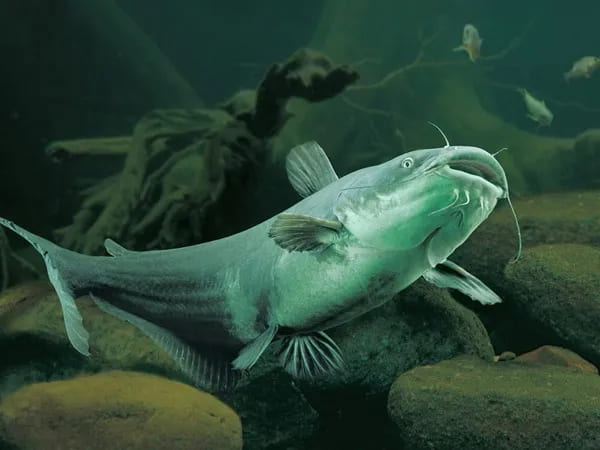
What Blue Catfish Are Looking For In May
Blue catfish need the same basic things in May that they need all season: food, security, oxygen, and efficient movement. What changes is where those ingredients overlap. Warmer water increases activity, baitfish become more important, and the pre-spawn window can push larger fish into more aggressive feeding behavior.
That does not mean blue cats feed recklessly. Large fish are efficient. They do not waste energy if they can sit near a channel edge, ledge, or deeper seam and let food come within range. This is why structure becomes so valuable. It gives fish a way to feed without wandering aimlessly.
In low flows, scent does not travel the same way, so bait placement becomes more important. Fresh cut bait near a likely travel route can outperform a stronger-smelling bait dropped into dead water. Blue cats are powerful fish, but they are not magic. They still have to find the offering.
The biology behind blue catfish behavior helps explain why they can dominate large river environments. They are built for big systems, varied forage, and opportunistic feeding. That flexibility gives them resilience, especially when conditions change quickly.
The Best Places To Look When Flows Are Low
Low water does not eliminate productive catfish spots, but it changes which spots deserve priority. Anglers should focus on places that still create a feeding reason. If the water is not pushing food hard, structure and depth must do more of the work.
| Low-Water Location | Why It Can Produce Blue Catfish |
|---|---|
| Dam pools | Depth, structure, and concentrated fish movement |
| River mouths | Natural travel zones between feeding areas |
| Channel edges | Efficient routes for larger fish |
| Deep holes | Resting water near feeding transitions |
| Rock transitions | Cover, bait movement, and ambush edges |
| Creek mouths | Inflow, scent, and occasional bait concentration |
| Flats near depth | Night feeding and low-light movement |
The key is not to fish every possible location. The key is to rank them. A flat beside deep water is more useful than a flat with no nearby escape route. A hole near a bait source is better than an isolated hole. A channel edge with life is better than a beautiful contour with no fish activity.
Good catfish water has purpose. That purpose may be food, comfort, shade, depth, or movement. The best spots combine several at once.
Bait Choice Matters, But Placement Matters More
Catfish anglers love bait debates, and for good reason. Fresh cut shad, herring, bunker, perch, skipjack where legal, nightcrawlers, chicken liver, and prepared baits all have their place. But in low-flow conditions, bait location may matter even more than bait identity.
Fresh cut bait is usually a strong choice for blue cats because it puts natural scent and oils into the water. Still, that scent needs a path. If the bait sits in slack water where scent barely moves, it may not reach fish efficiently. If it sits along a subtle channel edge or near a holding area, it has a better chance.
Bait size also becomes a tactical decision. Smaller baits may produce more bites and help locate active fish. Larger chunks may reduce action but appeal to better fish. In May, when bigger blue cats may still be feeding hard, I like the logic of using at least one larger bait as a target presentation.
The mistake is fishing every rod the same way. Spread the pattern. Put one bait tight to the edge, one deeper, and one slightly shallower or closer to a transition. Let the fish provide evidence, then adjust.
How Anglers Should Read Current Without Strong Flow
When the dam flow is low, visible current clues may be subtle. That does not mean the water is lifeless. Wind, tide influence in lower systems, boat wakes, small inflows, bottom contour, and temperature differences can still shape fish positioning.
Anglers should look for small signs: foam lines, drifting debris, bait flickers, bird activity, stained water edges, or places where the surface changes texture. Those clues can reveal movement even when the river does not look powerful.
The bottom matters too. A slight drop, shell bed, rock seam, or channel turn may create enough difference to hold fish. In low flow, subtle structure becomes more important because fish may not be pinned to obvious current breaks.
This is where patience has to pair with observation. Waiting is part of catfish fishing, but blind waiting is not a plan. If a spot has no bait, no depth change, no cover, no movement, and no reason to hold fish, waiting longer may only confirm a bad decision.
Why May Rewards Mobile Catfish Anglers
May can reward anglers who move with intention. The fish are active enough to make searching worthwhile, but not always scattered enough to justify random running. The best approach is controlled mobility: test logical zones, give good spots enough time, then shift when the water tells you to.
A strong plan might start near a dam pool edge, move to channel structure, then finish near the river mouth or a shallow feeding transition as light changes. That sequence follows fish behavior rather than convenience. It also gives anglers a way to gather information across the day.
Low water can make this even more important. If the first spot lacks movement, the fish may be grouped elsewhere. A small change in depth or distance from current can make a large difference. Mobility creates options.
The danger is moving too often. Blue cats may need time to find bait, especially when flow is weak. Anglers should avoid abandoning a good setup after ten quiet minutes. The better move is to fish with a clock and a reason: stay long enough to test the spot, then leave only when the evidence supports it.
The Trade-Off Between Numbers And Bigger Fish
A May blue catfish trip can be planned two ways. One approach is to catch numbers by using smaller baits in areas where active fish are likely. The other is to target bigger fish with larger baits near deeper structure and known travel lanes.
Both approaches are valid. The mistake is not knowing which trip you are fishing.
Anglers chasing action may want to use medium baits, cover more water, and fish accessible feeding areas. Anglers chasing a heavy blue should accept fewer bites and focus on the best big-fish structure available. That might mean longer sits, bigger bait, heavier gear, and more careful placement.
This is a real choice. A family outing may be better with steady bites. A serious trophy attempt may require quiet hours. Neither approach is wrong, but mixing them without a plan creates frustration.
May sits in the middle of those goals. It can produce numbers and size, but conditions still decide the day. Low water may concentrate fish in some areas while making others feel empty. The angler’s job is to recognize which version of the bite is happening.
Gear Should Match The Water And The Fish
Blue catfish are not delicate opponents. Even moderate fish can expose weak knots, dull hooks, light leaders, and poor drag settings. In a river system with rocks, structure, and current variation, gear matters.
A dependable catfish setup should include a rod with enough backbone, a reel with smooth drag, abrasion-resistant line, strong swivels, sharp hooks, and sinkers heavy enough to hold bottom without killing the bait presentation. Circle hooks are popular because they can improve corner-of-mouth hookups when anglers let the rod load properly.
Low flow may allow lighter sinkers than heavy current, but lighter does not always mean better. The bait still needs to stay where it belongs. If it drifts out of the zone, the entire presentation loses control.
A landing net is also part of the system. Too many good fish are lost because anglers think the fight ends when the fish reaches the bank or boat. For larger blue cats, the final few feet can be the most dangerous part of the battle.
Responsible Harvest And Local Context
Blue catfish occupy a complicated place in Mid-Atlantic fisheries. In some conversations, they are valued sport fish. In others, they are viewed through the lens of invasive impact and management concern. Anglers should understand the local context before deciding what to keep or release.
That means checking current regulations and thinking beyond habit. In some waters, harvest may be encouraged. In others, anglers may choose selective release for larger fish. The right answer depends on the fishery, the rules, and the management goals.
This is where practical location knowledge connects naturally with broader fishing responsibility. Understanding where catfish naturally feed helps anglers catch more fish, but it also helps them fish with better judgment because they begin to see how catfish fit into each waterbody.
Responsible angling is not about making every trip complicated. It is about knowing enough to make better decisions. That includes legal bait use, size and creel rules, fish handling, and whether a blue catfish should be harvested or released in that specific location.
What Low-Water Success Teaches Serious Anglers
The continued bite in the lower Susquehanna offers a larger lesson: good catfish anglers are condition readers. They do not need perfect water. They need enough understanding to find the best available pattern.
Low water can actually improve an angler’s skills. It strips away some obvious cues and forces closer attention to structure, bait placement, scent movement, and fish behavior. Instead of blaming conditions, the angler has to ask where the fish would go next.
That mindset creates confidence over time. Not false confidence, but the earned kind that comes from solving difficult days. Anyone can look good when fish are stacked in perfect current. The better test is catching fish when the river is stingy.
There is also a strategic benefit. Low water can reveal bottom features, bank contours, exposed cover, and access points that remain useful later. Smart anglers take mental notes. A visible ledge in May can become a high-water target in June.
What Readers Should Watch Next
The next phase of the May catfish bite will depend on water movement, weather stability, baitfish behavior, and spawning timing. If flows increase, blue cats may reposition again and feed more aggressively along stronger seams. If flows stay low, anglers may need to keep emphasizing deeper edges, river-mouth movement, and subtle structure.
That uncertainty is part of the appeal. Catfish fishing is not just bait and waiting. At its best, it is a slow, practical reading of water. Every condition change asks the angler to interpret the system again.
The lower Susquehanna bite matters because it shows that blue cats remain catchable even when the river does not give anglers an easy script. The opportunity is there, but it rewards discipline, better placement, and a willingness to rethink the obvious.
The May blue catfish bite should remain one of the better freshwater stories to follow because it combines seasonal movement, strong fish, changing river conditions, and practical lessons anglers can use immediately. Low water may reduce the drama on the surface, but under it, the same question still matters: where can a big blue cat feed efficiently right now? The anglers who answer that question best will keep finding fish.